





We have much more to do and your continued support is needed now more than ever.
Seeing the South Fork Wind Farm
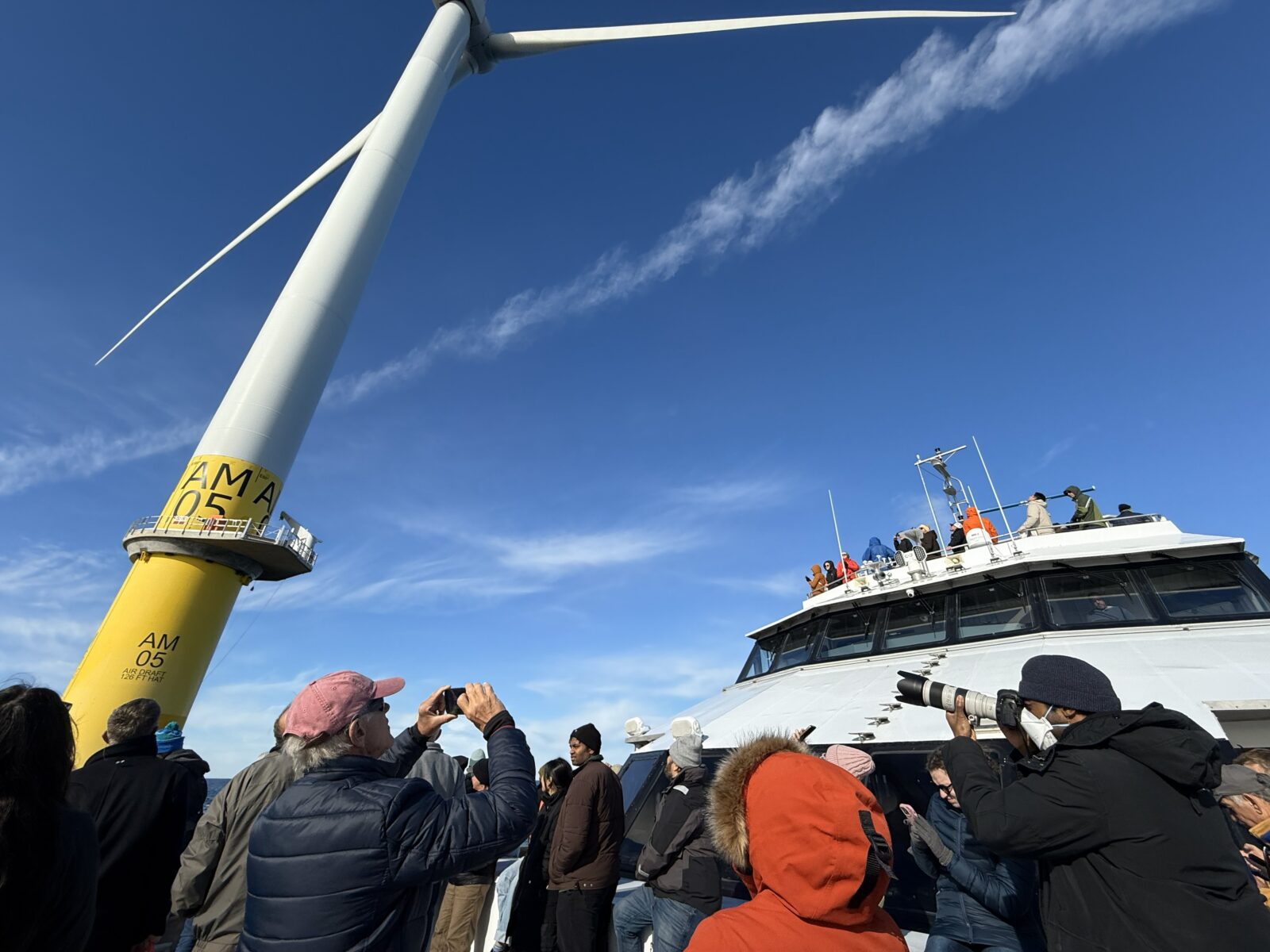
Tour passengers view a South Fork wind turbine from below. Credit: Lily Sones
On a brisk yet sunny morning in late November, the National Wildlife Federation’s Offshore Wind Energy Program brought 70 local environmental advocates and community members from the New England area out on the water to see the South Fork Wind farm up close and in person.
The attendees arrived at the Rhode Island Fast Ferry Terminal bundled in hats, gloves, and jackets. Although there were no other trips leaving the Quonset Point location, many passengers eagerly announced that they were checking in for the South Fork Wind tour. The majority on this trip had not yet seen an offshore wind farm up close.
Checking in on South Fork Wind One Year Into Operations
In the summer of 2024, South Fork Wind became the third offshore wind project to begin producing clean energy for Americans. The project, located in federal waters 35 miles off the east end of Long Island, NY, consists of 12 turbines that transmit energy to the South Fork—the most southeastern tip of Long Island. Since its one-year anniversary of operation, the project’s developer ∅rsted announced South Fork Wind reached its targeted 46.4% net annual capacity factor, generating enough energy to power 70 thousand homes and helping steady rising energy costs for ratepayers.
| What is ‘net capacity factor’? ‘Net capacity factor’ refers to the ratio of total electricity created compared to the maximum energy that could have been generated if the facility continuously produced energy at full-power during the same time frame. This unit of measurement is an important tool for analyzing the successful electricity generation of all energy sources, including renewables like offshore wind, to better understand the grid reliability of using different energy resources. |
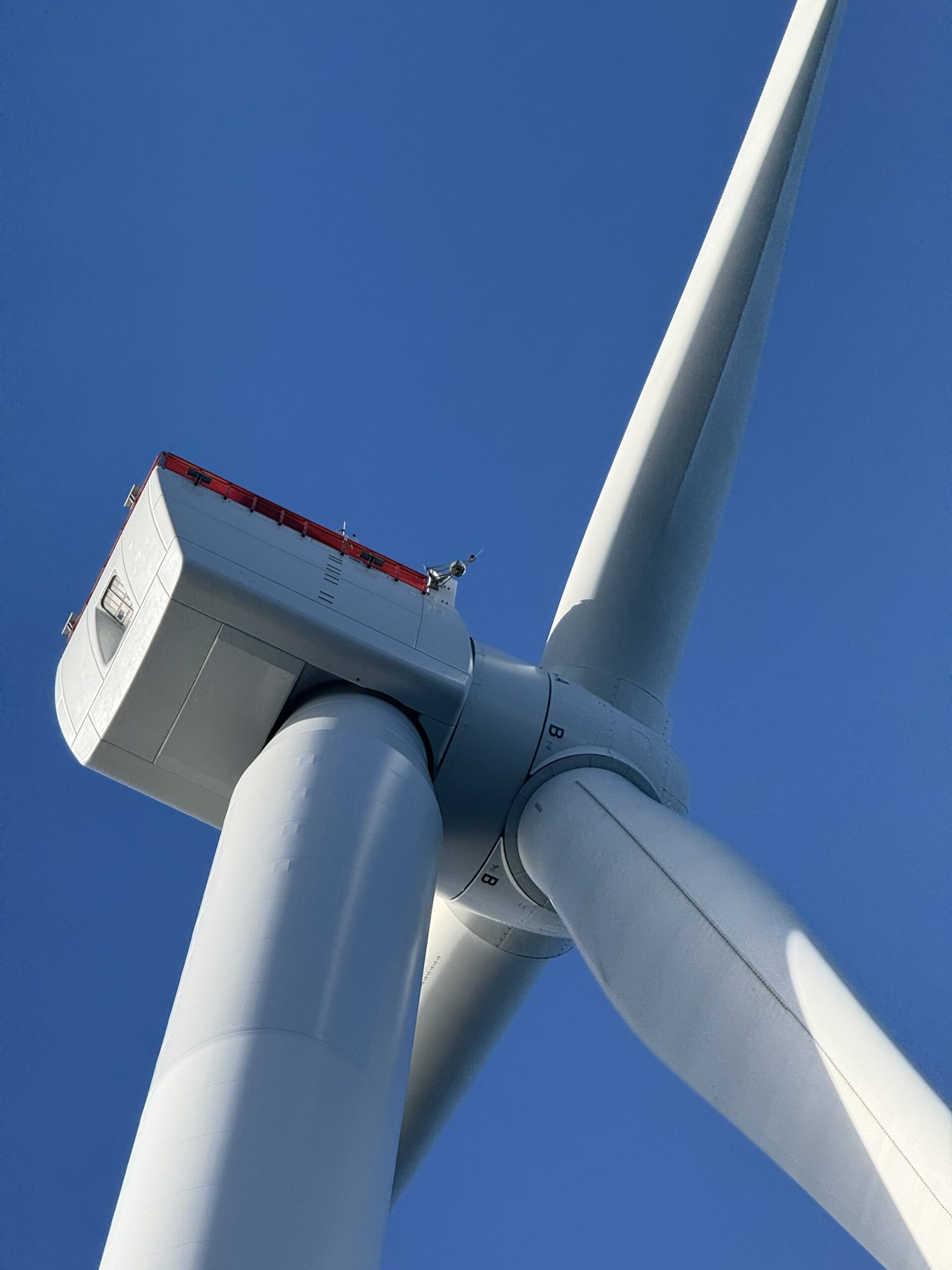
NWF’s Offshore Wind Energy Program has supported the responsible development of the nation’s largest untapped renewable energy resource for over a decade. With so few operational wind farms in U.S. waters, an important component of the team’s advocacy has been boat tours to share an experience most Americans will never have the chance to see. NWF has frequently taken environmental advocates, community members, local politicians, and journalists out to see the first energy producing U.S. offshore wind farm, the Block Island Wind Farm, which became operational in 2016. Since the completion of South Fork Wind over a year ago, we have embraced the opportunity to highlight the construction of even more turbines.
This most recent tour was initially planned for earlier in the week but was rescheduled by the ferry company. The winds and seas around South Fork Wind were deemed too strong—a logistical issue for our ferry but an emphatic reminder of the powerful natural resource that responsible offshore wind development harnesses.
‘Smooth Sailing’ On Our Journey Out of State Waters
The ferry set off promptly at 10 am with environmental advocates packed into the window seats. Some brave folks staked out spots on the open upper deck of the ferry, ready to fare a windy four hours to get the best vantage point to see the turbines as they came into closer view. It would take over an hour to travel out to the project site.
The length of the journey was extended further due to the season—from November 1 to April 30, NOAA mandates that most vessels 65 feet or longer within specific ‘Seasonal Management Areas’ slow down to 10 knots to avoid vessel strikes with the critically endangered North Atlantic right whale that seasonally uses the east coast as migratory routes and calving grounds.
Nonetheless, South Fork came into view and the tour passengers excitedly began to migrate outside onto the bow to take initial photos of the turbines still on the horizon.
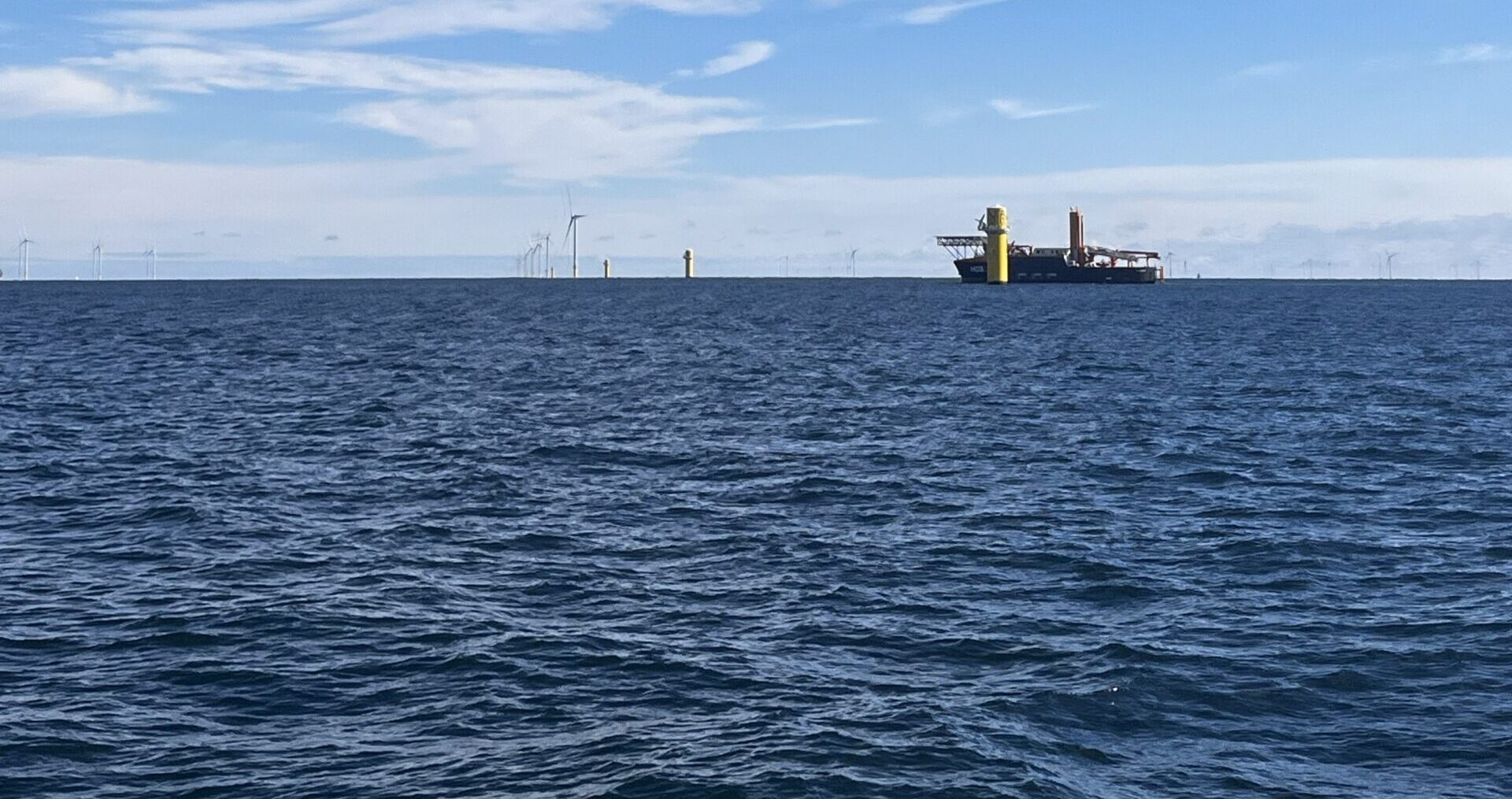
Approaching the Federal Lease Area(s)
From afar, the South Fork lease area seemed to blend into the lease area for Revolution Wind, another offshore wind farm that directly abuts South Fork Wind and will service Connecticut and Rhode Island once construction finishes in 2026. Less familiar attendees asked more seasoned folks and the ∅rsted representatives onboard questions about the crane and other vessels carrying the turbine blades to attach to the towers.
Farther south, passengers could see the shorter beginnings of turbine towers for Sunrise Wind, another offshore wind project for New York that began construction in 2024 and is anticipated to be finished by 2027.
Underneath A Gentle Giant
Soon the deck filled with our passengers as anticipation and awe grew to a palpable buzz within the crowd when we neared the first turbine. Laughter and conversation hushed as an ∅rsted representative came over the speaker to begin the audio component of the tour, describing the leasing process, construction, and power generation throughout their first year.
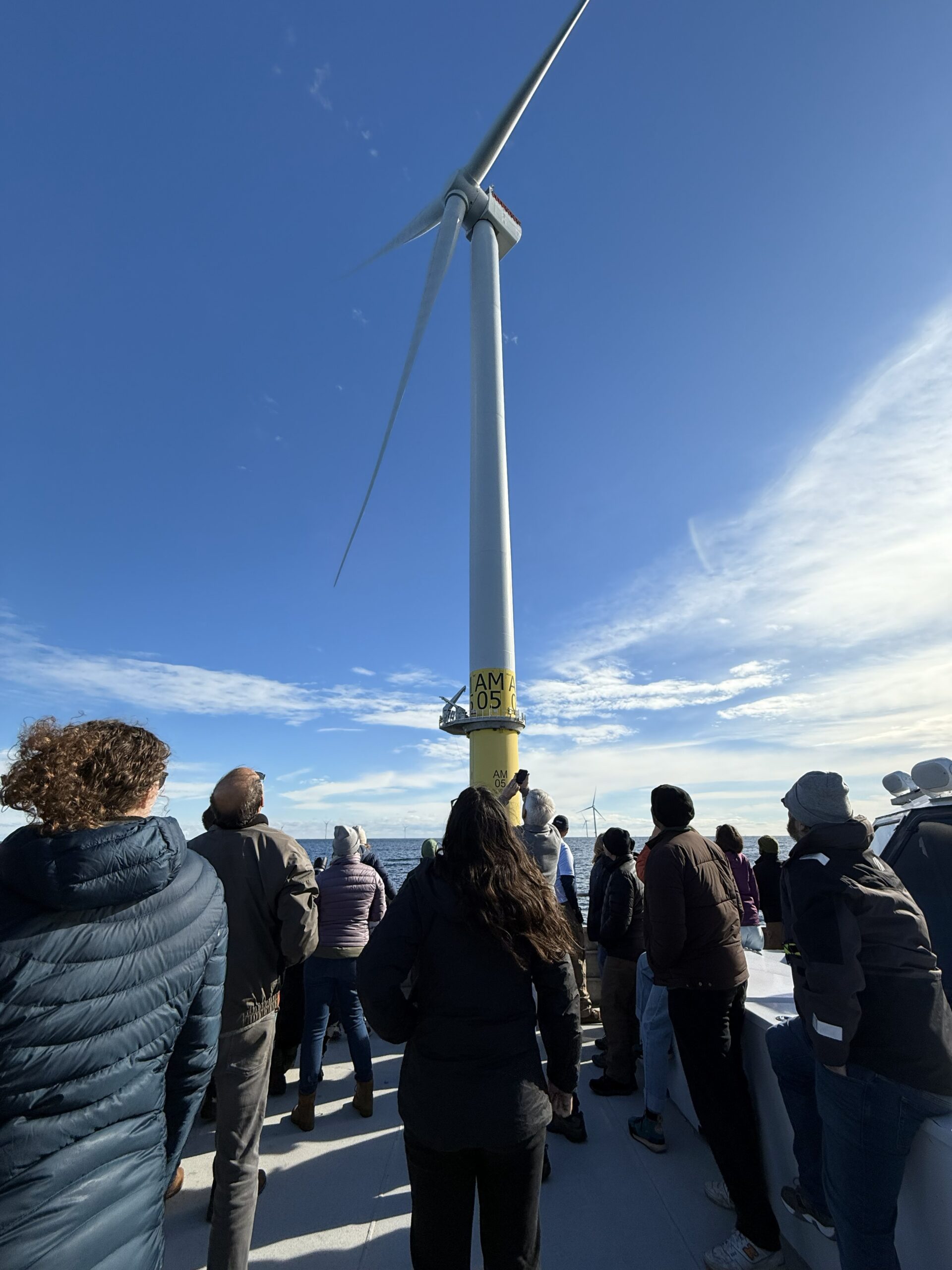
Across the crowd listening in attentive silence, what attendees noted most was the serene quiet as the turbine blades hypnotically turned above their heads.
“It was incredible,” said one attendee after the tour. “Getting right under the spinning turbines and hearing how quiet it was was amazing.”
Joel Angiolillo from Metrowest Climate Solutions echoed a similar awe: “Yes, quieter, more powerful than I realized.”
Operational offshore wind turbines do emit a continuous low frequency hum. These sounds are negligible—they pose minimal impact to wildlife, if any. But, continued monitoring and data collection at the project remains important to assuring the safety of wildlife.
Many on the tour also reflected on the size of the turbine blades overhead. Another attendee remarked that it gave them “an appreciation for the incredible scale of the infrastructure. These are marvels of engineering, and incredible feats of human innovation, and seeing how big it all was was just mind blowing.”
A Rhode Island offshore wind advocate added that having perspective on the scale of one nautical mile between the turbines at South Fork Wind was enlightening as well—he noted that seeing the distance between the turbines dispels the concern that fishermen would not be able to navigate between the turbines and fish within the lease area.
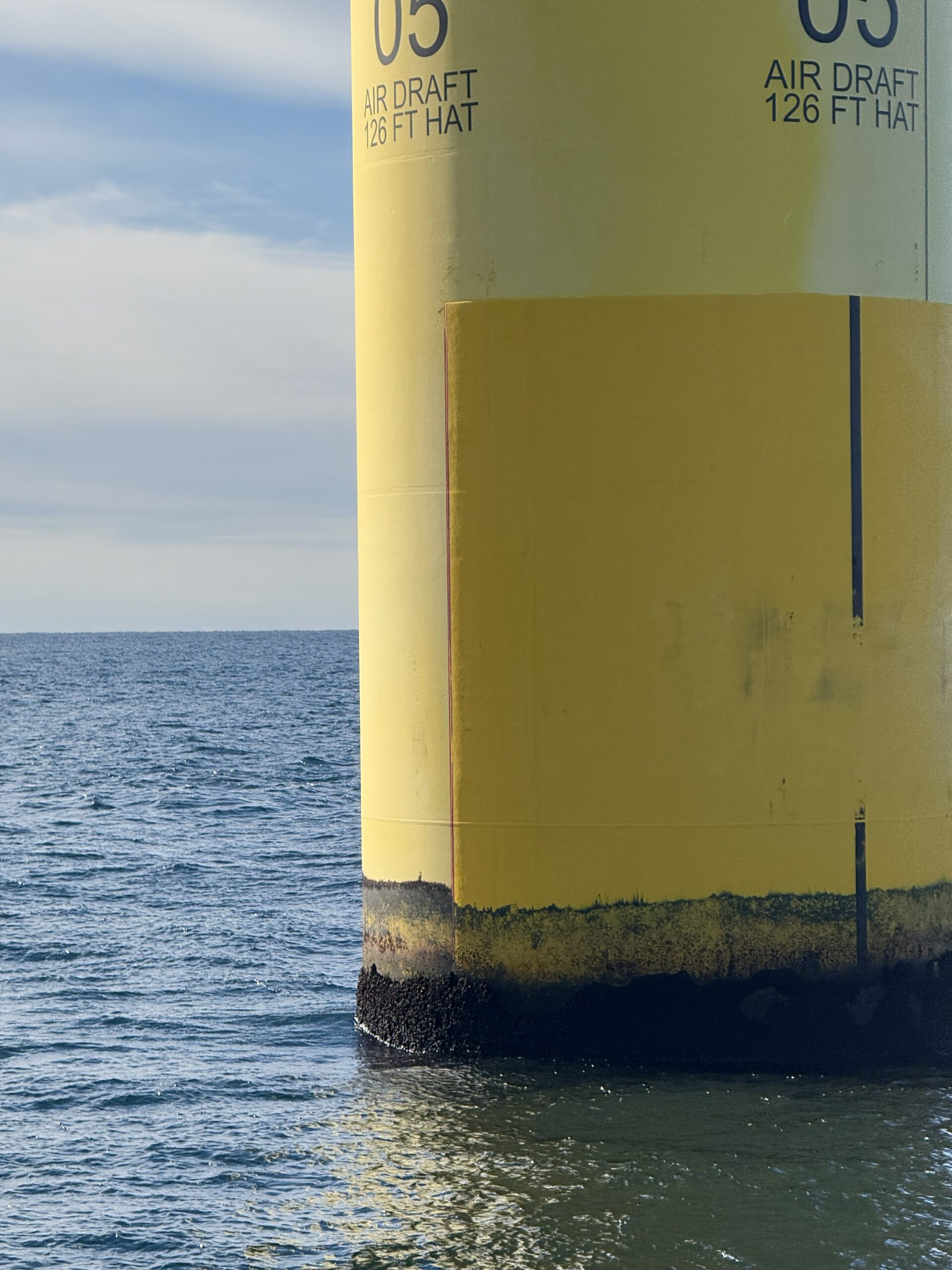
The ∅rsted representative spoke about their continual environmental impact mitigation strategies and marine life monitoring around the turbines. And, looking downward towards where the tower emerges from the water, we could see the reefs forming at the base of the turbines, rich with mussels, seaweeds, and other marine life attached to the yellow base.
Once the audio finished the ferry brought us out further to South Fork Wind’s substation, where the electricity from the turbines is collected and stabilized to prepare it for transmission to shore. Apart from the turbines themselves, the substation marks an important landmark in domestic energy production because it is the first American-built offshore wind substation. A team of more than 350 workers across three states—designing and engineering in Kansas, constructing in Texas, and installing in New York—supported the construction of the substation.
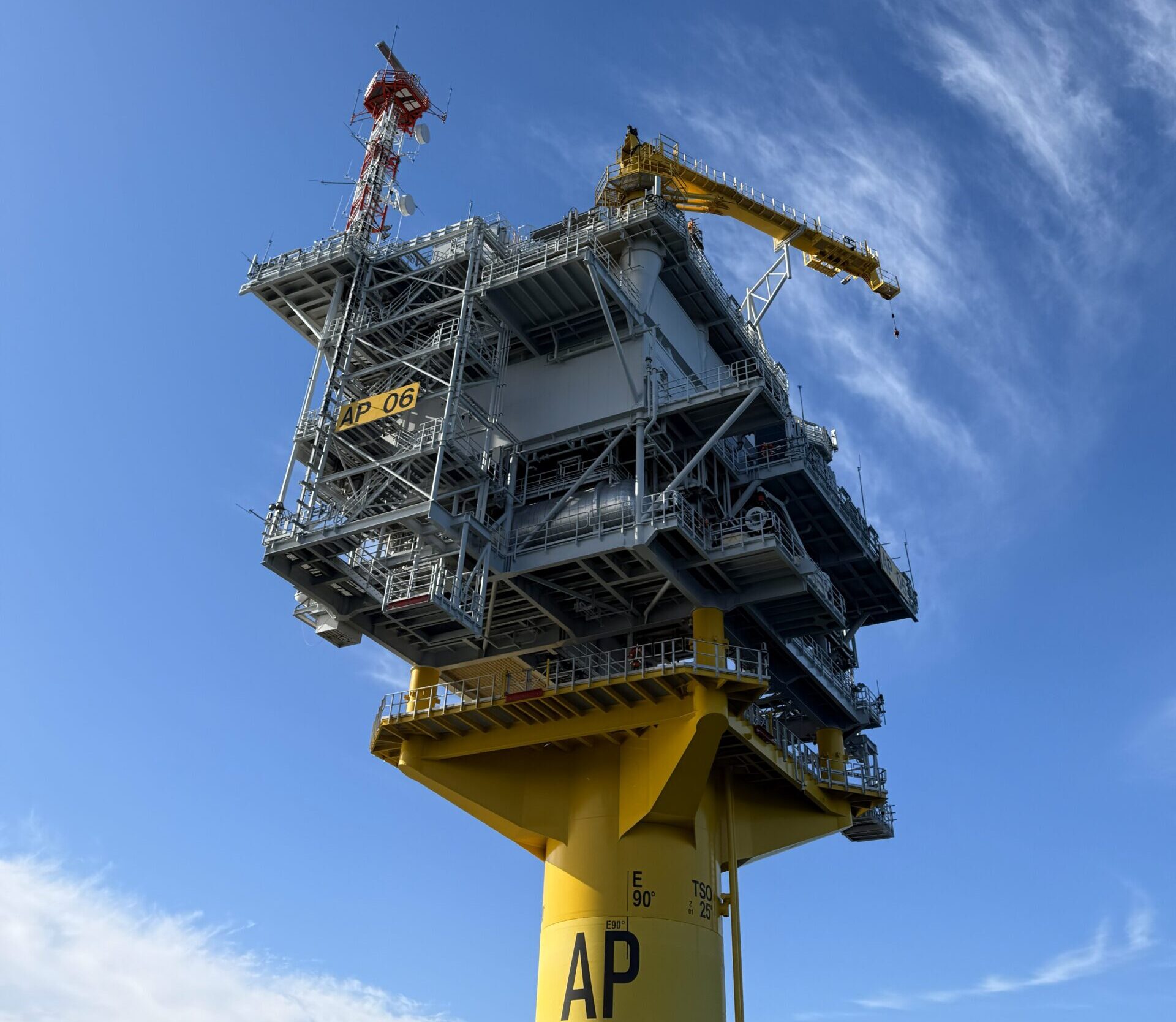
As we approached the substation, two workers came out onto the deck to wave to the onlookers on the ferry. One worker took a picture of us as the many offshore wind enthusiasts on the boat, dozens of yards beneath the substation, took pictures of him.

Returning to Shore and the Work at Hand
After waving goodbye to the substation, the ferry set course back to shore and the attendees moved inside to warm up, eat lunch, and continue their conversations with others onboard.
Despite the barrage of federal attacks to offshore wind this year, the passengers expressed that the tour overall gave them a renewed sense of hope during a time when advocating for offshore wind, and climate solutions in general, is so difficult.
“Even in these hard times,” Sanjay Arwade from UMass Amherst stated that, “seeing operating offshore wind farms was inspiring and energizing.”
Similarly, Mikaela Hondros-McCarthy from the Green Energy Consumer Alliance said, “I already believed offshore wind was a major tool we need to use at a large scale to decarbonize. It made me believe even more that it is what is best for the environment and our future by seeing them up close.”

Building Momentum: What’s Next for Beaver Conservation in Colorado