










We have much more to do and your continued support is needed now more than ever.
Ohio County Makes History: Residents Force First-Ever Vote to Overturn Wind and Solar Ban
Ohio Citizen Action.
Something unprecedented is happening in rural Ohio. For the first time in the nation, local residents have successfully collected enough signatures to put a wind and solar ban up for a vote—and they’re fighting to overturn it.
In May 2026, Richland County voters will decide whether to repeal restrictions that would prohibit large-scale renewable energy development in 11 of the county’s 18 townships. Richland County Commissioners voted in July to pass a resolution prohibiting wind and solar projects with little public notice or debate. The ballot question represents a grassroots victory and a potential template for communities nationwide.
How We Got Here
In 2021, Ohio’s legislature passed Senate Bill 52, giving local leaders veto authority over renewable energy projects that the state’s Power Siting Board would otherwise approve. About one-third of Ohio counties jumped at the chance to ban wind and solar development, including Richland County.
But SB52 included a provision allowing residents to petition to overturn these bans if they acted quickly enough. When Richland County enacted its restrictions, local residents had just 30 days to collect over 4,000 signatures—a daunting task that required mobilizing more than 100 petition collectors to go door to door and canvas at public events to reach the threshold.
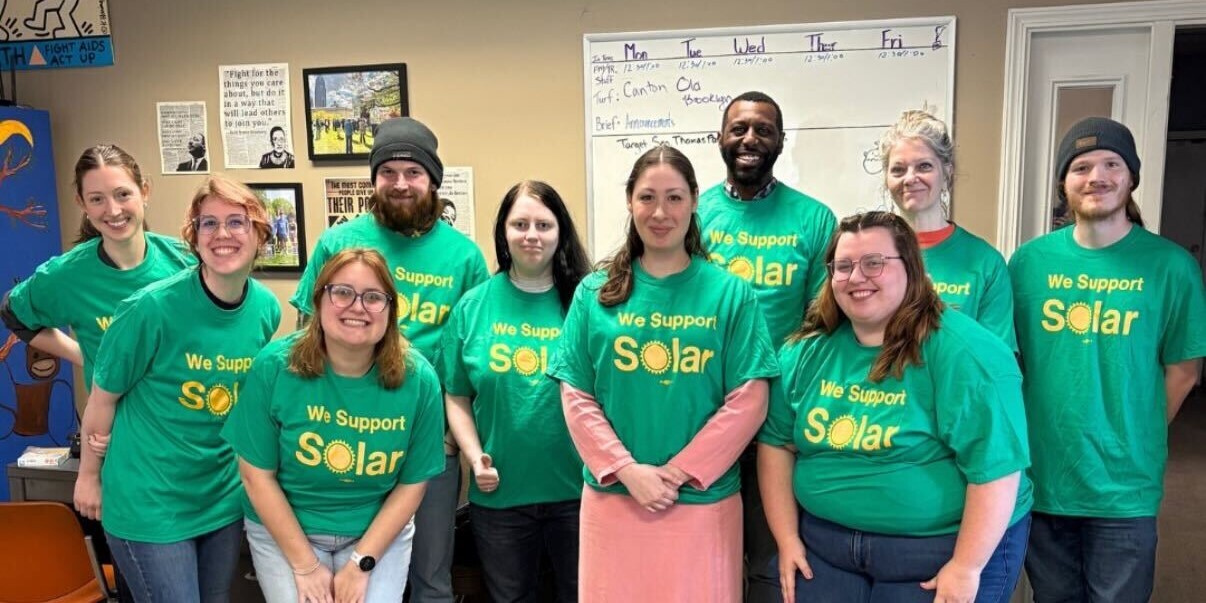
Working with the Ohio Citizen Action Education Fund, they pulled it off. Teachers, labor leaders, environmental advocates and other Richland County residents joined together to form a campaign team dedicated to giving voters a voice. On September 4, election officials confirmed the signatures were valid, clearing the way for the historic May 2026 vote.
Why This Matters
The campaign reflects something powerful happening in rural communities across Ohio and Appalachia. When given tools and encouragement, rural communities don’t just follow opportunities—they lead. Richland County residents understand what’s at stake: more local tax revenue for schools and infrastructure, good-paying construction jobs, long-term benefits for our climate and wildlife, and opportunities for family farmers to diversify their income while keeping their land in agriculture.
The data backs up their instincts. Polling shows 53% of Ohio voters want most of the state’s power to come from renewables, while two-thirds of conservative voters support getting at least half from renewable sources. Communities with utility-scale solar projects consistently report tangible economic benefits that help sustain rural economies.
Additionally, transitioning away from fossil fuels toward more renewable energy is good for the long-term health of our planet and beloved wildlife. Renewable energy reduces a host of other environmental threats, such as mercury pollution that poisons fish and wildlife in our waters, acid rain that harms our lakes and forests, as well as smog and toxic wastewater discharges from fossil fuel plants.
A Template for Democracy
Even before the election, Richland County has already accomplished something remarkable. They’ve shown that in an era of top-down political decisions, local residents can reclaim their power and force their communities to have difficult conversations about energy, economy, and the future.
If successful, their campaign will likely inspire similar efforts across Ohio’s remaining ban counties. More importantly, it demonstrates that rural communities are ready to lead on clean energy—if given the chance to make their own choices rather than having decisions imposed on them.
The May 2026 vote is still months away, but Richland County has already made history. Now they’re working to make change.
Tracy Sabetta is a consultant for NWF with Initiative Consulting.
