











We have much more to do and your continued support is needed now more than ever.
Slithering Through the Branches at Smith College
Habitat Restoration for the Arboreal Eastern Ratsnake at Smith College in Massachusetts
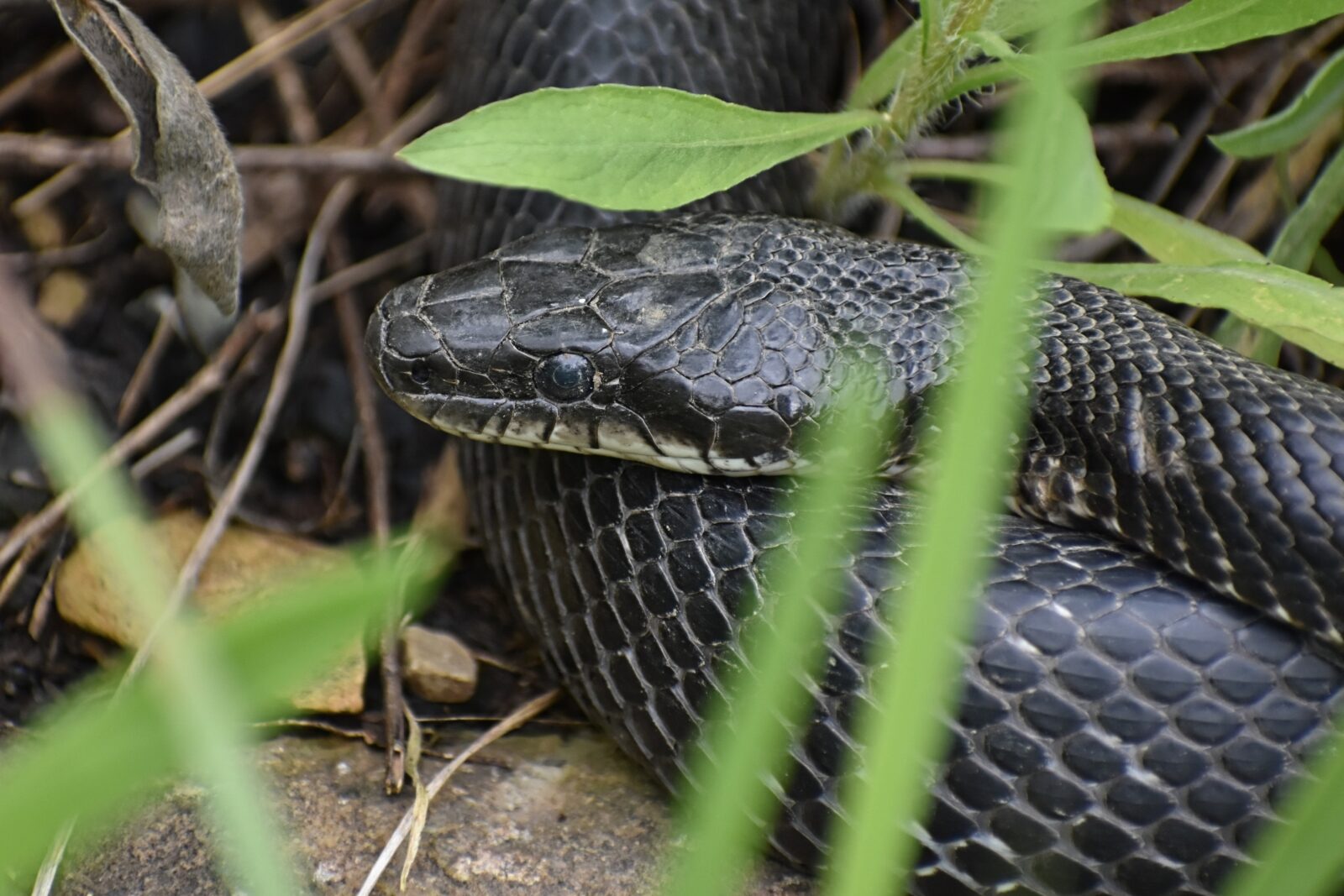
Eastern ratsnake. Credit: Brenda Lindsey
Species Overview
The eastern ratsnake, Pantherophis alleghaniensis, is an arboreal snake species, spending much of its time in trees. It hunts in both the tree canopy and on the ground, feeding on birds, rodents, and other animals. The appropriately named ratsnake is a key predator within its food web and is beneficial to humans in the way it keeps the rodent population under control. They can be found in a diversity of tree species—especially hardwoods—and prefer edge habitats where they can bask in sunlight and hunt at the transition from forest to open spaces.
The eastern ratsnake is listed as endangered in the state of Massachusetts and is featured in the Massachusetts State Wildlife Action Plan. Its current range reaches from Florida to Vermont, and may continue to grow northward into New Hampshire and Maine with the warming climate.
There are widespread threats to the population, such as the succession of old farmland into forests, resulting in a reduction of their ideal edge habitat. Another key threat to the naturally docile rat snake is poaching for the domestic pet trade.
The Ada and Archibald MacLeish Field Station (MFS), owned and stewarded by Smith College, is a 250-acre area of diverse terrain ranging from early successional grassland habitats to dense mature forests. Due to its prior farming history, MFS contains much of this desired edge habitat.
Through the Wild Kingdom Grant, in partnership with the National Wildlife Federation, we have restored nearly two acres of crucial edge habitat that had been previously taken over by non-native, invasive species such as multiflora rose, autumn olive, and Asiatic bittersweet.
Restoration

Habitat restoration opportunities for the state-endangered eastern ratsnake provide a new and exciting focus for conservation science at MFS. Habitat restoration began with vegetation control of invasive plant species, done with the goals of creating edge habitat and space for the planting of desired trees.
The next step is reforesting, with native trees matched to the snake’s preference for hardwoods, like oak and hickory, and perennial grasses suited to the landscape. Tree species better adapted to a future climate were also chosen to increase the ecosystem resilience, such as black gum and tulip poplar.
The project has provided experiential learning opportunities through course participation, internship experiences, and special conservation events. For example, an upcoming “Field Station Friday” event will include tree planting in the restoration area.
Through the “Natural Resources Conservation and Restoration” class taught by Paul Wetzel, students are given the opportunity for involvement in both the planning of the project and hands-on experiences with restoration methods. Student groups collaboratively determine tree planting locations in the restoration habitat and plan the hibernaculum design, which is discussed below. The entire class is helping remove invasives and plant trees.

Building of Hibernaculum
As a reptile, eastern ratsnakes brumate instead of hibernate meaning they are not fully asleep, but experience a reduction in metabolic activity allowing them to survive the cold temperatures of winter. They do not eat and may not drink during this time, relying on the food they accumulated over the fall and absorbing moisture through their skin for hydration. Brumation is typical of most reptile species, including other snake species, turtles, and lizards.
To successfully brumate, the species choose hibernacula, spots where they can stay undisturbed for the winter. They tend to choose rocky outcrops or debris fields, where the rocks above them can heat up during the day and help regulate the temperature. Other snake species will share hibernacula, so one single hibernaculum can host several individual snakes as well as multiple species. It has been found that the northern water snake will commonly share their hibernacula with ratsnakes!
As a result of habitat loss and fragmentation, the species may have a more difficult time finding these spots, so an artificial hibernaculum has been designed and will be built by students in the class.

The hibernaculum begins as a large hole about six feet deep, reaching beneath the frost line to help them conserve warmth. The bottom of the hole will be filled with large rocks with cavities and some dry leaves and grasses scattered around. This replicates the material that naturally occurs in the rodent burrows and tunnels that they typically use as hibernacula. Tunnels constructed with terracotta roofing tiles will allow snakes to move into the depths of the hibernaculum.
The tunnels and living area will then be strategically covered with soil and with openings surrounded by large rocks that will provide the snakes protection and warmth. An ancient apple tree next to the hibernaculum area will serve as a basking tree in warmer months. This addition of a hibernacula is new and innovative—this kind of restoration may be scalable across the landscape, encouraging snake populations to grow.
All Hands on Deck!
Conservation science is often about resourcefulness. Many of the new trees at MFS started their lives at a research site in Northern Wisconsin, in a similar habitat. At the end of her summer internship with the U.S. Forest Service, Alex carefully transported the saplings on a seven-day camping road trip back East.
The search for terracotta roofing tiles for the hibernaculum uncovered a stash in New Jersey, which were transported to MFS by friends of the project. The rocks for the hibernaculum are sourced from around MacLeish, some of which may have been used in colonial stone walls from the farming era. Conservation often relies on creativity and ingenuity to succeed!


Alex is a junior environmental geoscience student at Smith College, where she focuses on hydrology and soil science. She has worked at the MacLeish Field Station since her first year, where she developed a passion for land management and restoration. Alex served as an intern with the USFS Northern Research Station, and she brings her experience in forestry, ecological restoration, and scientific knowledge to the restoration project for the eastern rat snake. She plans to use the knowledge and skills gained from this project towards a career in fire ecology and wildlife conservation.
