





We have much more to do and your continued support is needed now more than ever.
“Think Global, Act Local”: 3 Lessons Learned from our Community Wildlife Habitat™ Leaders

Greater Stonehaven Community, Charlotte, NC, Community Wildlife Habitat. Credit: Ernie McLaney
“Think globally, act locally” has been a bedrock value in environmentalism since it was introduced in similar terms by Patrick Geddes over a century ago. Time and time again, we see that local and individual action are critical hallmarks of environmental activism.
Since 1998, the Community Wildlife Habitat™ program has been preparing individuals, volunteers, community groups, and local governments across the country to think globally and act locally through tailored programming.
Our national network of community partners has been proving for almost 30 years that healthy habitats and healthy communities go hand in hand. Investing in sustainable initiatives and advancing environmental projects right where you live, work, play, and worship can truly make a difference for your local community, the next generation, and the many pollinators and other wildlife that call your community home.
Communities across the country are proving that thinking globally and acting locally makes a difference.
The Community Wildlife Habitat program partners with cities, towns, counties, neighborhoods, and communities of all kinds to become healthier, sustainable, and more wildlife-friendly. Community Wildlife Habitat teams work to engage the community through workshops and community events that educate residents about sustainable gardening practices and encourage residents to be advocates for wildlife and sustainability.
By reaching habitat certification requirements through Certified Wildlife Habitats® and Schoolyard Habitats®, this program helps create pockets of habitat that connect individual properties to other and larger habitats, including parks, urban forests, and more.
There are nearly 380 community wildlife habitats across the nation. Of them, 197 have registered and are working towards certification, and 182 communities have reached certification and work to recertify on an annual basis.
Through programs like Community Wildlife Habitat, individuals don’t have to carry the responsibility of organizing local projects to better their community alone, and they don’t have to start from scratch. We hope these stories remind you of all the ways, small and big, that we can all show up for our communities.
3 Lessons Learned from our Community Wildlife Habitat Leaders
1. People Will Show Up to Create Community Habitats
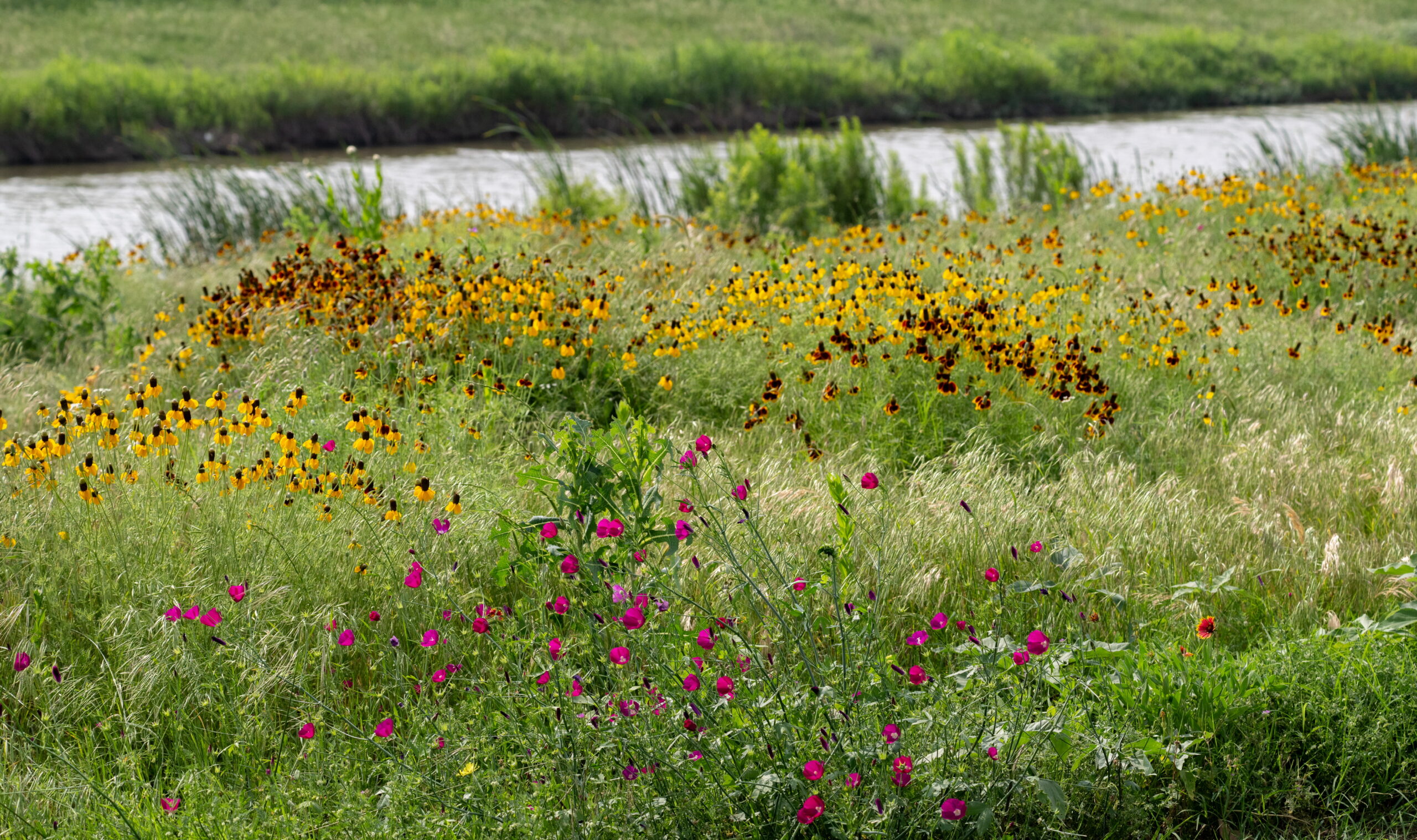
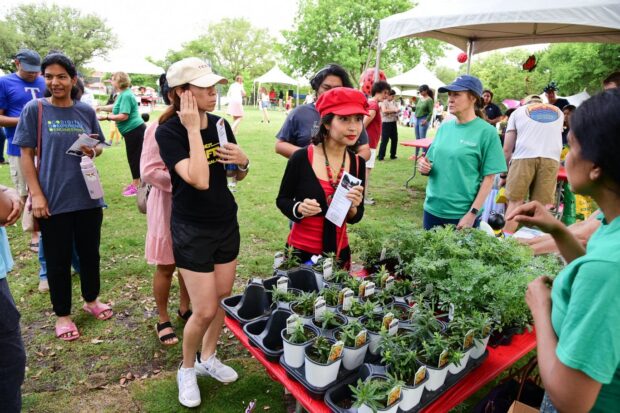
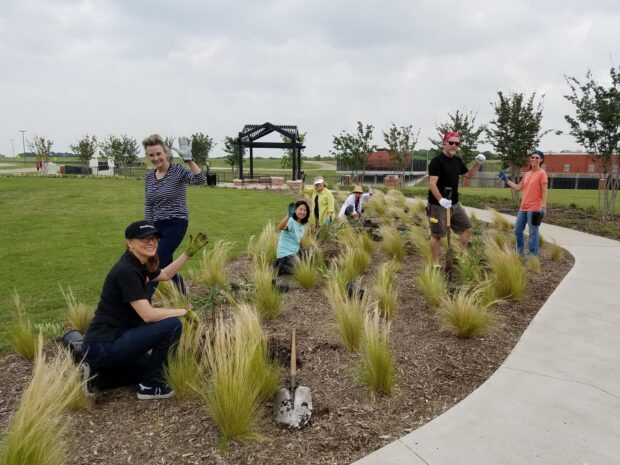
Valley Ranch is an HOA/neighborhood in Texas that gained certification as a Community Wildlife Habitat in 2024. To achieve their local environmental goals, the team successfully converted a 4-acre parcel of land along the Trinity River Elm Fork spillway from Bermuda grass to a native wildflower and grass prairie. Volunteers logged over 400 hours in the first 3 years.
2. Healthy Habitats and Healthy Communities Go Hand in Hand
Montclair, NJ, reached certification as a Community Wildlife Habitat 16 years ago and was the first community in the state to do so. One of the team leaders, Jose German Gomez, serves on the Montclair Parks and Recreation Advisory Board, and also runs the Northeast Earth Coalition (NEEC), an urban farming and environmental advocacy group in the tri-state area.
Through NEEC, German-Gomez runs a “Little Free Pantry” program that provides shelf-stable groceries to food-insecure families across Montclair and other communities. NEEC is the creator and host of the “Acting Locally for a More Sustainable World Conference,” hosted at Montclair State University, where attendees are encouraged to join Community Wildlife Habitat efforts.

With the support of dedicated volunteers and other team leaders, the team runs eight community gardens across Montclair and neighboring communities.
In 2023, Montclair’s Pine Street garden supplied the local soup kitchen with more than 1,450 pounds of fresh produce. These efforts showcase that showing up for our community members and supporting a sustainable, vibrant environment doesn’t need to be mutually exclusive.
In 2022, following ongoing and collective efforts to increase local green space through Community Wildlife Habitat, the town council officially passed the Jose German-Gomez Native Species Act that requires 70 percent of all plants and trees planted on town property to be native to the mid-Atlantic and Northeast regions of the United States.
Wilmington, NC, reached certification in 2024. Their effort is led by the Gardening for Wildlife committee of the Cape Fear Garden Club, with support from the Lower Cape Fear Wildlife Chapter of the North Carolina Wildlife Federation. In March 2024, community volunteers came together on North Carolina Arbor Day to plant native trees like the Brandywine Red Maple, Serviceberry, and River Birch at Eden Village.
Eden Village is a community designed to support chronically unhoused individuals. This project showcases how community members can come together on something positive and that they build relationships through shared volunteer opportunities, planting events, and community science projects.

3. Your Work Can and Will Inspire Others
Elm Grove, WI, reached certification in 2023. That same year, the Elm Grove community habitat team hosted a meeting in Brookfield, WI, to connect with individuals interested in bringing Community Wildlife Habitat to their community. This effort evolved into a first-of-its-kind “Tag, You’re It!” program, and as of 2025, they have worked to get six other communities to join the Community Wildlife Habitat program in the state of Wisconsin.
New Berlin, Pewaukee, Brookfield, Greenfield, Wauwatosa, and Menomonee Falls have all registered in the program and are working on crafting goals to reach certification. Local nonprofit, Waukesha County Green Team, brings together these Community Habitat teams every other month to network and collaborate on efforts to help gain certification. They are on the path to making Waukesha County the first county in the state of Wisconsin to be certified!!
In 2023, four counties in Northwest Indiana—Lake, Porter, LaPorte, and Starke—reached certification in our program, working together to make them the first multi-county region to do so. Team leads are active in mentoring neighboring communities as they go through the certification process. They continue to inspire Indiana residents by participating in NWF’s Affiliate, the Indiana Wildlife Federation’s annual conference.
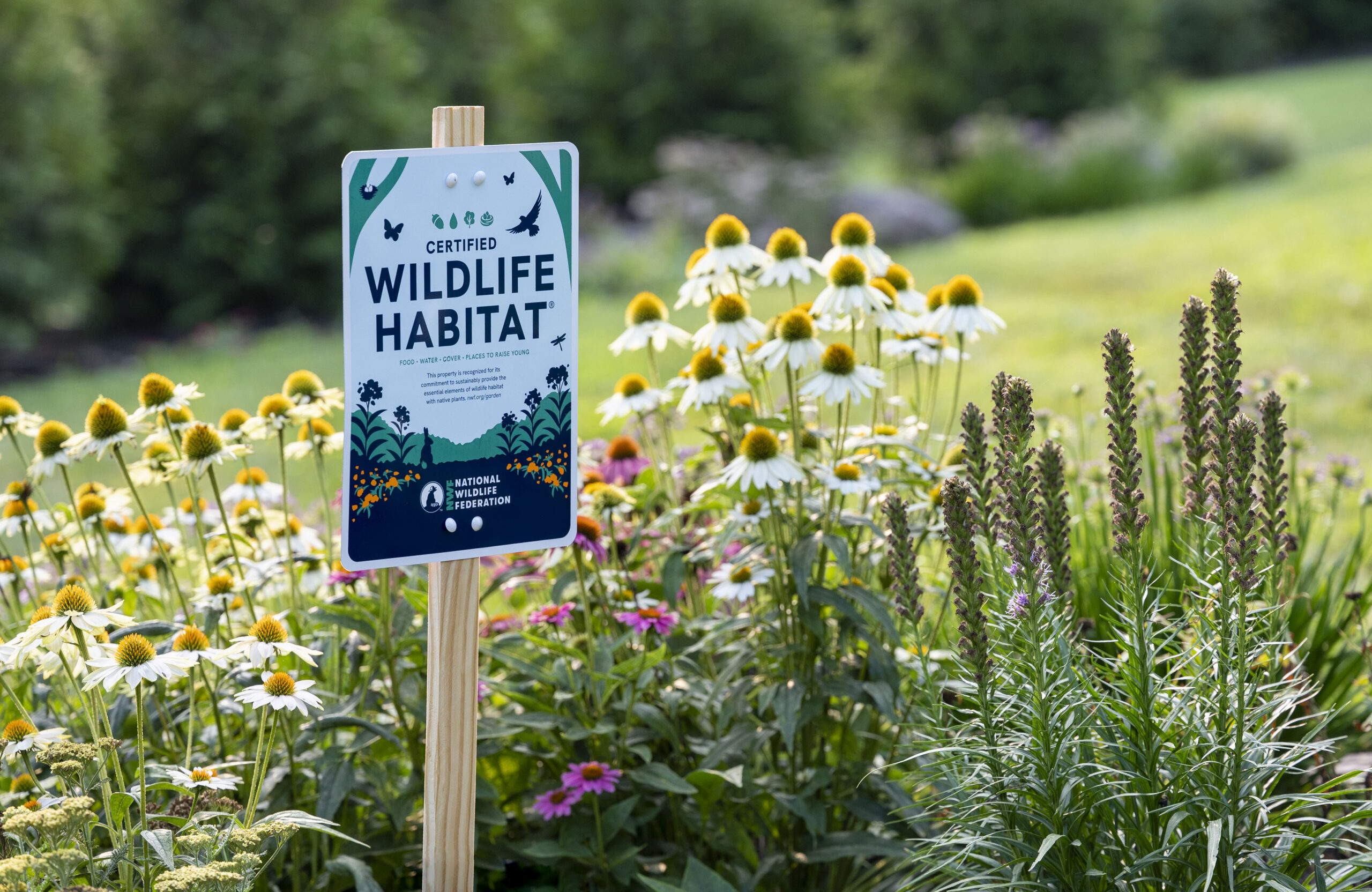
Our network demonstrates how passionate, driven, and organized individuals are the bedrock of our national network. These leaders are stepping up to meet goals around sustainability, food access, and restoring and enhancing wildlife habitat, especially for birds and pollinators.
Any individual can take meaningful action where they live, learn, play, and worship.
If you are overwhelmed by the challenges facing people and our planet, you are not alone, and you don’t have to act alone. Our national network proves that community-driven conservation has the capacity to address systemic issues and can help build meaningful community bonds and partnerships along the way.
Through programs like Community Wildlife Habitat, any individual or community can gain the tools needed to address local environmental issues like biodiversity loss, urban heat islands, flooding, or food deserts. Think global, act local. Consider starting your own Community Habitat Team today!
