















We have much more to do and your continued support is needed now more than ever.
CECC Roundtable Event Recap: Data Centers, Local Perspectives, and Community Impacts
The Clean Economy Coalition of Color (CECC) is an alliance of some of the nation’s most insightful Black, Latinx/é, Indigenous, Asian, and Pacific Islander leaders and advocates of color. This blog highlights some key takeaways from our January 8th CECC roundtable.
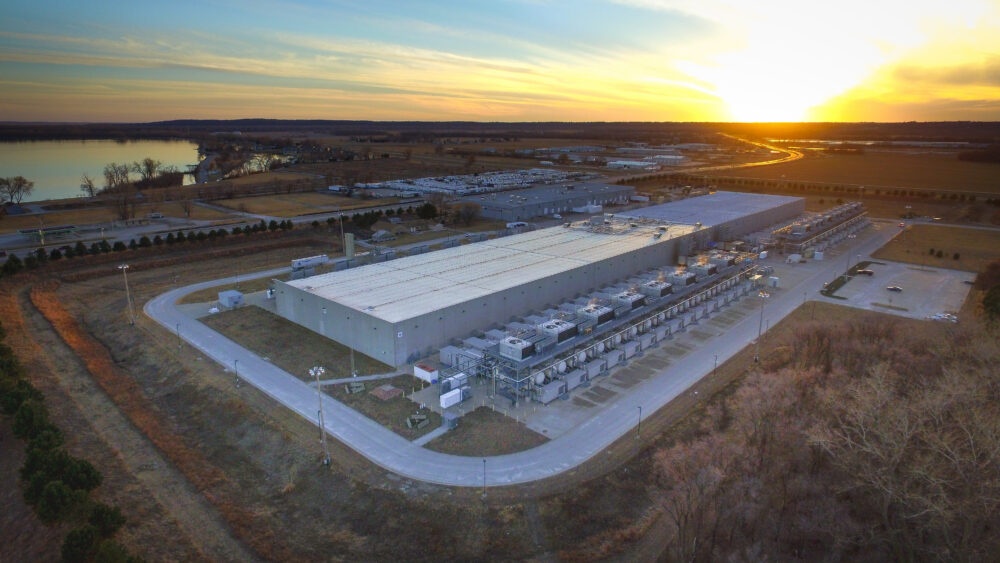
Artificial Intelligence (AI) data centers are being built across the country, and communities are concerned and asking questions about them, including: What exactly are they? Where are they being built and why? And do they affect communities, and if so, how?
The National Wildlife Federation’s Environmental Justice, Health, and Community Resilience and Revitalization program (EJHCR2) explored these questions during its first Clean Economy Coalition of Color (CECC) Roundtable of 2026.
This is the first in a series of roundtables focused on issues related to AI data centers. We brought together advocates and experts who are working to understand the challenges that the number and siting of data centers could, and in some instances do, pose to communities.
Meet The Panelists

Marquita Bradshaw is the Executive Director of Sowing Justice in Memphis, TN.

Sharon Lewis is the Executive Director of the Connecticut Coalition for Economic and Environmental Justice and Chair of the Connecticut Zero Waste Coalition.

Dr. Rania Masri is the Co-Director and Director of Organizing and Policy for the North Carolina Environmental Justice Network.
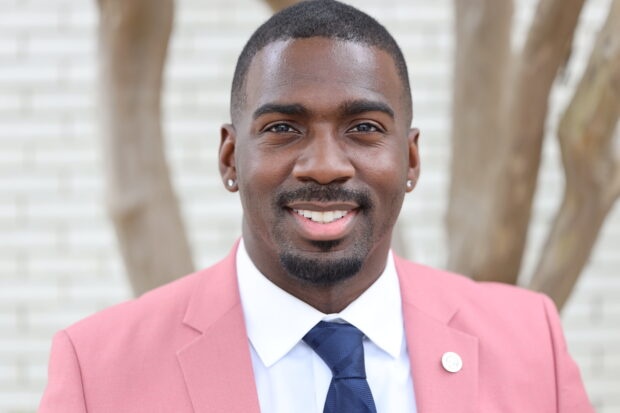
KeShaun Pearson is the Executive Director of Memphis Community Against Pollution (MCAP).

Dr. Khalil Shahyd is the Natural Resources Defense Council’s (NRDC) Senior Strategist for Environmental Equity, Green Finance & Economic Development.
Key Takeaways
During the almost two-hour conversation, panelists discussed several community concerns regarding data centers—including transparency in siting and construction, job creation versus public costs, environmental and public health impacts, and others.
Across topics, the messages were clear: community voices must be centered in decision-making, communities need more transparency in decisions that potentially impact public health and the environment, and advocates must continue organizing and stand in solidarity as this new and evolving issue unfolds.
What follows are key issues that panelists discussed during the roundtable conversation and how they are showing up for communities.
Communities are Concerned
If there is one thing that the A.I. Data Centers: Local Perspectives and Community Impacts roundtable emphasized, it is that there are real stories behind the impacts of these data centers, and communities need to have a say in their construction and siting.
Marquita Bradshaw, Executive Director of Sowing Justice, put into words the concerns of the Memphis, TN community when she described how they pushed back against the xAI data center. She describes the facility as one intended to be a centralized hub for mining data from around the world.
Marquita expressed pride in the fact that Memphians are fighting the big industries that are pushing data centers. “Our organizing is so resilient,” Marquita said. “Who would have thought organizations with less than sometimes $100,000 a year would be on the frontlines fighting data centers and winning.”
While these facilities overutilize resources like water and energy for their own benefit, communities are left to bear the burden, with limited opportunities to give public input on data centers. As Dr. Khalil Shahyd put it, communities are channeling their concerns by leveraging the voice of the grassroots and exploring how to exercise their power strategically.
Communities and advocates alike must continue organizing, engaging in local zoning and energy boards, donating (monetarily and with time) to organizations doing the work, consistently holding elected officials accountable, and, for leaders who feel inclined, running for office.
The takeaway from panelists is to show up and make your concerns heard, especially for underserved communities. Although actions are no guarantee of a solution, without them, the outcomes are almost certain—more data centers impacting more communities. As Dr. Masri put it, “data centers are not inevitable. This is a fight we can win.”
Lack of Transparency
From Memphis, Tennessee, to Prince George’s (PG) County, Maryland, and other communities where residents are fighting back against data centers, our panelists named gaps in transparency as a major concern. When asked about the early warning signs of data center construction, panelists mentioned that these facilities are often sited in communities that have been historically redlined, are low-income, exist near industrial pollution, and have abundant water and energy supplies.
Dr. Masri added that information sharing about data centers can be different depending on the community being targeted. She spoke about two counties in North Carolina, both facing data center development proposals, Wake County (a high to middle-income, predominantly white county) and Edgecombe County (a lower-income, predominantly Black county).
“The way information has been shared in those two examples has been strikingly different. In [Wake County], we have the proposal, we have the details, we know what they are planning to do. Versus [Edgecombe County], we’ve been fighting for the details, we’ve been fighting to get some information,” Dr. Masri said. “So not only is there an encouragement for these extractive industries to go to lower-income communities, and Black and Brown communities, there also is a discrepancy in the transparency of information that they provide.”
The discussion laid bare how, in many cases, community members do not know these data centers are in their backyards until it is too late. Our panelists mentioned that a lot of decisions that allow data centers to be placed in communities happen in secrecy.
This is made possible by local decision-makers who have sanctioned land purchases and changed zoning laws under non-disclosure agreements (NDAs) to facilitate the construction of data centers. The lack of transparency about these processes limits community access to information about potential impacts, including energy costs, water use, and environmental pollution.
Economic Impacts
Panelists also discussed the economic promises, particularly job creation for communities, and the impacts of data centers. Contrary to the information developers provide when data center projects are pitched to communities, quality job creation has proven mostly untrue.
Dr. Masri mentioned that data centers are actually taking jobs away from communities. “The myth that we have to accept these harms because these data centers bring us jobs. Well, they do quite the opposite,” she said. Dr. Masri continued to estimate that, “in the next 2 to 10 years, generative AI will take away 1 billion jobs globally.”
To Sharon Lewis, this point is illustrated by the very architecture of data center campuses. “I visited several AI data centers in the United States, and there is one thing that I noticed that would prove that they’re lying about the jobs,” Sharon said. “These massive buildings have tiny parking lots.” Sharon continued.
The panelists mentioned other economic issues, including some stemming from tax incentives received by data centers in some states. According to research from Good Jobs First, states like Texas, Virginia, and Illinois experienced significant tax revenue losses and very limited economic benefits despite the hefty subsidies. They did not benefit economically from data center siting.
Communities that are already disproportionately harmed by environmental pollution are now facing resource demands and potential public health impacts from data centers moving in. It begs the question of what the public utility of these facilities is and who they serve, because it certainly does not appear to be the communities they are housed in.
Environmental and Public Health Impacts
The panelists also discussed the same concerns heard from other environmental justice communities—the environmental and public health impacts of data centers, including water and energy use, as well as air and noise pollution.
One of the panelists, KeShaun Pearson, discussed how communities in Memphis are concerned about the pollution added to their environment by the xAI data center and what it means for their health and safety. KeShaun described how some data centers operate using methane gas turbines, producing pollutants like nitrogen oxide (NOx) and formaldehyde—which is linked to asthma and other respiratory illnesses.
“In Memphis, at the xAI facility, Elon Musk used up to 33 methane gas turbines to power the facility,” KeShaun said. “To help you understand how much air pollution that is, it outpaced the Memphis International Airport,” he added. In less than a year, xAI has become one of the largest emitters of NOx in Shelby County—with estimates, according to the Southern Environmental Law Center (SELC), reaching 1,200 to 2,000 tons a year. If data centers continue to operate on multiple natural gas-powered generators, air pollution and public health impacts will continue to be a concern.
In terms of water use, estimates suggest that large data centers consume vast amounts of water daily, with some developers digging wells to quench the thirst of these facilities. Daily use can sometimes reach up to 5 million gallons per day, or the equivalent of the water use of a small town. Communities already struggling to access clean and safe water now risk having heavily depleted water resources by these centers, with potential for regional water insecurity.
Conclusion
This CECC Roundtable exemplified the level of care that each panelist has for communities regarding AI data centers. Each panelist emphasized that communities are in need of support and solidarity. To quote Dr. Masri, whatever organizing you are doing now, “take it up a level.”
The importance of data centers and their accompanying challenges is evident not only by the information shared by the panelists but also by the more than 1,100 people who registered for this roundtable and the questions and comments that resulted.
The conversation does not end here. Be sure you check out the second CECC roundtable in our series focused on data centers. We will explore the current policy landscape and issues related to public health.
A recording of this roundtable can be found here. Join Us in Advancing Environmental Justice. Sign up for the Environmental Justice, Health, and Community Resilience and Revitalization program’s quarterly newsletter and follow us on Instagram.
