






We have much more to do and your continued support is needed now more than ever.
Lift as We Climb: Fostering Environmental Stewards through Earth Tomorrow

Earth Tomorrow Houston students and staff at Friedkin Group for the Summer Institute kick off, June 16, 2025.
Earth Tomorrow has been investing in leadership training and environmental education for youth on the frontlines of the climate crisis for more than 30 years. The program is tailored to provide youth with year-round opportunities to engage in environmental advocacy while offering a lifelong continuum of engagement for every participant.
In June 2025, Earth Tomorrow Houston brought together high school students, peer mentors, NWF staff, and various grassroots partners for their 3rd annual Summer Institute, hosted at the University of Houston. This week-long retreat is carefully designed to orient students to the legacy of conservation, community organizing, activism, and the vast career and educational opportunities for these budding leaders.
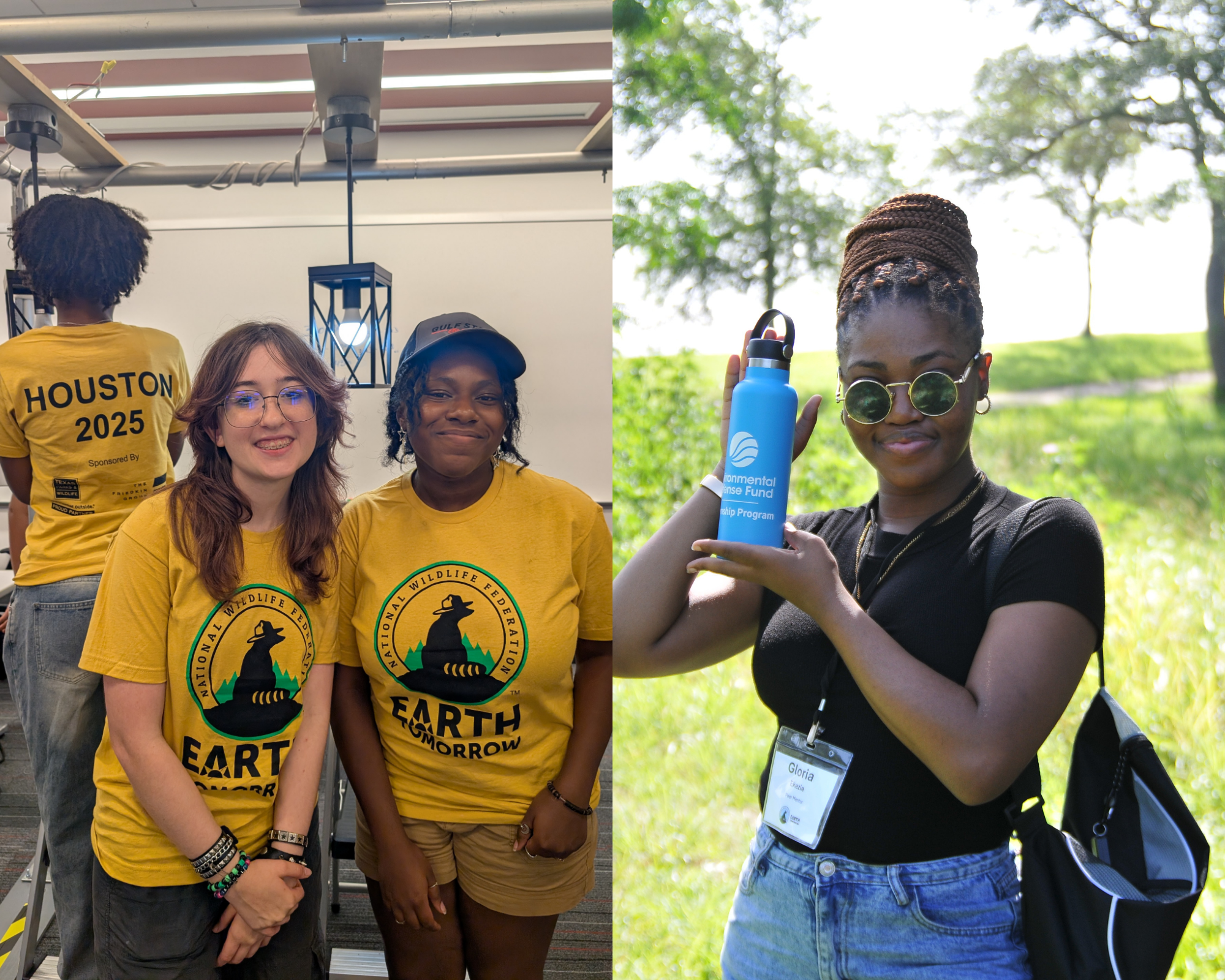
This annual, youth-centered retreat brings together students from diverse communities across Texas to make deeper connections between conservation, environmental justice, and the multifaceted solutions available to all of us. We know that in healthy ecosystems, the diversity of community members, structural processes, and biological legacies makes them more resilient and stable in the face of change.
These same principles apply to the conservation movement. Racially diverse, gender-diverse, and culturally diverse groups are better at asking deeper questions and solving complex problems. Earth Tomorrow recognizes that all of us have a stake in our natural resources, and supporting a diverse and inclusive profession allows our goals for wildlife and natural landscapes to be more relatable and impactful for everyone.
Rooted and Resilient: Embracing Dr. Bullard’s Environmental Justice Legacy
The retreat, which kicked off at Texas Southern University (TSU), was the perfect venue to launch this conservation and justice-centered retreat. TSU serves as the incubator for the Bullard Center for Environmental and Climate Justice, a research center founded by Dr. Robert Bullard, a pioneer of the environmental justice movement. Dr. Bullard was one of the earliest contributors who helped design the Earth Tomorrow program, back when it was just a small program operating in Detroit Public Schools.
Earth Tomorrow students spent the first day basking in not only this legacy but the legacy of TSU as a prominent Historically Black College or University (HBCU) in Texas. They spent the afternoon with TSU’s 2025 HBCU EJ Climate Corp, where they exchanged questions and ideas with college students from across the country who are devoted to environmental justice, conservation, and advocacy.
In partnership with the Friedkin Group and BridgeYear, students participated in career simulation models to learns about accessible lines of education and employment outside of traditionally prioritized four-year models.
Exploring Houston’s Political and Ecological Landscapes
Day two of the Summer Institute was an exploration into the political and environmental landscapes that define Houston. Students spent the morning with the Texas Parks and Wildlife Foundation learning about the city’s efforts to create fun, accessible, outdoor recreation opportunities through programs like Neighborhood Fishin’.
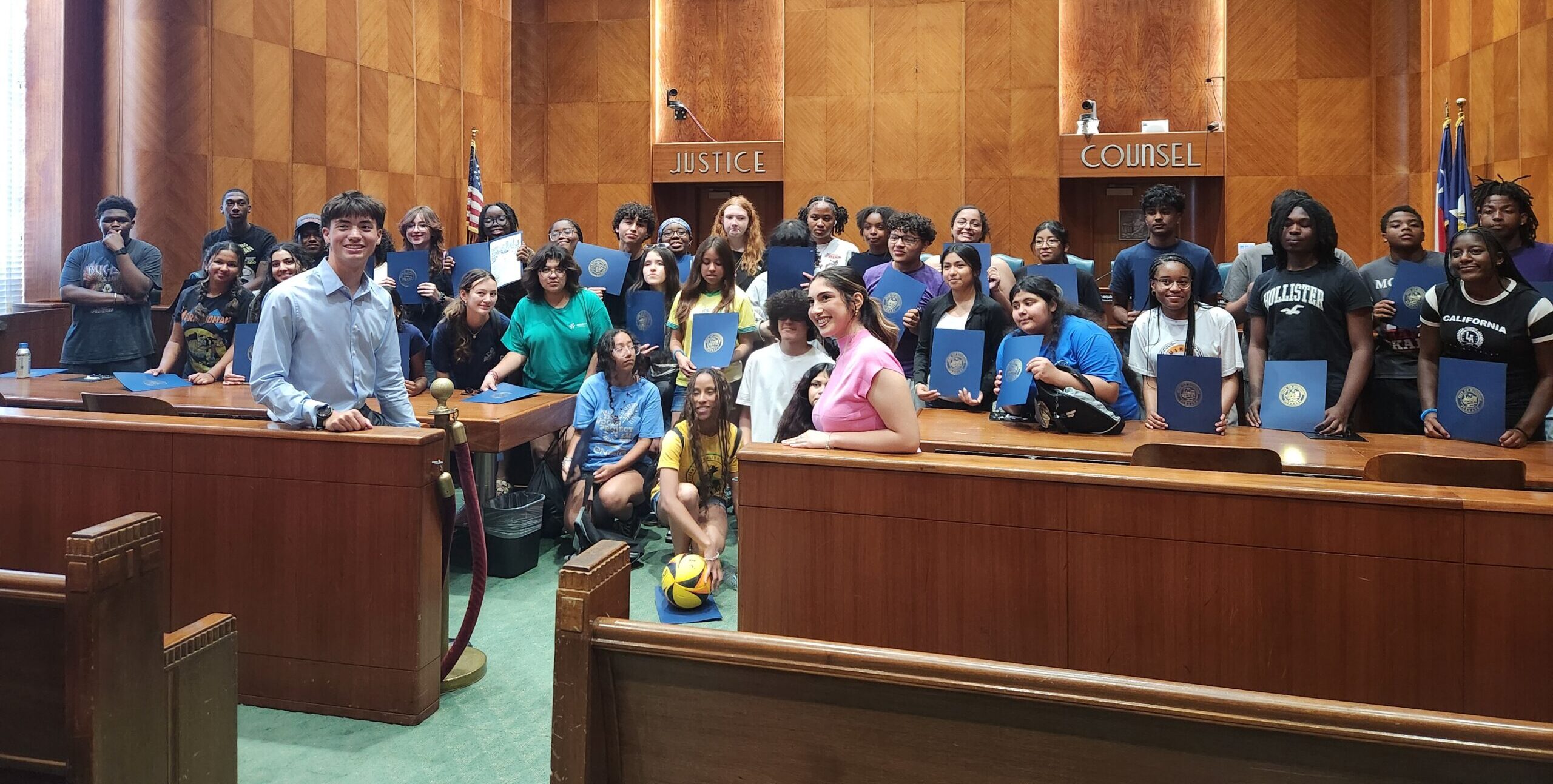
Students got hands-on experience in fish catching, casting, and releasing, as well as education on the science behind fishing regulations and local conservation efforts. The afternoon focused on civic engagement with a tour through Houston City Hall and the Houston Public Library, led by Bayou City Waterkeeper and Alief Votes.
Day three started with a visit to Trinity Bay Discovery Center, where students explored local watersheds and got to learn about water quality testing, seining, and bay bird adaptations. In the evening, students, peer mentors, and NWF staff took to Huntsville State Park for an overnight camping trip, a first for many students. Students and peer mentors worked together to set up tents, play games, kayak, cook out, and enjoy a scenic night hike together.
Once back on the University of Houston campus, students gathered for NWF’s College and Career Fair, where small groups had the chance to participate in rotating interviews and meet-and-greets with professionals working in conservation, civic engagement, higher education, state parks, and more.

Next Steps for the Next Generation
The Summer Institute is just one highlight of Earth Tomorrow’s year-long programming. When students are back in school, they will work in small teams to execute on self-designed environmental action plans. Throughout the week, students integrated lessons learned from their hands-on experiences into their school-specific eco-action plans. These school-based teams came together to refine and finalize their plans that will guide them in advancing environmental justice back home on their campuses and in their communities.
All this work culminated in a final showcase, where the students could present their eco-action plans to family, donors, participating organizations, and members of the community. We concluded the retreat with a keynote address from Marcus Sibley, NWF’s Northeast Region NY Metro Director of Conservation Partnerships. When asked for reflections regarding his time in Houston, the longtime speaker & environmental justice activist shared,
“It was such an honor to witness the powerful youth presentations delivered during the 2025 Houston Earth Tomorrow Summer Institute closing ceremony. The thoughtfulness and quality of the eco-action plans were a testament to the experiences and knowledge gained throughout the program. Grateful for the opportunity to speak to the future torch bearers about Environmental Justice, and more importantly, the necessity of centering justice in all conversations and efforts pertaining to the environment and conservation.”

This year’s Houston Summer Institute illuminated the various pathways of justice paved by those who came before, while guiding the next generation to forge their own unique path. Alongside our trusted partners and community members, we fostered an environment that prioritized joy and connection, helping us support the skills, relationships, and confidence of youth on the frontline of the climate crisis.
Building and protecting legacies means prepping ourselves and the next generation with the skills and mindsets needed to weather storms and rebuild afterward. We need all hands on deck, and all of us, including wildlife, will benefit.
