










We have much more to do and your continued support is needed now more than ever.
Honoring the Past to Imagine the Future
Reflections from the Clean Economy Coalition of Color’s October 2025 Environmental Justice Roundtable
The Clean Economy Coalition of Color (CECC) is an alliance of some of the nation’s most insightful Black, Latinx, Indigenous, Asian, and Pacific Islander leaders and advocates of color. This blog series recaps key themes from roundtables and reflections from the Environmental Justice team. You can read previous blogs here.
In the 34 years since the first National People of Color Environmental Leadership Summit, communities across the country have continued fighting for a future where they can breathe clean air, drink safe water, and live in healthy environments. The landscape of environmental justice is ever-changing, shaped by shifting political climates, evolving community needs, and emerging technologies. Yet the core of the movement remains the same: people coming together to create solutions that center community and honor their lived experiences to create a healthier, sustainable, and more just future.
This October, the Clean Economy Coalition of Color (CECC), hosted by the Environmental Justice, Health, and Community Resilience and Revitalization program at the National Wildlife Federation, held a roundtable webinar to capture a real-time snapshot of where the environmental justice movement stands today. The roundtable featured the National Wildlife Federation’s Environmental Justice Advisory Council, which consists of leaders who have worked in the Environmental Justice space for decades and whose vision and leadership have shaped local, national and global progress.
The conversation, moderated by Dr. Mustafa Santiago Ali, NWF Executive Vice President, and Dr. Adrienne Hollis, Vice President of NWF’s Environmental Justice, Community Health, Resilience, and Revitalization program, was expansive, energizing, and deeply grounding. Participants across the country joined to listen, ask questions, and share their own frontline experiences. What emerged was not just an update on the state of environmental justice, but a powerful call to action for the work ahead.
Meet the Panelists
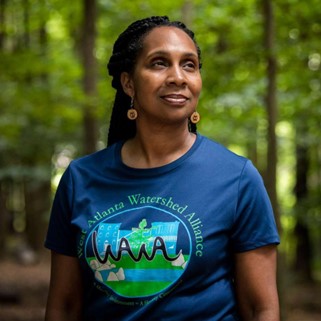
Board chairperson of the West Atlanta Watershed Alliance and cofounder of the Atlanta Earth Tomorrow® Program

CEO of the Women’s Network for a Sustainable Future and Board member and trustee at the Center for International Environmental Law

Director of New Alpha Community Development Corporation

Director of Community Outreach & Engagement with We the People Detroit
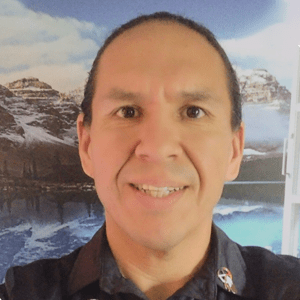
Director of Development and Managing Director of Red Cloud Renewable
The State of Environmental Justice Today
Dr. Mustafa Santiago Ali opened the conversation with a reminder that environmental justice work is both deeply urgent and deeply human:
“You cannot get through a single day without having an impact on the world around you. What you do makes a difference, and you have to decide what kind of difference you want to make.”
– Jane Goodall
He also reflected on James Baldwin’s reminder that love and justice require awareness:
“If I love you, I have to make you conscious of the things you don’t see.”
From there, panelists painted a nuanced picture of the present moment, one marked by uncertainty at the federal level but powerful momentum in states, municipalities, and grassroots organizations. New environmental justice siting laws, community benefits agreements, water affordability campaigns, cultural organizing, and youth-led innovation are reshaping what is possible.
Key Themes from the Conversation
1. Community-Driven Solutions Are the Heart of Change
Across every story and project shared, one message was clear: sustainable change begins in community. Panelists emphasized that frontline communities carry not only the burden of environmental harm but also the wisdom, strategies, and cultural traditions needed to solve it. Whether it be through watershed restoration in Atlanta, renewable energy training on Pine Ridge, or water affordability work in Detroit, community ownership is what gives movements longevity.
“We see [a cross-watershed and intergenerational approach] as a part of the solution to the challenges that our communities face. We also believe that our communities have the right to environmental self-determination. So in terms of the changes that we face and the solutions that we want to see to address the issues that our communities face, [our communities] have a right to call out what those solutions should be. And we also have a right… to diagnose what those problems are, so that we can address them in the most robust way possible.”
– Dr. Na’Taki Osborne Jelks
“[We the People of Detroit]… was really founded on self-determination and cooperative work around making sure that families were not losing their children because they could not afford their water. …we had to roll up our sleeves, and as one of our elders says, we had to deputize ourselves. We couldn’t wait on anyone to save us or rescue us… we begin to organize ourselves. Out of that work came the Community Research Collective.”
– Monica Lewis- Patrick
2. Technology, Culture, and Imagination Are Powerful Tools
From GIS mapping and water testing innovations to solar installation, storytelling, and cultural healing practices, the panelists underscored that environmental justice requires both technical and creative approaches. Communities are using technology to build evidence, assert sovereignty, and reimagine their futures. But it is creativity, culture, and imagination that make these futures feel possible.
“[Red Cloud Renewables] equips [Indigenous communities] with the skills necessary to install solar, be on the forefront of what we think is a clean energy movement in this country, and our training program at the Red Cloud Renewable Energy Center in Pine Ridge is, I would say, a one of a kind, and first of a kind… You know, there are 574 tribes. And I would say a handful can really define energy sovereignty for themselves… [We are] creating solar warriors. We equip these people with the skills necessary to get out there and normalize deployment.”
– John Red Cloud
“Another project we’re working on with Stanford and UCLA is to do water testing, and to pair that with GIS mapping, so that our young people have more skills that they’re bringing into these conversations, so that they understand what is happening, but they also are the communicators and translators to our older members of our community, so that we’re building power together. And so with that, they’re laying over top of that cultural work, animation, so all of this is about skill building and making our community members the experts in their own crisis.”
– Monica Lewis-Patrick
3. Policy Change Requires Persistence, Partnerships, and Pressure
Panelists discussed the evolving terrain of policy, noting both wins and losses. While certain federal environmental justice supports have been rolled back, many state and local governments are stepping in with new commitments. The message was clear: the movement must remain strategic, collaborative, and bold. Large nonprofits and institutions were called upon to more intentionally share resources and decision-making power, invest in community capacity, support local leadership, and stay committed even when the political landscape shifts.
“… We keep talking about the collective, and so the power is in that collective, it’s in the solidarity, it’s in the unity. It’s really about staying the course and doubling down… I know that some larger organizations have had to make shifts in terms of the language they’ve been using on their websites and that sort of thing. But what I feel like is most important is that the spirit of that collaboration has not gone away. And if those organizations can really just stay the course… I believe ‘that this too shall pass’ in terms of this moment that we’re in. And if you abandon us now, we will remember. So stay the course.”
– Dr. Na’Taki Osborne Jelks
4. Rural Communities Face Unique Challenges and Offer Powerful Solutions
Reverend Woodberry and John Red Cloud highlighted the specific needs of rural and tribal communities such as youth out-migration, underinvestment, and limited access to technical assistance. Despite these challenges, they emphasized how rural communities are also leading in renewable energy development (solar initiatives, hydro-panel projects), cultural revitalization, land-based education, and more. Their work shows how climate solutions can also be pathways to economic resilience and sovereignty.
“Rural communities are really losing a lot of our youth because there’s really no, what we call ‘engines of economic development’. But then again, there are assets that are in rural communities, land, forest, water or food. Things that if we can control, we can actually start to move communities from surviving to thriving… Our approach is that we start on the grassroots level, but then we replicate from there the work that we’re doing. So our approach is demonstration, and then after demonstration, replication, and after replication, amplification.
So a good example of that was when we were working with the Chisholm Legacy Project and National Wildlife Federation… We began using hydro panels, first [to generate drinking water] at the church, where I blessed,… then at our EJ Training Center in Brittons Neck, South Carolina where we have a 2,600 square foot building on seven and a half acres of wetland property. We use that as a drip water irrigation system to water the garden that we have. [Then we were able to amplify our work] and have them placed in individuals’ homes in Jackson, Mississippi, as well as 21 panels in Sand Branch, Texas, a Freedman community.”
– Reverend Woodberry
5. The Future Requires Collective Action
Every panelist affirmed that environmental justice is not a solitary effort; it is a shared movement that belongs to young people, elders, organizers, scientists, teachers, artists, and policymakers alike. Their closing reflections echoed a simple truth: we create change when we move together. In her final remarks, Dianne Dillon Ridgley built on the “Women’s Creed” (1995) and said:
“The people are speaking. And the people, when they speak, no longer will wait, and we cannot be stopped! We’re poised on the edge of the future. No map before us, a taste of fear sharp on our tongue, but we’re gonna leap! And the exercise of imagining is the act of creation. The act of creation is an exercise of will. And yeah, this is political, but it’s also possible… But you’ve got to believe it! Believe it, my sisters and my brothers. For we are the ones who will transform the world.”
Final Reflections
Environmental justice is a long arc built by generations who organized before us and those who will carry the work into the future. This roundtable reminded us that while the challenges ahead are significant, our communities are powerful, visionary, and deeply committed. As I run into obstacles and navigate burnout in this work, I find myself inspired to come back to the basics. This is not a battle that is won alone, but a path that is walked across generations, hand in hand with the communities I love.
The leaders who joined us have spent decades imagining a better world and building it piece by piece. For many of us who are of a younger generation of social, civil, and environmental advocacy, it was a hopeful reminder that this is not the first time there have been obstacles or roadblocks. It will certainly not be the last. But with perseverance, community care, and a united vision, change does come. The tools at our disposal are plentiful, and the embodied knowledge within our own communities to innovate solutions is limitless. The words of wisdom from the many traiblazers of this movement light the path forward and remind us that it is now up to all of us to keep walking, one step at a time.
Looking Ahead
The next CECC Roundtable, Data Centers: Local Perspectives and Community Impacts, will take place on January 8th, 2026 from 6-8pm EST. It will explore the intersection of artificial intelligence, data centers, and environmental justice, an emerging issue with real implications for frontline communities. Register for the event here!
To stay connected, sign up for the Environmental Justice newsletter and visit the National Wildlife Federation YouTube channel to watch recordings of past roundtables.
Join Us in Advancing Environmental Justice. Sign up for the Environmental Justice, Health, and Community Resilience and Revitalization Program’s quarterly newsletter and follow us on Instagram.
