






We have much more to do and your continued support is needed now more than ever.
Reflections from a Fellow: Redesigning Carbon Removal to Serve Communities First
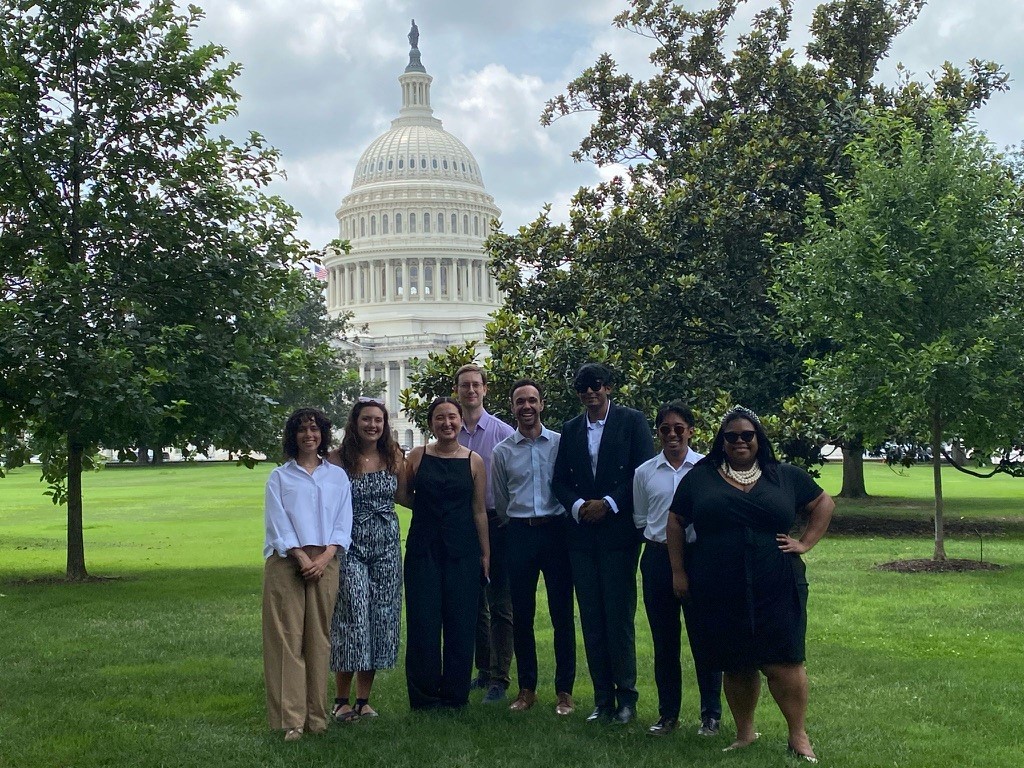
Credit: Brenna Boehman
This summer, I joined 12 other fellows through the National Wildlife Federation and Institute for Responsible Carbon Removal (IRCR) Fellowship to examine the intersection of carbon dioxide removal (CDR) and environmental justice (EJ).
As a geochemist and entrepreneur, I’ve approached CDR from the perspective of science and systems: how to quantify carbon flows, how to engineer carbon solutions, and how to scale them. But this fellowship invited me to step back and ask, what does it mean to build climate technologies that are not just effective, but just?
CDR is often framed as essential to climate justice. Even if we reduce emissions dramatically, we still need to draw down CO₂ to stabilize the climate and protect frontline communities. But environmental justice is not about hypothetical future benefits. It is about righting past harms, respecting community autonomy, and addressing the real, place-based impacts of industrial development, especially in fenceline communities already burdened by pollution and disinvestment.
The tension is clear. Many current CDR approaches don’t align with these justice goals. The largest and most established carbon management projects are engineered systems, like CO₂ capture and storage, often co-located with fossil and/or industrial infrastructure. Promising nature-based solutions remain hard to quantify and monetize. Across both, communities are too often asked to accept nascent technologies without clear accountability, meaningful participation, or the right to decline.
Coming into this fellowship, I was already convinced that CDR must center environmental justice. But I wasn’t sure what that would look like in practice. Two months later, I’m still sitting with that uncertainty. What’s clear is that the way we’re currently building and funding CDR, especially in venture-backed startups, is structurally at odds with the principles of co-creation and community refusal.

The previous administration’s White House Environmental Justice Advisory Council (WHEJAC) called for exactly this: that communities should have the right to co-create projects and to say no.
These principles have shown up in previous federal requirements, like Community Benefits Plans (CBPs) in DOE funding, and are supported by many carbon credit buyers, but CBPs often function as opt-in frameworks for projects already in motion. Community Benefits Agreements (CBAs) can go further, offering legally binding terms and revenue-sharing, but these are still rare.
Authentic partnerships in business
For startups, this level of engagement can feel impractical. But I’ve seen examples: companies partnering with local organizations, hosting town halls, building relationships over cookouts. When done well, these efforts reduce project risk by building local trust and avoiding costly delays. When done poorly, the community pushback can cancel a project entirely. From an operator perspective, meaningful engagement isn’t just the right thing to do, it is a better business strategy.
But we have to ask, can a venture-backed industry with a mandate to scale quickly really commit to the pace and patience co-creation requires? What would it look like if communities could choose which kinds of projects they wanted, whether for job creation, public health, or ecosystem repair, and then co-own the upside? And who can communities trust when universities, consultancies, and government agencies are often funded by the same industries that created the harm?

These are systemic questions. During the fellowship, our conversations often returned to the limits of what’s possible within the current economic system. Can we expect equity from processes built to prioritize profit and speed? No one, myself included, has a clear answer. But we have a responsibility to act now, to ensure that this nascent industry does not replicate the same harms that legacy industries have inflicted on environmental justice communities.
I’m inspired by the people we met—organizers, public servants, researchers—who are asking these questions from the frontlines and pushing toward better answers. From D.C. to Louisiana, advocates and innovators are advancing environmental justice and carbon removal in parallel, but there is still work to do to link the two and design solutions that address multiple forms of harm at once.
For those of us in the CDR space, there is still a narrow window to do this differently. We can build new institutions: entities that support co-creation, facilitate binding community benefits agreements, and help communities assess risk and make informed decisions.
We can explore models that treat CDR as a public good, like sanitation or energy, with governance structures designed for durability and equity. We can develop technologies that remove not just carbon but co-pollutants, especially in environmental justice communities.
Most importantly, we can start now. Even in the absence of perfect policy or market incentives, we can engage communities today. Because building trust takes time, and if we want CDR to be a tool for justice, that work can’t wait.

Building Momentum: What’s Next for Beaver Conservation in Colorado