









We have much more to do and your continued support is needed now more than ever.
Event Recap: Climate Disasters: Stories of Resilience and Preparedness
The Clean Economy Coalition of Color (CECC) is an alliance of some of the nation’s most insightful Black, Latinx, Indigenous, Asian, and Pacific Islander leaders and advocates of color. This blog is the first of a series of CECC event recaps and takeaways.
On September 9th, 2025, the Environmental Justice, Health, Community Resilience and Revitalization program hosted a Clean Economy Coalition of Color roundtable titled “Climate Disasters: Stories of Resilience and Preparedness” to discuss how panelists have addressed, prepared for, and remained resilient in the face of intensifying climate disasters. Panelists discussed the real-world impact of changing environmental policies on frontline and fenceline communities, approaches to disaster preparedness, and the role of community power in response to climate change-induced events.
This CECC discussion centered around disaster preparedness, aligning with both National Preparedness Month and the 20th Anniversary of Hurricane Katrina. It was timely to hear directly from community leaders, experts, and advocates who are on the frontlines of disaster response and resilience.
Panelists
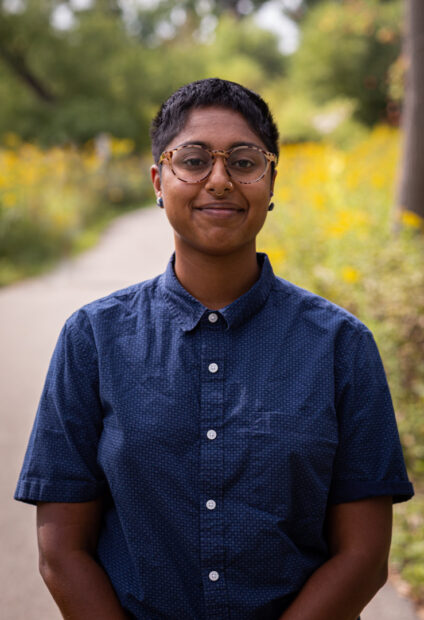
Pooj Ravindran (they/them) Pooj Ravindran has served with Chicago’s 40th Ward as Director of Constituent Services and later as then Chief of Staff. Pooj is now on Ald. Vasquez’s team as the Director of Policy and Chief of Staff for the City of Chicago’s Committee on Immigrant and Refugee Rights. Pooj has a great interest in making sure the government serves the interests of ALL people, especially those who have been minoritized and continue to face repression. Pooj was in the solar industry for many years before pivoting into government, and has extensive experience with program development, management, and strategic planning.

Omar Muhammed (he/him) Omar Muhammad has worked as a community advocate and activist since 2007 as a volunteer for the Lowcountry Alliance for Model Communities (LAMC). Omar has been instrumental in leveraging relationships with academics and governmental agencies to assist in the development of a Health Impact Assessment (HIA), other projects to address legacy pollution in low-wealth communities, and the redevelopment of underutilized properties into productive spaces such as parks and green spaces. He is the former Executive Director for Lowcountry Alliance for Model Communities.
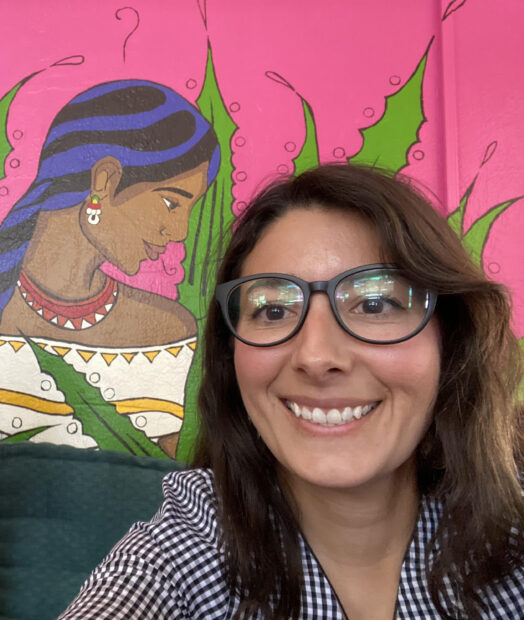
Norma Chairez-Hartell (she/her) Norma Chairez-Hartell is an artist, curator, and anthropologist whose work along the U.S./Mexico border includes founding the Murales Fronterizos project and listing Chope’s Town Café on the National Register of Historic Places. She has curated for cultural institutions, including the City of Las Cruces Museums System, the El Paso Museum of History, and the New Mexico State University Museum, where she also taught introduction to museology. Norma now works with the Hispanic Access Foundation as a Community Navigator, helping connect Community-Based Organizations with Forest Service Funding opportunities.
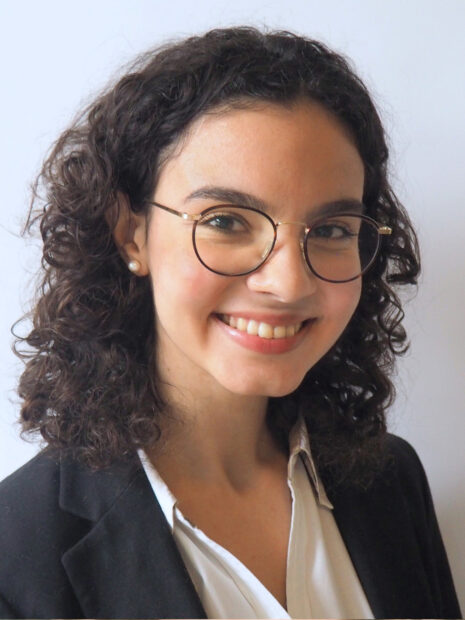
Hana Abdelatty (she/her) Hana Abdelatty is the assistant director for the extreme heat resilience pillar at the Atlantic Council’s Climate Resilience Center. In this role, Abdelatty supports microinsurance efforts, the Extreme Heat Resilience Alliance, and the Chief Heat Officer network. She is responsible for providing research and policy analysis, event and communication support, and project coordination. Abdelatty has worked internationally at various organizations such as the University of California, Los Angeles (UCLA) Luskin Center for Innovation, the United Nations Framework Convention on Climate Change (UNFCCC), and the Munich Security Conference. Hana has employed research, community engagement, and policy analysis to assist with the development of climate adaptation and extreme heat solutions for communities across the world.

Diane Pataki (she/her) Diane Pataki serves as the Chief Scientist and Vice President for NWF Science. Trained as an ecologist, her work has spanned the impacts of climate change on ecosystems, the role of human and biological processes in air and water resources, and interactions between urbanization, landscape management, and biodiversity. Her recent projects have been focused on nature-based solutions for sustainable cities and communities.

Courtney Foley (she/her) Courtney Foley is the Senior Director of Strategic Partnerships at the Climate Action Campaign, a vibrant coalition driving ambitious, durable, equitable federal action to tackle the climate crisis. She worked at American Bridge as their Tracking Director and led a team of over 40 field researchers. Previously, Courtney was the Deputy Field Director at the National AFL-CIO, designing and executing campaigns for affiliated unions. Courteney has an MBA from the George Washington University and is originally from Mississippi.
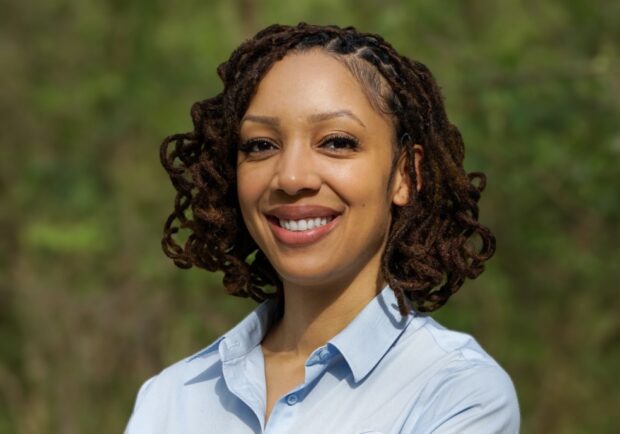
Corina Newsome (she/her) Corina Newsome is the Conservation Scientist at the National Wildlife Federation, working to advance community-led, justice-centered biodiversity conservation in cities. With a specific passion for avian conservation, Corina’s research has focused on understanding how we can help birds thrive in a changing climate. In addition to her work as a wildlife biologist, Corina is committed to increasing the representation and visibility of Black science professionals for the next generation of STEM experts and centering the leadership and perspectives of Black and Brown communities in wildlife conservation, environmental education, and exploration of the natural world.
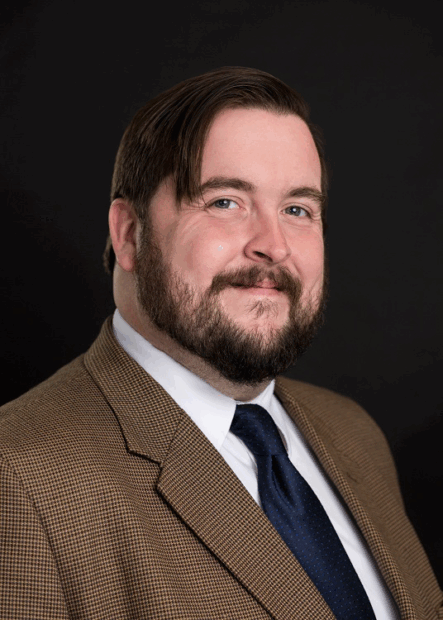
Andrew Kleiner (he/him) Andrew Kleiner is the Director of Community Science at the Academy of Natural Sciences of Drexel University, where he leads initiatives that connect communities with scientific research through biodiversity monitoring, climate resilience, environmental justice, and ecological restoration. Previously, he spent over a decade at the Lehigh Valley Economic Development Corporation, advancing brownfield redevelopment and building regional partnerships for economic development across 62 municipalities in eastern Pennsylvania. Andrew holds a Master’s in Environmental Science (Conservation Biology) from Johns Hopkins University and a B.S. in Environmental Science from Muhlenberg College.
Key takeaways
Strengthening partnerships are important to improving disaster response
Panelists emphasized that while preparedness efforts across the country remain fragmented, cooperation among organizations, governments, and communities can close those gaps. Abdelatty noted the current state of disaster preparedness is “lacking a unified approach,” and Newsome said “despite this fragmented setting, communities have crowdsourced and really worked together.”
The emphasis throughout the discussion was that while fragmentation is still a reality, partnerships, shared learning, and mutual support are gradually creating more effective preparedness networks.
Impacted communities need to be centered in disaster preparedness and recovery efforts
One of the most consistent themes was that authentic resilience comes from communities themselves, not from top-down government approaches. Muhammed expressed that “Our communities have always been resilient. The solutions are co-developed from the ground up.”
His comment comes from years of experience working with South Carolina residents who live in flood-prone neighborhoods and create their own disaster plans. Rather than waiting on federal or state responsiveness, communities are documenting hazards, mapping flood zones, and building mutual aid networks.
Panelists agreed that centering residents in developing preparedness and recovery plans is what creates lasting resilience. Chairez-Hartell mentioned, “There are always voices that are not included, and that is usually frontline and fenceline communities who don’t have a seat at the table.”
When communities are trusted to identify problems and create solutions, the plans made reflect local realities and build future trust. Disaster preparedness must start at the neighborhood level. Similarly, the power of community science was highlighted as a vital tool throughout these stories. Pataki described how “giving people the tools to collect data about where they live” helps fill in the gaps that often leave these front and fenceline communities from receiving aid and funding.
Community members are experts of their own experience, and Kleiner captured it perfectly by saying, “they [community members] know what is happening, and they are experiencing it.” These experts need to be included on every level.
Greater civic participation can shape local policy-making to better reflect community needs
The discussion also called for greater coordination and transparency in government processes (local, state, and federal) to encourage civic engagement, along with the importance of federal funding advocacy. Pataki warned, “We’ve had to shift from focusing on science to protecting science,” urging advocacy efforts around climate programs and funding. Ravindran echoed this on a local level by calling communities to “be proactive rather than taking a defensive stance” by pushing for better coordination and funding literacy.
Foley solidified these calls to action by reminding us all that coalition building and civic engagement are sustaining progress even in these uncertain times.
This CECC, Climate Disasters: Stories of Resilience and Preparedness, conveyed a clear and powerful message: disaster preparedness thrives when communities take the lead. As climate change worsens, disasters will happen more frequently, and their impacts won’t be felt equally. Similarly with all environmental justice issues, lasting change happens when we center the voices and expertise of people directly impacted by climate disasters.
Recording of the event and previous CECC roundtables can be found here, and if you’re interested in learning about the next CECC webinar, follow us on Instagram @envjustice_nwf and sign up for our newsletter.
