









We have much more to do and your continued support is needed now more than ever.
Spotted Owls: A Proven Strategy Against Extinction
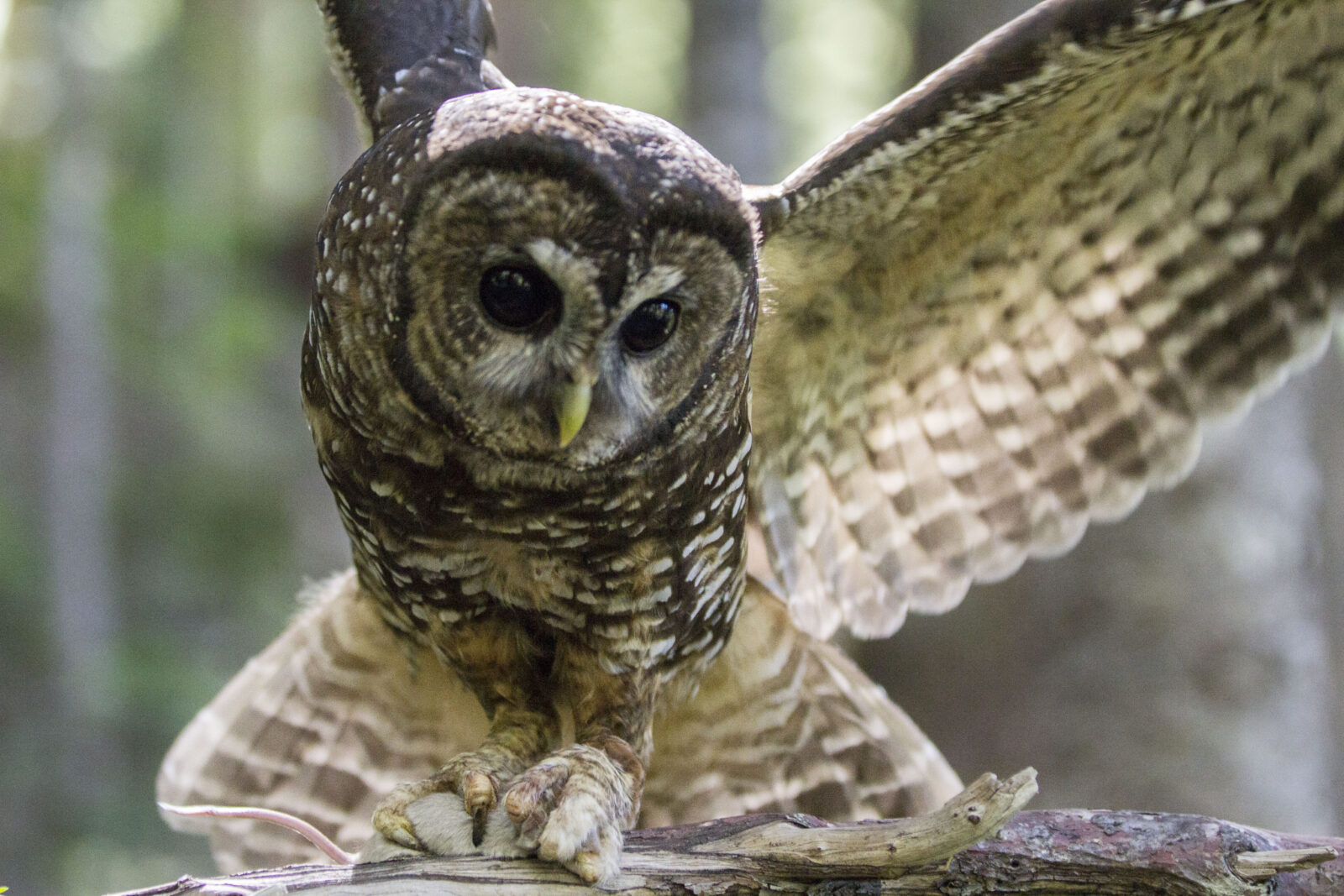
A female spotted owl flies down to catch a mouse. Credit: Emily Brouwer/NPS
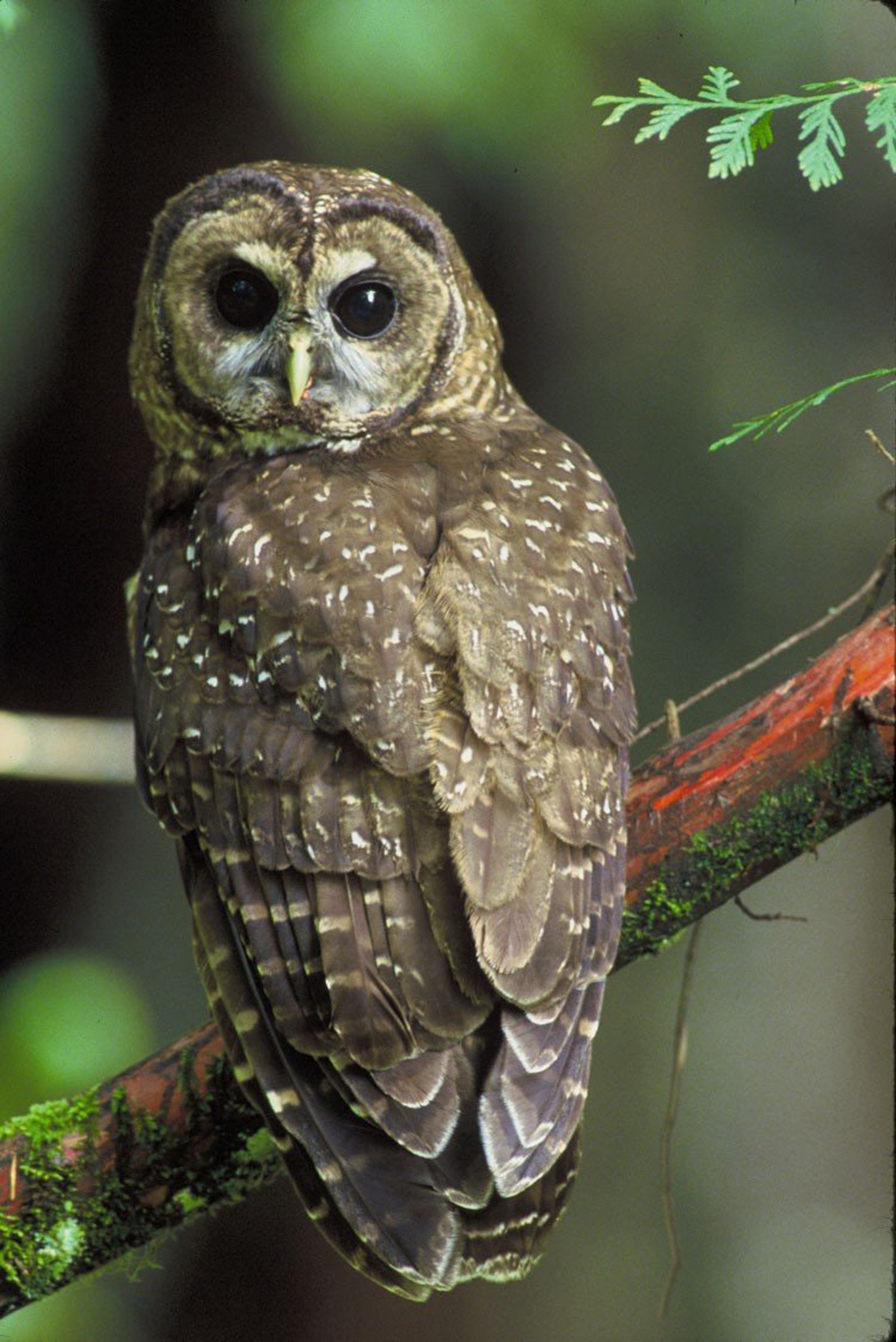
The northern spotted owl population has been rapidly declining, largely due to an unexpected culprit—the barred owl. A proven wildlife management strategy offers the potential to avoid extinction.
The elusive spotted owl tends to stick to the old-growth forests of the Pacific Northwest. But in 1990 it swooped into news headlines when it was listed as “endangered” under the Endangered Species Act. The timber industry had an outsized role in degrading the owl’s ancient old-growth forest habitat. However, in the intervening decades, despite greater preservation measures for old-growth forests, this owl has stubbornly retained its ESA listing. It begs the question: Why?
Enter the barred owl.
The barred owl, a very common species, began expanding its range from eastern North America at the turn of the 20th century. Human-caused climate and land use change has allowed barred owls to outcompete the spotted owl for prey and habitat. Without intervention, the expansion of the barred owl range puts the spotted owl at risk of extinction.
In 2024 the U.S. Fish and Wildlife Service issued the “Barred Owl Management Strategy” which calls for the removal of barred owls from spotted owl habitat. Decisions to remove wildlife are never taken lightly by the biologists that have to do the work, or by the National Wildlife Federation.
It is an unfortunate reality, however, that humans have driven the spotted owl toward extinction through destruction of their habitat, and by facilitating the expansion of barred owls. However, the plan to cull the barred owls is a science-based approach for successful wildlife management, similar to other plans to control invasive predators and competitors. Further, it is necessary to save the northern spotted owl from human-caused extinction in the U.S.
We took a dive into the strategy to explore its goals and why this approach works.
What’s at stake, what’s the opportunity? The northern spotted owl is at risk of extinction and increasing threats to the California spotted owl has led to a proposed listing under the Endangered Species Act. Time is of the essence if we want to ensure the survival of spotted owls, which have declined by more than 75% in two decades in their northern range and continue to decline.
Active management of wildlife by humans is necessary to support and protect biodiversity and allow us to conserve both species.
What are the overarching goals of the Barred Owl Managment Strategy? The Barred Owl Management Strategy is a tool to avoid extinction of spotted owls in the wild, but will not affect native barred owls in eastern North America.
How does this strategy work? The plan calls for the selective removal of about 450,000 barred owls in California, Oregon, and Washington over the next 30 years. This results in the culling of as many as 16,000 owls per year.
How will this impact the barred owl population? The plan prioritizes spotted owl sites and will focus efforts on areas with the greatest need or that have the greatest potential for success. Annually, this will impact just 0.5 percent of the barred owl population.
Will this plan succeed? The plan is based on sound science and proven wildlife management techniques. Barred owls would be removed strategically from habitats where spotted owls have the greatest chance of recovery. The strategy is similar to other plans to control invasive predators and competitors. For example, most sea, island, and shorebirds require predator and competitor control to survive. In California, reducing the barred owl population by one third successfully stabilized the spotted owl population.
“We have the opportunity to avoid the human-caused extinction of spotted owls in the wild, without impacting native barred owls in their historic range in eastern North America. It’s a win-win that conserves both species.”
– David Mizejewski, Naturalist and Ambassador, National Wildlife Federation
