













We have much more to do and your continued support is needed now more than ever.
Defunding the Future: Plan to Lower Emissions Loses Federal Support
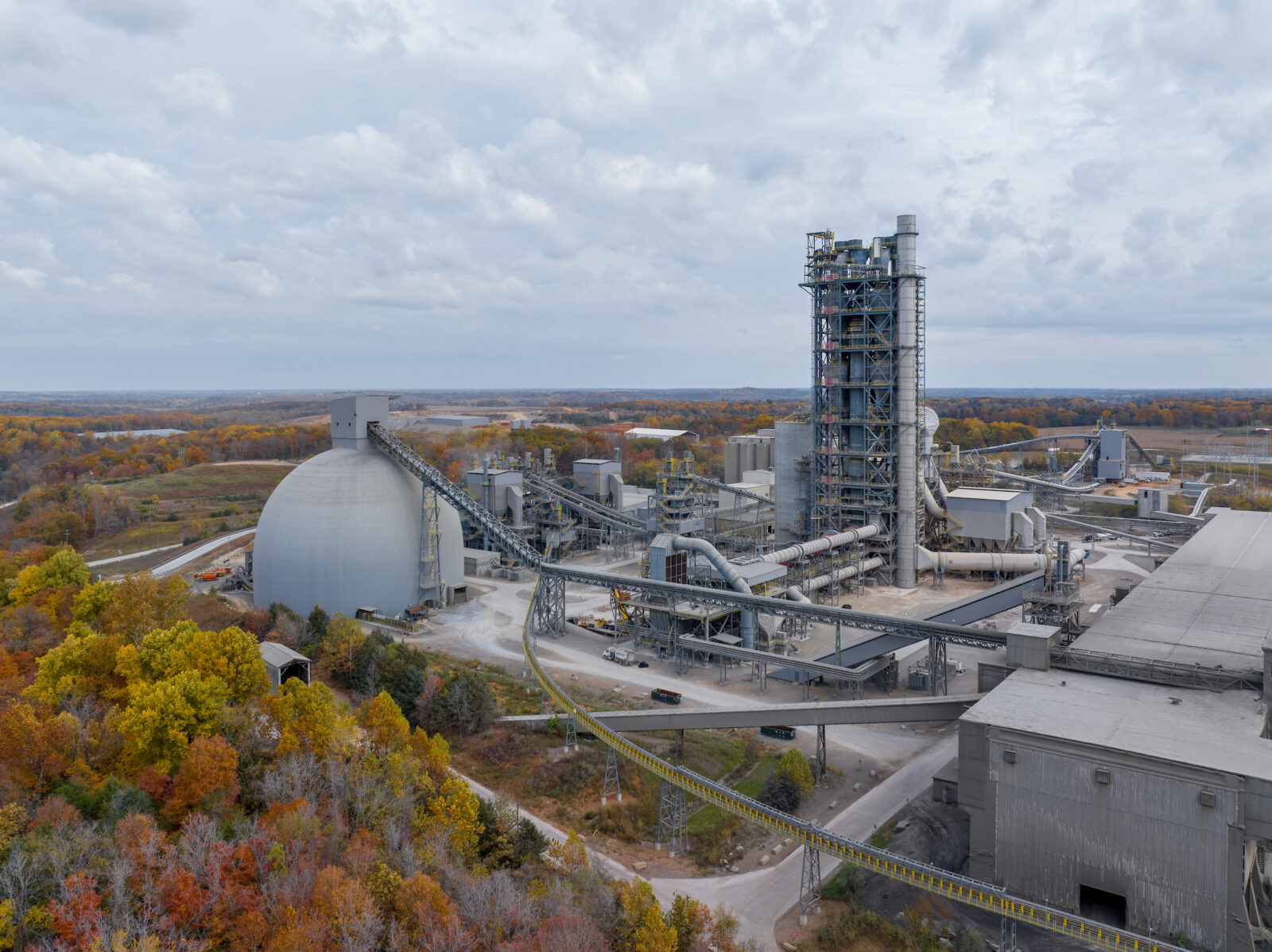
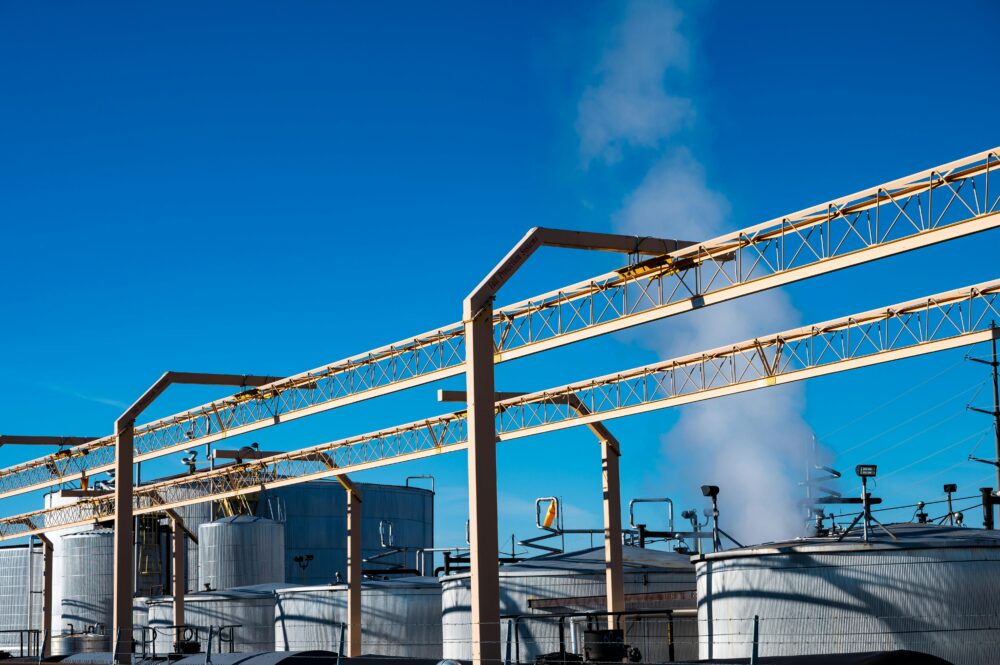
Mitchell cement plant. Credit: Hudson Photography
Look outside and you’ll see the building blocks of modern society—our sidewalks, streets, hospitals, and homes are made using a variety of materials, including cement. In fact, concrete—made using cement—is the second most utilized building material in the world, behind water. Like any industrial process, cement production releases greenhouse gas emissions, like carbon dioxide (CO2), into the atmosphere.
Those emissions have been accumulating in the air since the Industrial Revolution, accelerating a warming planet and the consequences that come with it. But we have solutions to lower industrial emissions that will continue to meet the needs of our society while addressing climate change.
Capturing Carbon to Lower Emissions
Carbon capture, utilization, and storage (CCUS) is one solution in a set of strategies that, if done with community input and wildlife mitigation methods, can help us tackle climate change. Various technologies have been developed and are in use across numerous industrial applications for decades.
CCUS is a three-part concept. First, carbon capture technology traps CO2 before it reaches the atmosphere. Think of it like a filter at a polluting source like a smokestack. Second, utilization refers to potential market uses for captured carbon, such as its conversion into other products like sustainable aviation fuel or for curing concrete. Third, captured CO2 can also be safely and permanently stored and monitored underground. It is commonly injected deep (3,000 to 7,000 feet below the surface) into retired oil and gas fields or saline aquifers, which are permeable rock formations containing non-potable water. The CO2 held is in place by a thick layer of impermeable caprock.
At Heidelberg Materials’ cement plant in Mitchell, Indiana, an ambitious CCUS project has been unfolding over the past several years. While recent policy changes have put some of its federal funding at risk, the company remains committed to advancing the work, building on a foundation of engineering, geological research, and global experience.
A Multi-Year Process of Innovation
In 2024, Heidelberg was awarded a matching grant of up to $500,000,000 through the Department of Energy’s (DOE) Industrial Demonstrations Program (IDP), a multi-phase project which was designed to ultimately move the Mitchell cement plant toward constructing and operating a full-scale carbon capture, transport, and storage system on-site. Prior awards from the DOE helped Heidelberg Materials successfully begin the Front-End Engineering and Design (FEED) needed to verify the project’s technical feasibility.
As David Perkins, Senior Vice President for Sustainability and Public Affairs at Heidelberg North America explained, IDP funding was never meant to be a blank check. “All of this builds on years of work and technical verification. It’s an incremental process, and nothing moves forward without demonstrating viability at every stage,” he said.
The Mitchell cement plant was rebuilt as a new facility in 2023 and is the newest and most modern in North America. This facility already incorporates features to minimize energy consumption and reduce greenhouse gas emissions. The CCUS project will build on this work towards decarbonization by capturing and diverting approximately two million metric tons of CO2 each year and storing it permanently underground in a deep geological saline aquifer system directly underneath the facility—that’s about the equivalent of driving 467,000 gas cars for one year.
Benefits of Capturing Carbon Emissions
Beyond capturing and storing CO2, the Mitchell cement plant project offers several potential co-benefits. In addition to the climate benefit of saving two million tons of carbon from entering our atmosphere each year, additional amounts of co-pollutants like nitrogen oxide and sulfur dioxide can potentially also be removed, further improving air quality and public health. This is part of the standard engineering process for carbon capture to make the process more efficient and lasting.
We can also build a circular economy with concrete. It’s durable, resilient, and 100% recyclable. When structures are demolished, that concrete can be processed and used again in new construction. What we need are mechanisms and policies like 45Q—a federal tax credit providing financial incentives for capturing and storing or utilizing CO2 from industrial sources or directly from the air—to realize that closed-loop system.

In Indiana, construction of the CCUS system at the Mitchell plant could also generate up to 1,000 construction jobs over a multi-year buildout, while long-term operations would support roughly 30 permanent technical positions. With ample land and existing infrastructure, the site could also become a hub for carbon-related research, pilot projects, or industrial co-location.
Federal Grants Revoked
Heidelberg Materials is among many companies seeking to lower their emissions through innovative strategies. DOE’s Industrial Demonstrations Program provided $6 billion in funding to companies demonstrating industrial-scale decarbonization solutions. Then, in May 2025, the DOE quietly cancelled over 300 awards, including the IDP grant for the Mitchell cement plant.
It’s unclear why projects that would be so valuable to the country’s economic prosperity and environmental future would be cancelled. Today, the United States is a net-importer of cement. We currently do not produce enough to meet the demand each year, and this will grow over time.
By investing in emissions reductions strategies at domestic plants, we can expand production and build back our manufacturing sector. Perkins added, “Do we want to let other countries innovate and drive this, or do we want to do it here?”
Innovating the Future
With the looming question of funding, Heidelberg Materials continues in the appeal process for the award cancellation while reaching out to the DOE to keep working toward a solution.
Additionally, the One Big Beautiful Bill gutted a lot of incentives that would help make climate and clean energy a reality, but it did preserve 45Q. Heidelberg Materials will continue to explore private marketplace partnerships since there is a growing demand and interest in the space for this technology, regardless of political will.
Despite uncertainty, one truth holds firm: there are countless people and companies continuing to address climate change and work toward a low-carbon economy that will ultimately improve the air we breathe and the water we drink.
