









We have much more to do and your continued support is needed now more than ever.
Groundhog? More Like Attention Hog
Punxsutawney Phil, who? Here are some other kinds of wildlife that appear in the spring (and don’t get enough credit for it)

Honestly, Punxsutawney Phil the groundhog gets way too much attention and credit for predicting spring. Who decided groundhogs get the monopoly on one of the most glorious seasons of the year? Learn about the lesser-known stars of early spring—unlikely pollinators, sleepy toads, moody bears, and elusive birds all pop out for the long-awaited warm weather and blue skies.
Mammals (black bears, red foxes, and raccoons)
While it’s clear there is a mammal whose spring activity gets the most recognition from us humans, there are a few other species that deserve some love, too. To start, black bears emerge from hibernation and leave their dens as the weather warms. However, females typically stay longer when they have cubs, who need more time to grow bigger before leaving the den.
Another species that emerges from its den in spring is the highly intelligent red fox. Ironically, they typically improve abandoned groundhog burrows while raising their young. Whether or not that makes them qualified shadow prophets, it shows that maybe renting can be better than owning in the face of unpredictable weather (and shadows).
And then there are the so-called trash pandas, masked marauders, AKA raccoons. They tend to become most active around mid-March as well, because this is the prime breeding season for them. They are typically solitary, but after gestating young over the winter period, they need to feed their new young.
For many species, including bears, foxes, raccoons (and yes, even groundhogs), life begins in spring. So this March, listen to Phil’s predictions if you wish. But no matter what the weather might be, know that many mammals are still rousing from the winter to face the day!


Birds of a feather migrate together (sandhill cranes, American woodcocks, and more!)
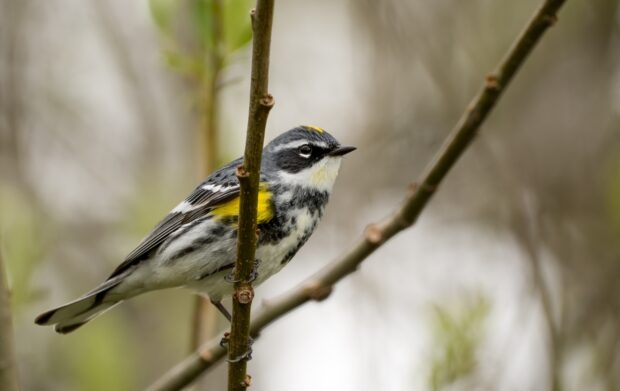
For many states in the northern part of the country or on migration routes, the return of familiar birds is often the first sign of spring. Over 350 species of birds cross the country on their spring migration. You might take a gander at robins reappearing to pick at the dirt for their breakfast, Canada geese flying overhead on their way to their summer breeding grounds, or the morning calls of songbirds like warblers, finches, and wrens resuming their songs among the treetops. In springtime, bird is the word!
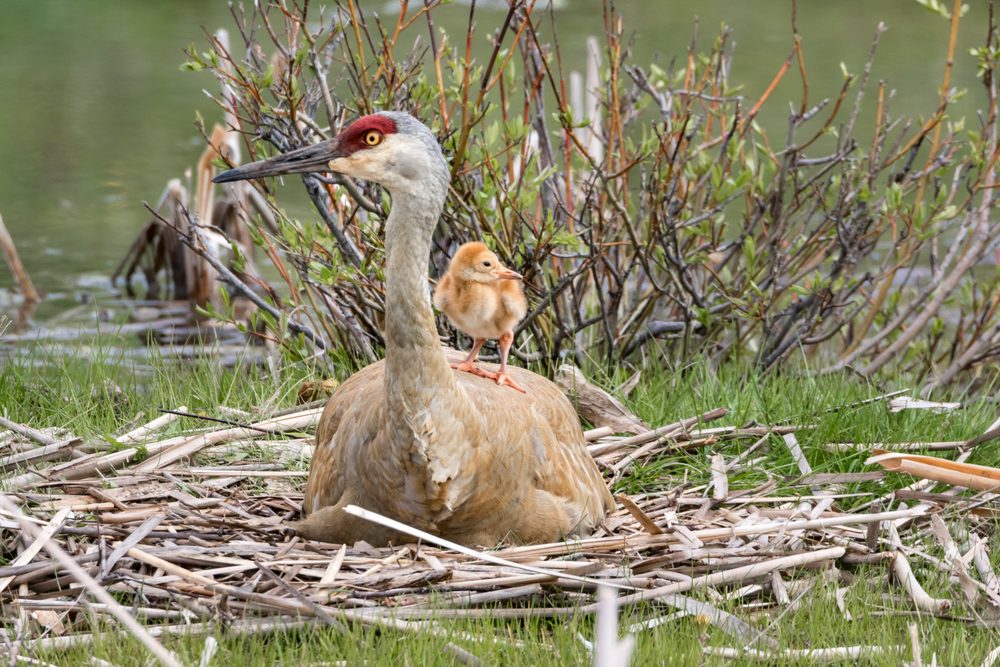
One incredible spring sighting is the northward migration of sandhill cranes through Nebraska. After hunkering down for winter in southern states like Texas, New Mexico, and Arizona, about one million sandhill cranes and some endangered whooping cranes flock together along Nebraska’s Platte River from mid-February to April as a stopover on their journey north towards Canada. During the day, they disperse amongst nearby corn fields and meadows to eat, then return to the shallow waters of the Platte River overnight. You know spring is in full swing when you spot soaring sandhill cranes.
Another bird with a dazzling—if difficult to spot—spring performance is the American woodcock. These odd little forest birds are relatives of sandpipers and are known for their funky strut, which helps them find worms in the soil. They have endearingly earned the nicknames timberdoodle, Labrador twister, night partridge, and bog sucker.
When spring comes around, male woodcocks return to the edge of forests to perform their “sky dance” at dusk. They let out a call, then fly high into the sky and circle, the air whistling over their wings. Then, they make their way back down to the ground and begin the process again, until finding their spring fling!


See you later, pollinator (bees, beetles, and butterflies)
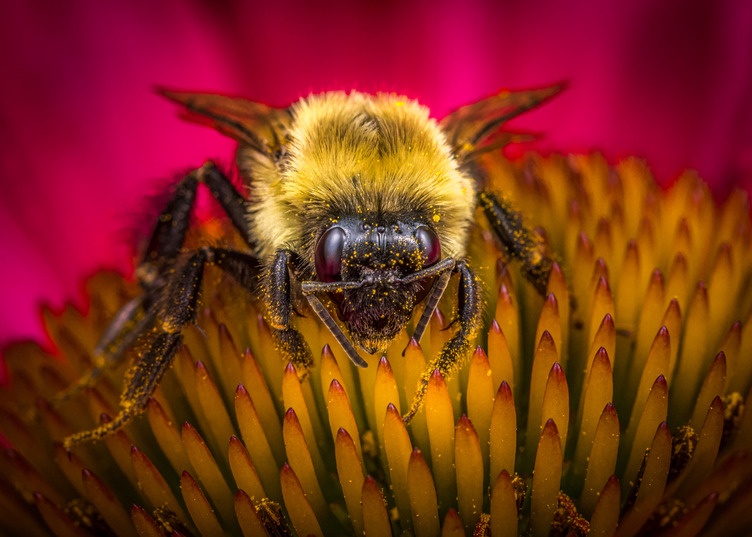
“Not the bees!” Yes—the bees! Native bees are estimated to pollinate 80% of flowering plants around the world. Did you know there are at least 4,000 bee species native to the United States? Un-bee-lievable!
Bees get a bad rap. But very few species of bees can sting. When spring flowers bloom, many bees come out of hibernation to drink nectar, pollinating flowers along the way. Queen bees are the only bumble bees that live through the winter (by hibernating) while all workers die off. Which means one bumblebee emerging in spring is responsible for creating a whole host of pollinators in the spring!
Some types of flowers can only be pollinated by certain bee species! Examples of bees native to the United States are: the American bumblebee, rusty-patched bumblebee, and the Mojave poppy bee.
Beetles are pollinators, too! In fact, they are some of the original pollinators—active 200 million years ago, before it was cool. Species like soldier beetles, scarabs, long-horned beetles, sap beetles, and checkered beetles all work to pollinate certain types of flowering plants. These plants will usually have fragrant flowers with cup- or bowl- like blossoms that are open during the day, and leathery, tough petals and leaves, like the magnolia. Maybe the real beetle juice is the nectar we drank along the way!
“Float like a butterfly, sting like a bee” – Muhammad Ali
While butterflies are less efficient than bees at moving pollen, they are the beauty queens of the insect world, and they have their place. Unlike bees, butterflies can see red and have good vision but a weak sense of smell. They gravitate towards (and pollinate) brightly-colored, clustered flowers with a lot of nectar. The iconic monarch butterfly feeds on milkweed toxic to predators as a caterpillar, which makes its attackers sick and keeps them at bay. This blog brought to you by the letter B!


Amphibians (wood frogs, spotted salamanders, and toads)
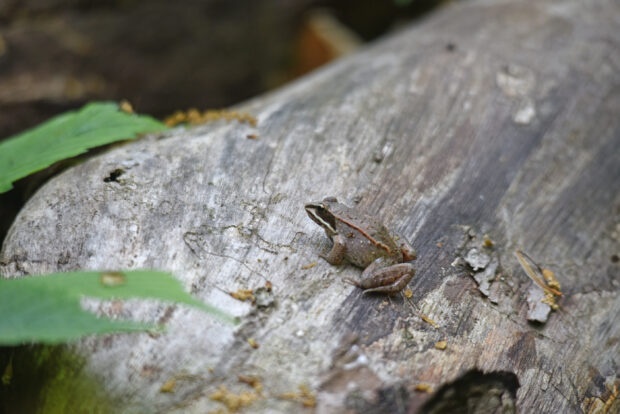
Amphibians are SUPER spring coded. This is their time to mate, breed, and lay eggs that will hatch in a matter of weeks, populating forests and arid grasslands with slimy and slithering specimens. Many amphibians have antifreeze characteristics that allow them to survive the unpredictable weather transition between late winter and early spring, when temperatures can still be at or below freezing.
Some species of amphibians, like wood frogs, lay their eggs in vernal pools. Vernal pools are small, temporary ponds filled with rainwater or snowmelt that are likely to dry up by the time late spring and summer roll around. Amphibians tend to lay eggs in vernal pools because fish typically do not inhabit vernal pools, keeping vulnerable eggs safe from predatory fish that might eat them.
Other amphibians, like the spotted salamander, aren’t so lucky. They, too, search for freshwater pools to breed in during late winter, after the ground has thawed. But while females can lay 100-300 eggs per year, around 90% of those eggs will not make it to maturation due to disease, predation, and ponds drying up. It’s a hard knock life for the spotted salamander!
With a breeding call that sounds like a brief snore, plains spadefoot toads are sleepy little springtime signifiers. Coming from their loosely packed soil burrows to mate during or after heavy rains, these toads also breed in ephemeral pools. Plains spadefoot toads have one of the fastest development rates of amphibians, laying eggs that hatch within two days.


 Written by Robert Watkins
