




We have much more to do and your continued support is needed now more than ever.
Building hope, organizing communities, and strategic planning on Florida’s Coast

The 2024 hurricane season reinforced the need for a Tampa Bay Coastal Master Plan.
Anyone who has the fortitude to follow the news these days has concluded that climate solutions are not currently coming from leaders in Tallahassee, Florida or Washington, D.C.
It is easy to succumb to despair rather than hope. But while we may not find solutions from above, we are blessed with springs of hope and action around us. Communities and organizations across the country and the Gulf are working together to fill the void, especially through their strategic and community-led planning efforts.
The solutions we need to address climate change impacts can come from the human spirit, the leadership and the resiliency in our communities. They can be found in our friends and neighbors, our youth, our fellow congregants, our local governments, and our colleges and universities. Every citizen who chooses to be a source of light and hope guides us forward.
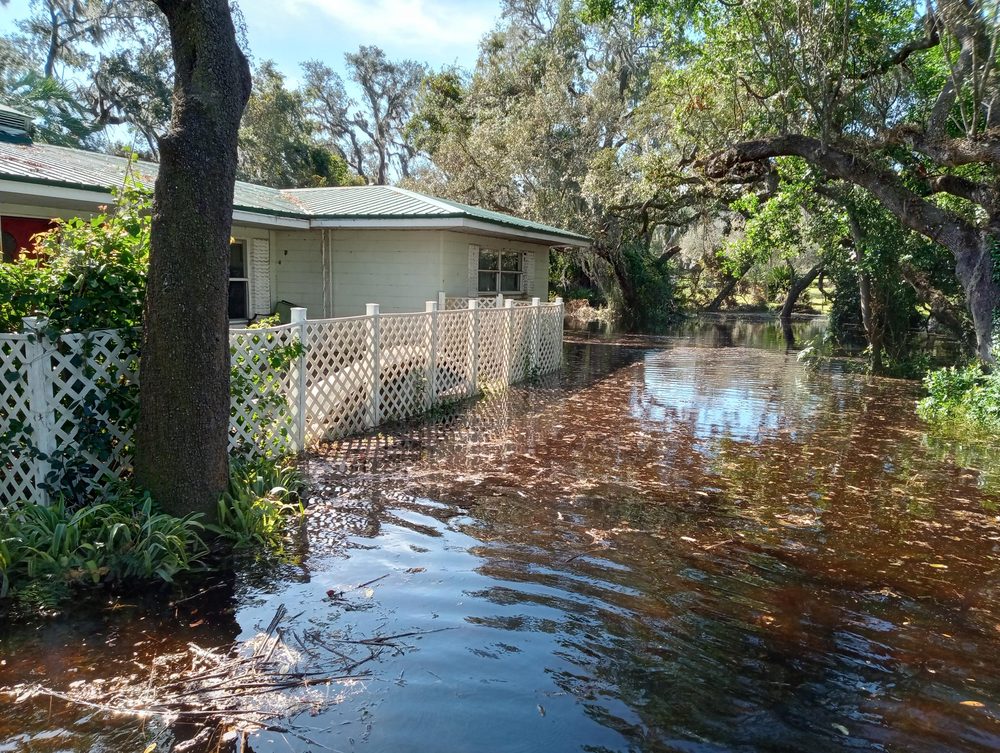
In the aftermath of Hurricane Milton in Fall 2024, our family home in Ridge Manor, Florida, flooded. Our home was built in 1963, and it had never flooded, ever. But in the era of climate change and more intense hurricanes, the rules changed. What was once a 100-year flood event could now be any given year.

Flooding Hits Home
With three feet of water in our home, which sat for almost three weeks, we were overwhelmed. When the water receded, we witnessed the true damage that flooding does: mold, decay, and simply loss. In some ways, we were blessed. We had flood insurance. We had some time to prepare for the rising waters. We had a safe place to evacuate to.
Then, the most amazing thing happened: Strangers we had never met arrived to help us and show us the way forward. Amazing volunteers from Louisiana, led by the Cajun Army, had enough equipment, skill, experience, and strength of spirit for those struggling. We were joined by co-workers, fellow church members, friends, neighbors, and family who helped us reclaim and remediate our home.
Over the course of weeks, we gutted our home down to the blocks and slab. Drywall, flooring, cabinets, furniture, clothing, books (the true loss!), papers, photos, appliances, etc., all had to go. We filled six large dumpsters. But truth be told, the loss was offset by what we gained in terms of faith in the ability of community to rally to those in need.

Communities Rally Together
Local communities have a deep reserve of resiliency and adaptive spirit. That can play a critical role in protecting us from flooding, storm damage, sea-level rise, habitat loss, and the social and environmental consequences of a changing climate. We have that power within us.
We can’t address a global climate crisis simply by working in our backyard. But we can band together in our backyard, and do the work to prepare our human and natural communities for what is coming and what is here.
We still must demand that state and federal officials provide leadership and solutions. We can’t afford to wait to take action.
After the 2024 hurricane season, local communities and governments across Florida understood that we must not lose the cooperation and purpose that led us to engage in recovery in a shared spirit. We must put that to use to find local solutions to adapt to a changing climate with resiliency, good science, sound policy, nature-based solutions, and equity of action and spirit.
And Floridians in the greater Tampa Bay region, and southern Nature Coast, are doing just that: Local communities are participating in the Tampa Bay Coastal Master Plan, and are developing and enacting locally led and driven projects in their communities to enhance resiliency and create adaptation. They are finding nature-based solutions, such as living shorelines, and using green infrastructure to replace grey, concrete infrastructure.
In part, we are the solutions we seek. When we join together in projects such as the Tampa Bay Coastal Master Plan, led in part by the National Wildlife Federation’s Gulf Program, we are agents of resiliency and response.
Tampa Bay’s Coastal Master Plan
The more citizen and community-led, the better. We don’t have time to delay. And we can’t.
To learn more about the Tampa Bay Coastal Master Plan and efforts to use nature-based solutions to adapt to sea level rise and climate change, with resilient strategies like living shorelines, habitat enhancements, and habitat preservation, please visit this site.
Portions of this blog appeared in an edited and abridged format in FAU’s The Invading Sea.
Joe Murphy is a native and lifelong Floridian who lives in Brooksville, FL. Joe is a former Wildlife Policy Specialist for NWF’s Gulf Program. He contributes these blog posts to NWF’s Gulf Program as a supporter and alumnus. You can follow Joe on Instagram @naturecoastjoe
