

















We have much more to do and your continued support is needed now more than ever.
Building Momentum: What’s Next for Beaver Conservation in Colorado
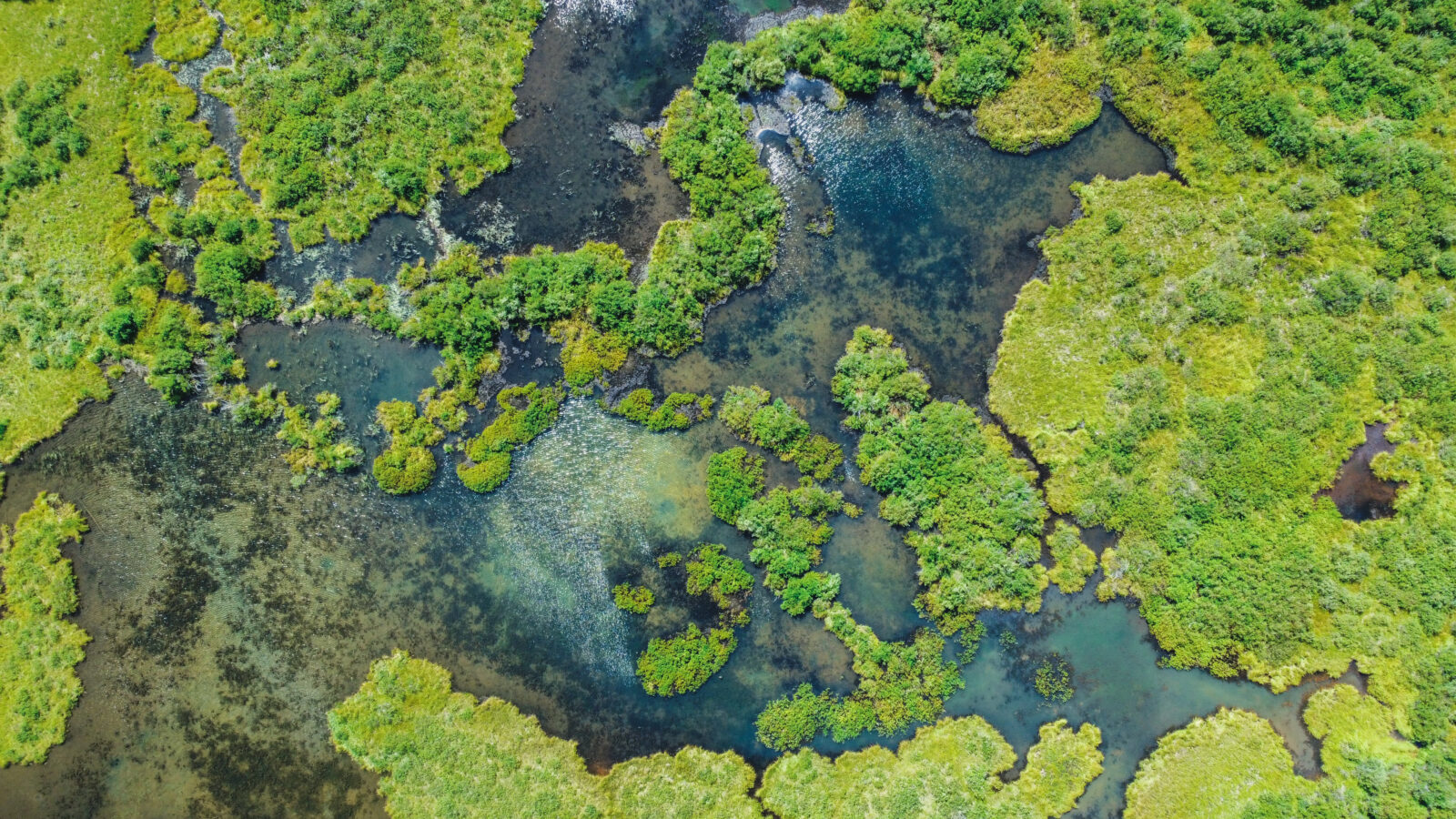
Beaver dam complexes create a habitat mosaic, benefiting many wildlife species while acting as a sponge to keep riparian areas green late in the summer when drought and fire are most prevalent. Credit: Tanner Saul
Last month Colorado Parks and Wildlife (CPW) joined a growing trend of agencies seeking to leverage the ecological engineering prowess of beavers by releasing its draft “Beaver Conservation and Management Strategy,” out for public comment through December 17, 2025. There’s a surfeit of worthwhile wildlife management objectives out there, and CPW has raised a particularly good one.
Indeed, beaver conservation is inherently epiphenomenal. That is to say that time spent working on beavers is also time spent working on waterfowl, on amphibians, on elk, on bats, on any creature, really, that depends on water availability and riparian vegetation. Given the right conditions, beavers can fashion riparian oases out of paltry rivulets.
If that wasn’t justification enough, these rodents’ industriousness benefits more than just fellow wildlife. Beavers’ aptitude for damming has multiple positive impacts on the landscape. Their dams slow and spread flowing water—reconnecting floodplains, deepening groundwater reserves, and keeping streams ranchers and irrigators depend on running later into the year. Active beaver complexes can shore up watersheds against drought, provide hardy wildfire breaks and refuge, and filter sediment, benefiting many communities downstream.
CPW’s intent to bolster beaver populations in areas that would produce serious habitat and watershed gains represents a strong step in the right direction. They correctly characterize beavers’ invaluable role as ecosystem engineers and note the thousands of acres of former beaver-occupied land in Colorado that could provide apt sites for restoration. Bringing beavers back onto these landscapes—whether through habitat improvement strategies, relocation, or both—and effectively managing them in place could prove game-changing for Colorado’s watershed health.

CPW’s strategy will provide a good baseline for beaver management in Colorado, but further details must be added to develop a concrete roadmap for long-term implementation. Successful management plans assign roles, identify partnerships, establish discrete funding mechanisms, and clearly define metrics that will monitor success.
As outlined in a recent report published by the National Wildlife Federation and the Theodore Roosevelt Conservation Partnership, many other states, Tribes, and local governments have crafted and are actively implementing beaver management plans. Lessons gleaned from these experiences can inform what we hope is CPW’s next step: developing a sturdy beaver management plan.
The Federation and our partners look forward to supporting CPW as it determines how to translate these sound conservation ideas into impactful programming.
Much has been written of the ways beavers punch above their weight ecologically (and beavers can be quite heavy). Less has been written about the humdrum details that make beaver programming work. As a beaver conflict technician in northwest Montana, I’ve learned that much hinges on these humdrum details.
Beaver restoration exists within a complicated patchwork of rules and human interests, and finding a mutually acceptable throughline is an unavoidable prerequisite if any real work is to occur. These throughlines are real and nontrivial. Folks want clean water, and more of it. Folks want healthy wildlife populations and habitats. At the same time, no one wants beavers pitching trees at garages or annexing driveways for extra pond space. Both these throughlines—a desire to enjoy the benefits of beavers, a desire to dampen their inherent challenges—can be actualized by dextrous beaver management.

Without the partnership architecture Montana’s Beaver Conflict Resolution Program has spent years cultivating, I wouldn’t be able to do my job. My position within Montana’s beaver management approach is well-defined, allowing me to fluidly coordinate with state fish and wildlife managers, county-level representatives, transportation sector authorities, and landowners.
My work is equal parts community outreach and on-the-ground implementation. Sticking to the science, I work hand in hand with landowners and agencies to increase awareness of beaver benefits and install devices that make living with beavers easier. That said, not every situation is amenable to non-lethal methods, and in these cases I can recommend trapping, an invaluable conflict management tool. Authentically bringing the full suite of management options to landowners and other stakeholders affected by beaver conflicts helps me build and gain credibility. Without buy-in from each of these folks, I’d have no traction.
The beauty of conflict resolution programming is that it is firmly cost-effective and long-term. In other words, it can actually make landowners’ lives easier. It offers transportation managers a more durable approach to chronic culvert damming, and park managers an easy way to protect important trees. It gives landowners the ability to mitigate beaver-related flooding without having to constantly notch and re-notch dams.
Well-established conflict resolution programs often result in beavers remaining on the landscape, thus letting them do the good work they’re naturally inclined to do. This improves the landscape’s carrying capacity for many wildlife species, which enhances opportunities for hunters, wildlife watchers, and others who enjoy time outdoors. We recommend CPW harness this sort of cross-sector and multi-party support to ensure beaver management efforts result in concrete gains.

As noted in the strategy document, Colorado brims with beaver restoration potential. CPW is off to a strong start, but there’s a long road to go. We hope there continue to be opportunities for feedback and thoughtful discussion as Colorado hones its management plan. By building a strong, varied constituency of support and crafting a robust implementation plan, CPW can unleash one of nature’s best (and cheapest) restoration forces.
Getting beavers into the right places—and keeping beavers in the right places—is not easy, but when it’s done with tact and care, just about everyone and everything benefits.
