








We have much more to do and your continued support is needed now more than ever.
Community Spotlight with the Keaukaha Action Network

Puhi Bay, Keaukaha, Hilo, Hawaiʻi. Credit: Bec Jimenez-Ward
For generations, the Keaukaha Hawaiian Homelands Community on Hawai’i Island has shouldered risks that few outside the community ever see. Surrounded by a cluster of industrial and military facilities known to release toxic chemicals (also known as toxic release inventory sites, or TRI), including sewage plants, airport operations, and aging landfills, this community has persisted at the intersection of deep resilience and disproportionate environmental burden.
Among the voices leading the movement for change is Terri Napeahi, founder of the Keaukaha Action Network (KAN). Drawing from her family’s generational ties to Keaukaha and her own work in advocacy and county planning, Terri has become a champion for environmental justice on the East side of Hawaiʻi Island. Her advocacy is rooted in lived experience, historical and ancestral knowledge, and a determination to see her community thrive.
In this spotlight, Terri shares her journey, the challenges her community faces, and her vision of what it will take to protect Keaukaha’s health and future.
Watching a Landscape Shift
The Keaukaha Hawaiian Homelands community sits nestled beside the black sand and rocky shorelines on the eastern side of Hawai’i Island. Terri Napeahi and her family have lived on this land for generations. Affectionately calling this area the “icebox,” her family has relied on the land and ocean for subsistence—weekends spent diving, gathering limu (seaweed), and fishing to feed themselves and their community. Although she didn’t realize the extent and impact at the time, Terri grew up watching the landscape of Keaukaha change drastically around her.

In the late 1960s, a new wave of development prompted the expansion of the Hilo International Airport and the subsequent forced removal of numerous Keaukaha residents. During our interview, Terri recounted her confusion as a child as family after family moved away and her neighborhood began to change.
First, the fences went up, then the runway extended, then the jets arrived. Her home sat across the fence from the very point where planes touched down, their fumes drifting directly into the neighborhood. “It just became a part of our lives,” she recalls. “Everyone in my family had respiratory problems. And on our street, people were dying young, dying from cancer. My own brother passed at 39.”
Along the shoreline, the ocean began changing too. Fish behavior shifted, and native species like Nenue (Hawaiian Chub) and limu ‘eleʻele (a native edible seaweed), once abundant, became scarce. The bay where her canoe club practiced was chosen as the site of the new sewage plant in the late 1960s, with treated and untreated waste flowing less than a quarter mile offshore. Hydrogen sulfide smells rolled through the community.
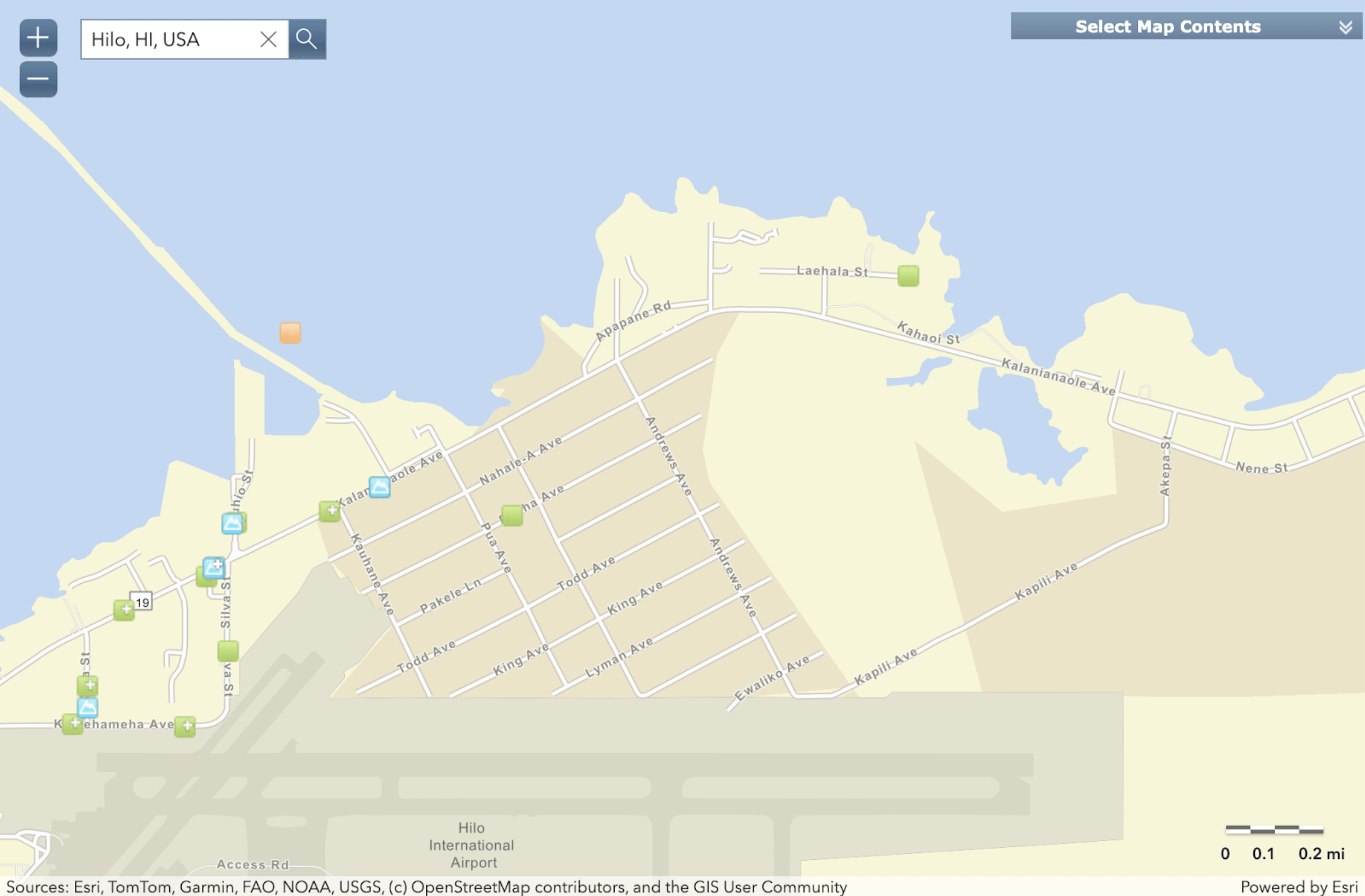
By the time key environmental laws, like the Clean Water Act, took shape in the 1970s and 80s, much of the infrastructure burdening Keaukaha was already in place. Gas tanks, fuel depots, shipping operations, and multiple facilities releasing toxic chemicals into the air and water were clustered around the harbor, just steps from Hawaiian Home Lands.
Terri saw her grandmother and other kūpuna holding signs and protesting, but it wasn’t until she experienced how the kids at school talked and teased about her community that she realized what was happening wasn’t “normal,” and that other neighborhoods were not experiencing the same changes. Keaukaha was becoming home to harmful facilities and absorbing the cumulative cost for decisions made far outside the community, often without its consent.
When Terri and her community started asking questions and seeking answers—“Why here? Who permitted this? What exactly is leaking or being released?”—no one could (or rather, would) give a clear response. Information was scattered across agencies, published in technical language, or simply not shared with the community.
The Creation of Keaukaha Action Network
This quest for clarity and truth led to the founding of the Keaukaha Action Network (KAN) in 2013. What started as a committee within the Keaukaha Hawaiian Homelands community quickly grew into a hub of research, accountability work, and grassroots education.
KAN’s approach is centered on ground-truthing, a method used in other heavily burdened communities, such as those in South Central Los Angeles. Ground truthing is a community-based research method in which residents collect and verify on-the-ground observations. Through community meetings, mapping, data collection, site visits, and direct communication with agencies, KAN sought to piece together what regulators couldn’t explain plainly.

A medical student from Johns Hopkins later partnered with KAN to analyze Environmental Protection Agency (EPA) spatial files. They identified seven facilities releasing toxic and hazardous chemicals around Keaukaha, tracked their emissions, and examined their compliance history.
Federal EPA data revealed what residents had long felt in their lungs, in the ocean, and on their land: facilities were leaking, improperly monitored, and out of compliance with state and county protections regarding hazardous substance release, and overseeing agencies were not enforcing their own rules. KAN used this evidence to push for action from the EPA, bring local and state agencies into the community, and demand transparency and accountability.
Throughout the years, KAN has remained dedicated to making these hidden realities visible. They have mapped pollution, documented contamination, and brought the Department of Hawaiian Home Lands (DHHL), Department of Health (DOH), Civil Defense, and county leaders to community meetings, asking them directly, “How did this happen, and who is accountable now?” Transparency, Terri says, “only matters if the community actually understands what’s being revealed.”
What Accountability Looks Like Now
Today, the work of KAN is far from finished. While years of organizing and research have brought greater visibility to the cumulative impacts facing Keaukaha, many of the community’s most urgent needs remain unresolved.
KAN continues to push for stronger, more transparent water quality monitoring at the sewage treatment plant that discharges near Keaukaha’s shoreline. Community members have long raised concerns about spills, leaks, and odors, yet air pollution and water monitoring data is still limited, difficult to access, and often released long after potential exposure events occur.
The county plans to upgrade the Hilo Wastewater Treatment Plant by 2030, but the members of KAN are concerned that the plans are insufficient to keep up with the city’s growing population. KAN is advocating for more encompassing planning, clearer reporting, stronger enforcement, and monitoring systems that actually reflect what residents are experiencing in real time.

At the same time, KAN is actively working to secure air quality monitors that can capture emissions from nearby facilities and airport operations. Existing monitors in the area focus primarily on volcanic emissions and do not account for industrial pollutants. Without real-time air monitoring, residents have no way of knowing when emissions spike, what chemicals are being released, or how those releases may align with health symptoms in the community. For KAN, air monitors are a critical step toward accountability, providing data that can no longer be ignored or dismissed.
KAN is also deeply engaged in ongoing conversations around geothermal development, as new proposals emerge on or near Hawaiian Home Lands. By hosting panel discussions with elders who have lived through previous geothermal projects in Hawaii, Terri and KAN are working to ensure that decisions about geothermal development include meaningful community input.
Their meetings often highlight that there must be a clear understanding of risks and impacts, and transparent accountability structures from the beginning, not after harm has already happened.
Across all of this work, KAN remains focused on a simple but powerful principle: communities have the right to know what is happening to their land, water, and air—and the right to act on that knowledge. Through continued organizing, data-gathering, and advocacy, the Keaukaha Action Network is pressing for systems that protect health, honor the rights and traditional practices of Kānaka Maoli, and prevent future generations from inheriting the same harms.
The battle is far from over, but the community remains grounded in their resilience and refusal to accept silence where accountability is long overdue.
To learn more about Keaukaha Action Network and how to support it, you can email them at keaukahaactionnetwork@gmail.com.
