






We have much more to do and your continued support is needed now more than ever.
Wildlife Crossings: A Win-Win for Wildlife and Drivers
Wildlife crossings prevent animal-vehicle collisions and reduce habitat fragmentation

Who hasn’t seen an animal on the side of the road, struck by a vehicle? Collisions with vehicles are a leading cause of mortality for various species and are the result of the fragmentation of wildlife habitats. Roads and other infrastructures impede animals’ movement and ecological connectivity. Animals depend on this connectivity in their habitats and ecosystems to search for food and water, to mate and escape danger. Wildlife crossings are a valuable tool for reducing the impact of habitat fragmentation.
Studies indicate that maintaining the connectivity of wildlife habitats is one of the best ways to prevent species loss. Wildlife crossings help animals move around, promote genetic diversity, reduce habitat fragmentation and prevent wildlife-vehicle collisions. Whether over or under roads and other infrastructure, wildlife crossings are essential to protecting biodiversity, public health, and road safety.

The Danger of Roads
In the United States, between one to two million vehicle collisions with large animals, including deer, mountain lions, and other species, occur each year, according to the Federal Highway Administration. The highest number of these collisions are in rural areas, however, cities are not exempt. The 10 states with the highest risk of animal-vehicle collisions are: West Virginia, Montana, Pennsylvania, Michigan, Wisconsin, Iowa, Mississippi, South Dakota, Virginia, and Wyoming, according to a recent analysis by insurer State Farm.
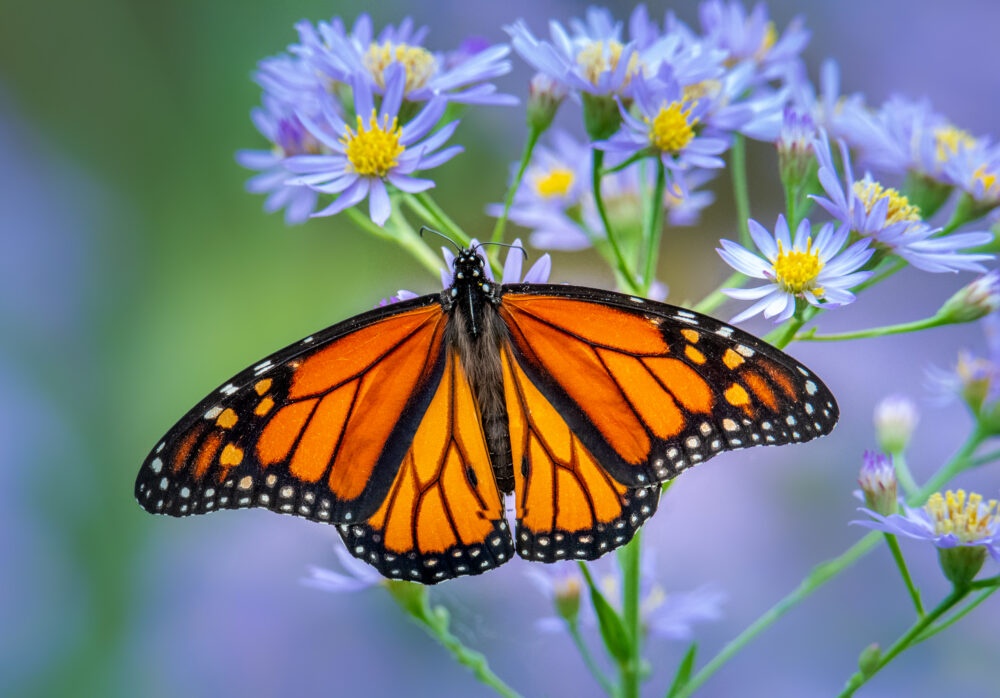
The Federal Highway Administration has identified 21 threatened or endangered species in the U.S. whose continued survival is threatened by road mortality. This issue impacts a multitude of animals, large and small, from mountain lions to monarch butterflies.
To address the fragmentation of wildlife habitats, it is necessary to create ecological corridors, through programs for improved land planning and management. These programs also promote collaborative efforts for conservation with Indigenous tribes and local communities.
A Federal Program for Connectivity and Road Safety
The Wildlife Crossings Pilot Program (WCPP) authorized in 2021 has been an important tool to help reduce the impact of wildlife vehicle collisions. The WCPP provided funding for 15 wildlife crossings projects and 20 projects supporting research, planning, design and wildlife vehicle collision analysis.
These projects have helped make roadways safer for motorists and improved habitat connectivity around our country. The demand for funding from the WCPP has far exceeded the available $350,000,000 in funding with approximately $1,134,000,000 in total funding asks.
With the Wildlife Crossings Pilot Program set to expire in 2026, there is a growing concern that many eligible applicants will not be able to leverage federal funding and simply won’t be able to afford the increasing costs of wildlife vehicle collision mitigation projects.
Currently, there is a large effort to reauthorize the WCPP in the upcoming Surface Transportation Reauthorization Bill. It is critical to reauthorize this program, increase funding to meet the demand by eligible applicants and remove the federal cost match requirement for Tribes that has been a barrier to more robust Tribal participation. Without the WCPP, we are at risk of increased vehicle collisions and severe habitat fragmentation.
In 2025, 26 states introduced 66 pieces of legislation related to wildlife corridors, wildlife crossings, and wildlife connectivity. For example, New Mexico passed legislation to create the Wildlife Corridors Fund and later provided $50 million in dedicated resources for the New Mexico Department of Transportation to build wildlife crossing projects for bears, cougars, deer, bighorn sheep, and other large animals.
The Sandia to the Jemez Mountains project, in Albuquerque, NM, envisions multiple crossing structures to connect wildlife habitat, allow for safe wildlife migration, and improve motorist safety.
This project illustrates the importance of working with tribal partners to reconnect wildlife habitat adjacent to tribal lands. Previous legislation established the New Mexico Wildlife Corridors Action Plan to identify hotspots where wildlife corridors intersect with some of the most heavily traveled roadways.

National Wildlife Federation Supports Wildlife Connectivity
The National Wildlife Federation (NWF) supports the collaborative efforts of state and federal agencies, landowners, community groups, and other NGOs to improve the ecological connectivity of wildlife habitats. In collaboration with its affiliates, National Wildlife Federation is working on projects to reconnect, restore, enhance, and maintain the migration routes of different species such as the pronghorn, a mammal found throughout the American west. The Nature Conservancy and the National Wildlife Federation have partnered on an interactive map to study the movement of pronghorns throughout the year.
In California, the National Wildlife Federation launched the #SaveLACougars campaign to build the Wallis Annenberg Wildlife Crossing, a vegetated overpass for wildlife, which will help animals cross a 10-lane section of Highway 101. Slated for completion at the end of 2026, the project is in Agoura Hills, 35 miles from Los Angeles.
This is a public-private partnership project of significant scope, with oversight and core leadership from the National Park Service, the Santa Monica Mountains Conservancy/MRCA, Caltrans, and the National Wildlife Federation.
Construction of this crossing, which began in April 2022, will result in the largest wildlife crossing in the world and the first of its scale in an urban area. It aims to save a population of mountain lions from extinction by providing a connection between the small and isolated population in the Santa Monica Mountains to a larger and more genetically diverse population to the north. With a fully functioning native habitat, it is also being designed for other wildlife to utilize.

The iconic mountain lion P-22, who made a miraculous journey across two major freeways to find a home, and roamed the Hollywood hills for over a decade, served as the poster-cat for the #SaveLACougars campaign.
Sadly, in December of 2022, P-22 was hit by a car and had to be euthanized due to his injuries and other health issues. Yet his legacy lives on, as P-22 helped raise awareness in the U.S. and across the world about the dangers of highways to big cats and other species, and the devastating impacts on habitat fragmentation on all wildlife.
You can see real-time footage of the progress of the construction of the Wallis Annenberg Wildlife Crossing here.
Finally, it is also important to highlight that private lands, including working lands such as farms and ranches, also provide significant wildlife habitats. The U.S. Department of Agriculture have voluntary, incentive-based conservation programs that support these habitats.
In the 2018 Farm Bill, which funds and directs USDA programs, significant progress was made by directing 10% of the largest working lands conservation program toward practices that benefit wildlife. NWF is working to expand these practices and include wildlife habitat connectivity and migration corridors in the next Farm Bill. The 2026 House draft Farm Bill included several of these provisions.
The button below will take you to NWF’s Action Fund page, where you can take action on this topic.
Read this blog in Spanish here.
