








We have much more to do and your continued support is needed now more than ever.
Preserving Indigenous Land Management Traditions in the Southeast
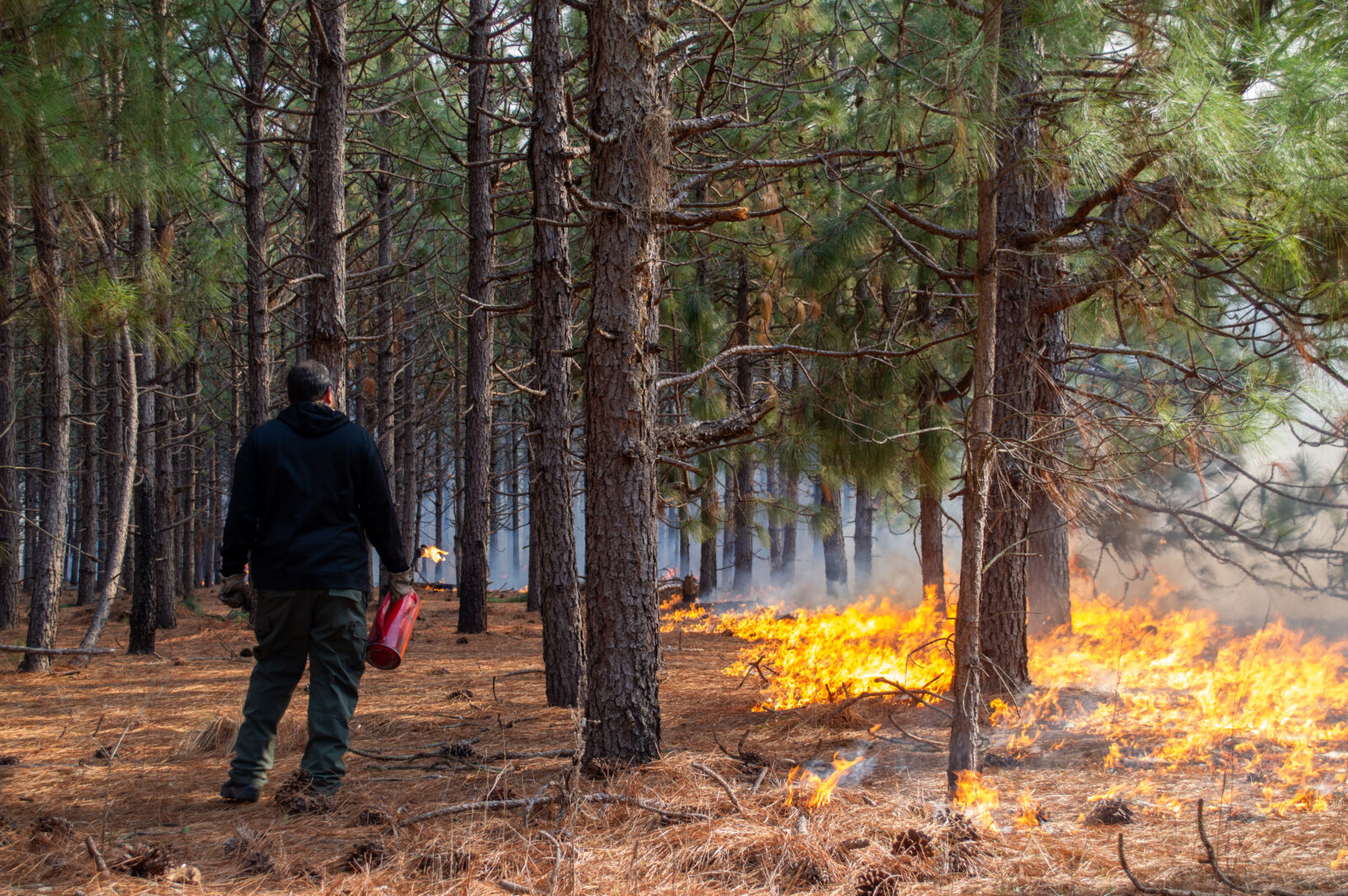
Lumbee landowner Mitch Locklear looking out at his prescribed burn. Credit: Shelby Flores
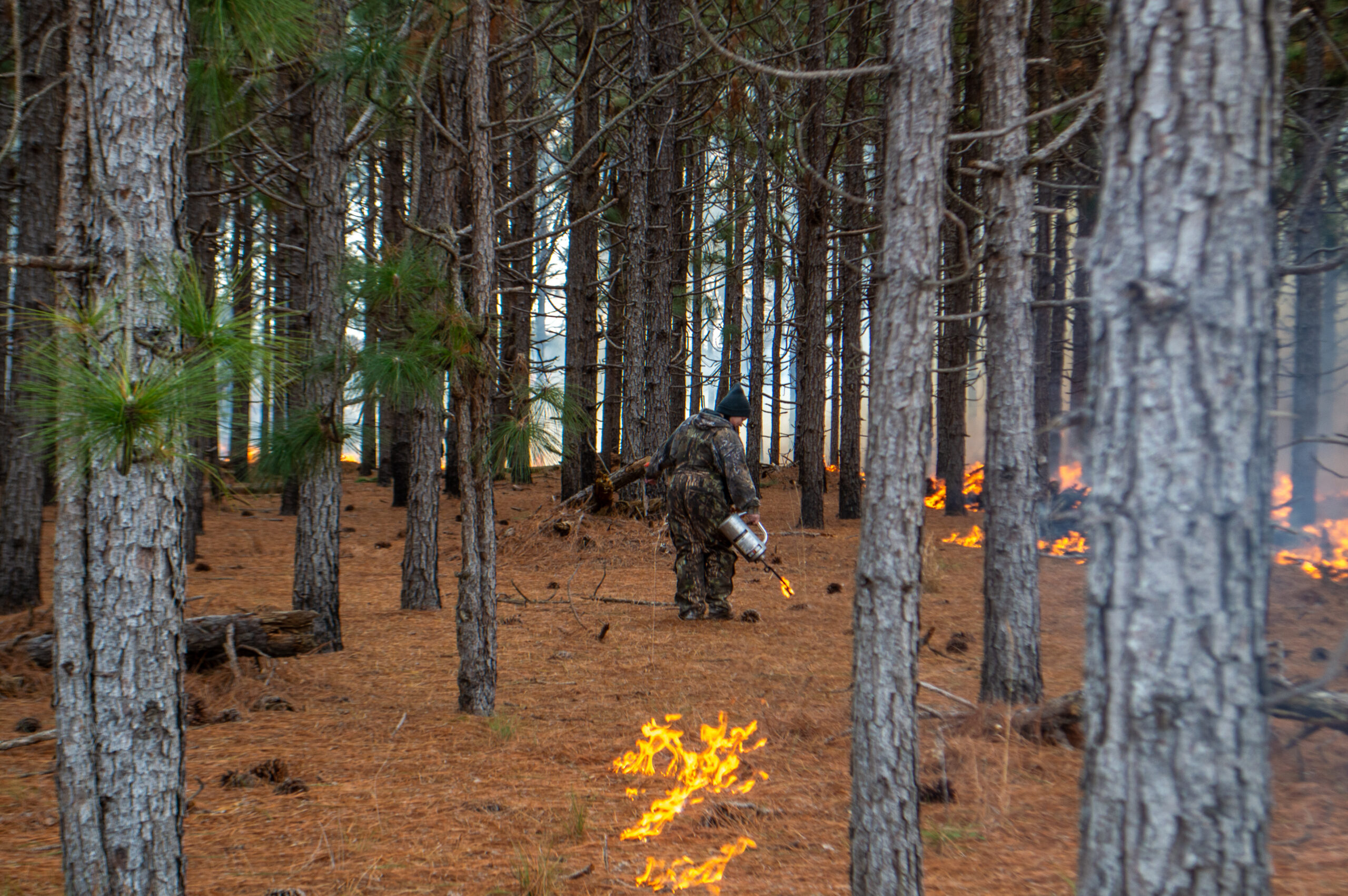
When you hear about prescribed burns—the intentional act of applying fire to vegetation to achieve predetermined land management objectives—you may think of paid professionals bearing protective gear with a drip torch in hand, while communicating with co-workers over walkie-talkies or cell phones. It’s true that that’s how the practice is conducted today, but its history stretches back a millennium. So, as you can imagine, that hasn’t always been the case.
A Practice as Old as Time
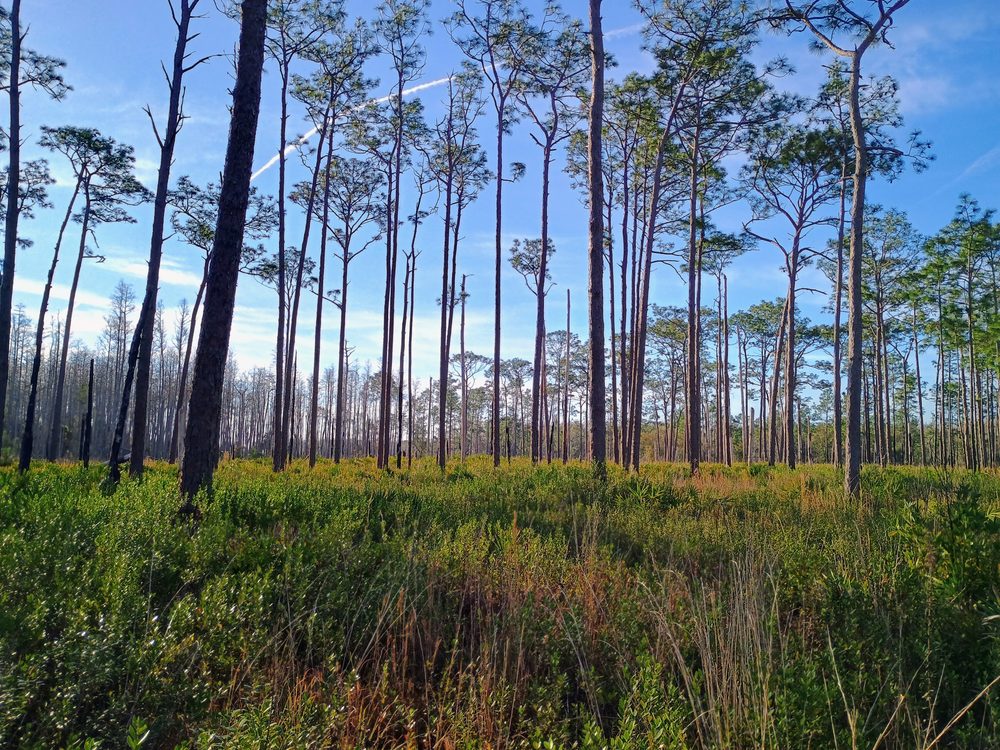
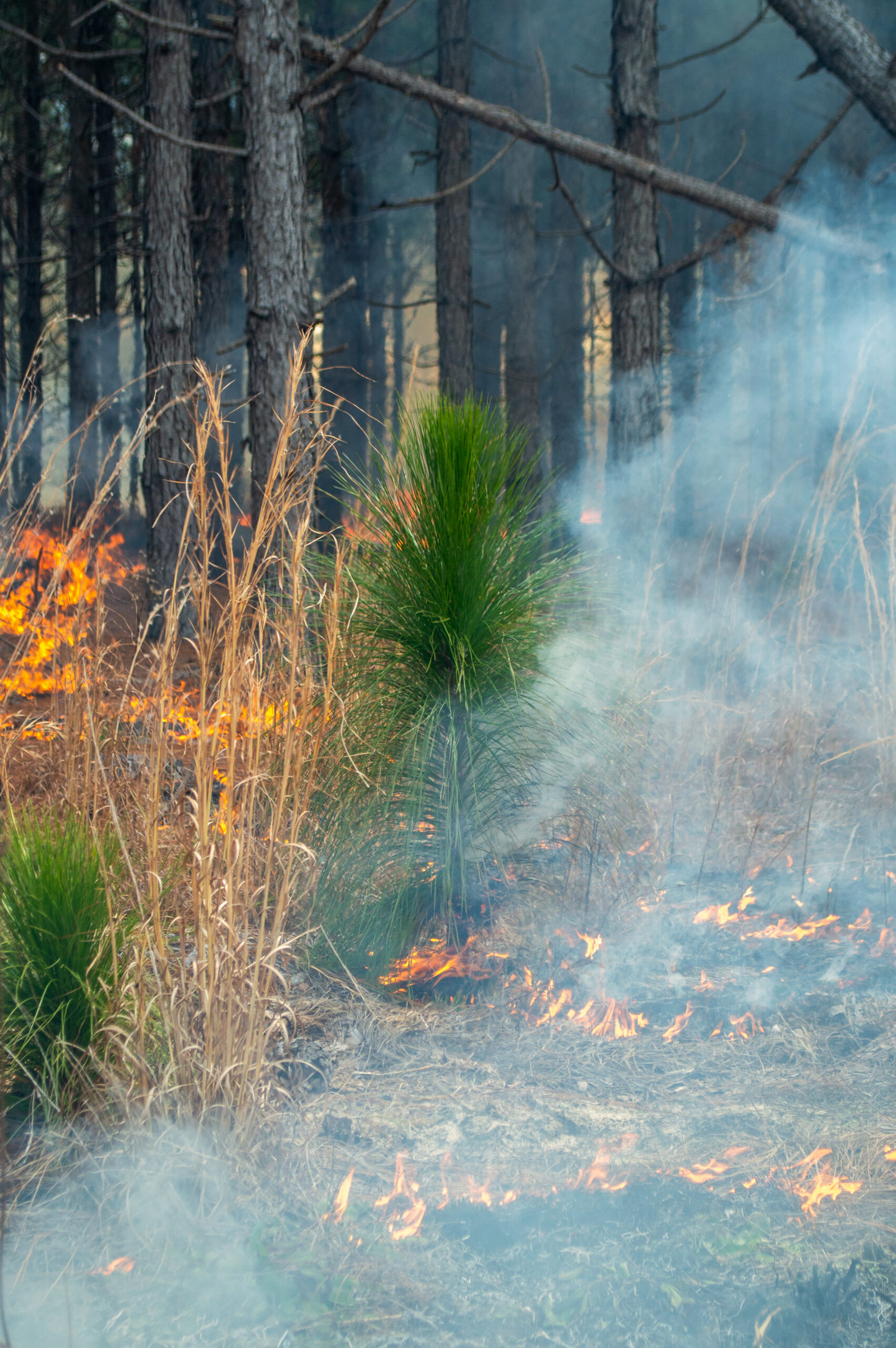
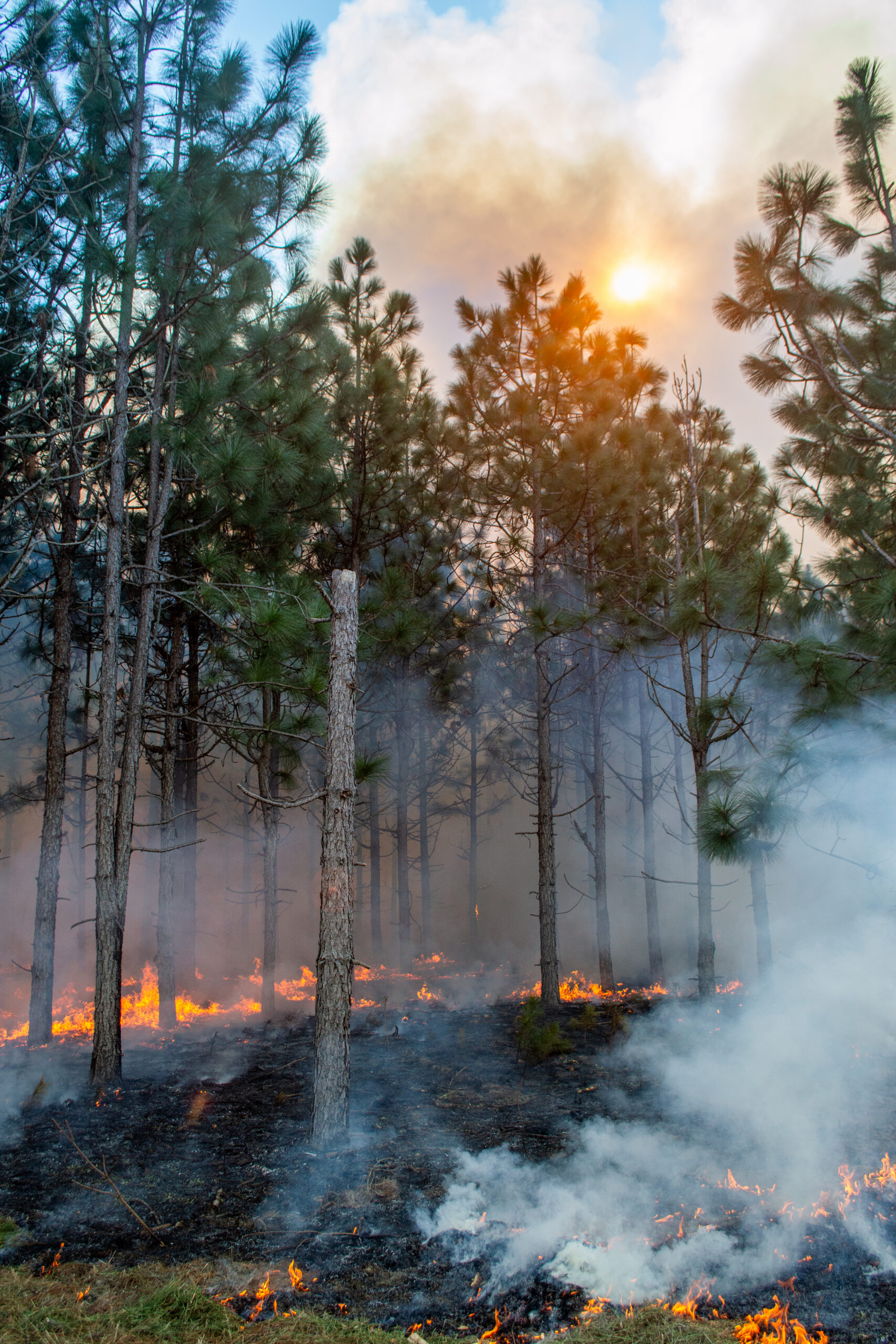
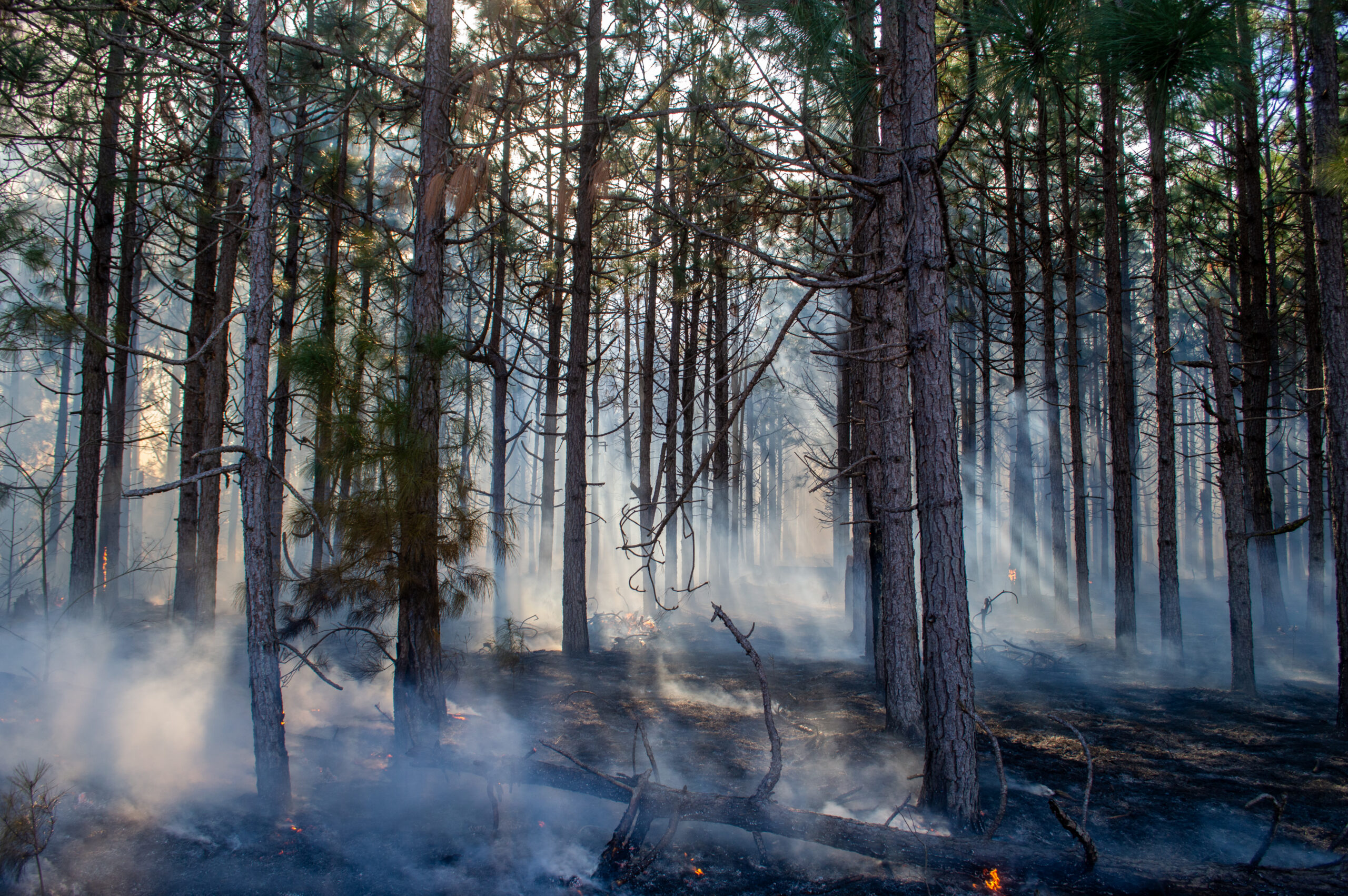
Lower-intensity fire is a natural and necessary aspect of many ecosystems, including the longleaf pine ecosystem, which ranges from southern Virginia to eastern Texas. Here, fire opens the understory up, providing ample hunting opportunities for native wildlife; increasing diversity and abundance of vegetation; and maintaining the habitat of keystone species like the gopher tortoise.
Indigenous Peoples recognized this, and intentionally lit small, controlled fires to clear land for crops, to hunt game, and manage and promote ecosystem health, providing communities with clothing, food, ceremonial items, and more—a practice known today as cultural burning. When they would migrate to a new location, they would leave their old site burning in their wake, knowing that, when they returned, they would find the land flourishing more than before.
The Lumbee Tribe of North Carolina—which recently received federal recognition through the Lumbee Fairness Act, signed into law on December 18, 2025—are one of many who continue to practice cultural burning. While they and many other Indigenous Peoples have lost many things over the years—including nearly 99% have had their homelands taken from them, according to a recent data set—this traditional practice remains a steadfast land management strategy.
Unfortunately, while fire continues to rejuvenate and maintain fire-dependent ecosystems to this day, the practice hasn’t been rightfully and positively depicted in the past. The resulting decades of fire suppression and, consequently, fuel—live and dead organic material—build-up, pose a risk to people and wildlife. Now, it’s more important than ever to carefully burn those fuels before they lead to high-intensity, life-threatening wildfires.
The Locklear Farm
Mitch Locklear, a member of the Lumbee Tribe, is one of National Wildlife Federation’s Longleaf for All Landowner Mentors. The Landowner Mentorship Model engages with landowners that have been successful in restoring longleaf pine on their property to share lessons and sustainable management techniques like prescribed burning. This January, Mitch brought a handful of local landowners to his property for a controlled burn to teach them the ways of prescribed fire.
His family farm, The Locklear Farm, was acquired in 1979 by Early and Lucille Locklear. It primarily served as a tobacco farm, but included cotton, soy, corn, and wheat over the years, eventually becoming a forested property in the hands of their children, brothers Ralph Phillip Locklear Jr. and Mitchell “Mitch” Locklear, who got forestry degrees. They initiated a longleaf pine planting in 2005 and added an additional border of longleaf pines in 2012.
The brothers have maintained the property with fire since the 2000s, but that wasn’t their first experience with fire on their family land. As Mitch points out, “Prescribed burning has been in my family ever [since] I was a little boy. My dad was a farmer—a sharecropper—so we always burned the fields after the crops, especially after wheat.”

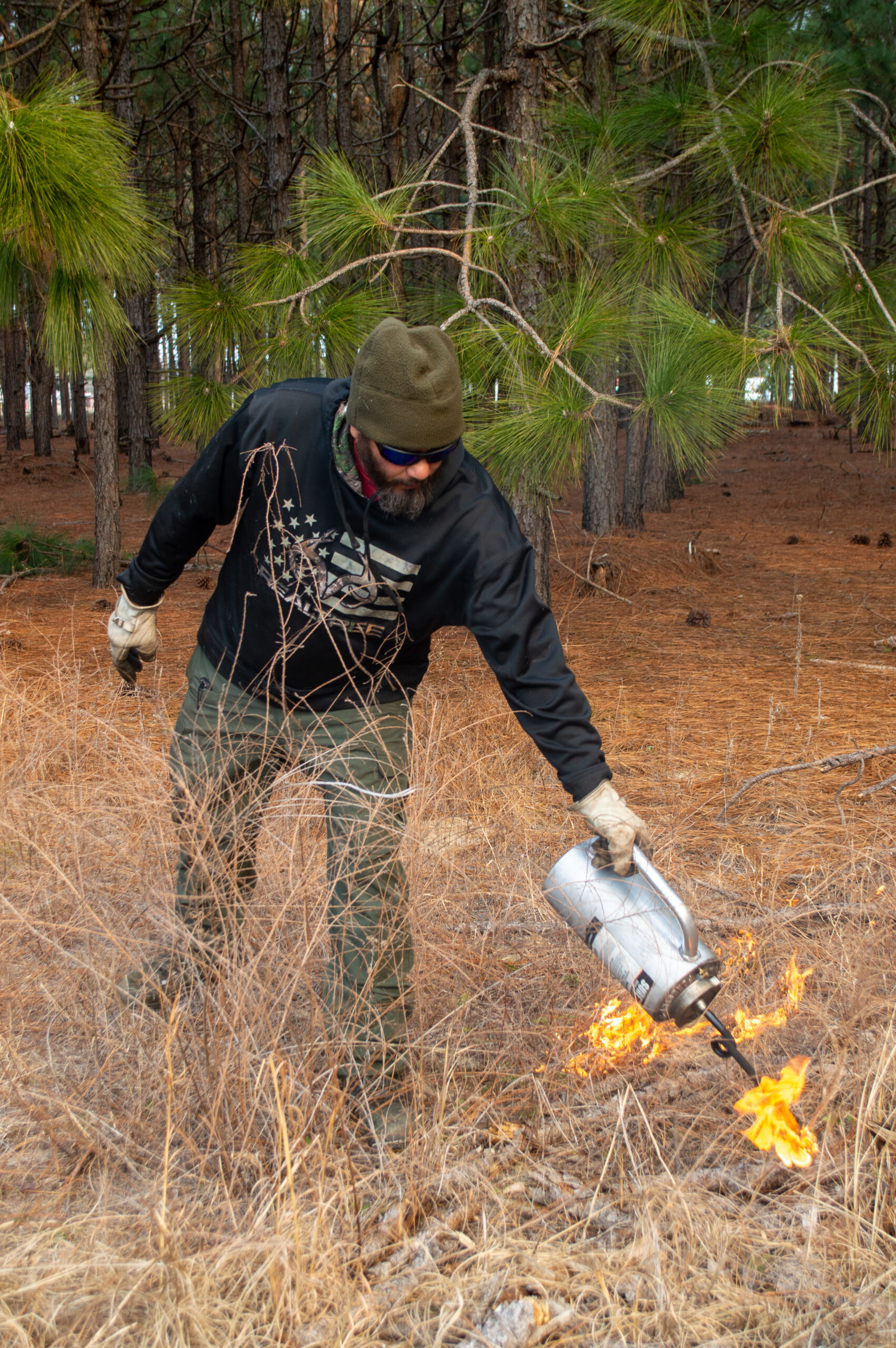
This generational practice doesn’t stop at Mitch and Ralph Phillip, as their children, though not pursuing forestry careers like their fathers, get involved in the practice where they can, with Mitch’s daughter Khinsley present at the pictured burn. She got her hands on the drip torch, and though wary of the flames, demonstrated a clear understanding of why this practice is important not only for the land, but to their People.
A Legacy of Fire
It’s evident that the practice of prescribed burning is a legacy that Mitch and his family proudly carry, and that this land—their historic land—will never go without the proper management as long as they live. Their investment into their land isn’t only for themselves, but for the coming generations, as it’s a means of generational wealth for their children, and their children’s children, and beyond.
“Burning is in my blood,” Mitch says. “I’ve always done it, always enjoyed it, and [I’m] grateful to continue it.”
The Longleaf for All Mentorship Model is conducted in partnership with USDA Natural Resources Conservation Service in North Carolina. USDA is an equal opportunity provider, employer, and lender.
