










We have much more to do and your continued support is needed now more than ever.
Educating North Carolina Landowners on Longleaf Pine Management

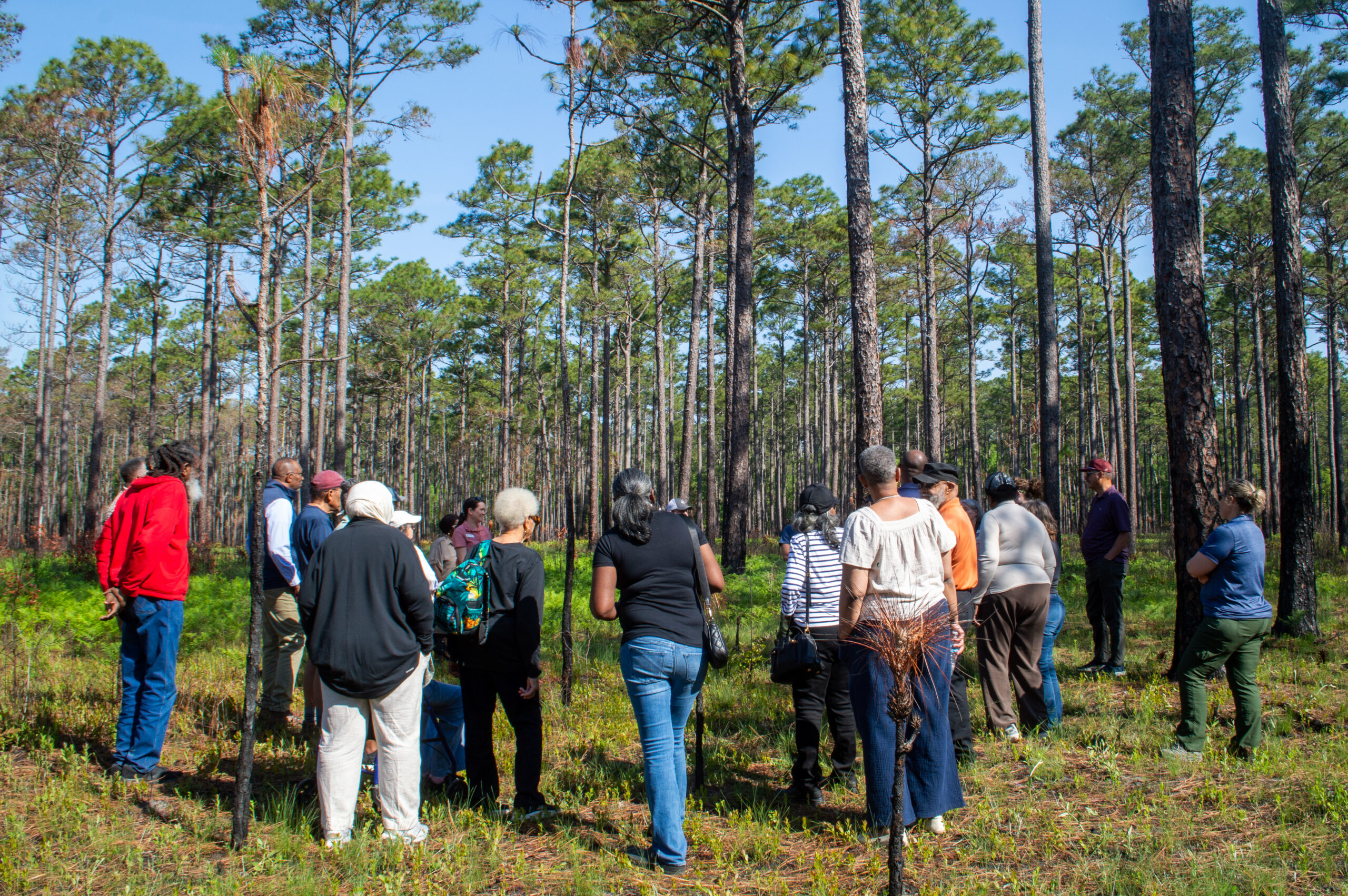
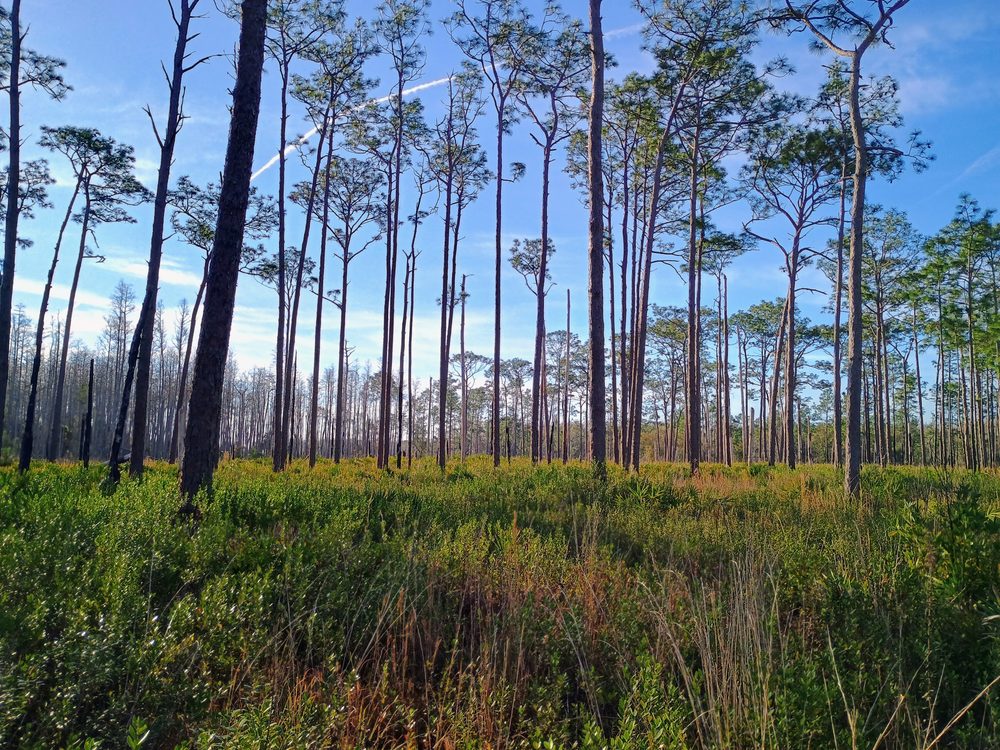
An attendee overlooks Croatan National Forest. Credit: Shelby Flores
There’s nothing like an Earth Day spent learning about restoring native forests, and this April, that’s exactly what nearly 40 Southeastern residents did. Landowners and professionals gathered in Maysville, North Carolina, tucked away in the coastal plain, for The Longleaf Alliance’s Longleaf and the Landowner Academy. This three-day workshop focused on providing landowners with resources to support land retention and longleaf pine management.
Constance Stancil, one of National Wildlife Federation’s Longleaf Landowner Mentors, hosted attendees at her family’s property, the Major Mattocks Real Estate Trust Family Farm. The Landowner Mentorship Model engages landowners that have been successful in restoring longleaf pine on their land to share lessons and sustainable management techniques, as Constance did here.
“It’s important that [landowners] see [model farms] for the same reason that Zakia and I saw [Mr. Hodges’s] farm,” Stancil says. “We saw what was possible, and we saw what happens if you work together. But we also had a chance to physically see the trees grow at different stages. . . . So, if people see the possibilities of what can happen on their land, and we expose them to different resources like that training we went to in Georgia and the training that was here in North Carolina, [they can acquire] a lot of information about the different resources that are out there.”


Honoring Ancestors Through Knowledge Sharing
The three-day workshop detailed everything from heirs’ property to non-traditional economic opportunities like carbon markets. The values of forest conservation for some landowners transcend pure financial returns, including the wildlife habitat value, aesthetics of the property, and familial bonds through shared experience. For many, there’s the peace one gains from walking through these forests and, for families like the Mattocks, the knowing it’s the land your ancestors walked, fought for, and won.
“My heart, my soul, is rooted in the dirt on that land,” Stancil says. “Everything I am, who I am now, started there.”
The Mattocks’s faced many hardships in keeping their land, from foreclosures to warranty deeds, eventually going from 902 acres to 615 acres. But their ability to retain any acreage despite their troubles is a symbol of this family’s resistance and strength. Constance Stancil and Zakiya Zaid, both trustees for the Major Mattocks Real Estate Trust Farm, detailed the full history to guests and honored their ancestors Joseph Spicer and Catherine Jones Spicer and Major and Peggie Mattocks, alongside their nine children Alice, Alva, Dorothy, Katie, Mary, Pearlie, Judge, Thurston, and Esther.
The current Mattocks trustees and beneficiaries honor the stewardship legacy of those ancestors by responsibly managing the acreage passed down to them. The family partners with organizations like the National Wildlife Federation and The Longleaf Alliance to promote locally relevant, environmentally sustainable practices and education to the community.

Achieving Progress Through Connection
With groups like Black Family Land Trust, North Carolina Wildlife Federation, and Help for Landowners, the Longleaf and the Landowner Academy equipped eager-to-learn participants with professional resources. These participants also brainstormed lists of their own personal resources to lean on, too, from lawyers and mediators to surveyors and accountants. Forest management, restoration, and estate planning for multi-generational land stewardship often require a team approach for long-term success.
“You will meet so many people that it’s unbelievable,” Zaid said. “There’s so many people we’ve made partnerships with to get us where we are. It’s not just one organization, it’s the community out there that you lean into.”
To round out the event, attendees visited Croatan National Forest, 160,000 acres of pine forests, bogs, estuaries, bogs, and pocosins. Here, they learned about the strategies and success of older longleaf pine forests management firsthand, including uneven age management, the effects of prescribed burns, and red-cockaded woodpeckers. This visit offered a hopeful view into the future of what their properties could become with years of management.
“Let this be your beginning, not your end,” Zaid said. “This is just your first step.”