






We have much more to do and your continued support is needed now more than ever.
Growing Change: How New Jersey Students Are Leading the Way in Sustainability
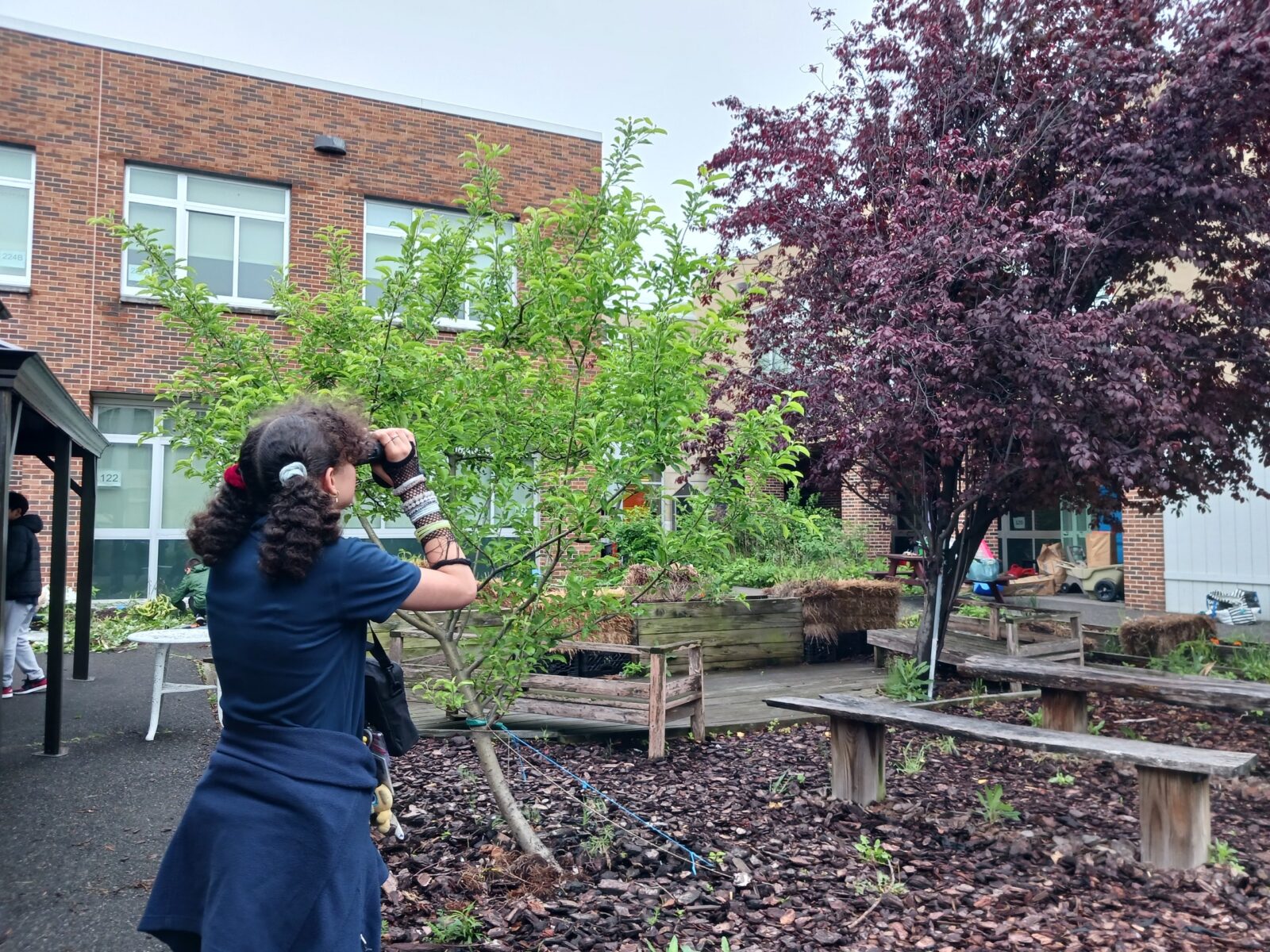
Lincoln Middle School student observing birds in their Bird Friendly Schoolyard.
Step into the courtyard of Lincoln Middle School in Kearny, and you’ll immediately notice something special. This isn’t just an outdoor space—it’s a living classroom. Beneath a covered pavilion, surrounded by bird feeders, raised garden beds, and pollinator plants, students are actively learning, growing, and giving back.
What happens in this courtyard extends far beyond its borders. Students are taking the lead on projects that matter to both their communities and the planet. Fresh produce grown in the garden is donated to families and local food banks. A student-led partnership with local businesses and Rutgers University resulted in the installation of a rain garden, designed to absorb stormwater runoff. These same students went on to teach others how to build their own rain gardens.
And Lincoln Middle School is not alone.
Across New Jersey, schools are stepping up through the Eco-Schools U.S. program, a global sustainability initiative operating in over 100 countries and administered in the U.S. by the National Wildlife Federation. Supported in New Jersey by the PSEG Foundation and New Jersey Audubon (a NWF affiliate), the program empowers students to take meaningful environmental action in their schools and communities.
“Through our partnership with the National Wildlife Federation, we’re able to create engaging, hands-on learning opportunities for our students that are rooted in community impact, environmental responsibility and leadership development,” said Maria Spina, Senior Manager of the PSEG Foundation & Corporate Social Responsibility. “This program gives young people practical ways to engage within their own communities and inspires them to make positive change in their environment. We’re grateful to work with partners like the National Wildlife Federation as we collective help build a greener, cleaner and friendlier New Jersey that our children can thrive in.”
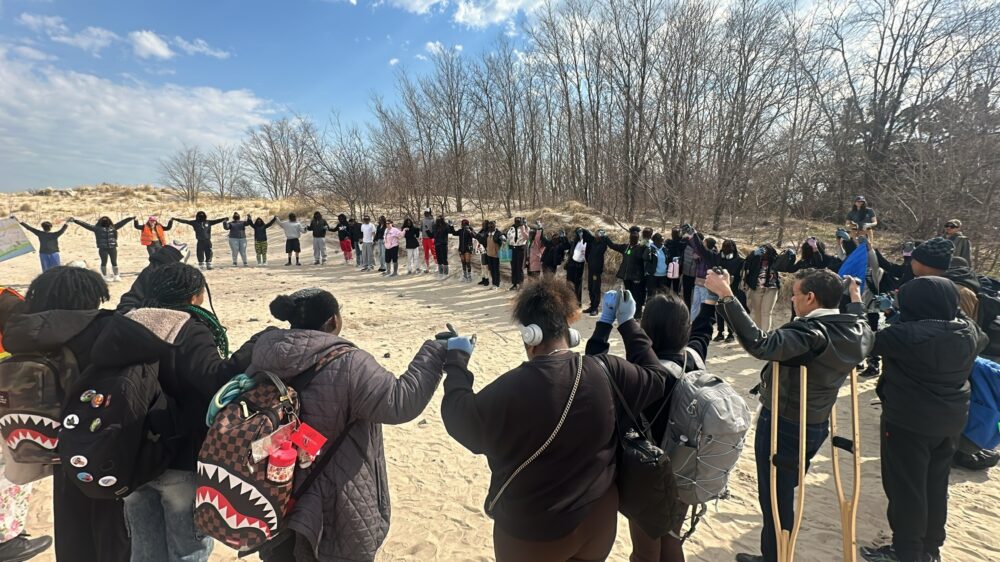
The impact is wide-ranging. Some schools have created free campus “thrift stores” to support students in need. Others are planting dune grass to combat coastal erosion, building pollinator gardens, launching seed libraries, and even raising fish in classroom aquaponics systems. Students are testing water quality in local streams and leading clean-up efforts that directly improve their neighborhoods.
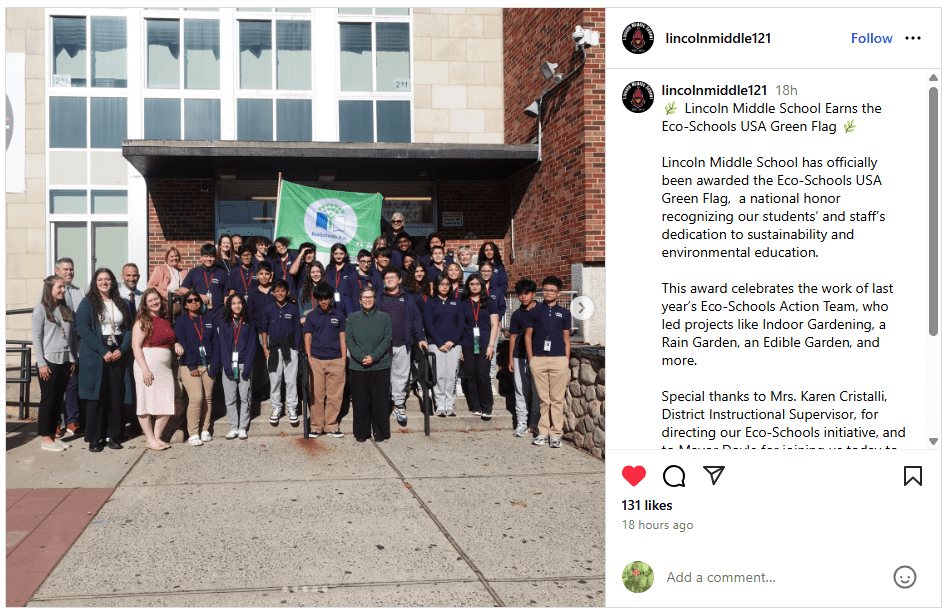
At the heart of Eco-Schools U.S. program are more than 60 “Action Cards”—student-driven projects focused on Climate Change, Wildlife and Biodiversity, and Healthy Communities. Schools earn points for completed projects as they work toward certification levels from Bronze to the prestigious Green Flag. In 2025, ten New Jersey schools—including Lincoln Middle School—achieved Green Flag status, demonstrating exceptional commitment to sustainability.
And educators are seeing the difference. As one teacher shared, the program transforms students’ care for the planet into meaningful, student-led action—building academic skills, confidence, and community impact.
Programs like Eco-Schools U.S. show what’s possible when students are empowered to lead. They’re not just learning about sustainability, they’re practicing it, shaping it, and proving that meaningful change can start right at school and in communities.
To learn more about how schools across New Jersey are making a difference, visit the New Jersey Audubon website.
Roberta Hunter is the Education Program Manager for New Jersey Audubon (NJA) an NWF affiliate. Roberta is responsible for implementing Eco-Schools U.S. in schools across New Jersey.
