




We have much more to do and your continued support is needed now more than ever.
Teaching Collegiate Students the ‘Why’ behind Prescribed Burning
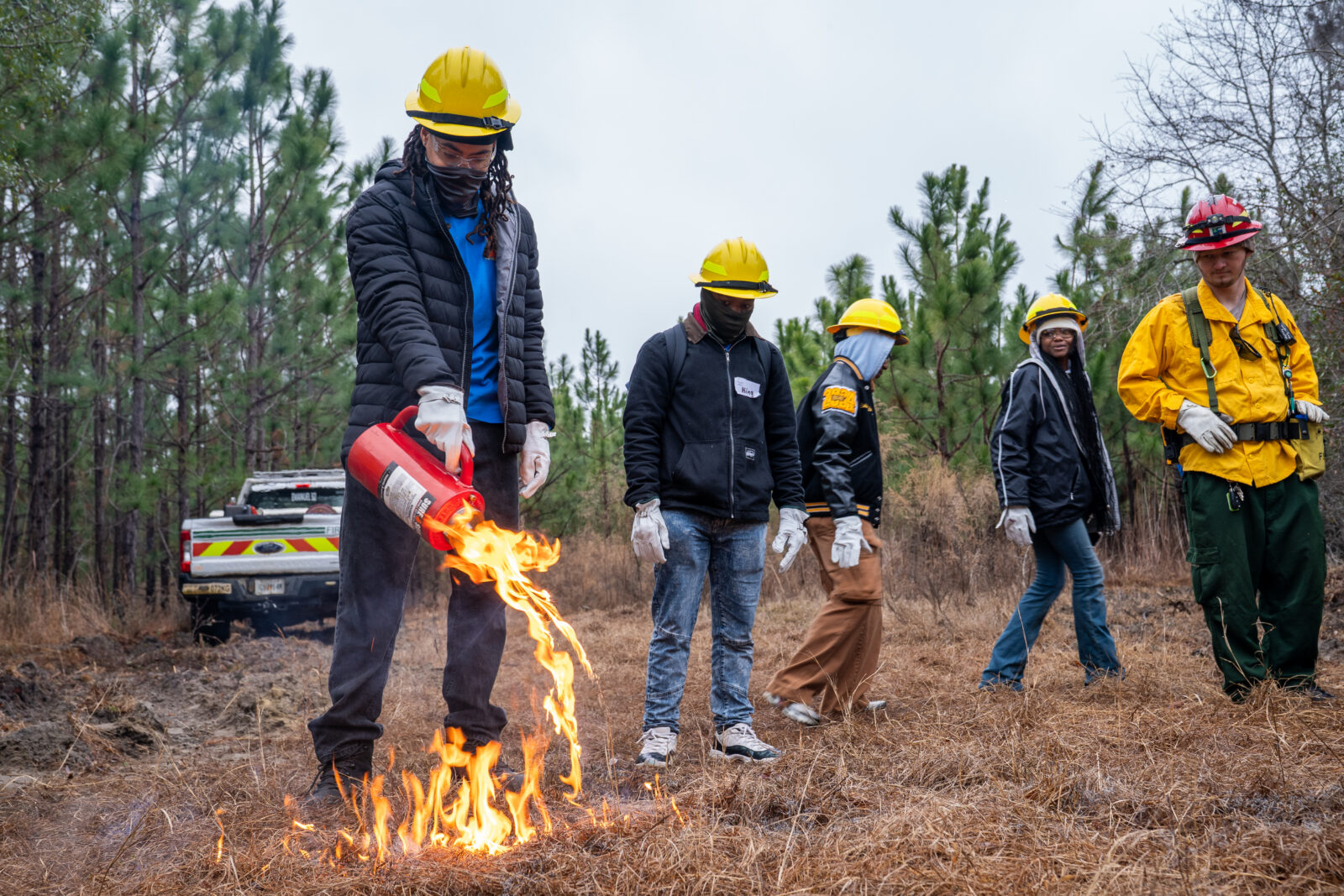
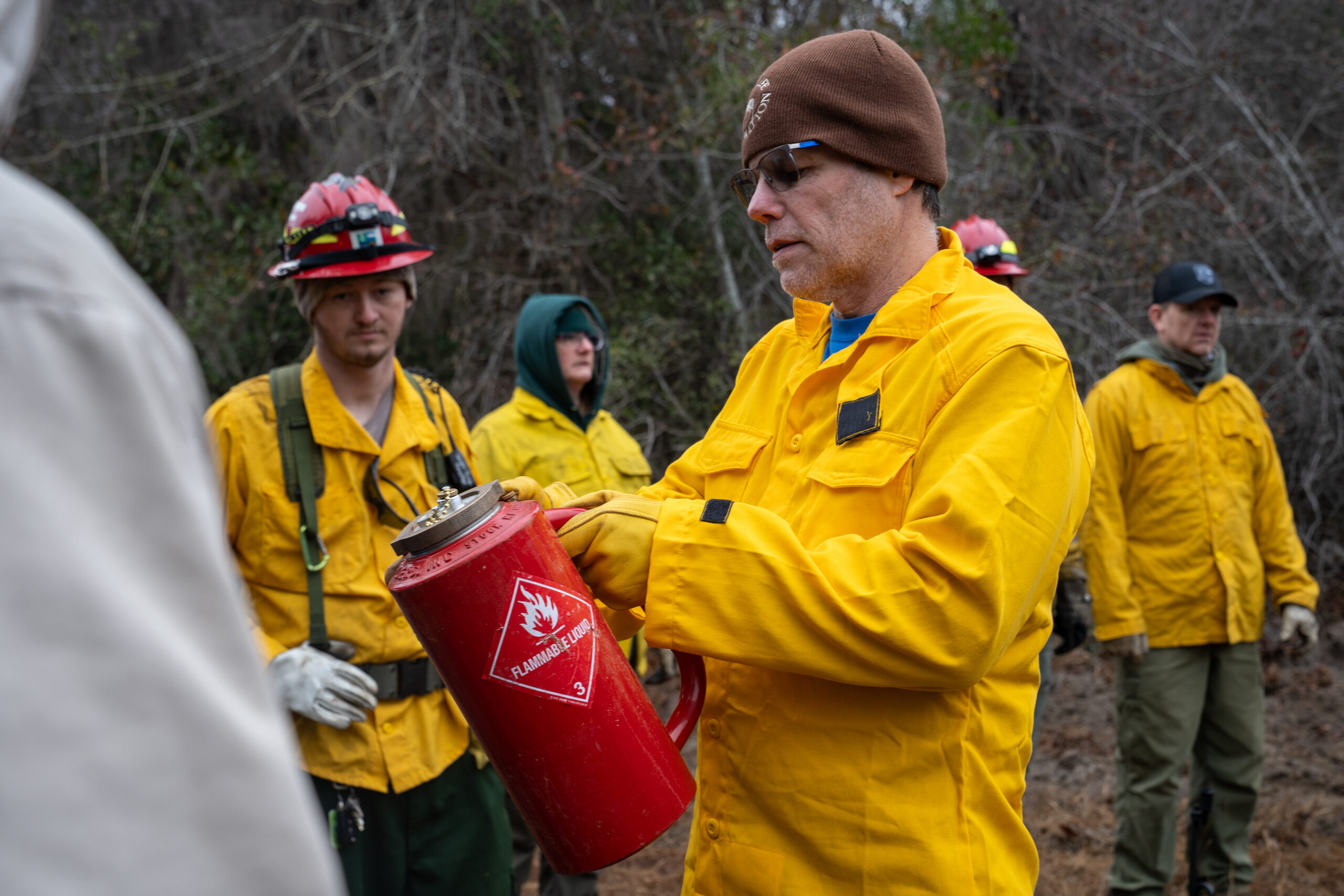
A Fort Valley State University student gets hands-on experience with a drip torch. Credit: Shelby Flores
Higher education is an essential component of natural resource careers. However, it’s one thing to learn in the classroom; it’s another to get outside. For the next generation of fire practitioners, who will be tasked with ensuring our forests remain healthy and resilient for native wildlife and local communities alike, it’s more important than ever they get hands-on experience.
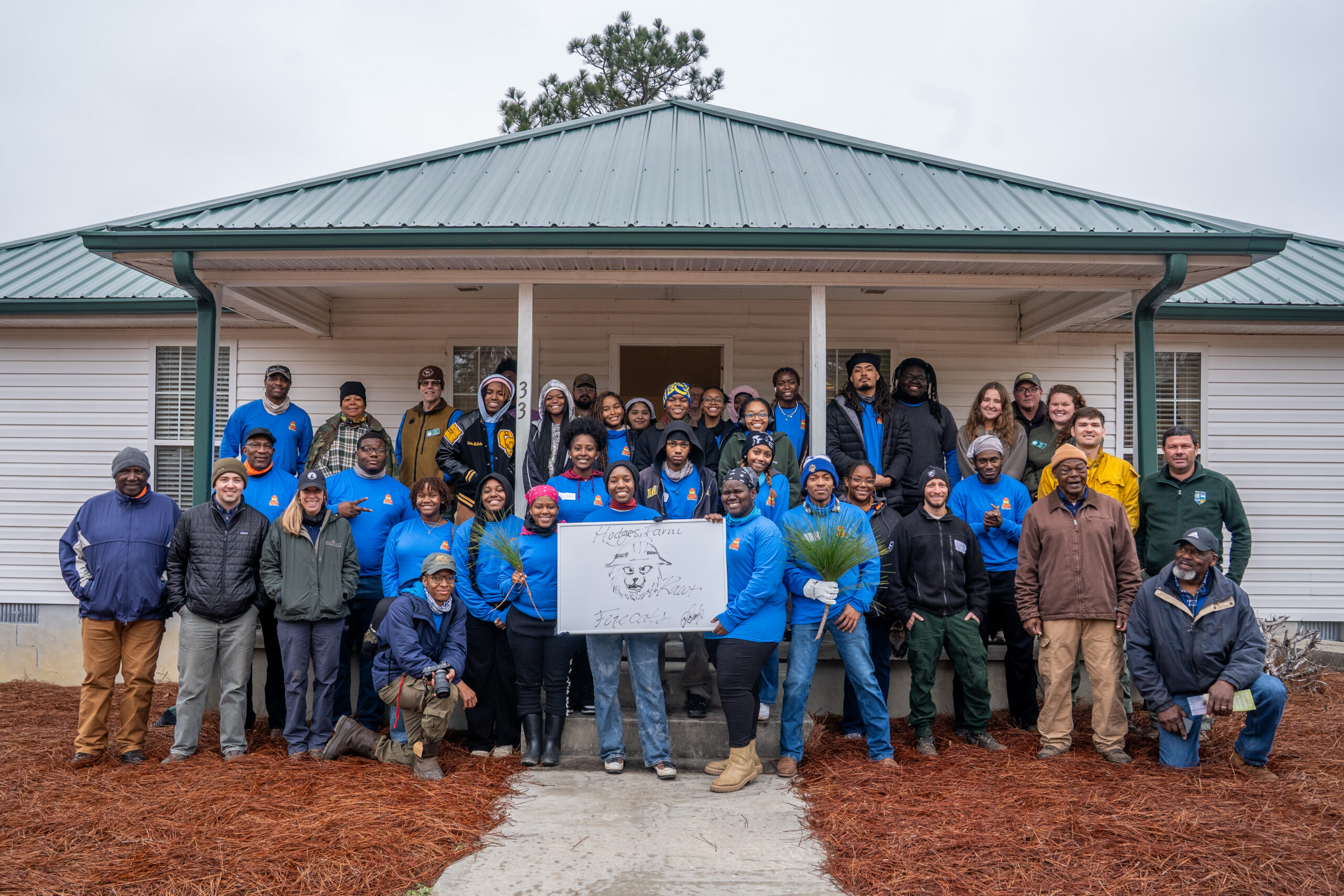
That’s why Fort Valley State University (FVSU), in collaboration with the National Wildlife Federation’s Southeast Forestry program, has established the FireCats. This collegiate club aims to bring together students with an interest in the natural world and careers in forestry, fire ecology, prescribed burning, and conservation.
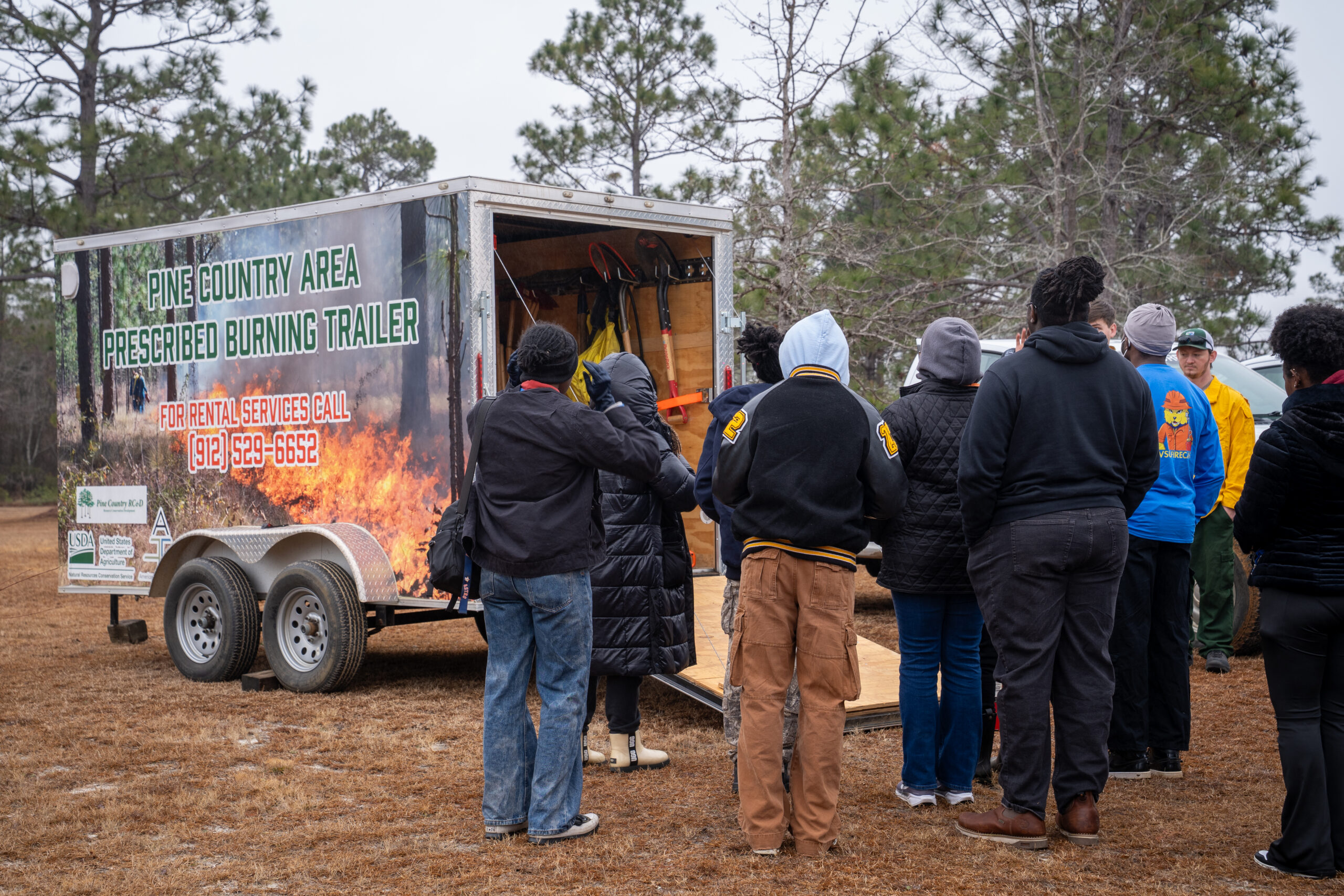
In collaboration with the Longleaf for All Mentorship Model—a program that leverages the knowledge of experienced forestry landowners to educate their community—the FireCats brought 24 students to Landowner Mentor Mr. Herbert Hodges’s property for his annual Learn & Burn in Swainsboro, Georgia.
A Fire-Dependent Ecosystem
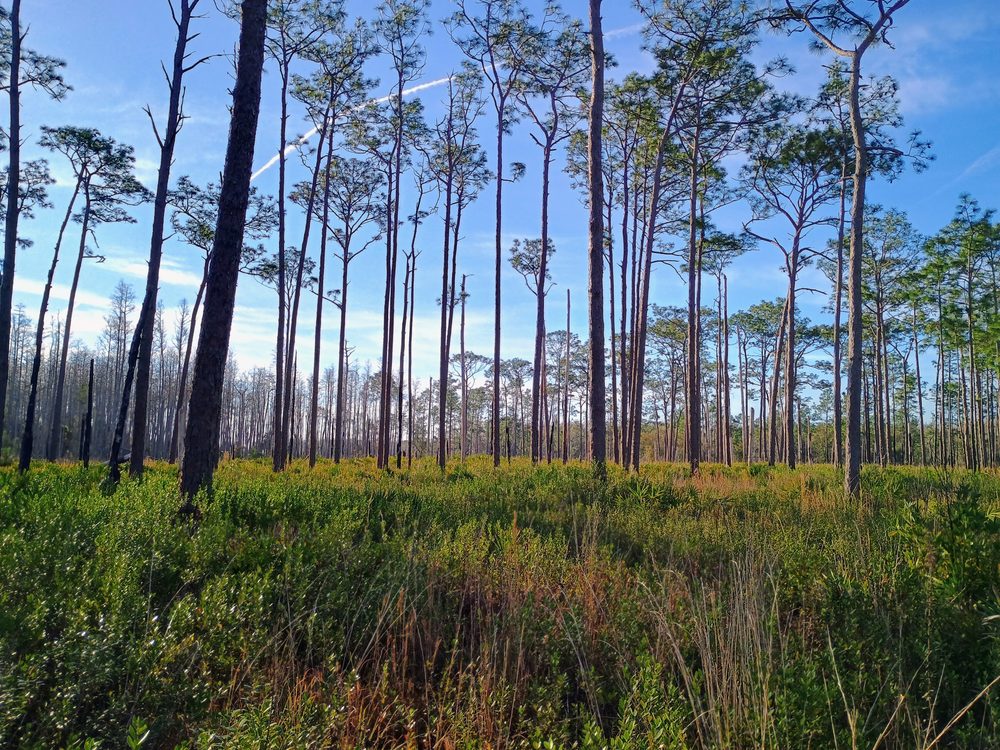
The longleaf pine ecosystem—once spanning 90 million acres stretching from southern Virginia to eastern Texas—is crucial to the Southeast, but human activity has caused a drastic decline in acreage. Efforts are underway to reverse this damage, and prescribed fire is a critical component of this, as lower-intensity fire is a natural and necessary aspect of this ecosystem.
It’s a methodology that not only helps the flora grow but thrive. In removing invasive shrubs and other competing vegetation, sunlight can reach the understory, promoting nutrient cycling, seed germination, and the growth or regrowth of native species. In fact, without prescribed burning, the ecosystem’s namesake species, the longleaf pine, wouldn’t be able to flourish.
For Zion Sayles, the newly appointed FireCats President, it was very rewarding to learn how native plants can survive during fires and rebound, coming back stronger than ever. In an interview, Zion noted her particular excitement “to provide plant science majors”—like herself—“with the opportunity to get deeper into the field of forestry and ecology” in her new position.
However, flora aren’t the only ones who benefit from fire in the longleaf pine ecosystem. Fire opens the understory up, which provides ample hunting opportunities for native wildlife; increases diversity and abundance of vegetation for herbivores; and maintains the habitat of keystone species like the gopher tortoise—an at-risk reptile students loved learned about.

Protecting Communities
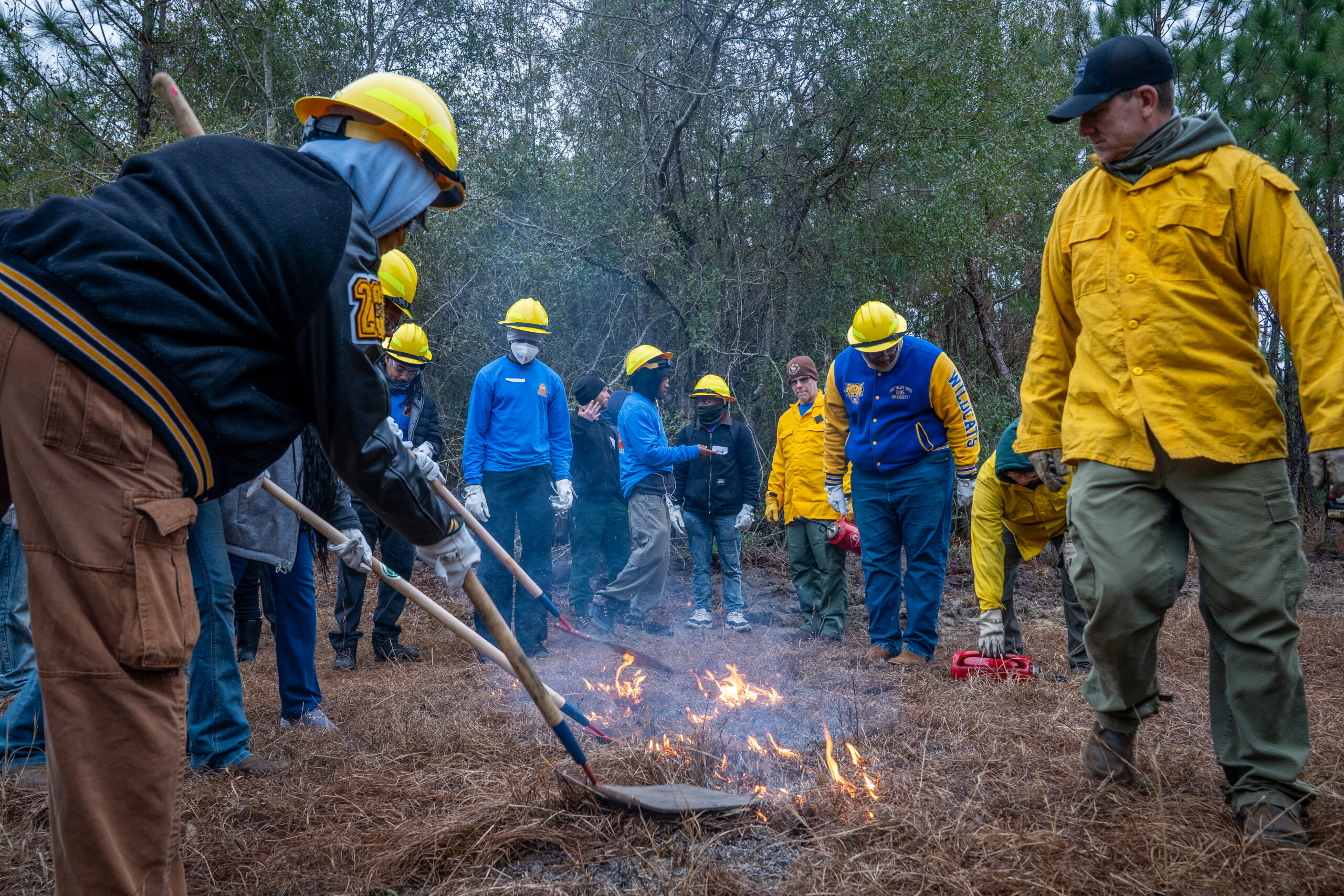
Prescribed burning doesn’t merely benefit ecosystems but communities too. Warming temperatures are amplifying wildland fire activity, and while humidity, wind speed, and direction are prominent influences in how these events spread, it’s the accumulation of vegetation—or fuels—that drive hotter, faster, and higher reaching fires.
The resulting catastrophic wildfires threaten landscapes, property, civilians, and firefighters, prescribed burners have the unique ability to get ahead of these natural disasters by removing these loads. In removing dead and live vegetation, such as trees, shrubs, grasses, and litter, fire practitioners can safeguard communities before trouble strikes.
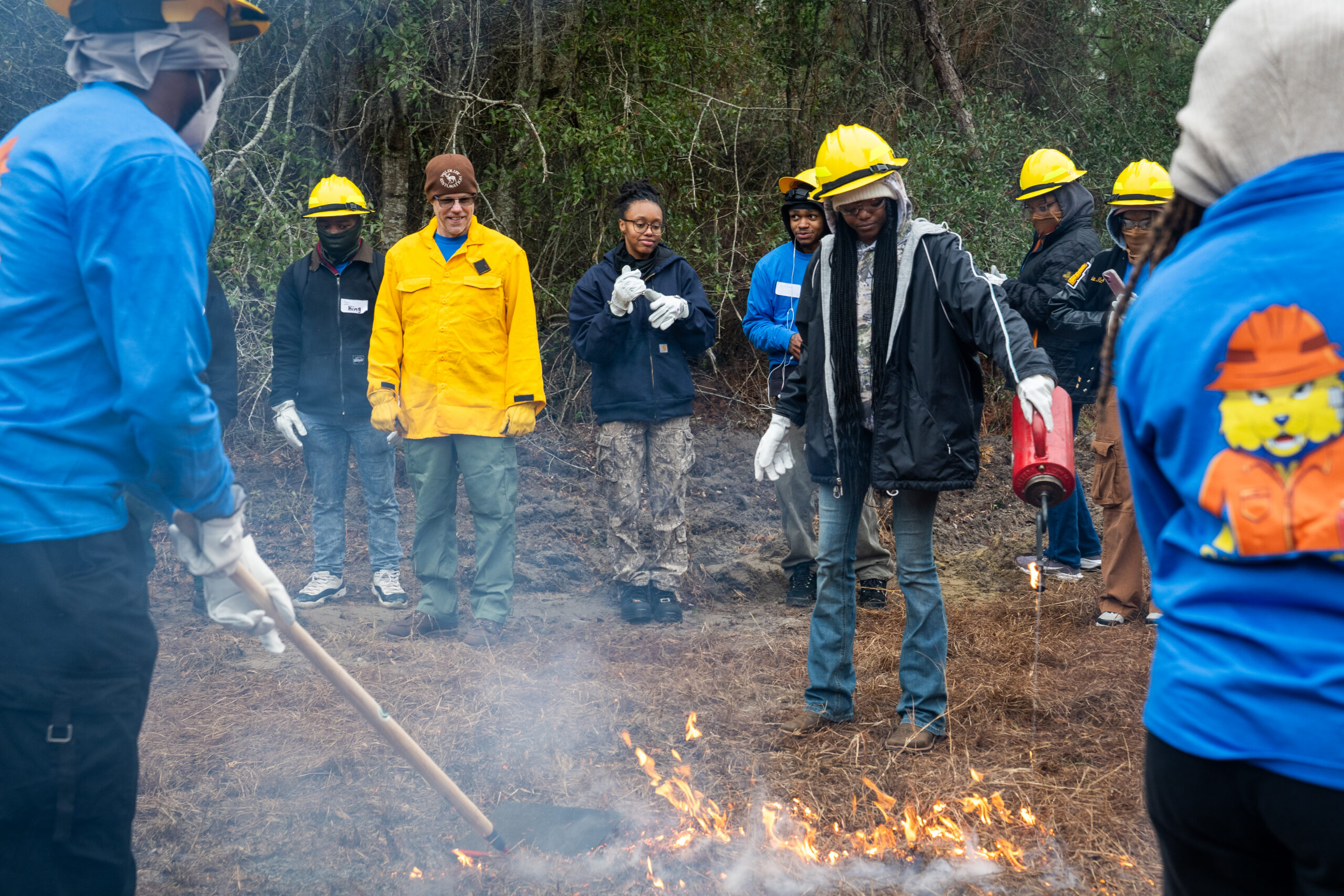
“This experience really opened my eyes,” says student Kingston Askins. “I can see how this is a very enjoyable career to go into, and it’s very rewarding, as you can see how doing these prescribed burnings [help] the environment.”
A Field Rife with Opportunity
It’s the diversity of the field that stuck with students in the end, as most students went into this event not knowing how their majors could help them have careers in fire. But that’s the beauty in forestry: no matter your degree, there’s always ways to get involved. The professionals were prime examples of this, as while many had natural resource degrees, others majored in the arts.
While it’s true that many of these students may not find their way into a fire-adjacent career, whether that be because of pre-determined career goals or otherwise, at the very least, they now have the resources to teach their friends and family that prescribed fire isn’t something to fear. And out of this peer education, who knows what future fire practitioners could be born.
“There are steps we can take to protect [the environment] for the next generation,” Herbert says, “[and] it’s going to take all of us being interested and working hard to see that it’s done.”