











We have much more to do and your continued support is needed now more than ever.
Eco-Schools in Action: Students Leading Change, Communities Seeing Impact

Students at Glandorf Elementary School celebrate their second Eco-Schools U.S. Green Flag
Across the country, schools are rising to meet the moment where climate action, student leadership, and community partnership intersect. The Eco-Schools program provides a powerful framework that helps K-12 schools translate sustainability into learning, leadership, and measurable impact. Designed to be student-led and educator-supported, Eco-Schools equips young people with opportunities to drive change, while giving schools and districts the data, stories, and outcomes they need to meet academic, social-emotional, and civic learning goals.
For superintendents, district administrators, principals, and educators, Eco-Schools offers more than just a checklist; it’s a flexible platform aligned with local priorities. From curriculum integration and school culture to equity and student agency, the program helps schools track progress, celebrate success, and engage families and communities as partners in building environmentally literate and resilient learners.
Eco-Schools provides the perfect balance of structure and flexibility that makes environmental action approachable. Whether a school’s green team is well-established or just getting started, the Eco-Schools framework and resources offer a path forward. The library of action cards features a broad array of options that can easily align with a school’s current interests or inspire new ones. Likewise, if a school has an idea for environmental action that does not fit neatly into an existing action card, Eco-Schools offers opportunities to get credit for that too. Eco-Schools meets schools where they are and builds momentum off of that.
-Kelly Moses, Denver Public Schools
Here are three stories that demonstrate the power and potential of Eco-Schools in action:
Glandorf Elementary School, Ottawa-Glandorf Local School District

At Glandorf Elementary in Ohio, going green isn’t just a project; it’s a tradition in the making. After earning their very first Eco-Schools Green Flag in May 2024, students charged into the new school year with fresh ideas, fierce determination, and the spirited leadership of the 7th-grade “Ecolizers.” This led to the school earning their second Eco-Schools Green Flag in June, 2025!
This year’s journey brought new action cards to life, including Indoor Gardening and Greenhouses and Divert Textile Waste, the latter keeping an incredible 3,000 pounds of textiles out of landfills. From building bird feeders and participating in the Great Backyard Bird Count to conducting macroinvertebrate surveys, students discovered firsthand how the health of local ecosystems is tied to the actions of a caring community.
When their tree planting project, part of the National Wildlife Federation’s Trees for Wildlife™ program, hit a snag due to an underground utility line, students didn’t back down—they problem-solved, adapted, and kept moving forward. Younger students learned side-by-side with older peers, while community partners stepped in with resources, expertise, and funding to help bring projects to life.
Perhaps most inspiring is the school’s EcoCode, brightly spelled out in colorful, non-recyclable bottle caps, a constant, creative reminder of Glandorf’s commitment to nature-based solutions.
As 7th-grader Peyton put it best: “We wanted to keep going and prove we could work just as hard, or even better [than last year].”
George Washington Carver Upper Elementary School, Bryan County School District
At George Washington Carver Upper Elementary in Georgia, sustainability isn’t just taught—it’s lived. In their very first year earning an Eco-Schools Green Flag, students poured energy, creativity, and purpose into seven different action cards, transforming their campus into a hub of environmental action.
From surveying macroinvertebrates in the school’s bioswale and wetland to launching a student-led composting program, every project was rooted in curiosity and teamwork. The school’s Compost Captains, student leaders equipped with repurposed buckets, collected food scraps during lunch, managed bins at recess, and became peer educators, showing classmates what to compost, how the process works, and why it matters.
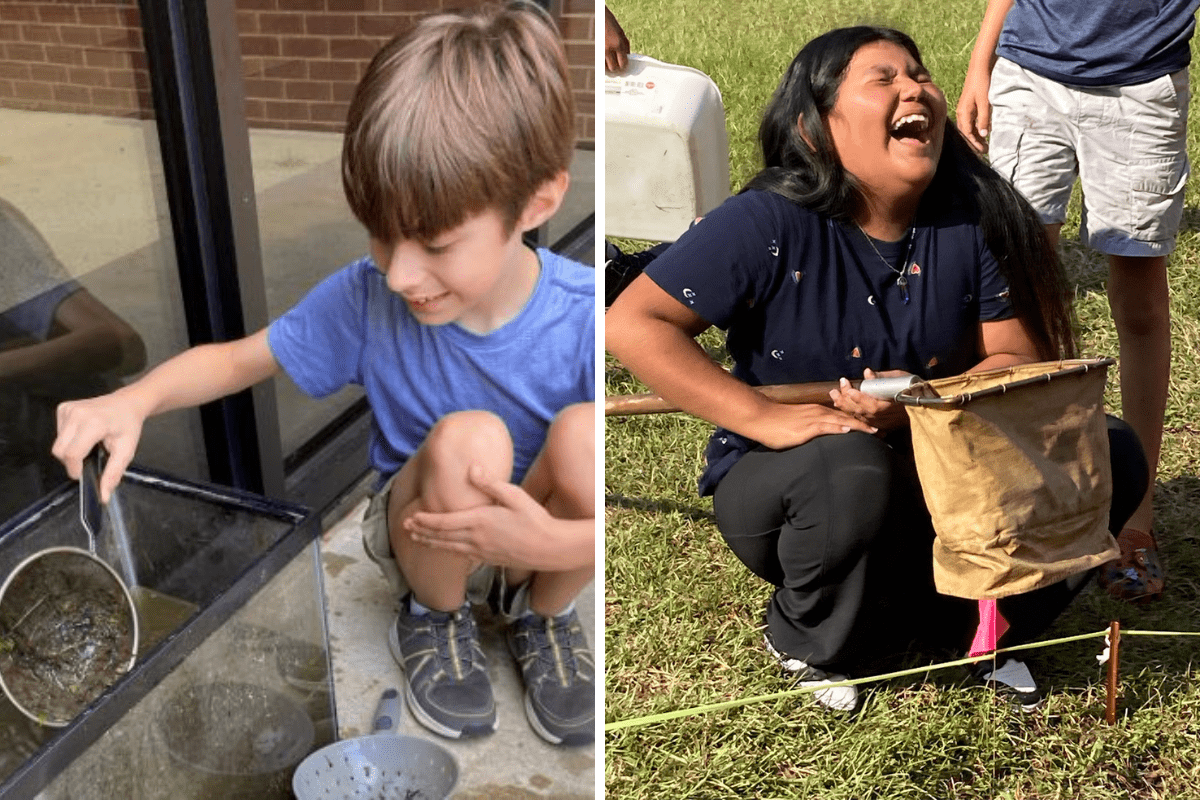
Classroom learning and hands-on action went hand in hand. Fifth graders turned the compost system into a living laboratory, studying decomposers, nutrient cycling, and energy flow, all while meeting Georgia’s science standards and advancing through the Eco-Schools Framework.
What started with small scraps has grown into a big impact: a culture where students lead, learn, and take action for the planet—proving that meaningful change can begin right in the schoolyard.
Teachers reported deeper engagement in science instruction, particularly in units involving soil, microbes, and sustainability. Social-emotionally, students developed confidence and leadership through public speaking, peer education, and environmental advocacy. Many Compost Captains expressed pride in creating something lasting and useful for the school, and students have begun proposing additional green infrastructure ideas based on the success of this initiative.
East High School, Denver Public Schools
At East High School in Denver, Colorado, students saw a challenge in their community, food insecurity, and decided to grow a solution. Through their Eco-Schools U.S. work, they applied for and won a DPS Climate Champions Grant, securing funding to transform the school’s south lawn into a sustainable, educational, and community-driven garden.
The student-led effort was anything but simple. Fortunately, it wasn’t the first time East High students had taken on a major challenge. In previous years, they had led a similar initiative to revitalize the school’s long-unused greenhouse. That project proved what’s possible when students unite around a shared vision and a strong work ethic.

When it came time to break ground on the garden, students drew from that enduring mindset of collaboration and persistence. They partnered with the school’s grounds department, facility manager, and city officials, navigating the Reg 84 approval process to irrigate their garden. Along the way, they tackled delays, revised bed layouts to fit irrigation requirements, and adapted their plans without losing momentum.
By spring, the garden was taking root—literally. Rows of vegetables and fruit now stand as a testament to what determination, teamwork, and a shared vision can achieve. The project reflects the very heart of a Green Flag Eco-School: students leading the charge, working hand in hand with community partners, and taking direct action to meet local needs.
Read more about the impact students, schools, and districts have had in the 2024-2025 Eco-Schools U.S. Impact Report.
