








We have much more to do and your continued support is needed now more than ever.
What in the Hellbender?
Learn about the largest salamander in the Americas.
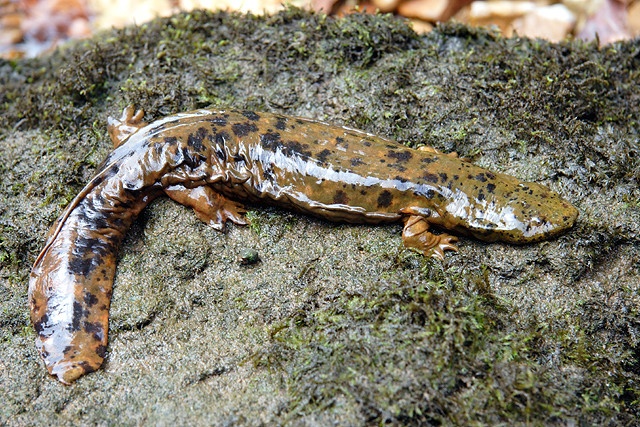
Hellbender. Credit: Michael Cravens
Endangered Species Day this year falls on May 15, 2026. In 2006 the U.S. Congress designated the third Friday in May as Endangered Species Day (ESD). ESD spotlights and advances conservation efforts for threatened and endangered species in the U.S. and around the world. It’s an opportunity to learn about endangered species and to take action to help these vulnerable plants and animals. The Endangered Species Coalition, along with several supporting partners, including the National Wildlife Federation (NWF), promote awareness and engagement opportunities around ESD each year. Read this year’s NWF blog to learn more about Endangered Species Day. Read on to learn about hellbenders and take our quiz.
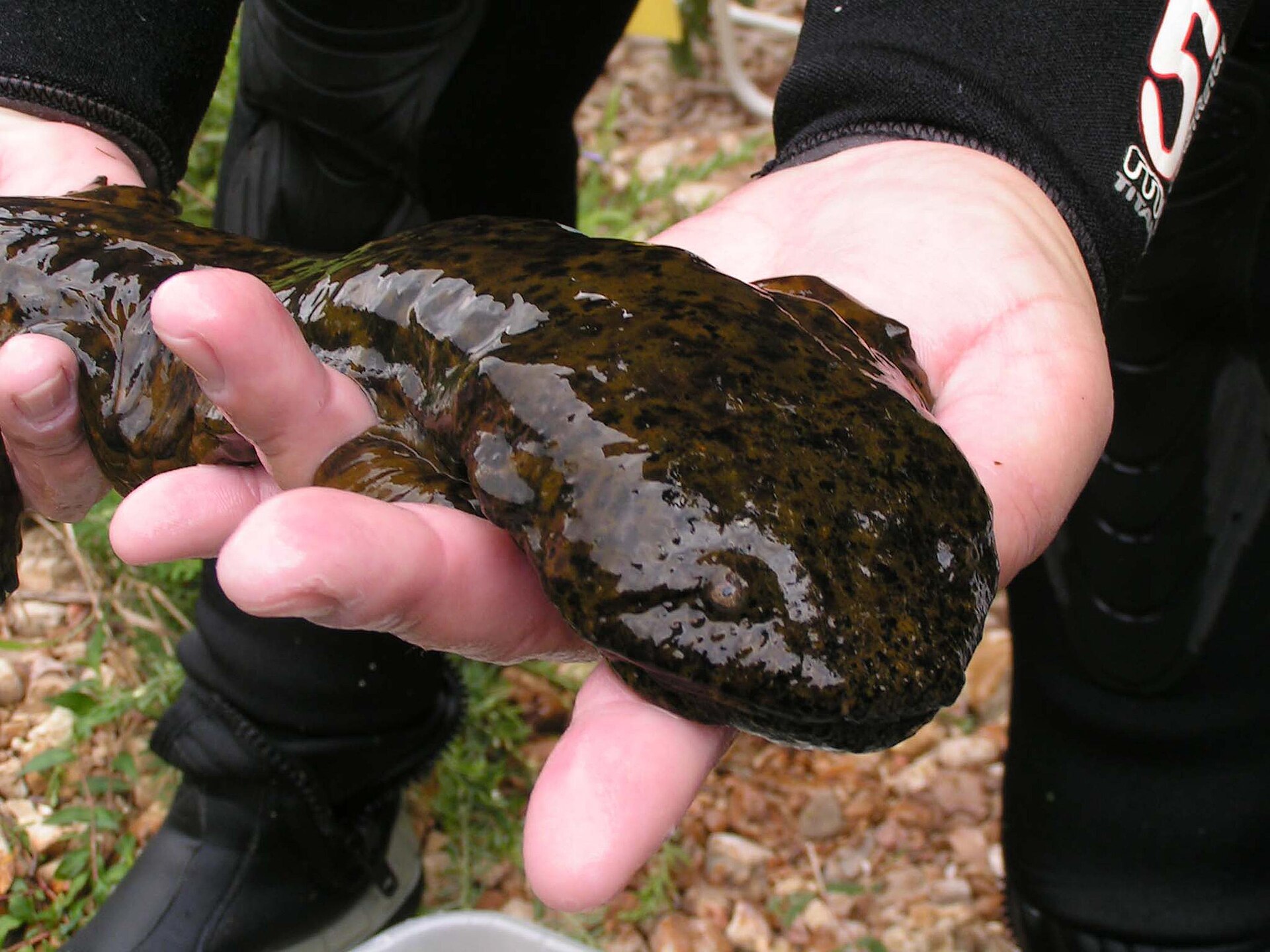
Hellbenders are one of many creatures I have unfortunately never seen. Growing up in the south, I’ve encountered many kinds of amphibians and reptiles, but this reclusive and uncommon critter eludes me. However, it doesn’t deter me from doing my best to learn all about these fascinating mysteries.
Hellbenders (Cryptobranchus alleganiensis) are fully aquatic amphibians, meaning they spend all of their lives in water. They primarily feed on crayfish, snails, small fish, tadpoles, insects, and worms, and have long life spans, sometimes up to 30 years. Other examples of fully aquatic amphibians are axolotls and mudpuppies, which are often confused due to their similar body shapes, but they’re quite different in biology and lifestyle.
Hellbenders breathe through their skin even though they have gills, but like most amphibians, they lose their frilly external gills once they reach adulthood. While gills are often a telltale sign of amphibians, their absence is a key and fascinating difference between hellbenders and mudpuppies, which retain their distinctive feathery gills throughout life. Their wrinkly skin allows them lots of surface area to breathe while underwater.
That distinctive, rippled appearance has earned them one of their many nicknames, “lasagna lizard”. Shockingly, the nicknames get stranger from here. Despite their odd appearance, Pennsylvania even went so far as to name the Hellbender their official state amphibian.
Hellbenders have many nicknames, including “Snot Otters” and “Devil Dogs”!
What is the lifecycle of hellbenders?
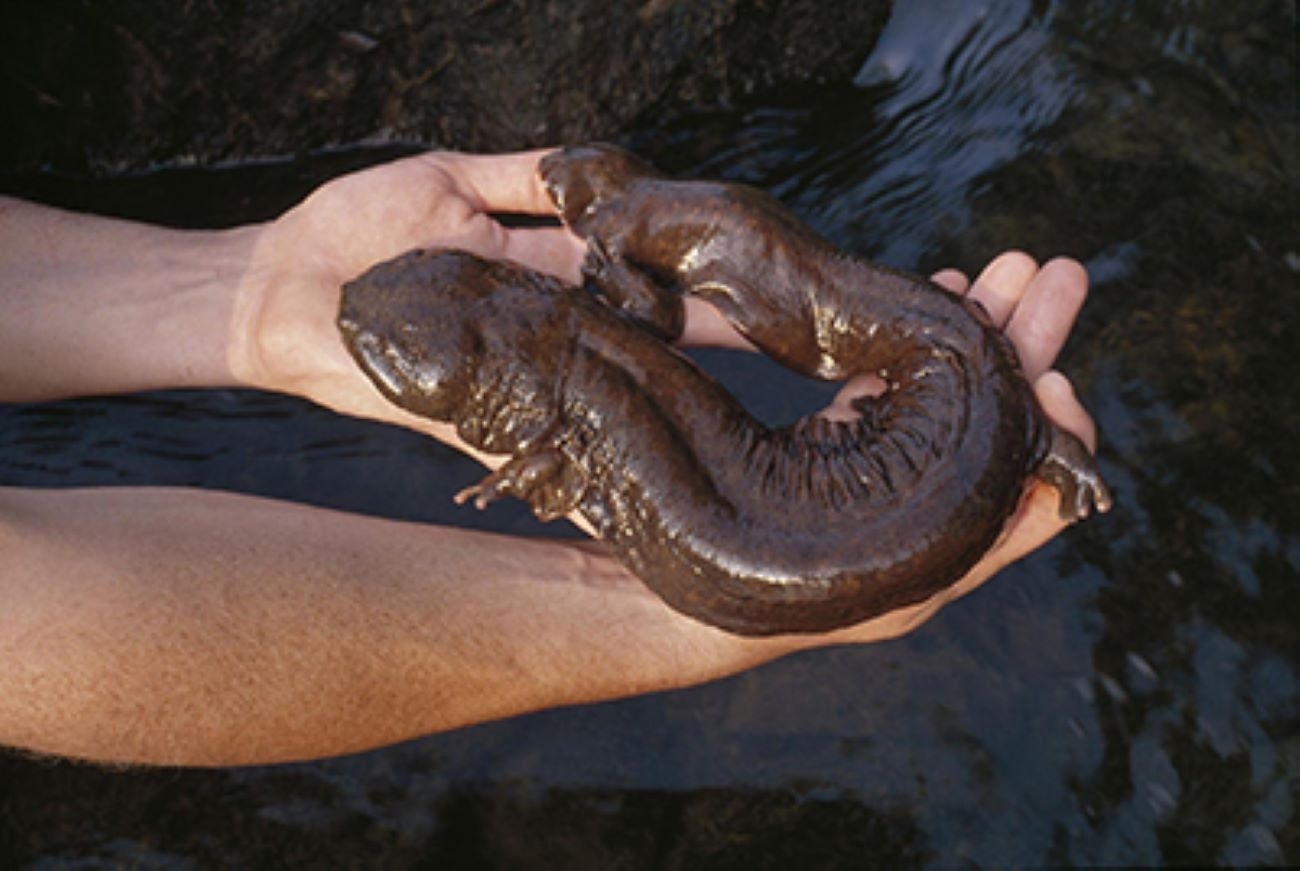
In the fall, the male hellbender finds and cultivates a carefully chosen spot along the river bottom. They carefully select just the right rock and, using their bodies to sweep away gravel and debris, create a protected cavity beneath. He then waits patiently for a female to choose him and his skillfully crafted den for laying her eggs.
Once the female lays her 200 to 400 eggs, the male hellbender remains, guarding and defending the eggs to give his offspring the best chance of survival. For this strategy to work, the water flowing through the nest must remain clean, cold, and free of sediment.
Hellbenders are the only living members of their genus, Cryptobranchus, and have existed for over 150 million years. Sometimes called a “ground puppy,” this species of giant salamander can grow up to 30 inches in length. This long evolutionary history is one reason why protecting their habitat is so important, as these ancient habitat specialists depend on clean, clear, and cold rivers to survive.
Download the Hellbender Fact Sheet to share in your community.
What is the conservation status of hellbenders?
There are two subspecies, and unfortunately, both are facing serious conservation challenges. They are the Eastern Hellbender and the Ozark Hellbender.
The Eastern hellbender (Cryptobranchus alleganiensis alleganiensis) has experienced widespread decline across its habitat and listed as endangered in Missouri since 2019. It was recently proposed for federal listing under the Endangered Species Act across all the states where it occurs, including Alabama, Georgia, Indiana, Kentucky, Maryland, Mississippi, New York, North Carolina, Ohio, Pennsylvania, Tennessee, Virginia, and West Virginia.
In contrast, the Ozark (Cryptobranchus alleganiensis bishopi) was federally listed as endangered in 2011, wherever it’s found, and is now only found in southern Missouri and northeastern Arkansas. This reflects its much smaller range and steep population declines from its historic range.

What is threatening hellbenders?
While the regulatory process can be complex, the broader picture is clear: hellbenders are facing serious challenges. Their habitat is declining, they are increasingly vulnerable to disease, and extreme weather events are placing additional stress on already fragile populations.
For example, Hurricane Helene caused widespread flooding in parts of the region, damaging the cold, clear, fast-moving streams hellbenders depend on. Pollution, sedimentation from land use, and habitat fragmentation from dams and development continue to degrade the rocky streambeds where they live and reproduce.
These threats showcase the importance of a simple but powerful principle: “leave no trace.” A common and preventable activity like stacking rocks, whether for fun or social media, can unintentionally harm hellbender habitat.
Male hellbenders build dens beneath large rocks for nesting, and moving those rocks can destroy critical breeding sites. Even returning rocks to the water can be harmful, as they may crush a hidden hellbender or block access to an existing den.
A common and preventable activity like stacking rocks, whether for fun or social media, can unintentionally harm hellbender habitat.

Scientific research highlights the urgency of the situation. The U.S. Fish and Wildlife Service reports eastern hellbender populations have declined by more than 80% across portions of their historic range, with some populations now functionally extirpated. Because hellbenders require exceptionally clean water and stable stream habitats, their decline often signals broader problems within freshwater ecosystems.
Despite these challenges, hellbenders have captured the imagination of many local communities. These wrinkled amphibians, sometimes affectionately called “snot otters”, have become unlikely conservation mascots. In Boone, North Carolina, residents have rallied around the species, supporting conservation efforts, advocating for stronger protections, and even celebrating the hellbender through public art.
Still, in some places, hellbenders have already disappeared from rivers where they once thrived. Historically present in many streams, they are now absent in areas impacted by decades of pollution, sedimentation, and habitat alteration. These local extirpations are a stark reminder that once populations are lost, recovery is extremely difficult.
- Disease. Disease, including Chytridiomycosis and other fungal infections, has been documented in Ozark populations as well as in Eastern hellbenders in states like Georgia and Pennsylvania.
- Habitat Loss. Habitat degradation remains a central driver of decline, as hellbenders are habitat specialists requiring specific environmental conditions and are highly sensitive to change.
- Damming of Rivers. Low-head dams alter natural habitat and impair how a stream behaves, and removing them allows for a natural river flow, normal sediment load distribution, and high dissolved oxygen.
- Illegal Pet Trade. Lastly, and perhaps most unfortunately, the pet trade hasn’t done hellbenders any favors. However, there is reason for hope. Affiliates of the National Wildlife Federation, including groups in West Virginia, North Carolina, and Arkansas, are actively working to educate the public, promote responsible recreation, and help reverse these trends.
Hellbender Conservation Efforts
Conservation efforts are underway across the country, and several organizations within the National Wildlife Federation affiliate network are leading education, research, and habitat restoration efforts including the North Carolina Wildlife Federation and Arkansas Wildlife Federation.

The Arkansas Wildlife Federation is actively involved in conservation and public outreach related to the Ozark hellbender in Arkansas. The organization collaborates with partners such as the U.S. Fish and Wildlife Service and the Arkansas Game and Fish Commission to support restoration and monitoring efforts, particularly in the Eleven Point River watershed, where hellbender populations occur. Their work includes sharing information about ongoing restoration projects and supporting recovery efforts funded for the species in the region.
In addition to conservation partnerships, the federation leads a range of public engagement programs, including wildlife-watching events, social media campaigns to raise awareness about native species and habitats, and also works with the Arkansas Environmental Education Association to help deliver initiatives such as the “Marvelous Misfits” campaign. Through these and other educational efforts, the organization introduces the public to unique wildlife like the hellbender and promotes broader stewardship of Arkansas’s rivers and ecosystems.
North Carolina Wildlife Federation is actively engaged in conservation and outreach efforts focused on the Eastern Hellbender in western North Carolina. The organization has supported policy advocacy by contributing to a comment letter urging the listing of the species under the Endangered Species Act and by raising awareness through blog posts and species spotlight campaigns.
In addition to policy work, the federation coordinates on-the-ground conservation activities through local chapters in the mountains, including stream cleanups and native plantings that help restore aquatic habitats important for hellbenders. Volunteers and partners also participate in surveys at locations such as New River State Park, where participants snorkel in streams to help locate and measure hellbenders as part of monitoring efforts. Following impacts from Hurricane Helene, they hope to shift from reactive work back to proactive species conservation, as they were before.
Take Action! How You Can Help Hellbenders
Even though hellbenders are elusive, advocating for and protecting their habitat is important, even though I’ve never seen one in the wild. Small, everyday choices can make a real difference for these ancient amphibians and the rivers they depend on.
- Do Not Stack Rocks. Avoid moving or stacking rocks in streams. What may seem harmless can destroy nesting sites or crush a hidden hellbender. These animals rely on stable, undisturbed rocks to survive and reproduce.
- Practice “Clean, Drain, Dry”. If you’re fishing or simply recreating, always clean your gear between waterways. This helps prevent the spread of harmful diseases that can devastate amphibian populations.
- Support Clean Water Efforts. Hellbenders need cold, clear, unpolluted streams. You can help by reducing runoff at home (limit fertilizer use, plant native vegetation) and supporting local watershed protection initiatives.
- Be a Responsible Angler. If you accidentally catch a hellbender, release it immediately and gently back into the water. They are sensitive to toxins or pollutants that may be left on your hands. Never keep or handle them unnecessarily, as they are protected in many places and highly sensitive to stress.
- Get Involved Locally. Join stream cleanups, habitat restoration projects, or educational events through organizations like the Arkansas Wildlife Federation, North Carolina Wildlife Federation, or West Virginia Rivers Coalition. These groups are actively working to restore habitats and raise awareness.
- Be A Voice for Wildlife. No matter how big or small we think we are, when we speak up together, our voices can have a huge impact! It can be as simple as talking to friends and family, writing letters, and sharing your voice on social media.
- Support the Recovering America’s Wildlife Act. Encourage your Congressional representatives to fully support and help pass the Recovering America’s Wildlife Act. This historic wildlife legislation offers the best hope for addressing the nation’s wildlife crisis.
Kids’ Corner with Ranger Rick®:
- Watch: Hellbenders
- Read: Salamander City
- Read: Reptile or Amphibian?
- Craft: Feed the Frog
- Game: Kahoot – Awesome Amphibians
Get outside for a Green Hour®
Learn more about the hellbender at NWF’s online wildlife guide.
