









We have much more to do and your continued support is needed now more than ever.
More Than Volunteers: How General Motors Mentors Power a Year of Eco-Schools Impact
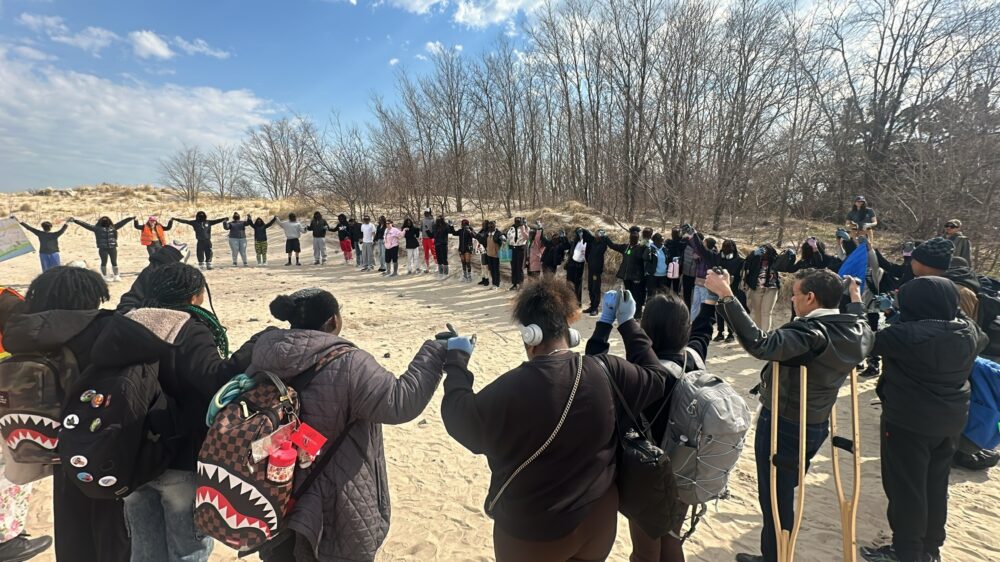
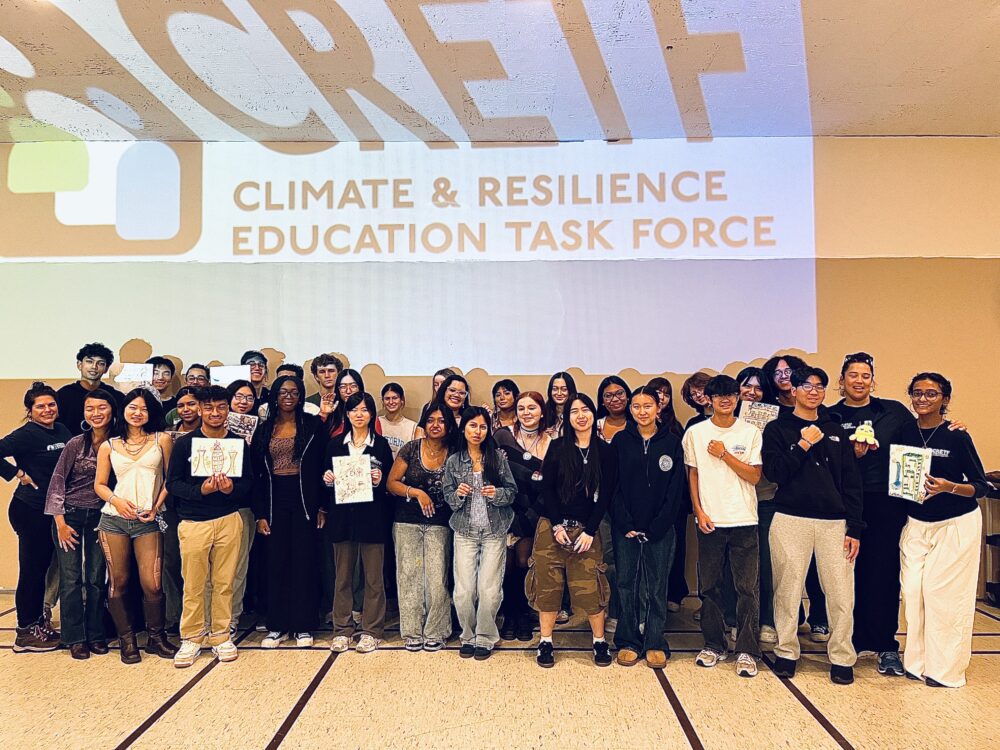
Behind every impact metric in the National Wildlife Federation General Motors Green STEAM Partnership is a relationship. For over a decade, the National Wildlife Federation (NWF) and General Motors (GM) have partnered to bring Eco-Schools U.S. to students, educators, and schools across Michigan, Ohio, New York, and Missouri, and at the heart of that work are the GM Mentors themselves. These are GM employees who show up at schools, in classrooms, and in outdoor spaces, offering guidance and a helping hand to student-led action teams as they shape sustainability plans around their own community’s needs.
In doing so, they open doors to STEAM careers that many students haven’t been exposed to or yet imagined for themselves. NWF continues to work closely with GM staff to recruit and match GM volunteer mentors, schools, and students each year, because the program’s growth and success depend on it.
That support takes many forms: helping schools develop sustainability action plans, leading green career days, mentoring students one-on-one, and joining hands-on community workdays. GM’s national STEAM investments reflect the same commitment. This year alone, the company’s nonprofit partners have introduced more than 300,000 students to STEAM careers as part of a broader effort to build a diverse talent pipeline through hands-on learning.
This year’s Eco-Schools National Wildlife Federation General Motors Green STEAM Partnership results highlight mentor-powered work across every participating school: 1,100+ hours of outdoor learning, 142 energy conservation actions, 37,800 square feet of habitat created, 45 native trees planted, 1,800 native plants planted, 23,300 lbs. of waste collected, 13 water conservation actions implemented, 3,300 youth engaged, and 157 actions completed.
Marygrove High School: A Senior-Led Capstone
At Marygrove High School in Detroit, MI, every student takes a core engineering course built around the Human-Centered Design Framework, and seniors spend the year applying it to a real community partnership.
This year, senior Cherokee Barrow, now headed to the University of Michigan on a full-ride scholarship, worked directly with GM Mentors to coordinate and implement their Eco-Schools action plan for the 2025-26 school year, expanding this work to include student groups at the high school’s sister elementary-middle school.
Cherokee didn’t work alone. Detroit is one of the largest U.S. cities without a full-service supermarket, and roughly two-thirds of residents struggle to consistently access healthy and affordable food.
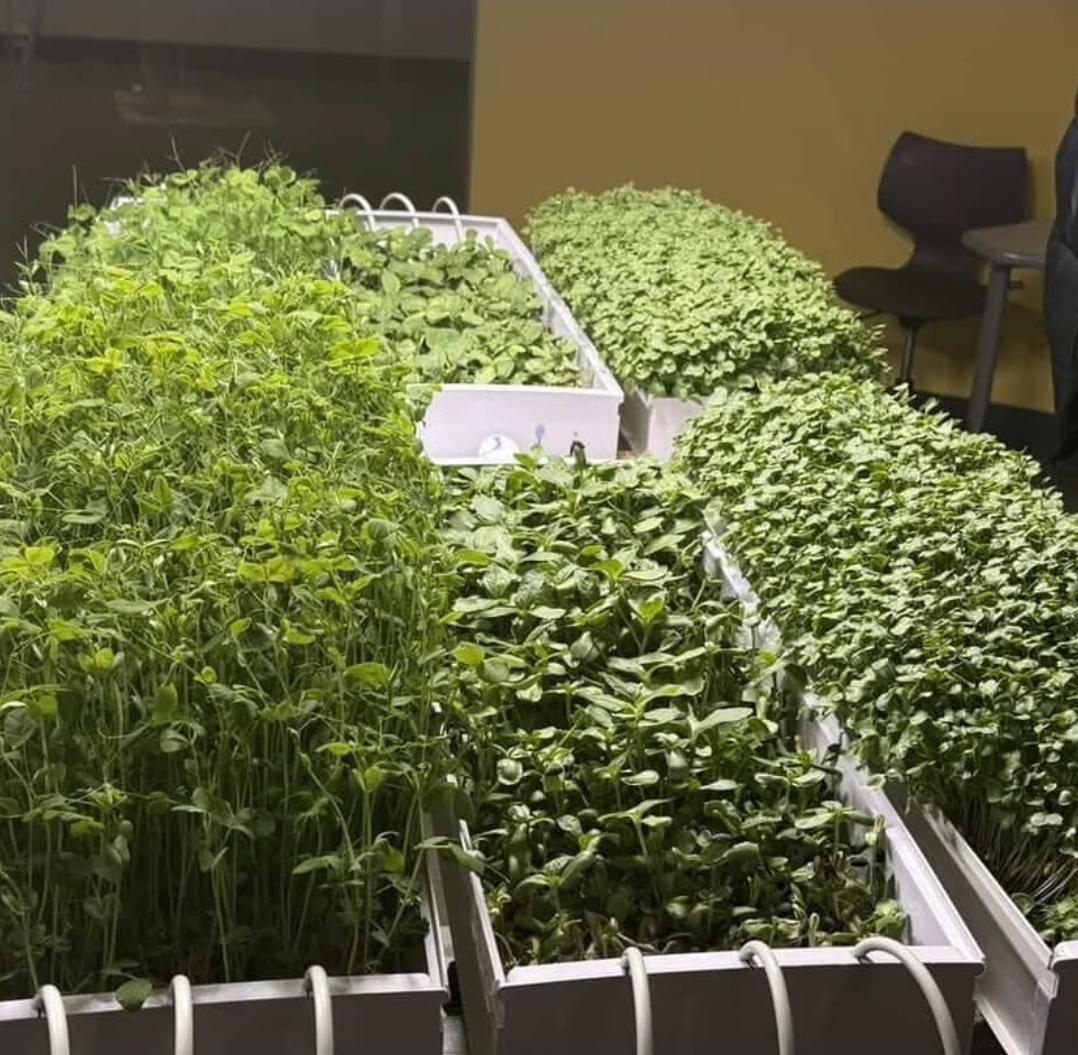
This is a reality juniors Rowan Beck and Olivia Winters tackled head-on by leading the school’s Aspen Challenge team to address food access as a community issue. AP Environmental Science teacher Kerry Williams supported their hydroponics and aquaponics systems. Mark Fentress of CWO Farm, a working farm on Marygrove’s campus, mentored students through a hydroponics capstone project.
The GM connection ran through nearly everything the students did this year. A career fair brought GM employees Andre Houston and Haley Beebe to campus to speak about their own career journeys, giving students a direct look at what a real-world STEAM career can be.
Andre and Haley later returned for the school’s capstone symposium, where more than 100 community members watched students present hydroponics, an edible garden, composting, rainwater collection, and wildlife habitat projects, capped off with a short student-made film.

Bowsher High School: Building on Years of GM Mentorship
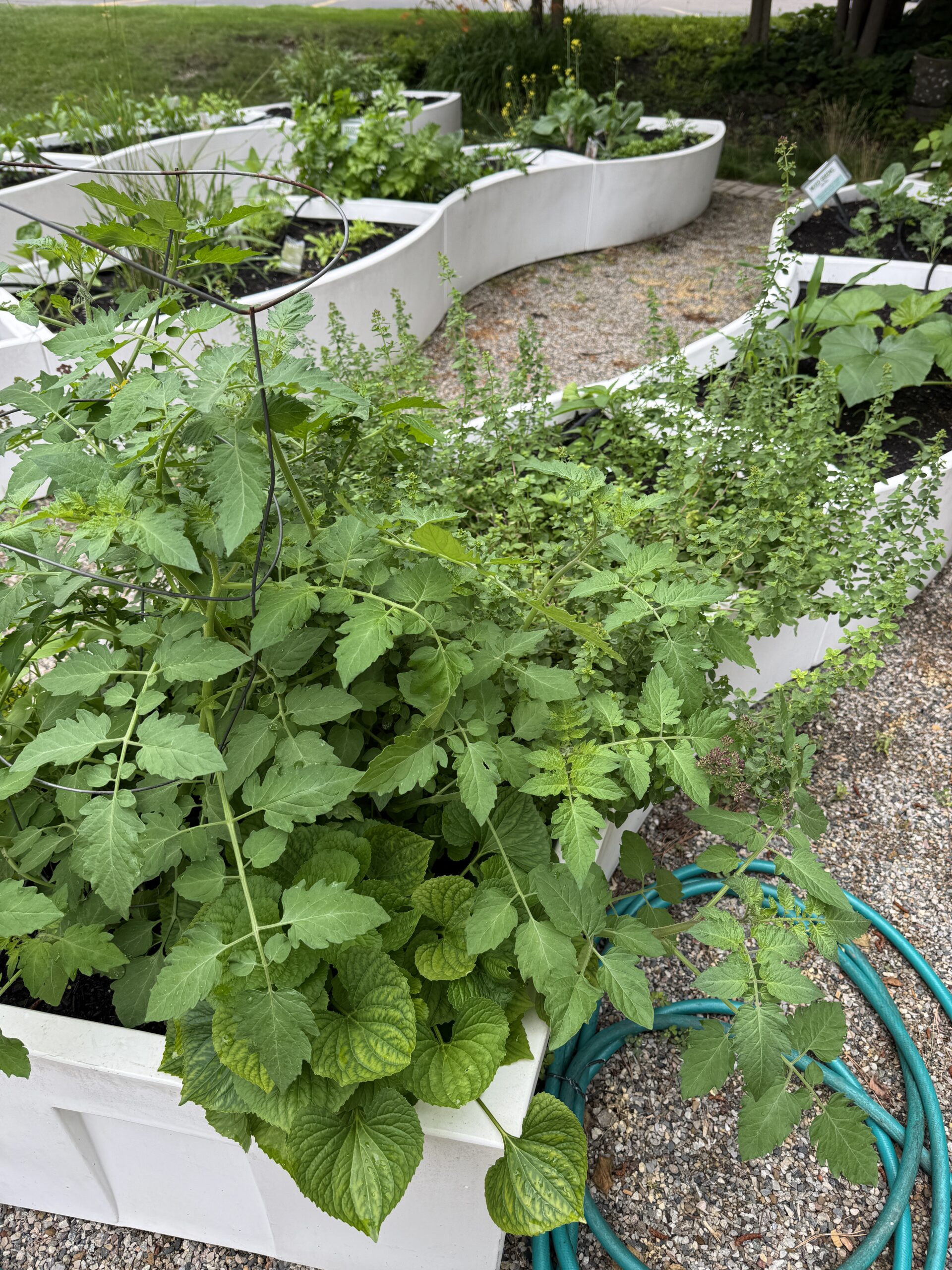
In Toledo, Sherri Zeller, GM’s Environmental Lead and a longtime Eco-Schools mentor at Bowsher High School, Sherman Elementary, and the Aerospace and Natural Science Academy of Toledo, has spent two years helping Bowsher’s action team grow its school garden and pull in more teachers and students.
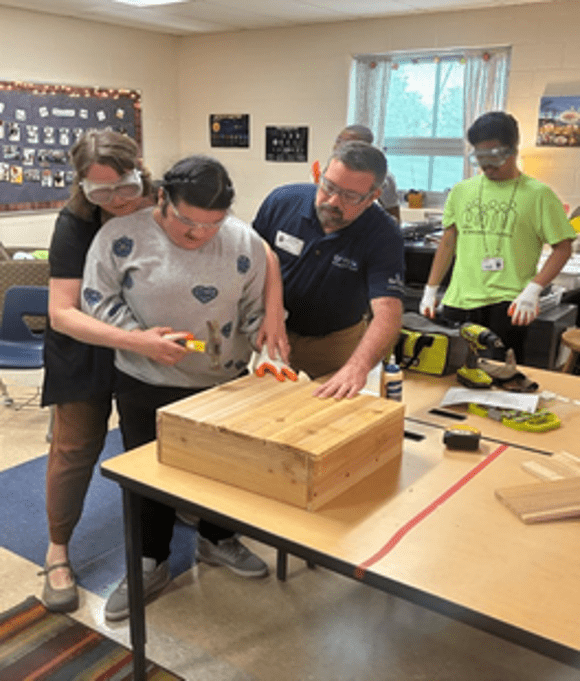
This year, students partnered with GM volunteers to build insect hotels, weed, plant native species and vegetables, water, and mulch. They documented their progress in photos shared in the district newsletter, The Bridge, and later by Sherri with the broader GM community.
The team also created an Eco-Code and completed an action plan that expanded the school’s edible garden to 600 square feet with 30 native plants and its pollinator garden to 300 square feet with 15 native milkweed plants for monarch butterflies. The University of Toledo swim team also helped with spring and fall garden cleanups. As one teacher noted, the Eco-Schools action cards offer so many strong options that the biggest challenge is deciding where to begin.

Why Mentors Make the Difference
None of this—the gardens, data, career fairs, or capstone projects—would happen without GM staff volunteers returning year after year. Mentors like Sherri Zeller, Andre Houston, and Haley Beebe do more than oversee projects: they show students what STEAM careers look like in practice, connect classroom learning to community impact, and help students like Cherokee Barrow see a path beyond graduation.
As GM continues its national investment in hands-on STEAM education, Eco-Schools brings that commitment to life: a senior earning a full-ride scholarship, a garden helping feed a school, and students already meeting the people shaping the careers they may one day pursue.
