





We have much more to do and your continued support is needed now more than ever.
Restoring Hope: NYC Students Help Build Coastal Resilience for Climate Impacts
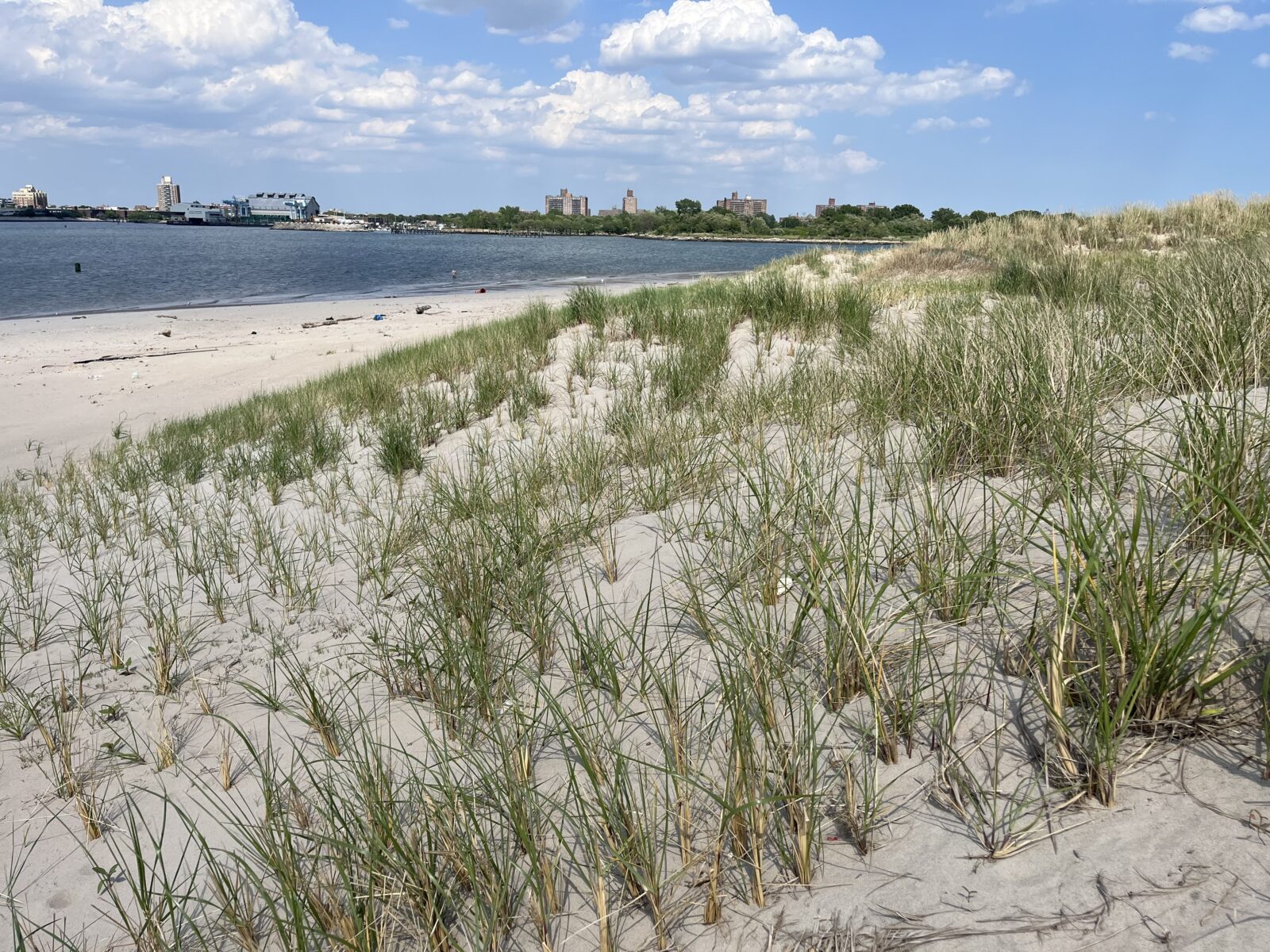
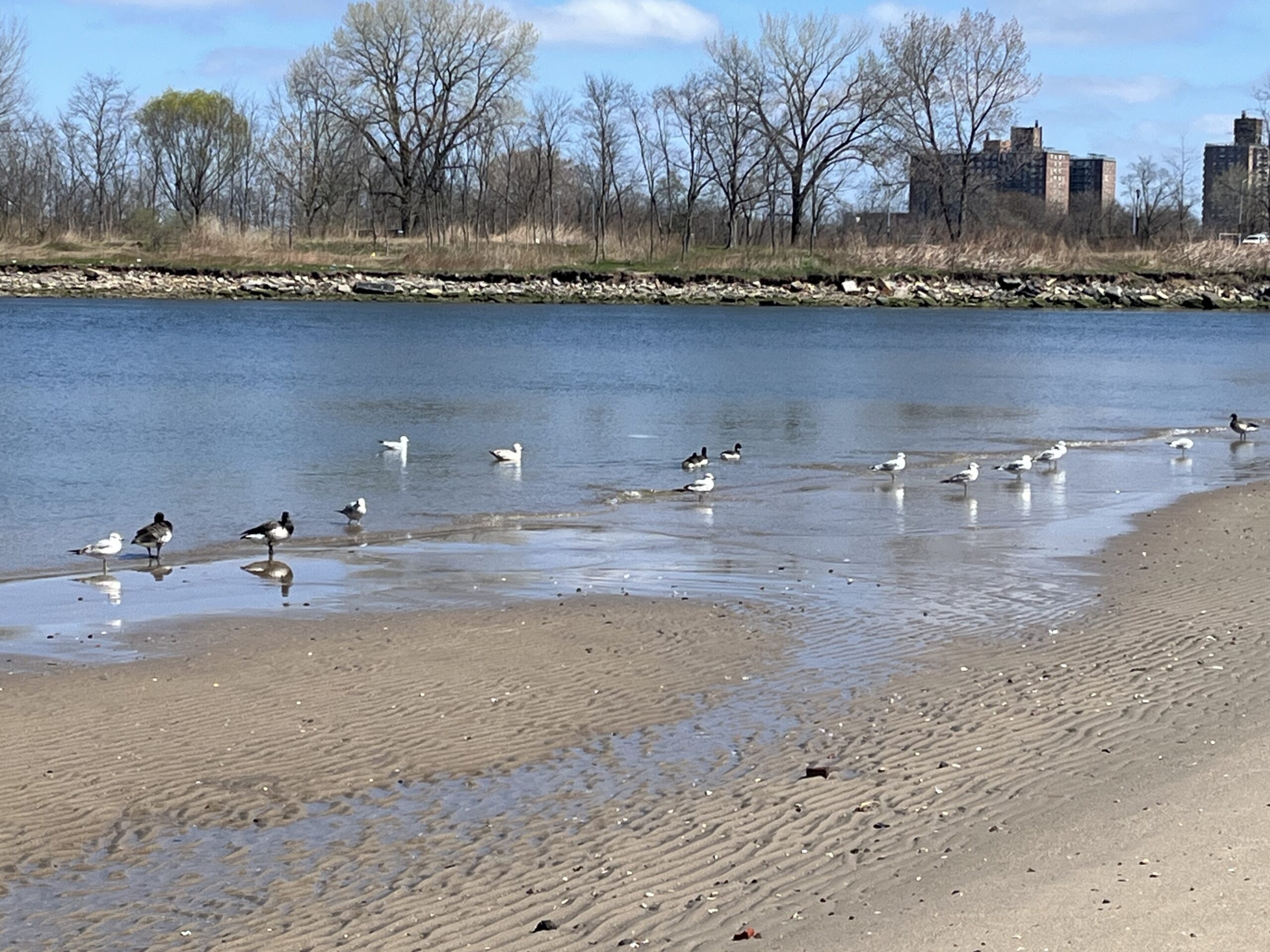
Coney Island Creek Park. Credit: Emily Fano
For the fifth consecutive year, hundreds of New York City public school students, their teachers, and community and corporate volunteers came together to plant American beachgrass in Coney Island Creek Park—Brooklyn’s last urban estuary. The Park is an 8.5-acre natural area that provides recreation for more than 50,000 people. Once rich in fish, oysters, crustaceans, and marsh plants, the Creek has been heavily urbanized.
The natural flood buffers and wetland marshes that once helped reduce storm surge have been replaced by combined sewers and stormwater infrastructure. The lack of natural flood protection, in addition to high levels of pollution, has placed residents at risk before.
A Persistent Risk
During Superstorm Sandy in 2012, “backdoor flooding” from the Creek damaged homes and infrastructure. Floodwaters reached up to 10–11 feet, contaminating homes with saltwater and sewage, leaving many uninhabitable. Because of its geography as a peninsula and projected sea level rise of 6 feet by 2100, Coney Island remains at high risk for future flooding. Inland flooding on major roads is occurring with increasing frequency, disrupting life for residents.
Without robust interventions, Coney Island could be underwater by the end of the century. More immediately, sand from unvegetated dunes in Coney Island Creek Park migrates into streets, storm drains, and adjacent homes, creating a nuisance and additional hazards.
Building Coastal Resilience Through Nature-Based Solutions
Since 2017, the National Wildlife Federation’s award-winning Resilient Schools and Communities (RiSC) program has been educating students, teachers and intergenerational volunteers about climate science, local climate impacts and the nature-based solutions that can mitigate their effects. In 2021, RiSC launched programming in Coney Island with guidance from resident advisors who recounted stories of devastating flooding from both the Creek and the ocean.
Climate Education in Action
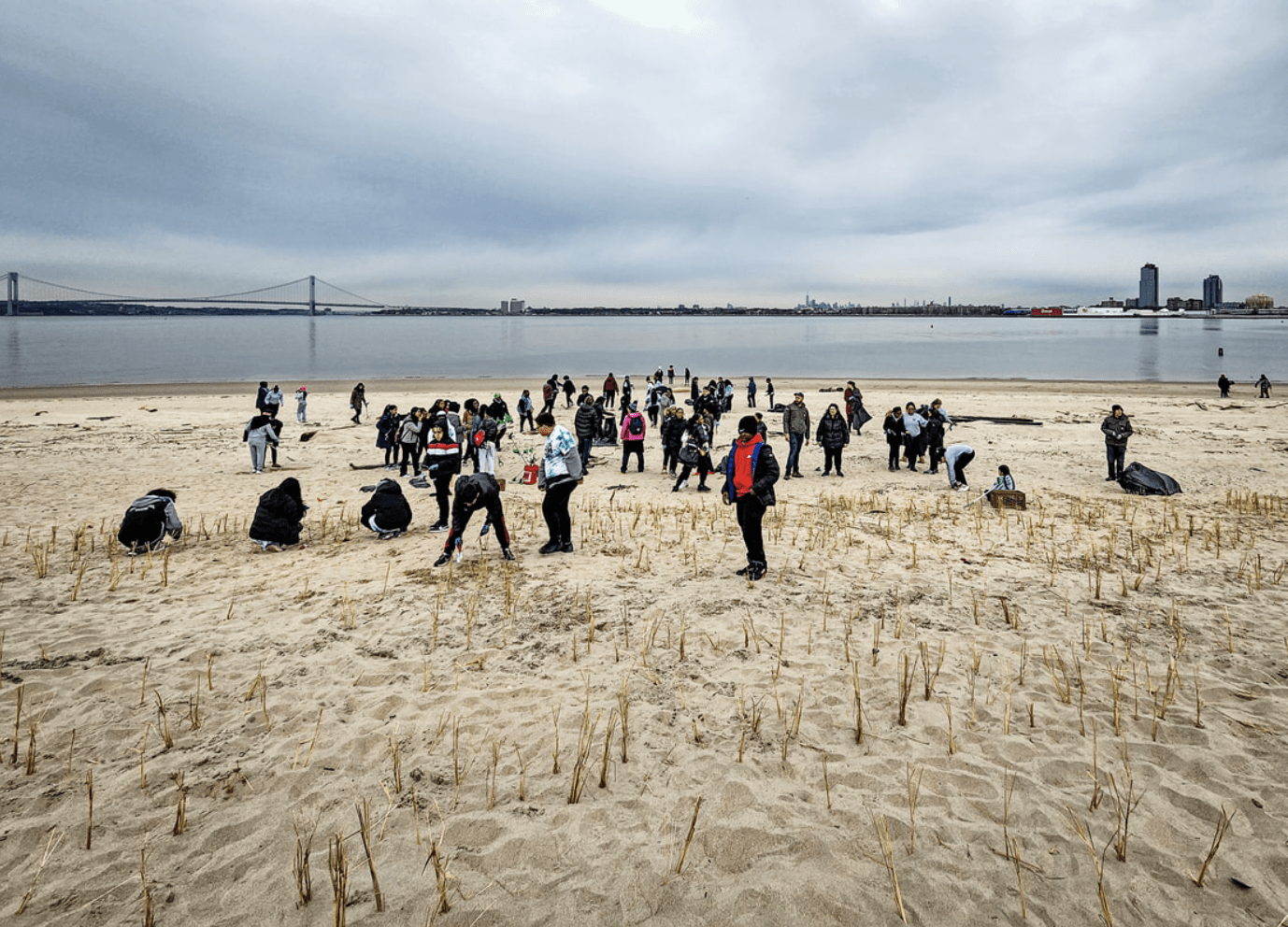
Fueled by these stories, and in partnership with NYC Parks and the American Littoral Society, NWF began shoreline restoration efforts at the Creek in 2022 with 80 middle and high school students from five New York City public schools. That year, students planted 6,000 American beachgrass plants in the estuary.
Fast forward to 2026, some 600 students and their teachers from 23 NYC public schools, and about 70 community volunteers, came to plant 40,000 American beachgrass plants in the estuary. Over 100,000 have been planted since 2022 through the RiSC program.

Creating Habitat for Wildlife
American beachgrass (Ammophila breviligulata) is a native plant with a dense network of roots and rhizomes that can stabilize dunes and provide coastal protection from extreme wave conditions. It also provides numerous ecological benefits including cover for wildlife like native and migratory birds, small mammals, crustaceans and pollinators that call Coney Island Creek Park home. According to FEMA, “primary frontal dunes are often the first line of defense against flooding in coastal regions.”
A new partnership with plant biologists at Brooklyn College will determine the health of the beachgrass plants and how well they are providing functional resilience services for this frontline community.
Celebrating 10 Years of RiSC
For 10 years NWF’s RiSC program has been collaborating with partners to engage students and intergenerational volunteers in hands-on learning activities that mitigate local climate impacts and build both social and ecological resilience. NWF also provides teachers with curricula and professional learning opportunities to expand their knowledge and bring climate and resilience topics into the classroom in ways that center hope, solutions and action.
We thank Allied World and Con Edison for their support of the RiSC program.

To learn more about RiSC visit their website here.
 Written by Emily Fano
