












We have much more to do and your continued support is needed now more than ever.
What’s In My Backyard: Appreciating Local Crows
How much do you know about the crow?
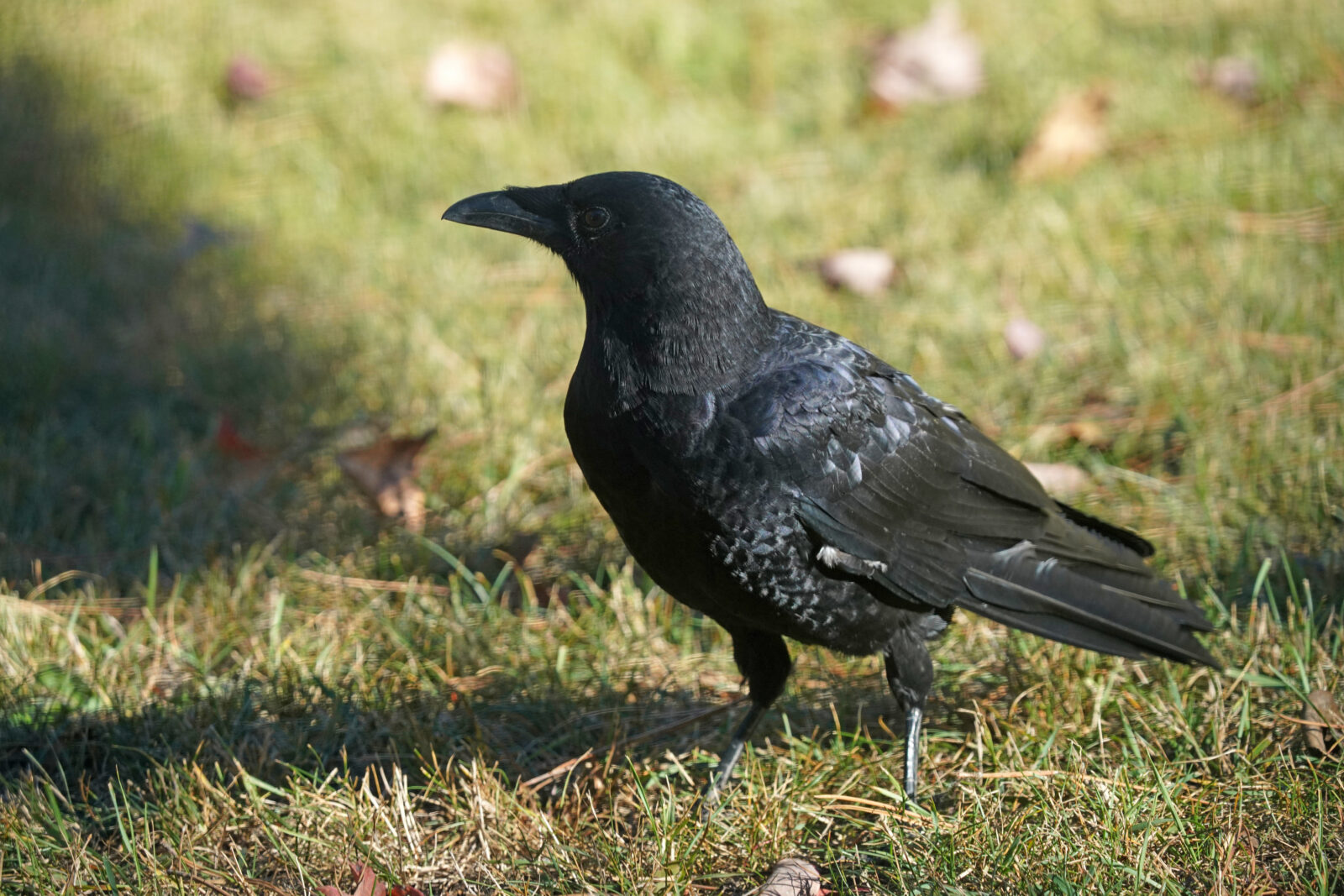
American Crow. Credit: Courtney Celley/USFWS
One of the most commonly featured species for Halloween is the crow, but how much do you actually know about these infamous birds? Our new series, “What’s in My Backyard” will explore the private lives of our wildlife neighbors.
There is More than One Crow Species in the United States
Many of us assume that all the crows we see are the same species, but there is actually more than one species found in the United States. Many sources will list the American crow and fish crow as the only two species, but there are two more that exist within limited areas of our fifty states. While all crows are omnivorous, meaning they eat a variety of food types, the primary diets of each species tend to reflect their habitats.
American crow

The very social American crow and their notorious calls are the quintessential crow depicted in American pop culture. It is the most common crow species found in a variety of habitats across much of the continental U.S., avoiding the extreme desert areas of the Southwest.
There are subtle physical variations amongst geographical populations of American crows but all of them are completely black and have a distinctive wing flapping. As omnivores, they consume a variety of foods from worms, fruits, and seeds to multiple types of proteins, and are known to steal food from other wildlife species and even pets. They often take advantage of living around humans by eating our scraps or peanuts that are offered to them. The oldest known American crow to live in the wild was seventeen years old.
Fish crow
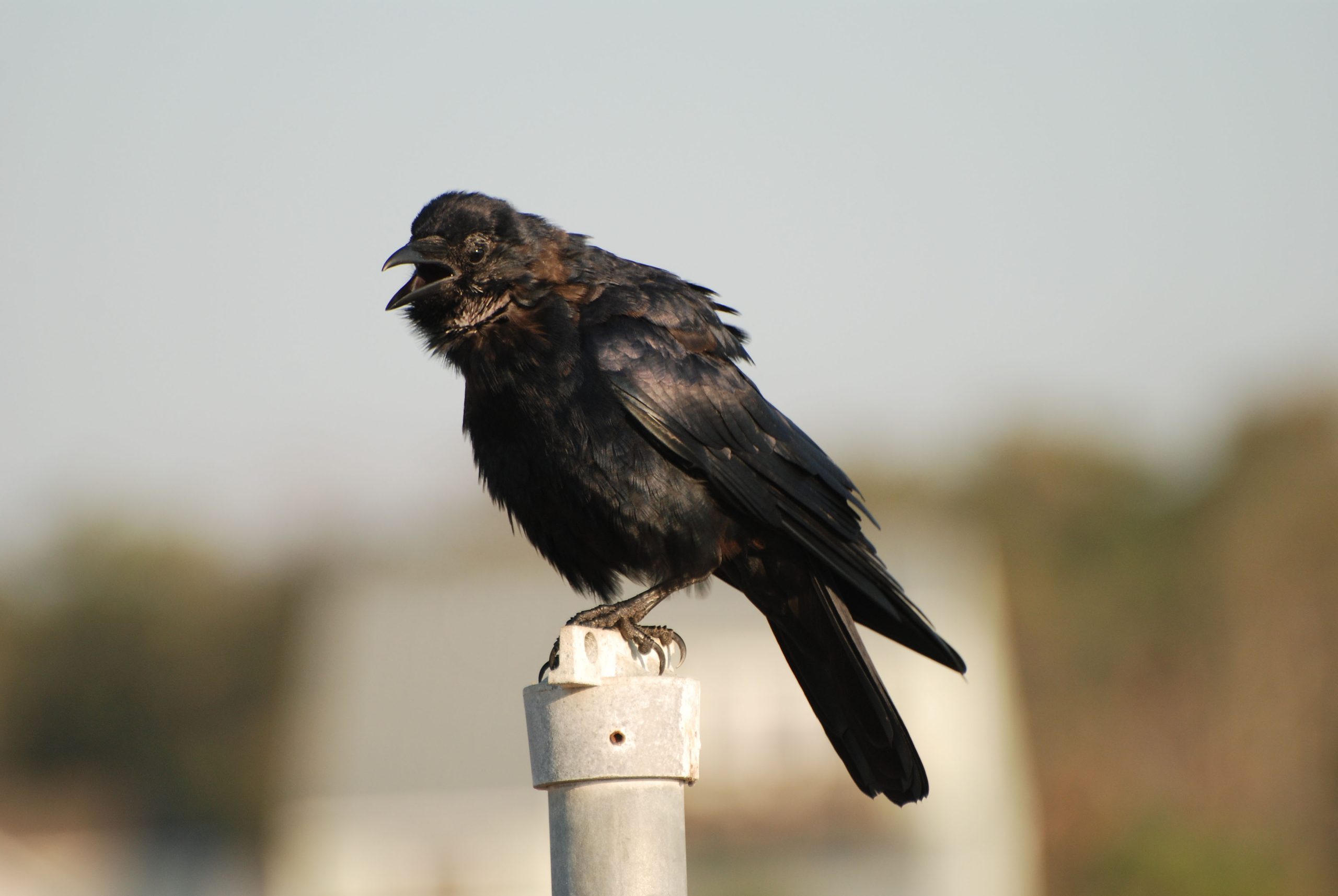
The fish crow can be found in coastal areas in the Atlantic states and eastern Gulf states. However, populations of these crows have also been found in the interior states along the Mississippi River in recent years. They are built very similarly to American crows and have been known to blend in with them in areas where both species overlap.
The best way to distinguish the fish crow is through their nasal calls, especially their double-noted caws that sounds eerily similar to a human saying “uh uh”. Their diet includes more marine species than other crows but they will eat almost anything. Fish crows are also known to save caches of food for later.
Tamaulipas crow
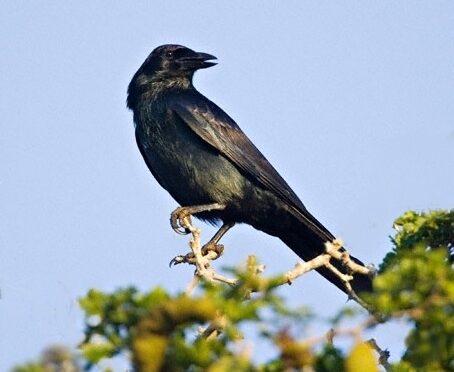
While the Tamaulipas crow is primarily found in a small arid area of northeast Mexico, these crows can also be spotted around Brownsville, TX–especially at the garbage dump. These crows were thought to be a part of another crow species in Mexico but DNA testing proved that they are a distinct species.
What also makes this crow special? Unlike many other crow species, the Tamaulipas crow has glossy feathers with a purple cast and frog-like calls. There are many things that experts do not know about these smaller crows. More studies are needed to fully understand the private lives of these crows.
‘Alalā, or Hawaiian crow
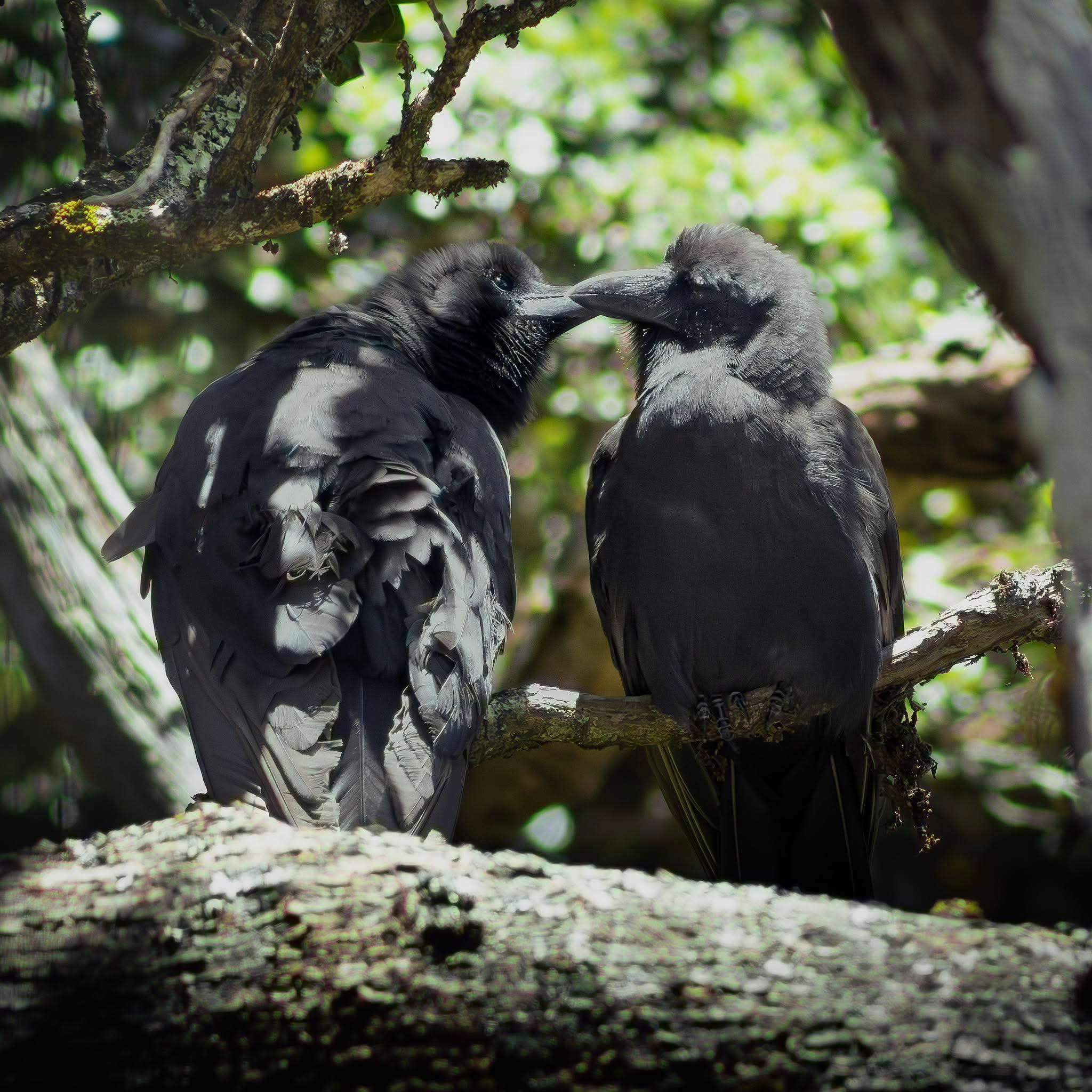
The endangered ‘Alalā, or Hawaiian crow, is the only surviving species of five corvid species that used to inhabit the Hawaiian Islands. ʻAlalā are ecologically and culturally important. They eat a variety of native fruits and are important to forest health as seed dispersers for native plants. ʻAlalā are also revered as spiritual guardians in Hawaiian culture.
Habitat loss and the introduction of non-native wildlife and diseases brought these crows to the brink of extinction. The collaborative conservation efforts of the ʻAlalā Project partnership have fostered successful captive breeding efforts and the reintroduction of the revered ʻalalā back into Hawaiʻi’s native forest.
Another crow that is native to the U.S. territories is the federally endangered Mariana Crow on the islands of Rota and Guam.
Crows are Highly Intelligent
Multiple studies in recent years have proven that these birds are highly intelligent and can easily adapt to complex situations. Crows are able to develop individual learning, craft tools to access food, help each other (including with nesting responsibilities), and engage in social learning to train fellow members of their flock as well as pass down the information through the generations.
Because of these remarkable cognitive and social abilities, people sometimes refer to them as “petty” because they teach other crows about which human is a threat and hold on to that knowledge (or grudge) for years. It’s best to treat them with respect.
Do Crows Migrate?
Crows and other corvids are listed under the Migratory Bird Treaty Act, but crows are not migratory in the same way that hummingbirds or monarch butterflies are considered. American crows are considered “partially migratory” or “short distance migrants”, where some of the flock may shift towards the warmer ends of their residential range while the other half remains where they are.
Fish crows do shift around their year-round range but have not been found more than 180 miles outside of their breeding areas. Tamaulipas crows and ‘Alalā are not considered migratory.
Do Not Confuse Crows With These Other Birds
Some crow species share ranges with other black birds. Here are two types of birds that are often confused with crows:


Grackles
There are three different grackle species found in North America (common, great-tailed and boat-tailed) that share similar spaces with crows in North America. Learn more about these species on ebird.org.
Ravens
These larger, shaggier birds have a different call than crows and tend to soar rather than continuously flap their wings. Learn more about the differences between crows and ravens on allaboutbirds.org.
Crows are fascinating birds that deserve more respect than they are often given. We encourage you to continue to learn more about crows or other wildlife featured during Halloween. Stay tuned for the next edition of “What’s in My Backyard?” to cover other common wildlife neighbors.
A special thanks to the Maui Forest Birds Recovery Project for contributing to this blog.
