











We have much more to do and your continued support is needed now more than ever.
Meet NWF’s Environmental Justice Advisory Council: Monica Lewis-Patrick
This blog is part of a series introducing National Wildlife Federation’s Environmental Justice Advisory Council (EJAC). Established in 2023, the EJAC provides advice and guidance not only to the Environmental Justice, Health, and Community Resilience and Revitalization program, but to the National Wildlife Federation (NWF)’s leadership, and its board of directors. This council is the first of its kind amongst large-scale environmental non-profits, composed of environmental justice leaders who have dedicated decades to addressing environmental injustices in the effort to create a society where all people are treated fairly. Read the announcement here.
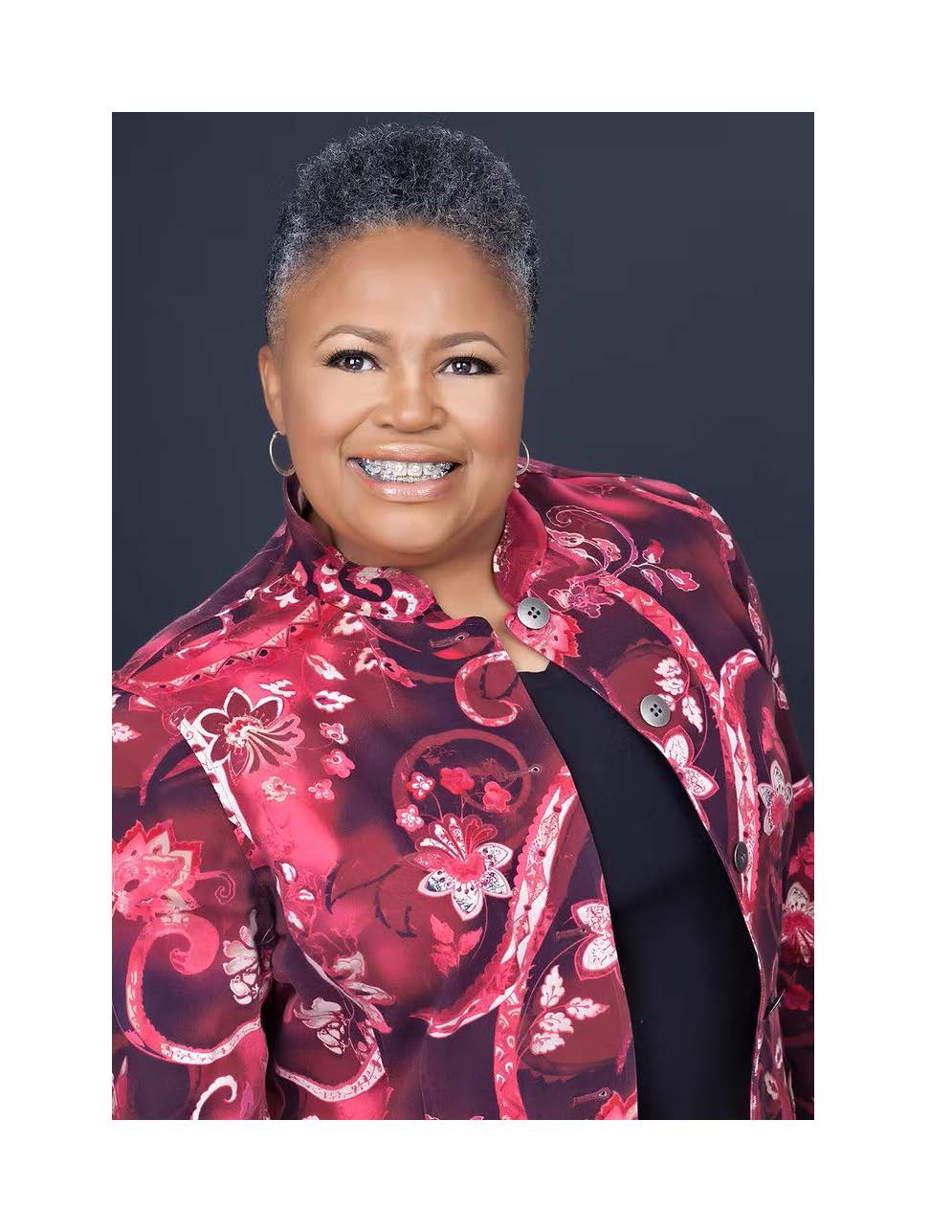
EJAC member and co-founder and president of We The People Detroit, Monica Lewis-Patrick is known as the “Water Warrior” and is one of the country’s biggest champions for equitable access to clean drinking water. As a member of the Healing Our Waters – Great Lakes Coalition Governance Board, the International Joint Commission Great Lakes Water Quality Advisory Board, and the Michigan Advisory Council on Environmental Justice, Lewis-Patrick advocates for policy that ensures all communities have access to clean water while empowering Michiganders to protect their communities’ health.
I spoke with Monica Lewis-Patrick to learn more about her journey to becoming the “Water Warrior,” her relationship with the National Wildlife Federation, and how Big Greens can better support community-based organizations.
This interview has been edited and condensed for length and clarity.
What led you to environmental justice work?
Monica Lewis-Patrick: “I was working in the space of working as an advocate for youth in the criminal justice space [in] Tennessee. And so my background was more clinical and actually working with youth. And then, when I first moved to Detroit in 2008, I was in the middle of fighting against the privatization of public education. And so in that fight against the privatization of public education, within a short period of time of being in the city of Detroit, not even a year, I found myself in the middle of fighting against the privatization of water.
[Reverend Dr. JoAnn Watson], who partnered with Councilwoman Maryann Mahaffey in the fight for water affordability, was my mentor. She is the person that would send me to these meetings where people were talking about the environment and urban gardening and farming. And, I had no idea the intensity and the intentionality of those moments.
As a matter of fact, I would tell people I’m not an environmental justice person, I’m a social justice person. And I had an elder by the name of Rhonda Anderson, who is a very well known activist and really a godmother in the EJ space here, who worked for Sierra Club. And she stopped me after I gave this speech about what was happening in terms of the austerity in Michigan. And I told them I didn’t do that EJ stuff; I do social justice. She stopped me at the end of that meeting and said, “Baby, I need to talk to you – you can’t be a good social justice advocate without being a good environmental justice advocate.” And it was that good talking to from an elder that shifted my perspective. And from that day to this day, I’ve taken on a different perspective in terms of what environmental justice is, and what my role is in it.”
What have been some memorable moments since you dived into the environmental justice space?
Monica Lewis-Patrick: “Oh my goodness. I would say there’s been a couple. I think a critical moment for me was when we were able to finally start seeing some traction in the Biden administration around water infrastructure and really investing in infrastructure in a way that really would make a difference. To be welcomed into that space as an activist, and then have my recommendations and input taken seriously, was a powerful moment, I think, for all of us as activists.
I think the second thing is that Dr. Brenda Mallory and Dr. Jalonne L. White – Newsome with the White House Council on Environmental Quality (CEQ) appointed me as the chair of the water affordability table for the White House. [That] was another powerful moment because water organizers across the country have fought for 25 years just to get people to recognize water affordability as an issue. And not just something that only pertained to Detroit or to a very hyper-urban core, but [as] a national crisis at this point.
That was another powerful moment because it allowed me to bring my mentor, the Honorable Councilwoman JoAnn Watson, who worked closely with the Honorable Councilwoman Maryann Mahaffey, to the White House to hear congressional leaders in the White House screaming her name – because they knew the significance of the work that she had done all of those years ago along with the Honorable Maryann Mahaffey.
[Dr. JoAnn Watson] passed away in 2023 so she didn’t even get to see even the advances we’ve made over the last two years to move water affordability closer to a real human right in these United States. But it was the brilliance and the genius that we stand on today. So we often lift her name and lift her story, because none of the work that we do would exist if she had not been laboring in the vineyard to do what she had done.”
It seems like it hasn’t been the single work of a person. It’s someone who’s been in this for three decades, someone who’s been in this one decade, someone who joined yesterday, chiming in at once, and it seems like it makes a big difference.
Monica Lewis-Patrick: “Well, I mean, case in point would be, there’s a former vice president for the National Wildlife Federation, Simone Lightfoot. Simone has played a critical role in inviting me into some spaces that I would have never even known that they existed in terms of decision making and the brokerage of power. And so I just always have to credit Simone Lightfoot – for National Wildlife Federation finding her, and her being such a jewel in the movement, and then her being so willing to take a risk on me.”
What are you involved in right now?
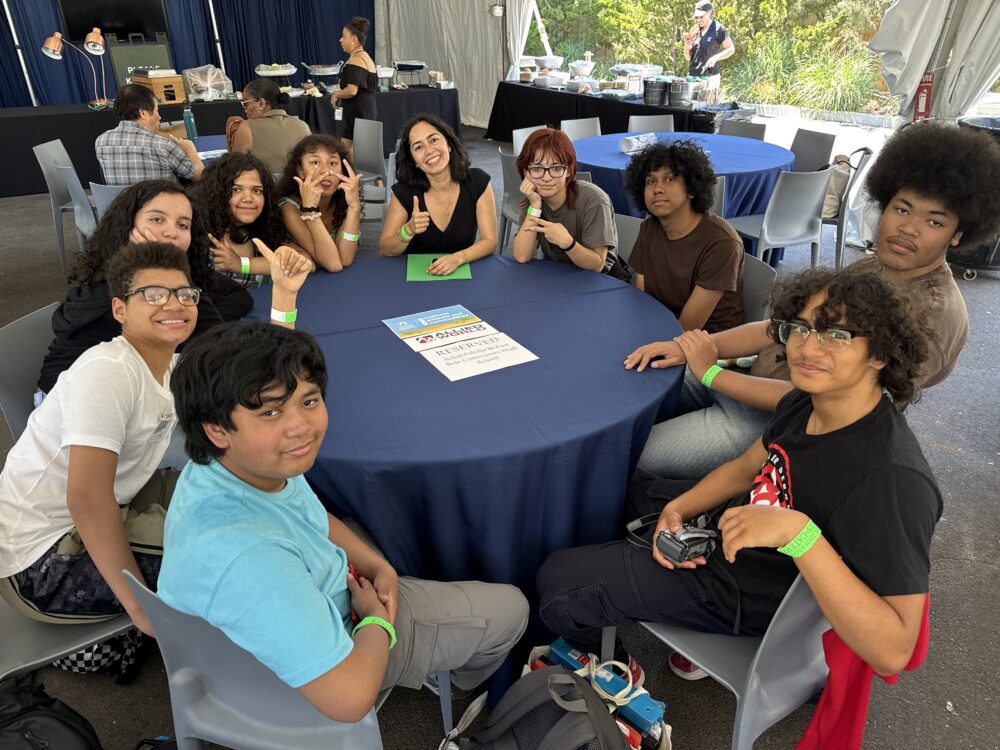
Monica Lewis-Patrick: “I’m really having a lot of fun working with young people right now. They’re actually working on a project right now, where they just finished 14 weeks of GIS mapping. And to see teenagers in the summertime excited about GIS mapping was just so thrilling. I mean, super excited. But it’s really giving [them] these tools for life, so that as more and more climate impacts happen, more and more flooding, more and more water disparities, that more and more of our children, especially children of color, have the tools that they need to navigate these very complex issues and conversations.
I would say another thing that we are doing that’s super fun is that we’re building out a national campaign called Water for Everybody. And that national campaign kicked off because my communications director was trying to work with me on condens[ing] a phrase that would capture all of the water issues. And we, the Community Water Center, DigDeep, US Water Alliance, and the Water Hub, we’re building out a national campaign that we’re super excited about that’s gonna roll out this coming year.
And then the last thing that we’re super excited about is that we’ve started – and this was with the support of the National Wildlife Federation and Freshwater Future in 2015 – having listening sessions with our communities around what would it take for community to build the necessary coalition to actually build a state policy to advance water affordability, true water affordability. We are excited because we have a package of bills that have been introduced in Lansing [Michigan], and that package of bills is called Affordable Water Now, House Bill 4555 and House Bill 5170 to 5173.”
I am curious to learn more about the origin of your relationship with NWF. You mentioned Simone Lightfoot was a really important figure to help bring you into the fold, so to speak. But I would love to hear more about those early years and how that’s changed over time.
Monica Lewis-Patrick: “Simone introduced me to Andy Buschbaum [former director of NWF’s Great Lakes office and co-founder of Healing Our Waters]. Andy was my first introduction to an environmental lawyer. And so, [I] spent some time with Andy, Mike Shriberg [NWF’s former Great Lakes regional executive director], and Oday Salim [senior attorney at NWF] and they were really critical in terms of helping us shape the framework for the legal packaging of legislation.
As it relates to how I got invited to the HOW [Healing Our Waters] – [It’s] because of a couple of things. The HOW was going through a DEI analysis about the organization itself. It was also during the time that Milwaukee was having a lead crisis. Toledo was having algae bloom issues, and Detroit was having massive water shut off. And we had just finally gotten a name for the Flint water crisis, even though we had been working there a year before everybody else even knew what was going on.
So, as we were coming to the table, a couple of white members of the HOW governance table stepped down and relinquished their seats, so that people of color would be represented at the governance table for the HOW. I thought that was really significant. Because these were not just white allies saying that they were allies. They actually demonstrated relinquishing power to ensure that persons of color were able to be represented at the table and have power. And what I can say to the credit of Healing Our Waters and NWF is that they really took a risk at a time where people were really afraid of some of the work that was coming through environmental justice folks. We were concerned about no water, or toxic water, or lead-infested water; That wasn’t the case for people that we were showing up with.”
Environmental justice is not a widely supported movement, which makes attempts to mischaracterize or attack environmental justice even more harmful. What is a common misconception about environmental justice that you’d like to correct?
Monica Lewis-Patrick: “I would say the biggest one that I encounter is that environmental justice leaders and organizations are only concerned about people of color. I don’t think that’s an honest characterization of the fight. I think we are prioritizing those most at risk, those most in danger.
I’m really proud of how we’ve been able to lift rural communities, conservative communities, more white, conservative-leaning communities. Even as we may differ on other things, my humanity and my compassion says I must care that you have water, even if I don’t agree with your political stance.”
What advice do you have for people who are early in their environmental justice advocacy?
Monica Lewis-Patrick: “My first one would be to find a good mentor. As a matter of fact, get two or three. Because sometimes you’ll have one that is better, more gifted in one area of expertise that you need. And then it may be someone else you may need for something totally different.
And you’re gonna need them throughout your life.
The second thing that I’ve learned is it is so important to build relationships. As a matter of fact, Simone Lightfoot, one of the things she used to say all the time is get your friends before you need them. And I found that to be true. Over the years as I have come to these tables and spent time learning and engaging with people, it’s been amazing who I’ve needed over the years to help me advance the work we do.
And then the third thing I would say is as you age, spend time with young people. And don’t spend it in an extractive way of, you know, I’m trying to pick your brain for this project, but just spend time with them.
I try to spend time with them just trying to understand, one, how to be a better elder, understanding too that some of the challenges that we had to navigate are different. The landscape looks different. So [I’m] trying to be a translator, if you will, between an intergenerational movement that we’re trying to build lovingly – giving critique when necessary, but also lovingly giving support.”
By investing in the next generation and building strategic partnerships with large environmental organizations like the National Wildlife Federation, Lewis-Patrick is passing forward her mentors’ lessons and working to build a future where all people can have clean water in their communities with community expertise at the helm.
As the National Wildlife Federation works to strengthen our environmental justice efforts, we appreciate Monica Lewis-Patrick’s and the rest of the Environmental Justice Advisory Council’s guidance. Stay tuned for the rest of the Environmental Justice Advisory Council profiles and visit We The People Detroit’s website and their Instagram to learn more about their work in Michigan.
