





We have much more to do and your continued support is needed now more than ever.
A Case Study in Nature-Based Solutions: Coney Island, NY
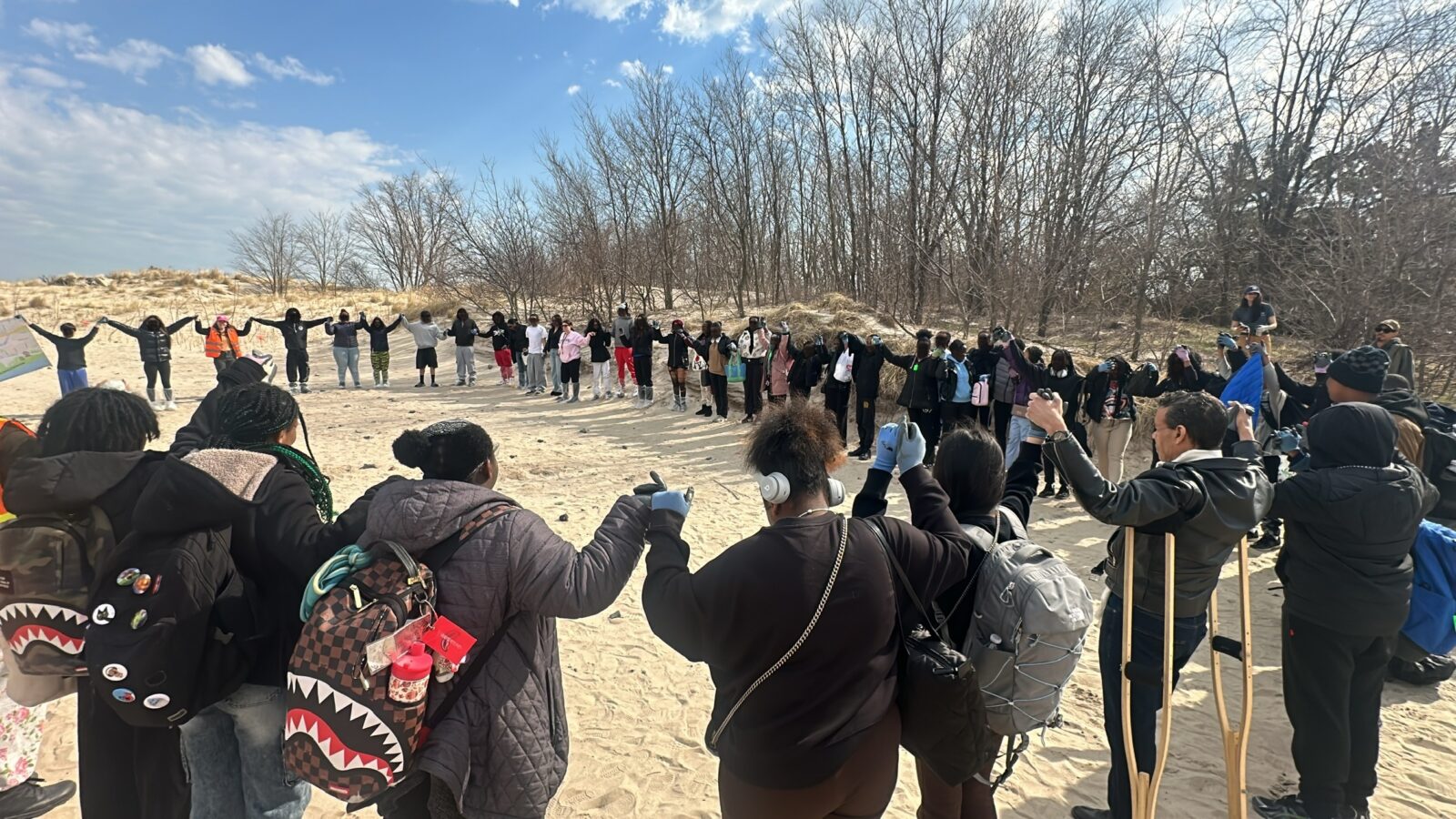
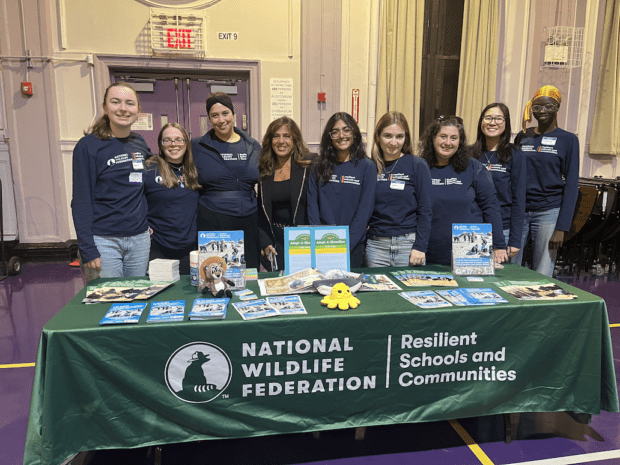
The Resilient Schools and Communities (RiSC) program helps prepare the next generation of New Yorkers and climate leaders for a changing climate. Credit: NYC Parks
By protecting, restoring, and integrating nature into our communities, we can create more beautiful and enjoyable environments while helping to protect ourselves from mounting natural disaster risk. These approaches are known as “natural infrastructure” or “nature-based solutions.” They harness nature and natural processes to address everyday challenges.
The case study below is featured in NWF’s Showcase Report: Versatility of Nature-Based Solutions: Protections and Benefits from the Parcel to Community Scales, made possible with support from Allied World.
Case Study: Coney Island Plantings
New York City’s coastline faces growing risks from life-threatening hurricanes and flooding. This was made devastatingly clear by Superstorm Sandy in 2012 and Hurricane Ida in 2021. In response, we launched the Resilient Schools and Communities (RiSC) program in 2017 to help prepare the next generation of New Yorkers for a changing environment.
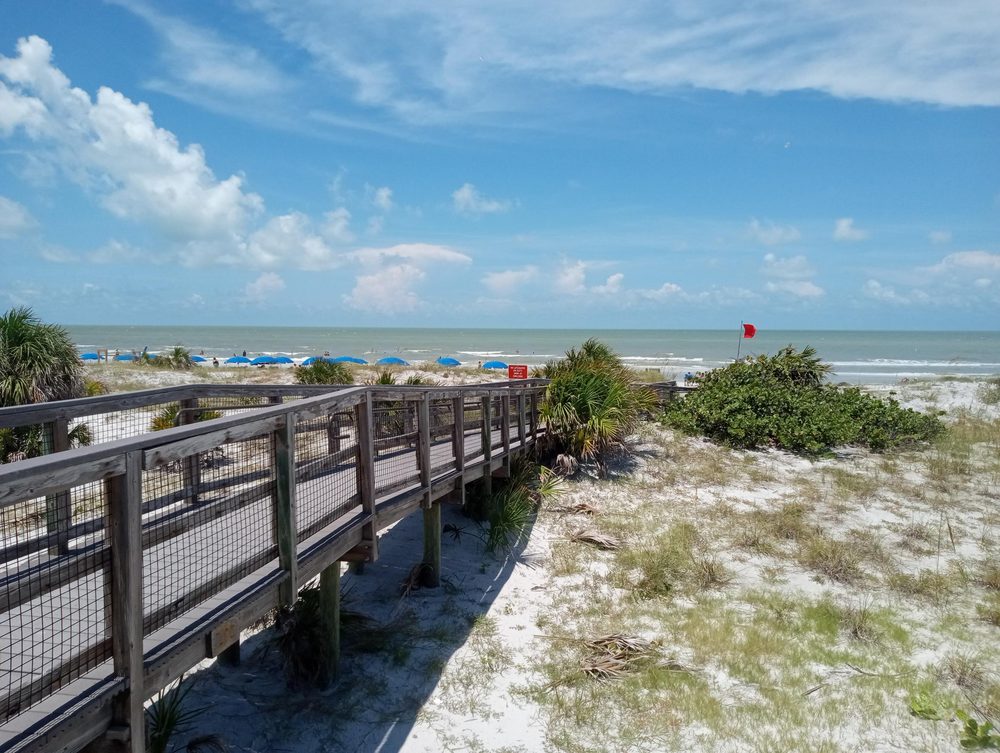
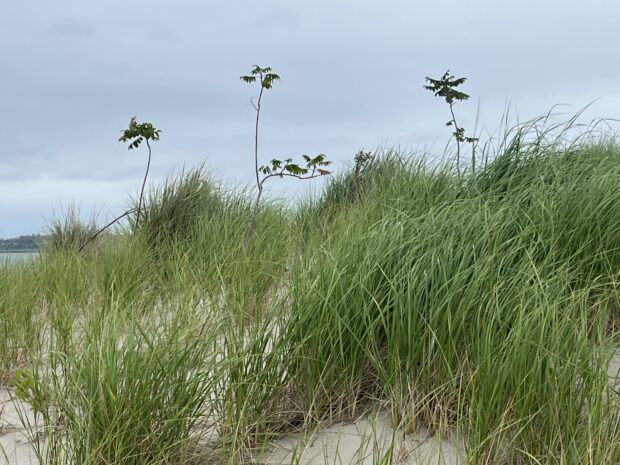
RiSC is being adapted in Texas, New Jersey and Puerto Rico. In New York City (NYC), RiSC and partners are engaging public school students and intergenerational volunteers in planting native American beach grasses, as well as trees and shrubs, in Coney Island Creek Park—Brooklyn’s last urban estuary. American beachgrass is a hearty native plant with a dense network of roots and rhizomes. Its ability to stabilize dunes, reduce erosion, and provide coastal flood protection from extreme wave conditions has been well documented. It also provides numerous ecological benefits including cover for wildlife like snakes, small mammals, and native and migratory birds that live in the Park.
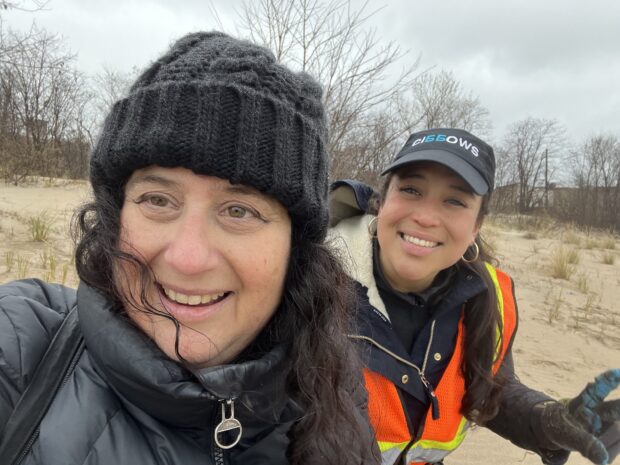
Emily Fano, who leads the NYC project for the National Wildlife Federation, talked to us more about this project that brings together education and nature to benefit New York City.
Can you tell us more about the project and what your goals were?
The RiSC program launched in seven South Brooklyn public schools in 2017, including Coney Island, many of which were badly damaged during Superstorm Sandy in October 2012. About 50,000 homes in Coney Island were left uninhabitable after the storm, thousands of public housing residents lacked heat and hot water for weeks, and an 11-foot storm surge inundated homes and businesses with polluted water and sand.
At the same time, public school students were receiving very little climate education, mostly in science classes, and resilience was not part of any curricula. We wanted to fill those knowledge gaps and help students understand what made Sandy such a powerful storm. We designed a curriculum and a RiSC Vulnerability Assessment for schools, to help students understand their schools and communities’ vulnerability and how those could be addressed.
The RiSC 3.0 curriculum was tailored to Coney Island and was designed in partnership with community leaders, teachers and scientific advisors. It explored this frontline community’s ecological and social history and its coastal vulnerability. According to FEMA, “[p]rimary frontal dunes are often the first line of defense against flooding in coastal regions.”
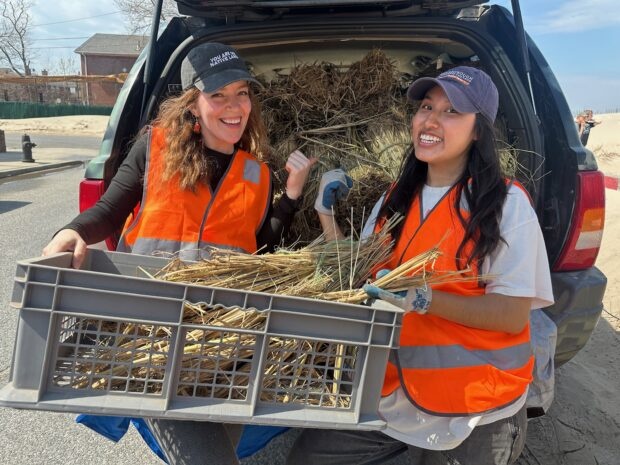
Since 2022, NWF has led intergenerational habitat restoration events in Coney Island Creek Park to build social and ecological resilience in the community. Close to 4,000 New York City public school students, 200+ teachers, and hundreds of community members have collaborated with NWF, NYC Parks, the American Littoral Society, corporate volunteers and Coney Islanders to plant over 100,000 American beachgrass culms, restoring over 2.25 acres of frontal dunes in the park. We also bring teachers on site for professional development.
How does the project enhance resilience for the local community and ecosystem?
Our goal is to build functional flood protection for the 50,000+ people living adjacent to Coney Island Creek Park by expanding plantings there. We hope to stop sand from migrating into roads, homes and sewer drains, since clogged drains will exacerbate flooding on the streets.
We also hope to continue planting native woody shrubs and trees in the maritime forest adjacent to the road. This will provide enhanced flood protection and sand stabilization as well as additional habitat for bird species. E-birders have documented 244 bird species in the Park including grebes, loons, gulls, terns, warblers, ducks, sandpipers and more.
What feedback have you received from the surrounding community about this project?
In November 2025, we conducted extensive community outreach in Coney Island, prior to a meeting that invited residents to learn about the RiSC program, ask questions and provide feedback. The meeting was co-hosted by NWF at a partner school and was attended by 50 people including students, community board members, representatives from four elected officials’ offices, and a homeowner association. Feedback towards our program was overwhelmingly positive and continued restoration of the shoreline is a top priority of the local community board.
Since 2020, NWF has established deep connections within the Coney Island community. NYC public schools in Coney Island and across the city continue to be instrumental in our habitat restoration efforts. NYC Parks is a critical partner, securing permits for our restoration work and public events, and providing staff, tools, plant material and other supplies. The Coney Island Aquarium has hosted RiSC professional development workshops for educators and hosted a celebratory event in June 2026 with several schools and program partners and our corporate partners at Allied World.
What key lessons have you learned that could benefit others looking to implement similar projects?
I think about these four key things as a nonprofit coming into a frontline community like Coney Island that has experienced historic disinvestment: 1) listen, 2) be humble, 3) earn trust, and 4) ask what people need. It has been essential to build relationships with community leaders to understand Coney Islanders’ lived experiences. We made sure to engage residents in program planning and design as paid advisors and have provided stipends to local educators and volunteers. Our current program manager, Abby Jordan, lives in the community, which I would consider a best practice, and is now also serving on the community board.
As we were planning our program in Coney Island, we wanted to understand what projects were already underway in the community and who was leading them; what did people care about; what challenges were they facing. Economic and health challenges persisted for years after Sandy and gang violence has also been a problem among youth. We learned that residents were understandably wary of outsiders after years of gentrification that accelerated luxury condo development and proposed controversial projects, including a casino that the community fought and successfully stopped. People were over-surveyed for “research” after Superstorm Sandy and nonprofit programs came and went after their grants ran out, leaving no lasting benefits for the community.
We didn’t want to treat Coney Islanders that way or abandon the community. We have committed to continuing our work there until we’re sure that our plantings provide functional flood protection. In addition to the beachgrasses, we have also strived to leave another lasting legacy. When we learned that a community partner needed a website, we raised funds to help them build one. We also aim to benefit local students by continuing to provide hands-on restoration experiences and introductions to new career pathways that can shape their future.
What message would you like to share about the importance of nature-based solutions for communities and ecosystems alike?
Nature-based solutions, including bioswales, rain gardens and expanded tree beds, which capture stormwater and reduce combined sewer overflows that pollute waterways, can be deployed incrementally in neighborhoods and can yield immediate benefits. Larger scale projects like restoring wetlands and installing green roofs also have numerous benefits.
Perhaps most importantly, nature-based solutions empower local action. Residents can help design, build, and maintain projects at the community scale, strengthening stewardship and building social connections in the process. Beachgrass planting projects, like the one in Coney Island, are relatively inexpensive. They typically involve native plants, volunteer or local labor, and simple tools, costing a fraction of gray infrastructure projects that can run into the millions of dollars per mile.
Gray projects typically involve long design, permitting, and construction periods before they begin providing full benefits due to their scale and complexity. This can delay measurable improvements in flood mitigation. Gray infrastructure also often needs costly repairs or replacement after major storms.
When communities work with nature rather than against it, they get solutions that are more resilient, are often more affordable, and beneficial in the long run. At the same time, communities gain co-benefits like cleaner air and water, healthier ecosystems, recreational spaces, and improved public health.
 Written by NWF Staff
