








We have much more to do and your continued support is needed now more than ever.
Growing Tomorrow’s Environmental Leaders
How Eco-Schools Are Bringing STEAM Learning to Life
Across Michigan, Ohio, New York, and Missouri, students are discovering that sustainability is more than an environmental responsibility—it’s an opportunity to become scientists, engineers, problem-solvers, and leaders.
For 11 years, the National Wildlife Federation’s Eco-Schools U.S. program and General Motors (GM) have partnered through the GM Green STEAM Partnership to support student-led environmental action. Through action grants, educator professional development, and mentorship from GM employees, students use the Eco-Schools framework to design and implement projects that strengthen both their communities and their STEAM skills.
During the 2025–26 school year, more than 20 schools participated, bringing environmental education to life through hands-on learning and innovation.
Flint Hill Elementary: Where Nature Becomes the Classroom
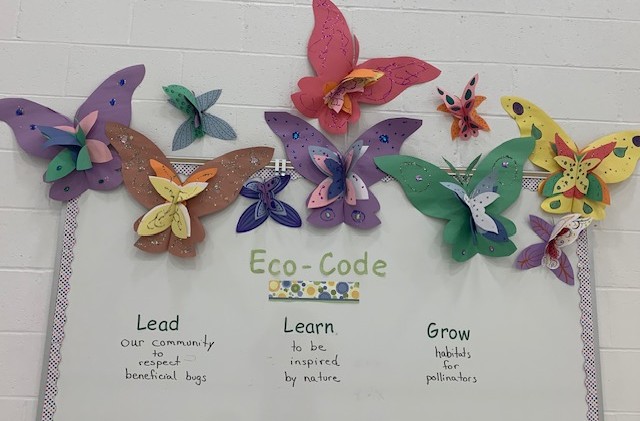
At Flint Hill Elementary School, sustainability is far more than a lesson—it’s a student-driven movement guided by the Eco-Code: “Leading our Community to Respect Beneficial Bugs, Learning to be Inspired by Nature, and Growing Habitats for Pollinators.”
Students began by identifying environmental priorities and transforming those ideas into actionable projects. Their work centered on expanding pollinator habitats, increasing recycling efforts, and creating outdoor learning environments where science could be experienced firsthand.
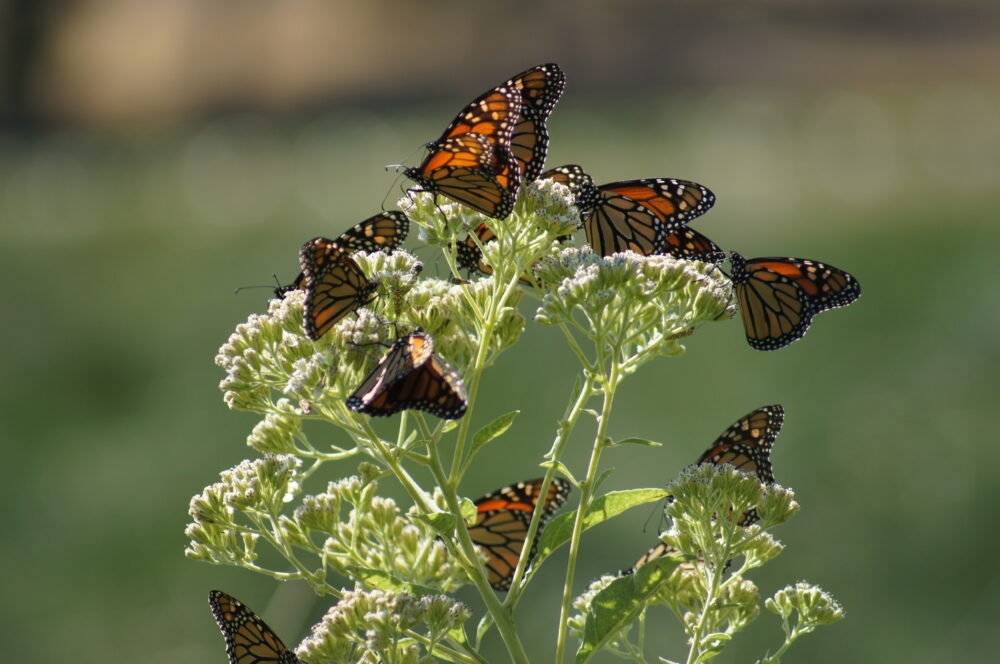
A thriving pollinator garden became a living laboratory where students observed butterflies, hummingbirds, and other pollinators while learning about ecosystems, biodiversity, and plant life cycles. Students helped construct and maintain butterfly feeders, watering stations, and hummingbird feeders, applying scientific observation skills to monitor wildlife activity and habitat health.
Engineering and design thinking came into play as students and volunteers built an 8-by-4-foot raised garden bed. Students explored plant selection, soil composition, and garden design while cultivating pollinator-friendly flowers that supported local wildlife.
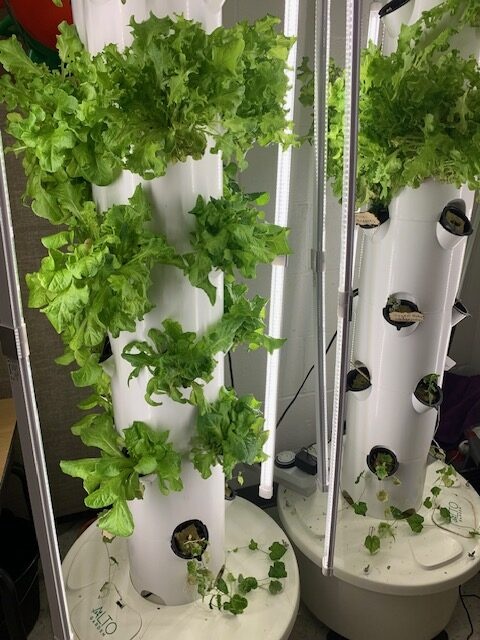
Perhaps one of the most exciting examples of STEAM learning was Flint Hill’s Tower Garden project. Through hydroponic growing systems, students discovered how to produce food both indoors and outdoors while exploring concepts such as water conservation, plant biology, and controlled growing environments.
By monitoring light exposure, water levels, and plant growth, students collected data and applied mathematical reasoning to track progress.
The impact extended beyond the classroom. Fresh lettuce and vegetables grown by students were served in the school cafeteria, creating a direct connection between science education and healthy food systems.
Students even designed informational signage to educate their peers about the produce they had grown, blending scientific communication with creativity and visual design.
Flint Hill students also demonstrated the power of civic engagement. Recognizing the role of community partnerships in environmental stewardship, they wrote a letter to Mayor Guccione thanking the town for its green infrastructure and support of pollinator habitats.
Through this project, students practiced communication, advocacy, and leadership skills while gaining an understanding of how local governments contribute to sustainability efforts.

The addition of butterfly benches and outdoor learning spaces further transformed the campus into an immersive environmental classroom where students can observe wildlife, conduct investigations, and connect with nature every day.
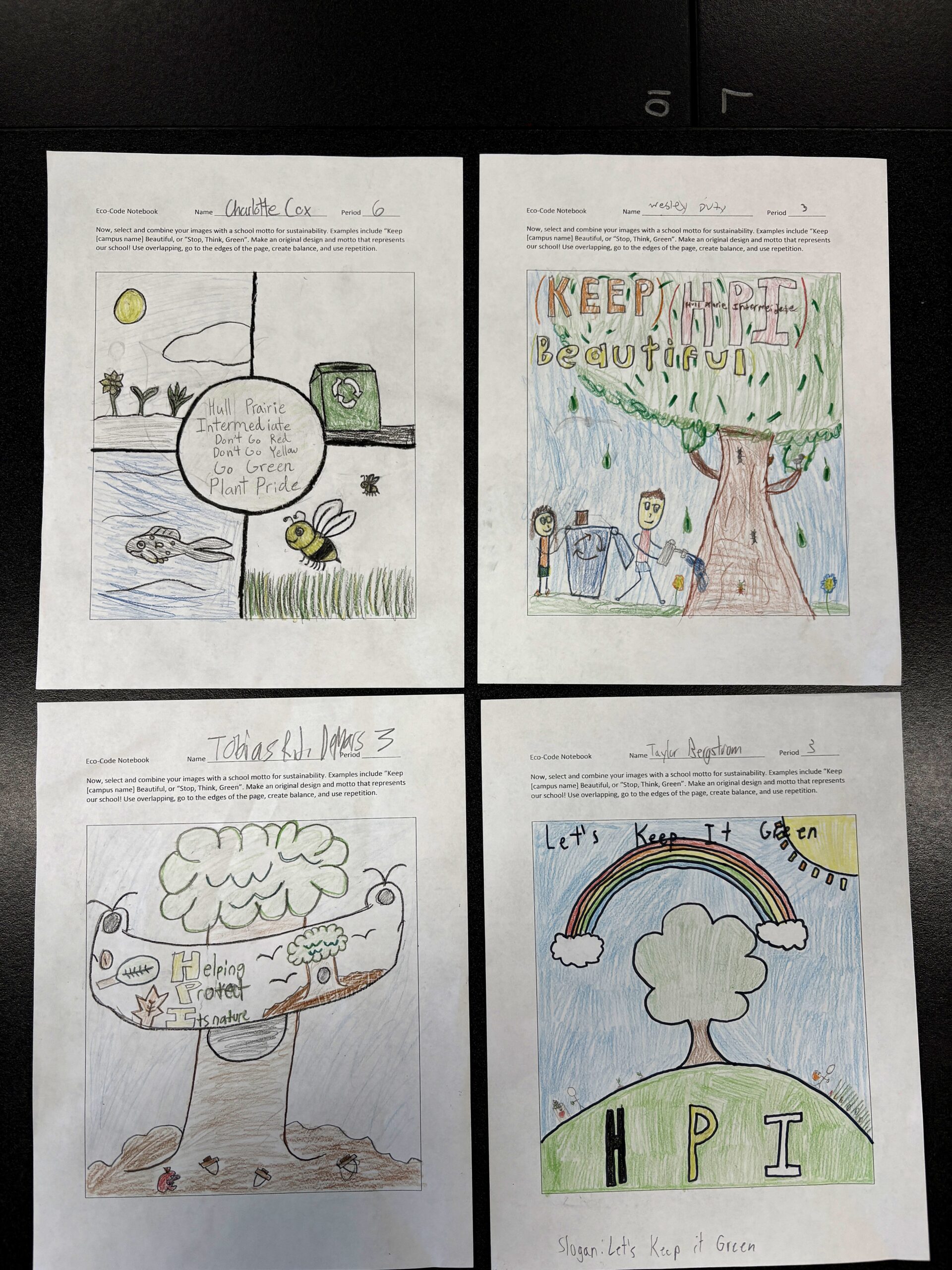
Hull Prairie Elementary: Innovation Rooted in Curiosity
At Hull Prairie Elementary (HPI), sustainability thrives through collaboration, creativity, and hands-on exploration.
The school’s Action Team—comprised of students, teachers, and custodial staff—meets monthly to oversee a wide range of environmental initiatives. Nearly 200 students actively participate in projects focused on composting, recycling, habitat restoration, gardening, and even rainbow trout cultivation.
From the beginning, students took ownership of the program. They developed and voted on their Eco-Code, designed educational posters, recorded morning announcements, and shared updates through the school’s learning platform, helping spread sustainability awareness to more than 1,000 students and families.
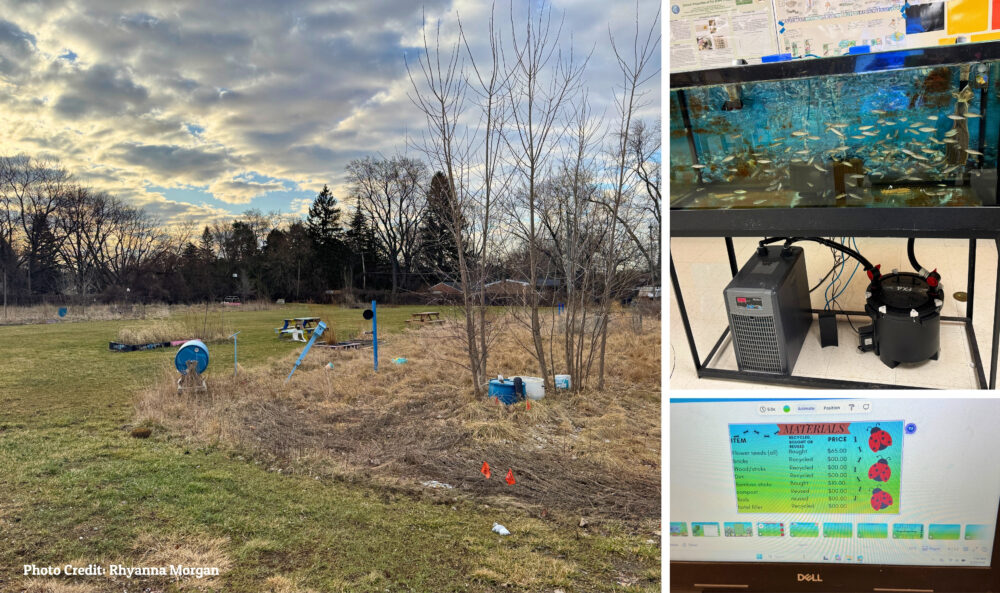
One of the year’s most impressive accomplishments was the expansion of HPI’s hydroponic growing program. What began as a few hydroponic buckets evolved into a sophisticated indoor growing system featuring 11 hydroponic buckets, a 40-plant hydroponic tower, and a four-tier greenhouse used for seed starting.
These projects provided students with authentic opportunities to explore plant science, engineering design, environmental systems, and data collection. By monitoring growth conditions and experimenting with different growing methods, students gained valuable experience in scientific inquiry and problem-solving.
Learning extended beyond school grounds through partnerships with GrowNextGen and Hertzel Farm. Virtual collaborations and field-based learning experiences introduced students to large-scale agriculture and composting operations, helping them understand how sustainable systems function at both local and commercial scales.
Students then applied what they learned by expanding their own composting efforts at school. Their success has sparked conversations among city officials and community leaders about bringing similar programs to additional schools throughout the Perrysburg Schools.
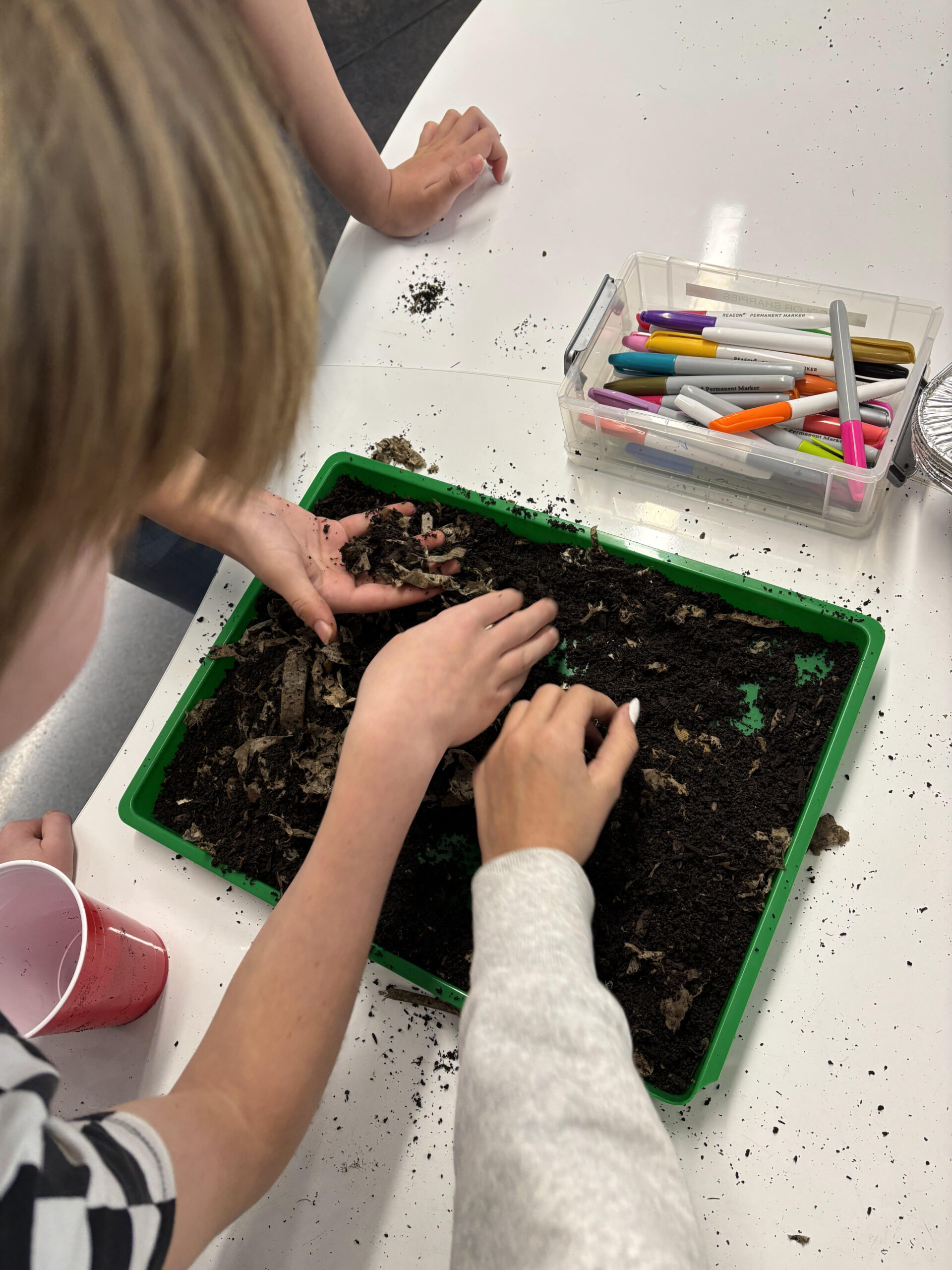
When challenges arose during a rainbow trout project, students embraced the scientific process by investigating fish deaths through observation, analysis, and dissection. Their willingness to ask questions and seek answers exemplified authentic scientific inquiry.
Their commitment to sustainability also benefited the broader community. Produce grown through hydroponic systems was shared with the school cafeteria and donated to a local food bank, reinforcing the idea that environmental action can have meaningful social impact.
Building Skills for a Sustainable Future
The projects at Flint Hill Elementary and Hull Prairie Elementary showcase the power of combining environmental education with hands-on STEAM learning. Students aren’t just studying science from textbooks—they’re designing systems, collecting data, solving problems, communicating ideas, and collaborating with community partners.
Whether constructing pollinator habitats, growing food through hydroponics, investigating ecological challenges, or advocating for sustainability in their communities, these students are developing the skills needed to thrive in an increasingly complex world.
Through the continued partnership between Eco-Schools U.S. and General Motors, students are learning that sustainability isn’t just about protecting the environment—it’s about developing the creativity, critical thinking, and leadership skills needed to build a better future.
