















We have much more to do and your continued support is needed now more than ever.
Data Centers, Water, and the Strain on Local Resources
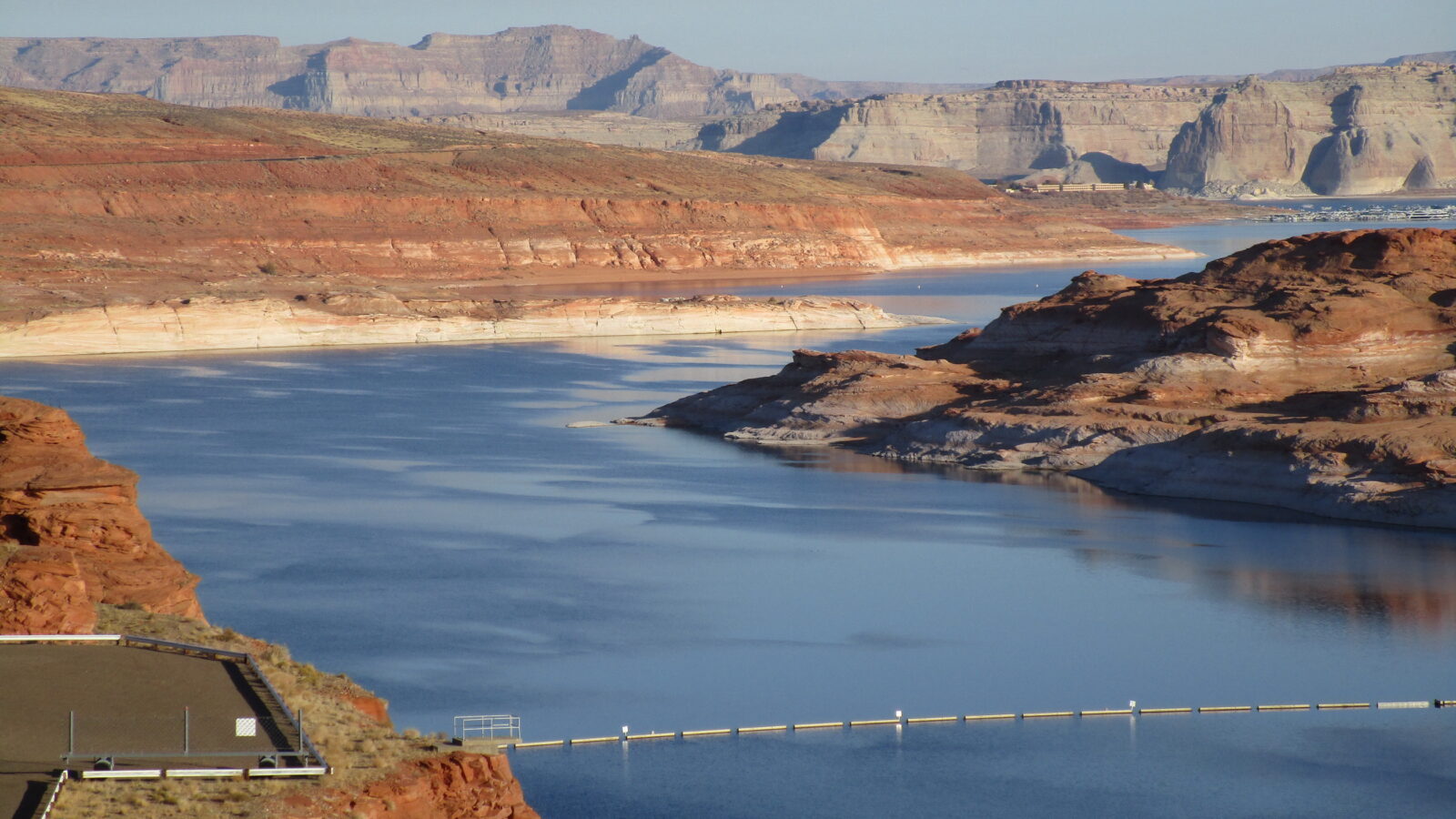
Lake Powell, Arizona. Credit: Reinhard Link
Data Centers and Water Use
Data centers are driving huge increases in electricity demand in the U.S.—and placing parallel pressures on water. Data centers are quietly becoming major water users, often in water-stressed regions. As artificial intelligence (AI) accelerates demand for computing power, data centers are expanding rapidly, placing new and largely unregulated pressure on local water systems.
Proper water management policies and water-efficient technologies will be imperative to safeguard local ecosystems, communities, wildlife, and our broader shared natural resources as data centers rapidly develop.
Why data centers need water
High-density computing infrastructure generates more heat than conventional data centers, often making water-based cooling difficult to avoid. A traditional data center may consume electricity comparable to that of 10,000 to 25,000 households, while some hyperscale AI facilities can exceed the energy demand of 100,000 households.
A facility’s total water footprint extends beyond on-site consumption. It also includes indirect water used for activities such as electricity generation, semiconductor manufacturing, construction material production, and wastewater produced during operations.
Although evaporative cooling systems recirculate water through multiple cycles of reuse, they still require ongoing water inputs because a portion is lost through evaporation and periodic discharge to maintain water quality.
Lake Powell—part of the Colorado River Basin, which supplies water to tens of millions of people—has fallen to about 40 percent of its storage capacity amid prolonged drought and rising demand.
The Water Transparency Issue
Transparency around data center water use is uneven. Facilities can measure how much water they use, but what gets shared—and how—varies widely depending on location, utility oversight, and whether water comes from public systems or sources like on-site wells.
Companies also report different metrics. Some share total water use, while others focus on cooling or provide only partial data. Not all distinguish between potable and recycled water, and information about cooling chemicals is often limited. Because disclosures are largely voluntary and not standardized, it’s difficult for communities and policymakers to compare facilities or understand cumulative impacts.
At the same time, data center water demand is growing in regions already under stress. Much of the Western U.S. continues to face drought and groundwater depletion, while they also attract new development due to land, energy access, and economic incentives.
While it is standard for industrial and residential users to pay different water rates, the terms of large-scale water agreements are not always transparent. This can raise concerns about fairness and resource prioritization, especially in water-scarce regions.
In 2024, a single Google data center in Council Bluffs, Iowa used over 1 billion gallons of water from the Missouri River that also serves Council Bluffs residents—about the equivalent of 13,300 people’s annual use.
Communities deserve clear, accessible information about how much water data centers use, where it comes from, and what the impacts are before new projects move forward.
Ecosystems and Public Health
Ecologically, the consequences of data center water use are significant. Water use from data centers has both quantity and quality impacts. Reduced streamflows can harm fish and aquatic species while decreasing biodiversity. Groundwater extraction risks aquifer depletion, and large-scale land conversion fragments habitats and disrupts migratory pathways.
Water quality impacts also matter. As water is recirculated in cooling systems, or when facilities reuse treated wastewater, dissolved salts can become concentrated, producing brine during discharge. While often overlooked because it is not “toxic” in the traditional sense, brine is difficult to dispose of responsibly and can create local environmental stress, particularly in water-scarce regions.
There are also concerns about chemical use in cooling systems, including refrigerants and PFAS (“forever chemicals”), which persist in the environment and are linked to health risks such as cancer and reproductive harm. Despite these risks, disclosure and monitoring requirements for many of these substances remain limited.

What needs to change
Data centers may be inevitable, but unmanaged data center growth is not and certain solutions already exist. Some operators are adopting more water-efficient cooling systems and using recycled or non-potable water, while others pursue “water positive” goals, though verification varies.
Stronger standards are needed to improve transparency and accountability, especially through consistent water metering and reporting. Water use should also be evaluated at the watershed level, not just site by site, to reflect real regional limits.
As data centers continue to expand, balancing technological growth with responsible policies and data is critical for sustainable resource management.
