












We have much more to do and your continued support is needed now more than ever.
Behind the Scenes of Conservation: The Role of Conservation Technical Assistance

Soil Conservation District workers consulting in field of rye cover crop. Credit: Edwin Remsberg and USDA-SARE
The U.S. Department of Agriculture (USDA) administers several voluntary, incentive-based conservation programs that help farmers, ranchers, and foresters implement practices that protect soils, water and wildlife. In fact, in 2023 USDA conservation impacted over 53 million acres, or an area larger than the state of Utah. This was the result of $6.6 billion in funding to farmers, a number that should grow as a result of a historic Congressional investment in USDA conservation programs last year.
What can fly under the radar are the expert conservationists who help make this on the ground conservation happen. Just as you would consult a mechanic for car repairs or a financial advisor for retirement planning, farmers, ranchers, and foresters can turn to Conservation Technical Assistance (CTA) staff for land management expertise at the USDA’s Natural Resource Conservation Service (NRCS).
CTA staff are the “boots on the ground” who provide direct support through one-on-one conversations to help farmers navigate programs and make management decisions.
These experts identify on-farm resource concerns, design individual conservation plans, implement low-cost, high impact practices, and use other USDA programs, if necessary. Improvements made through CTA are beneficial to all Americans, as it helps improve the conservation of soil, water, and wildlife across the United States.
A Closer Look at Conservation Technical Assistance
In Adams County, North Dakota Stan Murphy purchased an 839-acre ranch in 1995. Since purchasing the land, Murphy has worked tirelessly to transform the property in partnership with NRCS. Stan has completed many conservation projects, including a 25-tree row that extends 700 feet. He credits NRCS CTA as a key to his success: “I had the expertise, which was the main thing, from NRCS.”
This is just one example of how hundreds of thousands of producers have used CTA to solve natural resource concerns while enhancing the efficiency and resiliency of their operations.
CTA is not done casually. It utilizes a nine-step planning process led by NRCS agents and trusted partners, including local conservation districts, university extension, and state agencies to develop practical, no-cost conservation plans tailored to the specific objectives and circumstances of individual landowners. Throughout the process, experts work with the landowner to identify potential solutions, and to help put practices in place.
By providing the expertise necessary to implement effective practices on the ground, CTA acts as the access point for delivering billions of dollars in Congressional conservation investments. However, despite its role in protecting soil, water, and wildlife, CTA funding has experienced significant cuts in recent years. In fact, in 2026 it declined to its lowest point since 2008 and USDA requested zero discretionary funding to CTA in 2027.
Voices from the Field – Focus Groups
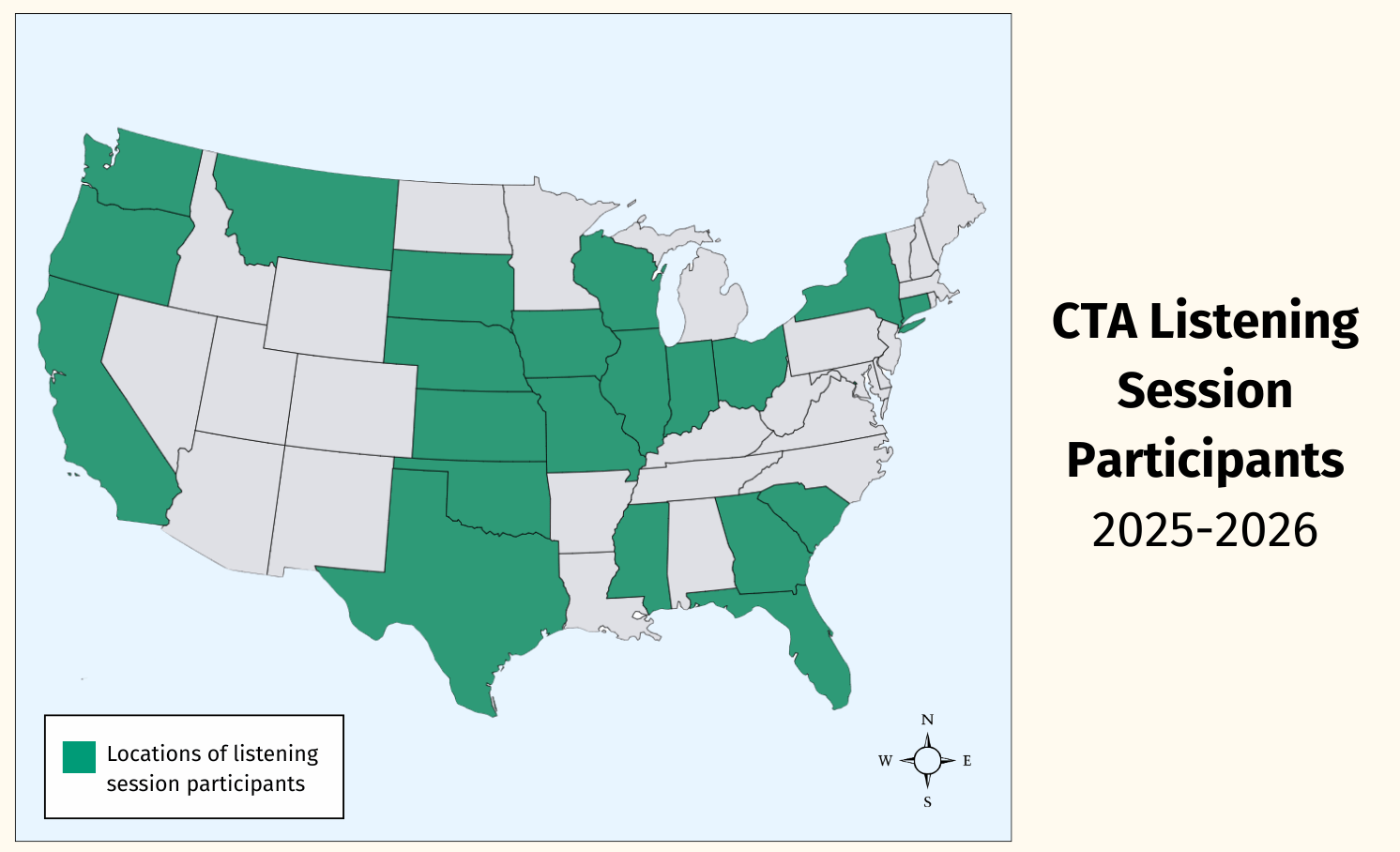
NWF, in partnership with Rural Coalition, and Partnerscapes launched a project to identify opportunities to make CTA more efficient and accessible. Between late 2025 and early 2026, the team conducted focus groups with 36 participants including farmers, ranchers, conservation professionals, and former NRCS staff who helped identify solutions to expand CTA’s impact.
Across the conversations, one resounding theme we heard was how valuable CTA is. Despite challenges, people across the spectrum were supportive of CTA and its value for providing on farm assistance.
“NRCS has been a tremendous partner for us – a valuable partner that needs help. They are a trusted, non-regulatory partner” – Producer with 50 years of NRCS experience.
Opportunities
Participants identified several areas for improvement including more flexible processes and standards, improved service quality across all offices, and increasing the number of staff and support for those experts. Additionally, the national USDA should support equitable and transparent funding processes, to enhance partnerships and conservation planning and adoption.
Recommendations
Discussions of innovative solutions and improvements to the CTA delivery system led to six themes:
- Locally led, Nationally supported
- Improve control at the state level. Specifically, allow State conservationists to take the lead, as they are the experts in their area.
- Support NRCS and Partner Staff
- Invest more time in recruiting qualified staff and increase staff compensation to improve retention rates.
- Increase mentorship opportunities for new staff, including with experienced farmers.
- Eliminate Unnecessary Requirements
- Streamline application and planning processes and listen to staff and farmers about redundancies that can be eliminated.
- Improve Customer Service
- Improve staff training opportunities.
- Implement best practices across states, using successful work from other states as case studies.
- Effective Funding Priorities
- Increase transparency across funding decisions
- Increase funding equity across production, producer, and farm types.
- Effective partnerships and Technical Service Providers
- Streamline the Technical Service Provider (TSP) certification process and improve accessibility for partners and farmers, alike.
CTA Underpins the Value Farmers Place on USDA Conservation

In response to farmer and rancher demand, Congress recently invested an additional $11 billion into USDA conservation programs through 2031. Without staff and partnerships provided by Conservation Technical Assistance, this funding won’t get out the door and improve the soil, water, and wildlife habitat as intended.
Now, perhaps more than ever, Congress and USDA need to listen to farmers and provide the CTA funding and staff that they need.
You can learn more about Conservation Technical Assistance and appropriations funding for the program in this fact sheet.
