












We have much more to do and your continued support is needed now more than ever.
Wildcats of the United States
Uncover the facts about these stealthy wild felines.

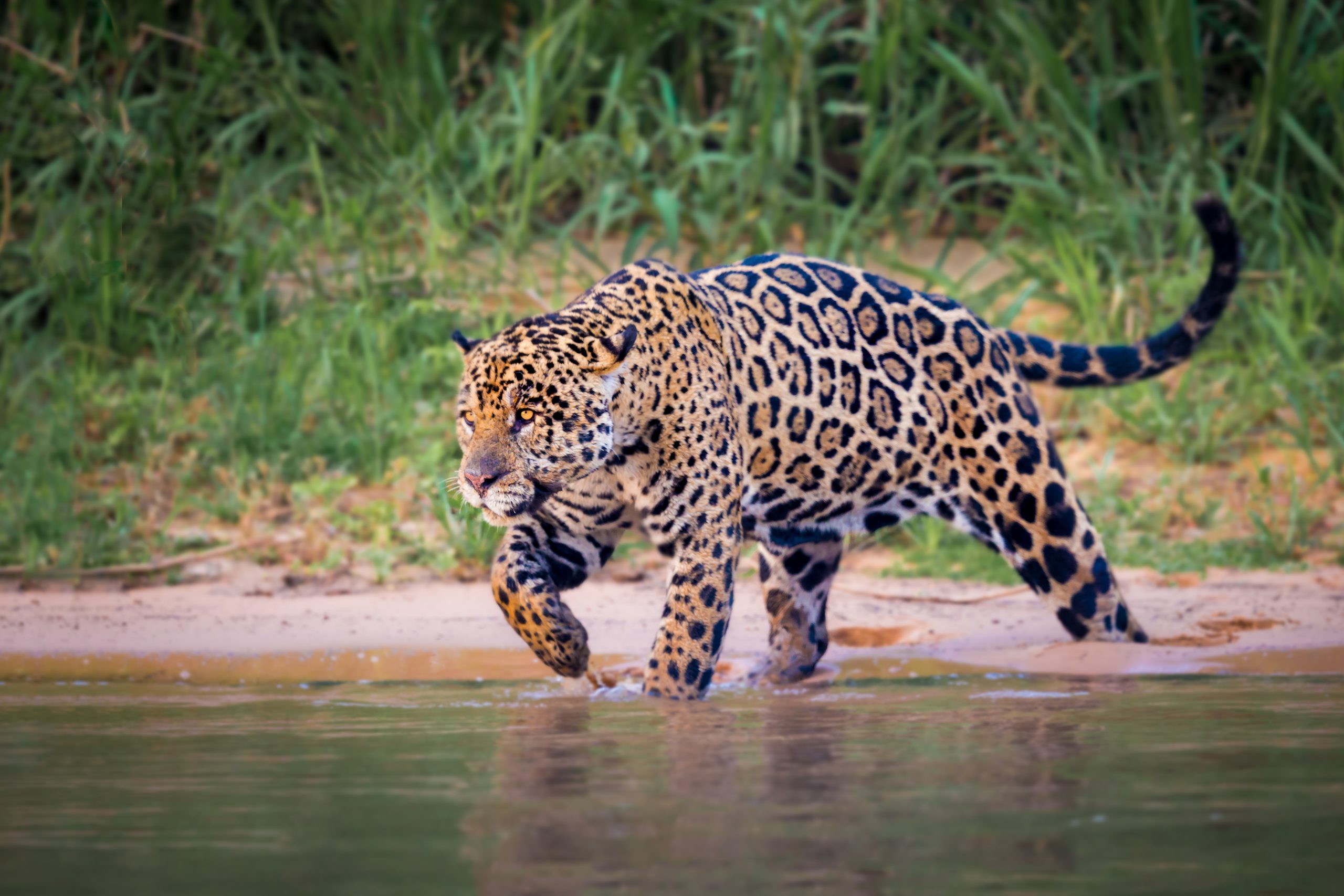
Jaguar. Credit: John Hobbs
Did you know that the U.S. is home to six wildcats? The jaguar, bobcat, Canada lynx, ocelot, jaguarundi and the mountain lion! That may seem like a lot of cats, however, South America, Africa and Asia have significantly more species of native wild cats.
Unfortunately, the Eastern cougar (a subspecies of the mountain lion, also called the cougar) that once lived in the eastern U.S. and Canada is now considered extinct. Hunting and the depletion of its prey population of white-tailed deer led to its decline. The U.S. Fish and Wildlife Service officially declared the eastern cougar extinct, with the last known individuals killed in the 1930s.
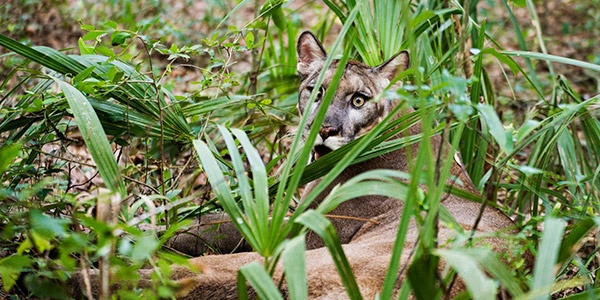
Another subspecies of the mountain lion that is currently threatened with extinction is the Florida panther (Puma concolor coryi); it’s a regional population living in Florida and is listed as endangered under the U.S. Endangered Species Act (ESA).

Here are a few facts about our wildcats:
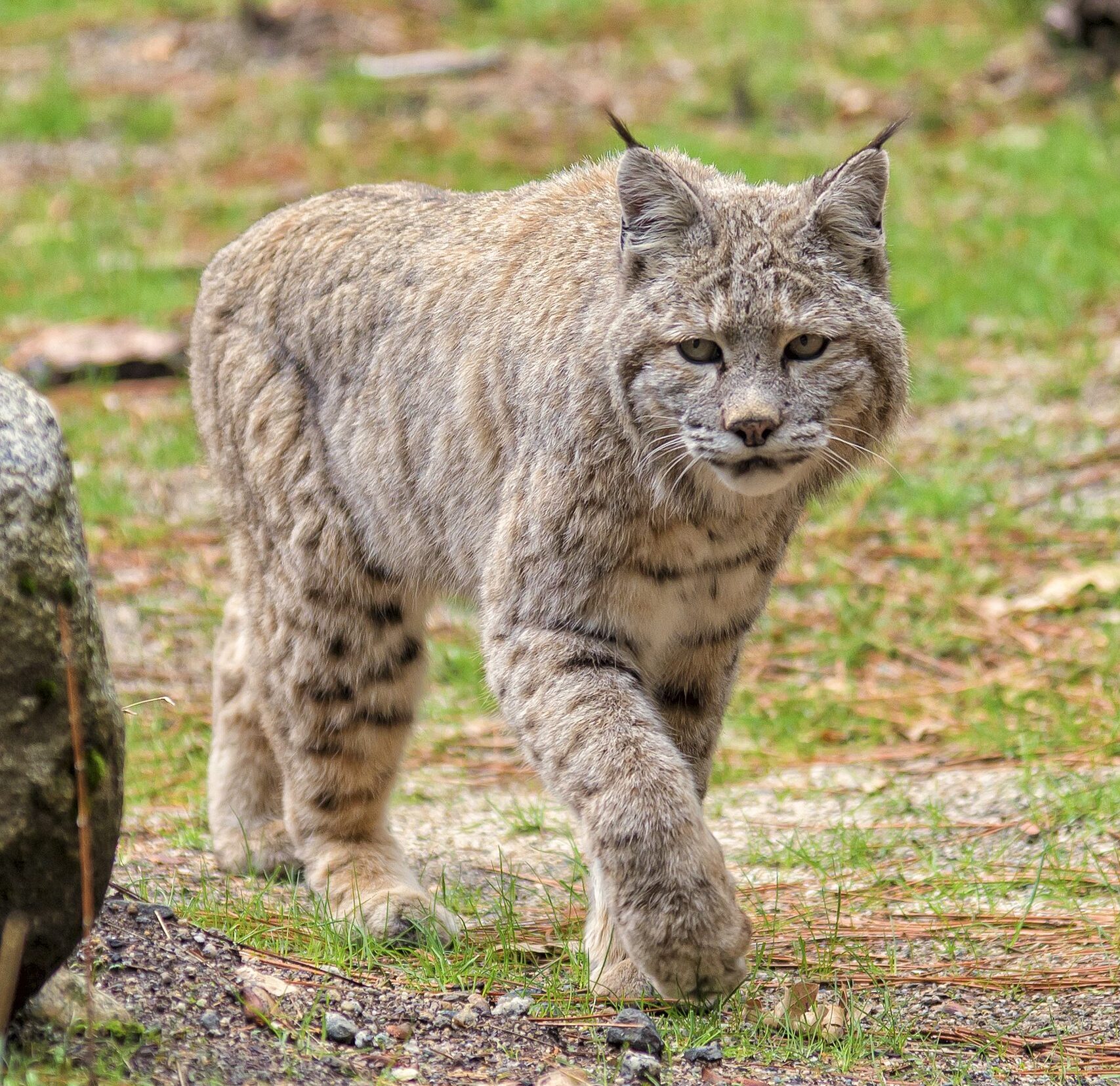
Bobcat (Lynx rufus)
The bobcat is named for its short “bobbed” tail that is about 4-7 inches long. The majority of the world’s bobcats are found in the U.S. (bobcats can be found in 47 of the contiguous U.S., plus Alaska); however, their range reaches from southern Canada to Mexico. They are small to medium sized cats, adult males weighing between 15 to 30 pounds, and their favorite foods are rabbits and hares!
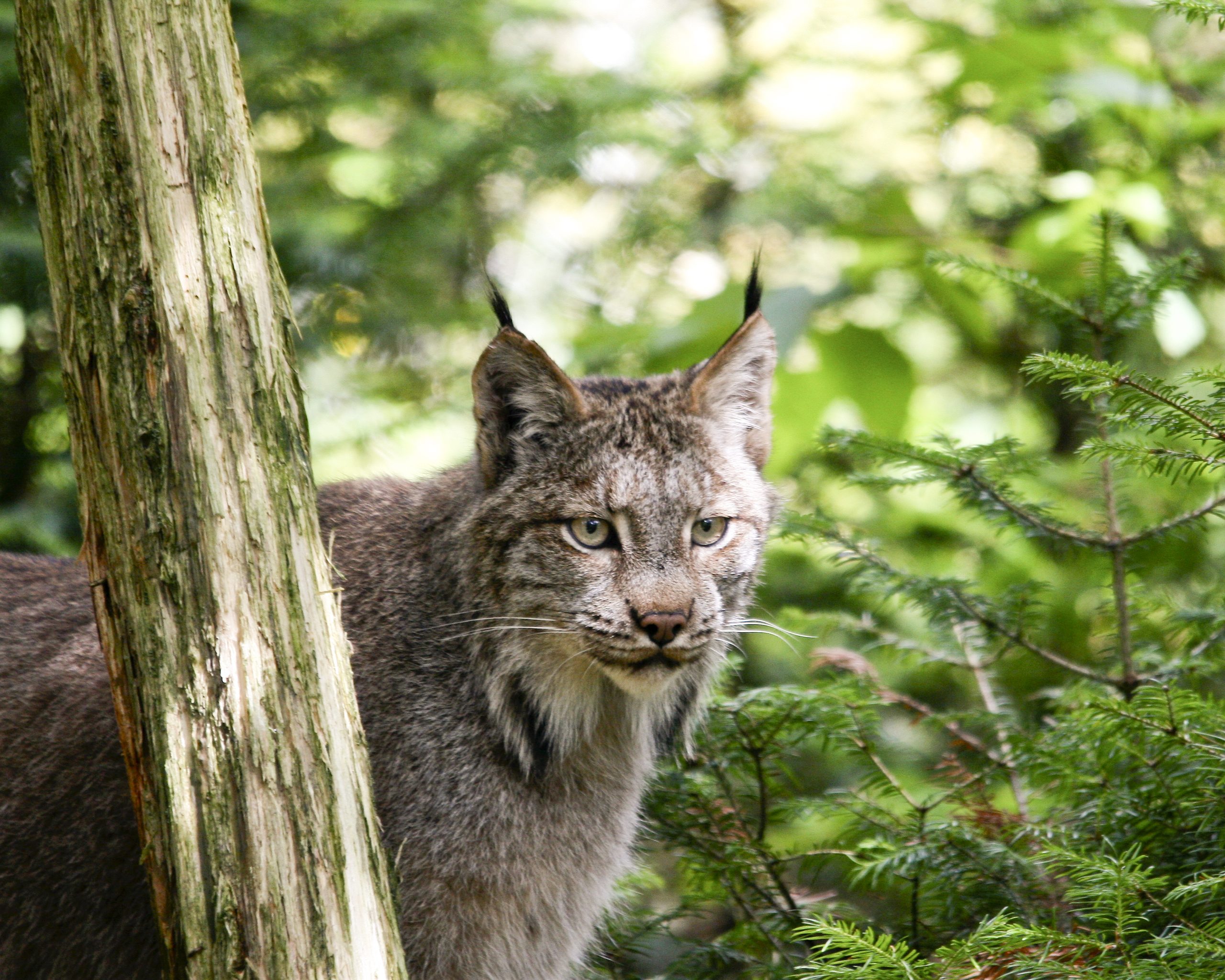
Canada lynx (Lynx canadensis)
Listed as threatened under the Endangered Species Act (ESA)
The Canada lynx is named such because most of them live in the boreal forests of Canada, however, they can also be found in Alaska and several other northern and western states. They are usually larger than bobcats with adult males weighing between 20 to 30 pounds, and their favorite food is snowshoe hare!
Mountain Lion (Puma concolor) also called a Cougar
The North American cougar goes by many names including mountain lion, panther or puma depending on the region in which they live. Cougars live primarily in the western U.S, and of all the wildcats, cougars live closest to humans. They are extremely rare to see but most likely the wildcat you’ll see if you see one. Adult males weigh between 145 to 170 pounds, and their favorite foods are large ungulates, like deer or elk, however they will also eat small mammals when necessary.

Jaguar (Panthera onca)
Listed as endangered under the ESA
The jaguar is the largest wild cat in the U.S. and the Americas. It lives in the southern parts of North America including Arizona, Texas, Mexico, and into central and South America. Most jaguars have tan to golden-orange fur, with black rosettes and a white belly.
However, some jaguars are completely black, often called “black panthers,” their black fur coat is a melanistic trait. The average weight of adult males is between 150 to 200 pounds, and their favorite foods include capybaras and peccaries (wild pigs). They are opportunistic carnivores and will eat over 85 different species.
Ocelot (Leopardus pardalis)
Listed as endangered under the ESA
This cat’s name, ocelot, comes from the Aztec word tlalocelot, meaning “field tiger.” The ocelot can be found in south Texas, occasionally in Arizona, however they are more abundant in Mexico and throughout central and South America. On average, adult males weigh 15 to 34 pounds. Ocelots don’t really have a favorite food, they eat many different kinds of animals including mice, opossums, raccoons, javelina, deer, doves, lizards, and snakes.

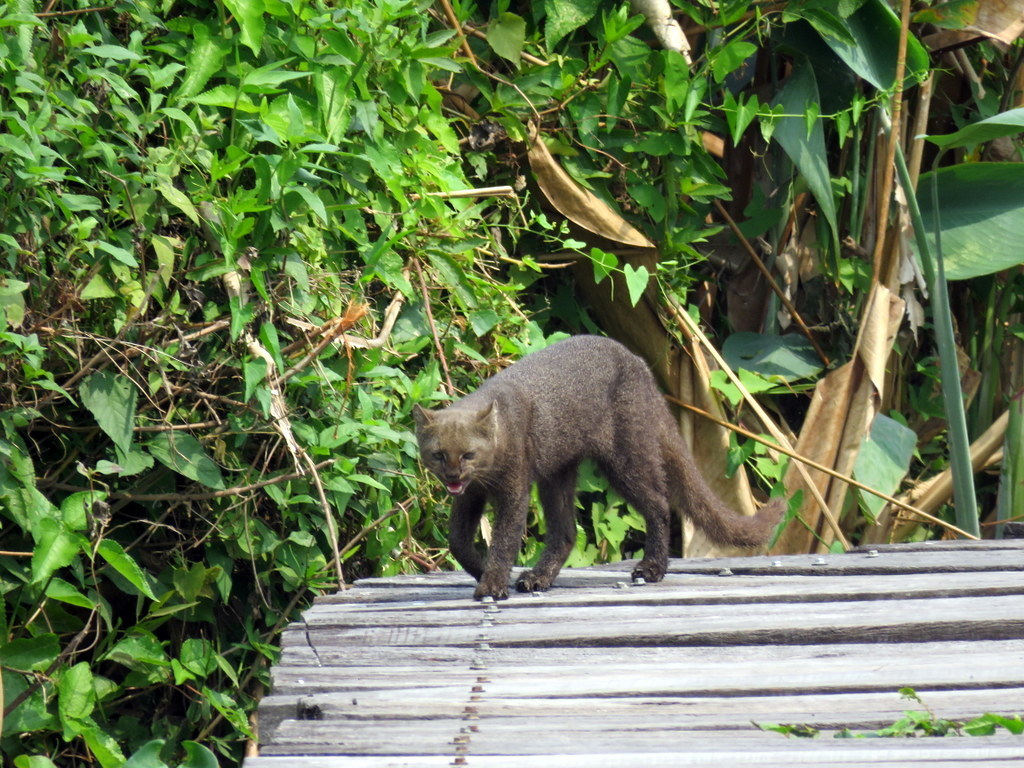
Jaguarundi (Puma yagouaroundi cacomitli)
Listed as endangered under the ESA
The jaguarundi is often called the Gulf Coast jaguarundi, and can be found in Mexico, and throughout central America, and much of South America. Once found in southern Texas and Arizona, the jaguarundi is most likely extinct in the U.S., however the ESA currently protects them. Adult male jaguarundis weigh 10 to 20 pounds, and their favorite food is small mammals, mostly rodents.
Educate and engage kids with the Wild Cats! An activity guide for kids and families to learn about wild cats of the U.S.

Wildcat Conservation
Wildcats play an important role in the environment. They are predators and they help support a healthy ecosystem through their prey practices. Cats prey on small mammals including rodents, which can spread disease and cause crop damage. Larger wildcats, like the mountain lion, prey on herbivores like deer and elk, which can cause damage to native vegetation if overpopulated. Key threats to wild cats include habitat loss, vehicle strikes, and illegal hunting.
Here are a few conservation highlights:
The #SaveLACougars campaign is a conservation initiative launched in 2014 by the National Wildlife Federation (NWF) and the Santa Monica Mountains Fund to build the world’s largest wildlife crossing over the 101 Freeway in Agoura Hills, California.
The project was inspired by P-22, the famous Los Angeles (LA) mountain lion, to prevent inbreeding and highway mortality by reconnecting fragmented habitats in the Santa Monica Mountains. The wildlife crossing will open in December 2026 and will not only provide safe passage for mountain lions, but for other animals including mule deer, bobcats, coyotes, gray foxes, and black bears.
P-22 is without a doubt the most famous mountain lion. He was known as the “Hollywood Cat,” where he was a resident of Griffith Park in LA. P-22 was first detected in early 2012 and estimated to be about 12 years old at that time. In March of the same year, biologists from the National Park Service captured and outfitted the cougar with a GPS radio collar. What made P-22 so famous was his extraordinary crossing of two major LA freeways to get to the park. Unfortunately, in December 2022, the California Department of Fish and Wildlife made the difficult decision to euthanize (humanely kill) P-22 due to severe injuries most likely caused by a vehicle strike. Read more of his story.
The Florida Wildlife Federation (FWF), an affiliate partner of NWF, has a long history of panther protection. The FWF focuses their efforts on advancing practical, science-driven solutions and making panther recovery a priority at every level of government.
Current initiatives include protecting the last remaining habitat in Southwest Florida through careful vetting of proposed development projects through public engagement and scientific rigor and expanding the panther’s current range to its historical range of the Southeastern U.S. by advocating for public and private land conservation and ensuring habitat connectivity through wildlife crossings on existing and proposed roadways. Additionally, implementing reintroduction strategies in priority sites across the Southeastern U.S. is also a current effort of FWF.

The University of Arizona’s Wild Cat Center is dedicated to wildcat conservation; they accomplish their mission through wildlife monitoring, citizen science engagement, education and outreach efforts, and research to include photo analysis and DNA extraction from scat. They focus mainly on jaguars and ocelots—meet their cats, including Cinco, a jaguar first detected in the U.S. in 2025.
How to Help Wild Cats
- Tell your family and friends about wildcats and why they are important to the environment.
- Support the construction of wildlife corridors.
- Avoid using harmful chemicals. Insecticides, rodenticides and herbicides are designed to kill living things and can contaminate fresh water sources including streams and rivers. Secondary poisoning of predators that prey on rodents can also be a result.
- Participate in or host a wildcat safety event. These events educate the community on wildcat safety, what to do if you encounter a mountain lion, for example, and how to prevent attracting wildcats into the community where people live.
- Contact your public official and advocate for laws that protect wildcats and other wildlife including the Endangered Species Act and the Recovering America’s Wildlife Act. NWF’s Action Fund Advocacy Toolkit provides guidance on the many ways to share your message of support with friends, family, public officials, media outlets, and more.
Share this NWF resource with an educator in your community! Wildlife Mascot Guide – Turn Your School’s Wildlife Mascot into a Tool for Student-Led Environmental Learning and Action.
Kids’ Corner
Engage youth in learning about wildcats
- Download: Wild Cats! Activity guide for kids and families to learn about wild cats of the U.S.
- Read: Water Cat: A jaguar doesn’t mind getting its feet wet – or its whole body!
- Read: You might have seen the hit Black Panther movies. Exciting, right? Now meet the REAL black panther!
- Read: At Home with Bobcats
- Watch: Cougar Climbing
- Craft: Make a Cougar Puzzle
- Craft: Felt Catnip Toys: A Fun Cat Craft for Kids (for your domestic cats!)
 Written by Kristy Jones
