










We have much more to do and your continued support is needed now more than ever.
America’s Whale: The Endangered Rice’s Whale Can No Longer Call its Gulf Home Safe
One of the most endangered whales in the world no longer has the full protection of the U.S. Endangered Species Act in the Gulf due to oil and gas leasing activities.

Credit: NOAA Fisheries
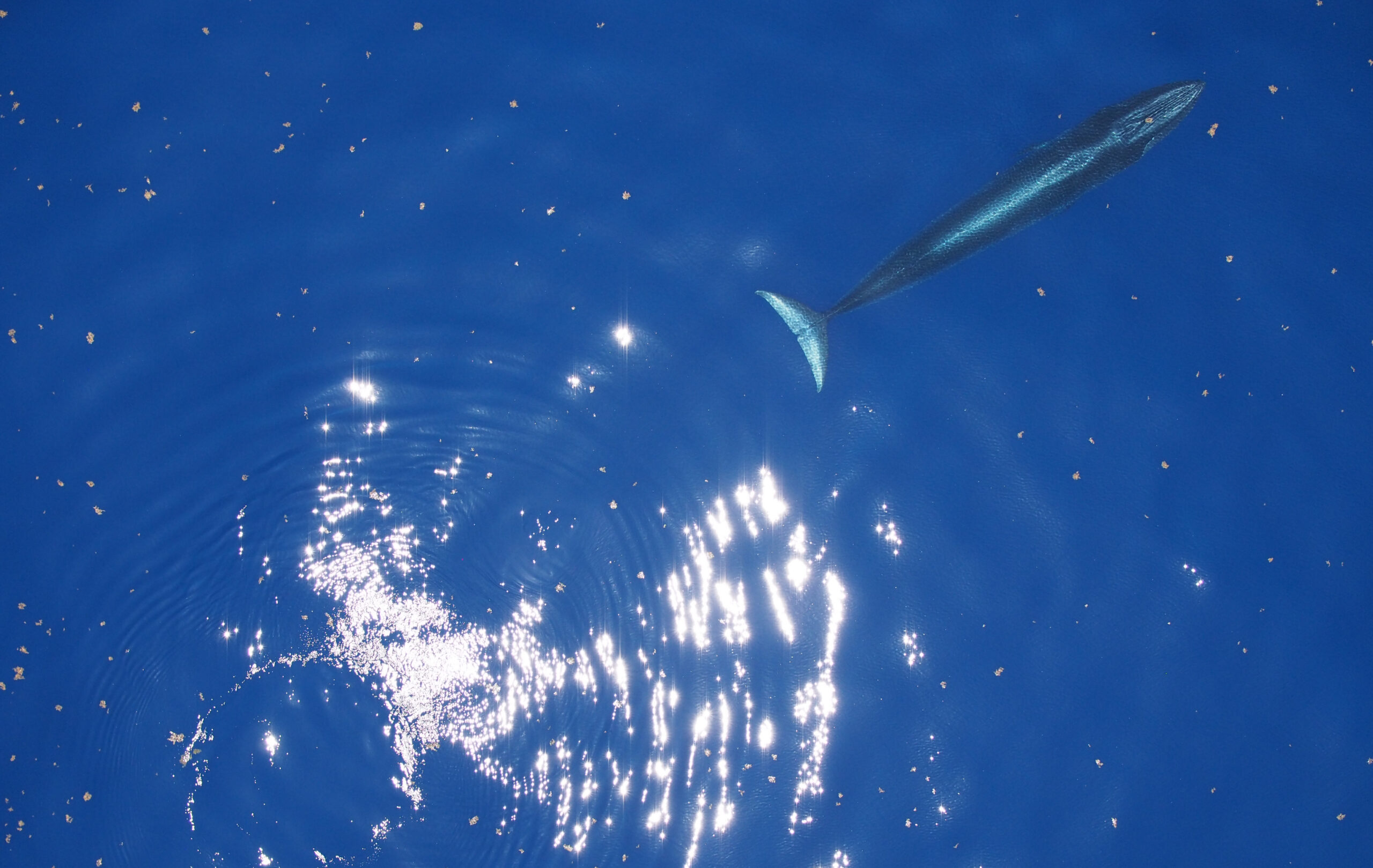
The Rice’s whale is listed as endangered under the U.S. Endangered Species Act (ESA) and is one of the rarest whales in the world with fewer than 100 whales left on the planet. Some call the Rice’s whale, America’s whale, because it is believed to be the only whale species that lives year-round in U.S. waters, in the Gulf.
In March of 2026, ESA protections were lifted from the Gulf as a result of the “God Squad” decision to grant the oil and gas industry an exemption from ESA consultation requirements.
The God Squad is officially called the Endangered Species Committee and is made up of six permanent members including the Secretaries of the Interior, Agriculture, and the Army; the Administrators of the Environmental Protection Agency (EPA) and the National Oceanic and Atmospheric Administration (NOAA); and the Chairman of the Council of Economic Advisors. A seventh member is designated by the President.
The God Squad was designed to be a measure of last resort when conflicts between needed projects and species protection cannot be resolved. Given what is at stake and that most conflicts arising between species protection and development can be worked out, the God Squad has been very rarely convened. The last convening was in 1992, when the decision was made to overturn protections for the spotted owl. And that decision was later withdrawn after litigation.
In this convening, the God Squad ignored the usual requirements and findings that the extraordinary measure of an ESA exemption was necessary. Without even finding an irreconcilable conflict between oil and gas development and protecting species, the God Squad relied on a never before used “national security” exemption to erase protections.
The seven-member Endangered Species Committee’s unanimous vote to exempt oil and gas development in the Gulf from the Endangered Species Act—allowing oil producers to ignore long-standing commonsense safety practices—sidesteps proven practices to develop energy resources and safeguard threatened and endangered species. National Wildlife Federation press release, March 31, 2026
Without ESA protections in the Gulf, the Rice’s whales’ habitat could be facing devastating impacts and put further stress on the few whales that are left.
“Extinction is an unacceptable price to pay for expediency, especially when long-established, commonsense practices can help energy development and wildlife recovery co-exist,” said Collin O’Mara, president and CEO of the National Wildlife Federation. “Endangered species in the Gulf are not impeding our military readiness nor our strategic positions—and allowing harm to them will not make our troops or nation safer. We should be rallying the nation to recover America’s critically endangered species like the Rice’s whale and Kemp’s ridley sea turtles, and we urge oil companies to continue to follow responsible practices that protect wildlife, while we work with Congress and the courts on a responsible path forward.”

Rice’s Whale 101 and Its Role in a Healthy Marine Ecosystem
The Rice’s whale is a baleen whale, which means it is a filter feeder, and feeds on krill and plankton. It’s gray on top, has a pale gray to light pink belly, a uniquely shaped hooked dorsal fin and can grow up to 42 feet long.
Their life span is unknown; however, it’s estimated that the Rice’s whale can live up to 60 years (based on the life span of a closely related whale species). It was recognized as its own unique whale species in 2021, the Balaenoptera ricei. It was previously thought to be a subspecies of the Bryde’s whale.
The Rice’s whale and other whales contribute to blue carbon storage. Whales are efficient creatures; they are able to capture and store atmospheric carbon in their bodies. When they die, they most likely sink to the ocean floor; the carbon is trapped and prevented from being released back into the atmosphere as carbon dioxide. Additionally, whales bring nitrogen and other nutrients to the ocean surface, this process is called “the whale pump.”
Threats to the Rice’s Whale
The Rice’s whale is facing many threats including oil spills, plastics pollution, vessel strikes, ghost gear entanglement, ocean noise, etc.

Oil spills are pretty common in the Gulf and could happen more often with the ESA protections being lifted. Oil can coat the baleen (the filter feeding structure inside the whale’s mouth) making it difficult for the whale to eat, and the whale could even swallow the oil.
According to NOAA, “scientists estimate that 48 percent of Rice’s whale habitat in the eastern Gulf was exposed to oil from the Deepwater Horizon oil spill. And as a result, the whale’s population may have declined by up to 22 percent, and there are likely lingering effects on reproduction and population growth.” Exposure to oil can also cause respiratory issues, increased vulnerability to diseases, skin irritation, and other health impacts.
Other current threats that will most likely increase due to more oil and gas activities in the Gulf include vessel strikes and impacts from underwater noise. There is already a high amount of traffic in the northern Gulf where several commercial shipping lanes coincide with the whale’s territory. In 2009, a female Rice’s whale was found dead in Tampa Bay; it was determined that a vessel strike was the cause of death.
Additionally, shipping and energy (oil and gas) exploration and development activities produce noise underwater. For example, seismic surveys use loud air guns to map the ocean floor for oil and gas.
This underwater noise interferes with the hearing and call frequency range of Rice’s whales. “It is likely that Rice’s whales rely on their hearing to perform critical life functions such as communicating, navigating, finding mates and food, and avoiding predators.”
Check out New York Times interactive graphic about the effects of sonic blasts on the Rice’s whale. Click to view graphic.

Plastic pollution is also a critical threat to the whale’s habitat; Scientists believe between 5-13 million metric tons of plastic entered the ocean in 2010. An estimated 56 percent of whale, dolphin and porpoise species have consumed plastic, according to the Environmental Investigation Agency. Plastic often looks like food, or is ingested accidentally with water and zooplankton, like krill, as baleen whales (e.g., Rice’s whale) feed. As a result, plastic can block these animals’ breathing passages and stomachs, leading to death. Entanglement in ghost gear (abandoned fishing gear) can also impact the Rice’s whale’s ability to swim freely, surface to breath, and eat.
The Gulf’s “dead zone”, the second largest in the world, is a low-oxygen zone, that negatively impacts all marine animals including the Rice’s whales and other cetaceans.
How You Can Help the Rice’s Whales
- Contact your public official and advocate for the Endangered Species Act. NWF’s Action Fund Advocacy Toolkit provides guidance on the many ways to share your message of support with friends, family, public officials, media outlets, and more.
- Tell your family and friends about the Rice’s whales and the threats they are facing in the Gulf.
Read NWF Blog, Oceans Are the Heart of the Planet, to learn how oceans provide vital support for living creatures, humans and wildlife.
Kids’ Corner with Ranger Rick
- Read: The Ocean
- Read: Who Needs Teeth?
- Watch: Amazing Orcas! Fascinating Killer Whale Facts for Kids
- Watch: Humpback tail slap
- Watch: Motion of the Ocean
 Written by Kristy Jones
