








We have much more to do and your continued support is needed now more than ever.
Why You Shouldn’t Be Afraid of Tarantula Hawk Wasps

Tarantula hawk wasp. Credit: Renee Grayson
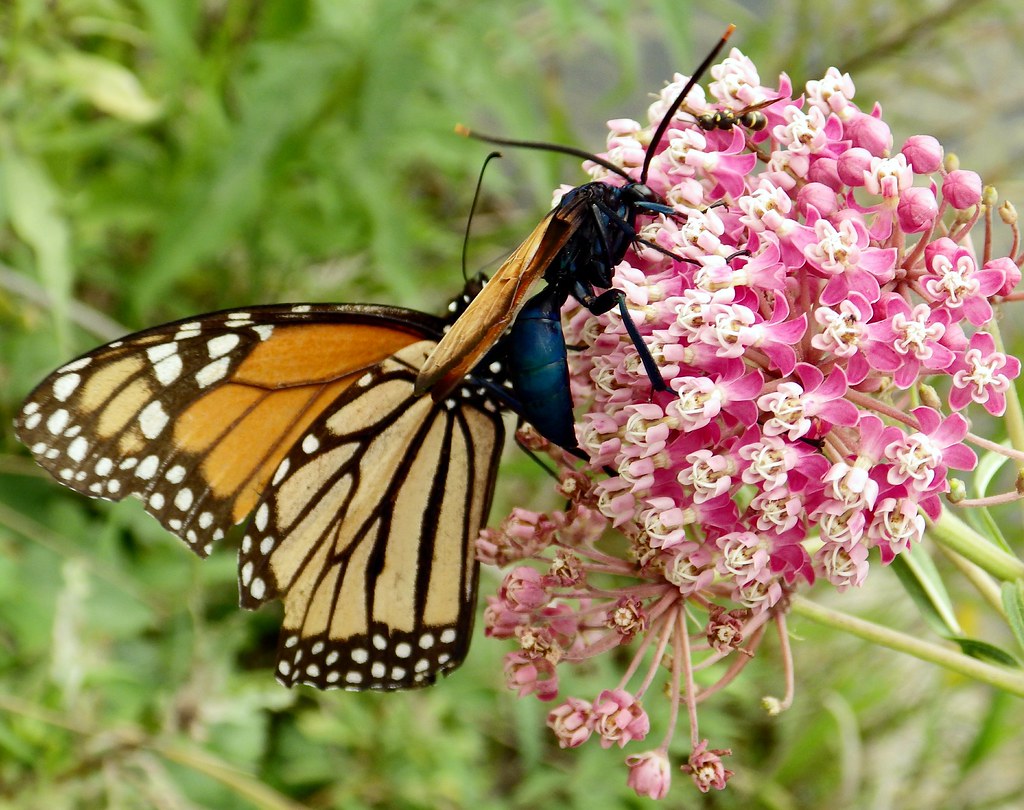
If you’ve planted milkweed for monarchs in the US Southwest and started noticing big, iridescent blue wasps with bright orange wings working in the flowers (or worse, rocketing straight toward you!), it’s understandable if your first reaction is alarm. These are tarantula hawk wasps, and they have a bad reputation for their sting, which is rated at the top of the entomological pain scale second only to bullet ants.
But these wasps aren’t out for human blood, and their presence in your milkweed is a benefit to butterflies. Learn why these scary-looking insects are actually a wonder to have around the garden!
Your Milkweed is Working as Designed
Tarantula hawks are one of the main pollinators of milkweed. If you’re planting milkweed to support pollinators, then seeing these wasps around means your garden is succeeding!
Plus, by pollinating milkweed and other native plants, tarantula hawk wasps help ensure these important plants continue to grow in the landscape to provide habitat for monarchs and other pollinators. The wasp at the flower and the monarch you’re hoping to support are linked through the same plant.
Find milkweed for monarchs (and wasps) with our Native Plant Finder!
Tarantula Hawks are Docile While Foraging
Tarantula hawks at flowers are almost always docile. Foraging time is strictly for gaining energy, and aggression costs energy; there’s no reason for a nectaring wasp to spend its calories chasing a human. Pretty much the only time a foraging tarantula hawk will sting is if someone touches it or swats at it, in which case it is trying to protect itself. Stand near a milkweed full of these wasps and they will ignore you completely while they eat.
Aggression is for Rival Wasps, Not Humans
Male tarantula hawks claim dominance through a behavior called hilltopping, which is essentially the children’s game King of the Hill played by wasps.
A dominant male perches on the highest, most conspicuous post near foraging grounds—a tall shrub, the corner of a building, the tip of a fence—and launches out to investigate anything that moves past, including humans!
He’s checking whether the moving object is a rival male to be chased away or a receptive female to mate with. Either way, he needs to arrive at speed. Wait a few seconds, and the male will return to his post once he realizes you are not a wasp.
Male Wasps Can’t Sting
This is the most important point: only female tarantula hawks have stingers. The males doing the dramatic intercept flights from their perches, the ones that might feel like they are “chasing” you, are physically incapable of stinging. They might look terrifying but are completely harmless.
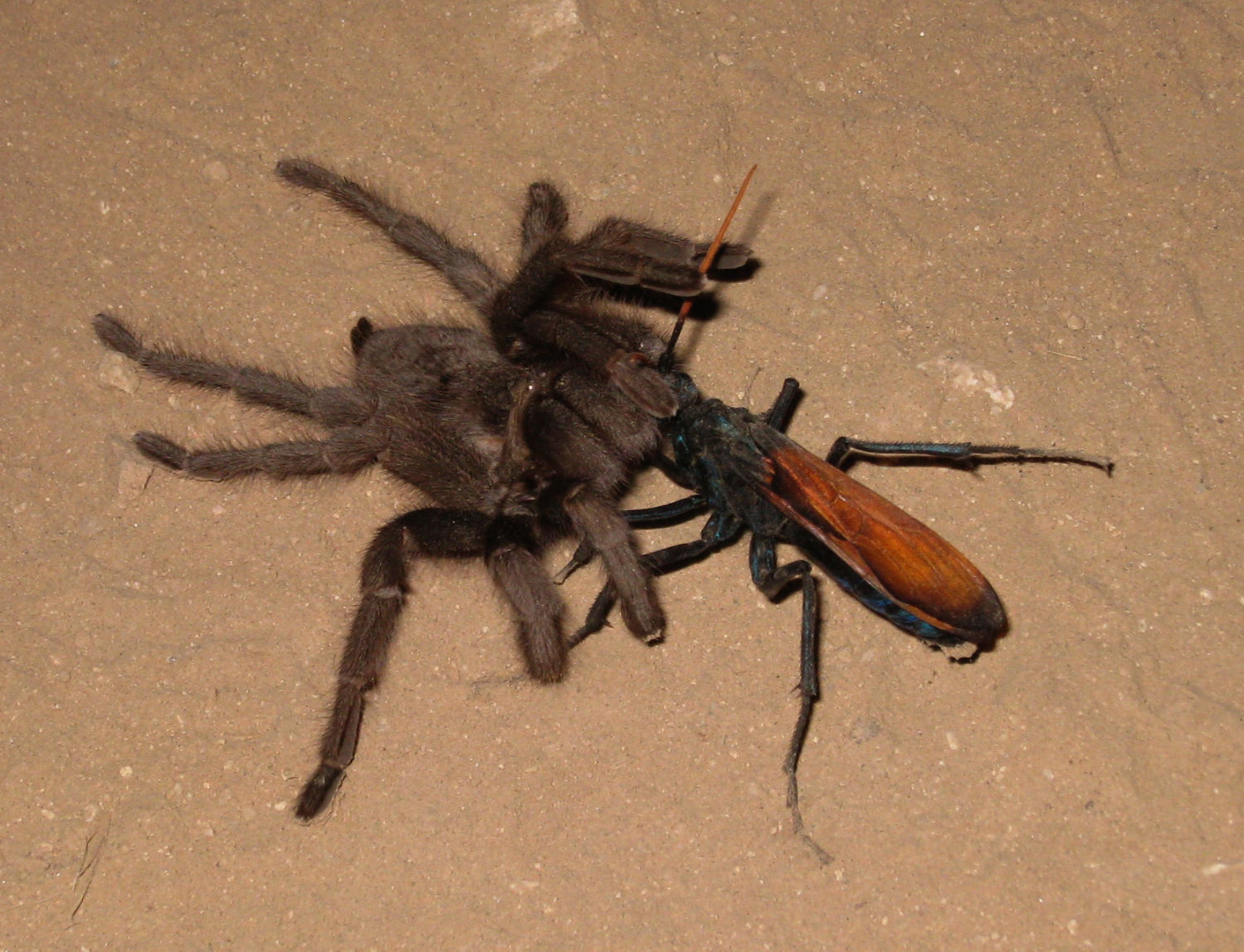
Females, meanwhile, spend most of their time in that calm, can’t-be-bothered foraging mood. When they’re not foraging, they’re hunting tarantulas—which is what the species name refers to. This is the only kind of animal they will sting aggressively, and they do it for a reason: to bring back to her nest, alive but paralyzed, to feed her young. Females do not chase humans. They chase tarantulas!
Designing Gardens with Tarantula Hawks in Mind
When gardening with milkweed in tarantula hawk territory, a couple design choices can substantially reduce unwanted encounters:
- Tuck milkweed away from high-traffic paths and tall conspicuous perches. Doorways, walkways, and the immediate edges of buildings are exactly where you don’t want a hilltopping male to set up. Group plantings away from those zones when possible.
- Build a better perch. If the affected area is near a building or other structure that’s currently the tallest perch around, consider installing a pole with a small platform on top, taller than the building, set about thirty feet away in a quieter spot. This may pull territorial males off the building edge and into a location where their displays won’t startle anyone.
The Bigger Picture
A milkweed planting that attracts tarantula hawks is a planting that’s pulling in real pollinator diversity. The same flowers feeding the wasps are feeding monarchs, native bees, and more. The wasps are also keeping the local tarantula population in check, which, depending on where you live, is a service worth keeping around.
Once you can read the behavior, these encounters stop feeling like attacks and start looking like what they actually are: a healthy native ecosystem doing its thing, loudly, right outside the front door.
