













We have much more to do and your continued support is needed now more than ever.
Invasive Insects in Your Backyard: How to Identify & Control Stink Bugs, Japanese Beetles, and Spotted Lanternflies

Adult spotted lanternfly. Credit: Judy Gallagher
Many of the crawly critters you might see around your lawn or garden are there to help. Bees, butterflies, and moths pollinate flowers. Ants and earthworms keep soil healthy. Ladybugs, praying mantises, and spiders help control plant-eating bug populations.
But these backyard ecosystems can be thrown off by less-helpful inhabitants. Invasive species—organisms that aren’t native to an area and cause harm to the ecosystem—sometimes take up residence in our yards and home gardens, and it can be tricky to tell them apart from beneficial wildlife.
Not In My Backyard: Identifying Invasive Insect Species At Home
If you see a bug in your yard and want to know what you’re looking at, some good resources for identification include iNaturalist and BugGuide; many universities also host state-specific databases for identifying local insects.
Why Invasive Species Are a Problem in Our Yards
The most common invasive species found in American yards and gardens are plant species like kudzu, Japanese honeysuckle, or English ivy. These plants grow quickly and outcompete native plants for sunlight, nutrient, and space.
Similarly, invasive insects often reproduce quickly and lack natural predators to keep their populations under control in their new ecosystems. They can also sometimes damage plants in lawns and gardens.
How to Identify Three Common Invasive Insects in the U.S.
For a quick start guide on what to look out for, we’ve put together this list of three of the most common U.S. invasive insect species you might come across in your garden, where you might find them, and what to do about it.
1. Brown marmorated stink bug
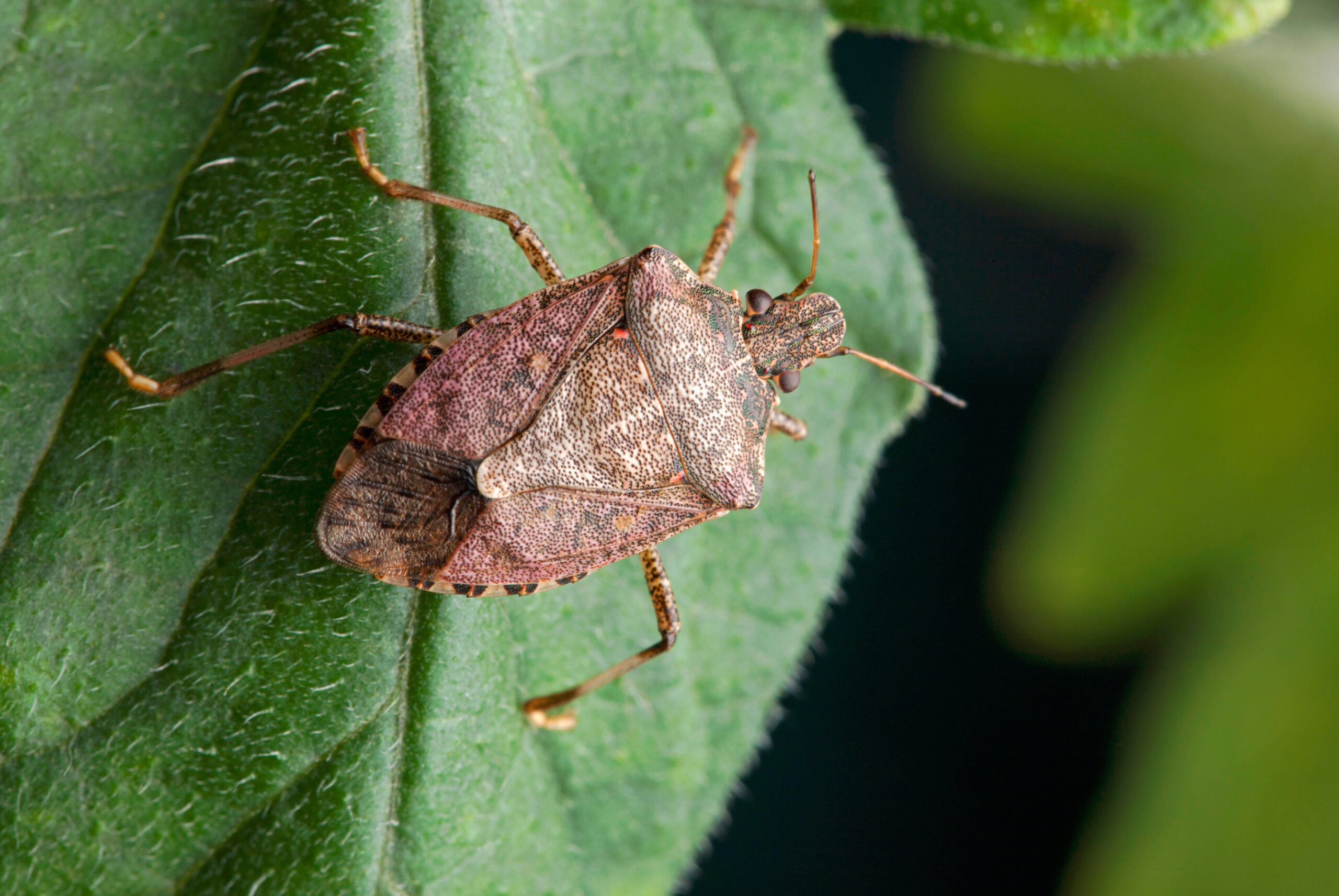
Brown marmorated stink bugs have been spotted in nearly every U.S. state, with the highest concentrations in the mid-Atlantic region. They eat a wide range of fruits, veggies and crops and can pose a threat to home gardens and major agricultural operations alike. In early autumn, adult stink bugs often seek shelter inside buildings to overwinter. Fortunately, stink bugs don’t cause harm to homes or furniture—but they can be a smelly, unsightly nuisance indoors.
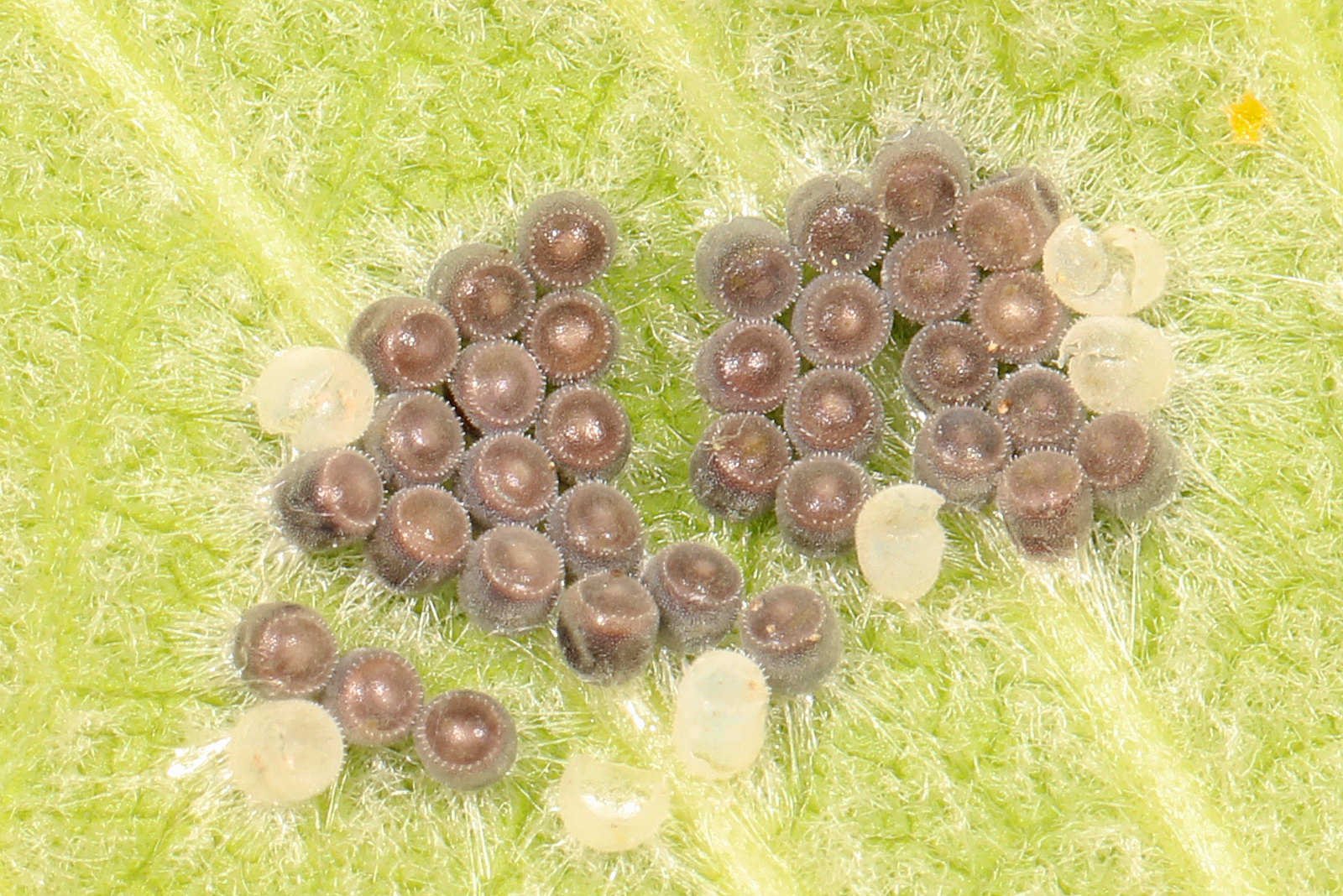
Stink bugs are notoriously tricky for gardeners to control—most insecticides are not particularly effective against them. Experts recommend a multi-pronged approach:
- Search for and crush their egg clusters, which females typically lay on the underside of leaves. Their eggs are tiny and barrel-shaped, varying in color from pale green or yellow to nearly black.
- Spray neem oil to suppress stink bug nymphs after hatching (though this is unlikely to fully eliminate the population).
- Catch full-grown stink bugs and either crush them or throw them into soapy water; a hand-held vacuum can sometimes help with this, if used consistently.
- Cover vegetables with a row cover to prevent stink bugs from feeding. Be aware that there are drawbacks to using row covers—they’re not always feasible to protect fruit trees, and they can sometimes prevent pollination or trap too much heat.
If you spot stink bugs indoors, they can be dealt with by flushing them down the toilet, vacuuming them up, or trapping them in soapy water.
To keep them out in the first place, seal off openings to the outdoors, shut off unnecessary lights near doorways, and minimize food sources like crumbs or produce scraps. Neem oil and diatomaceous earth, sprinkled near possible entrances, may also help.
2. Japanese beetle
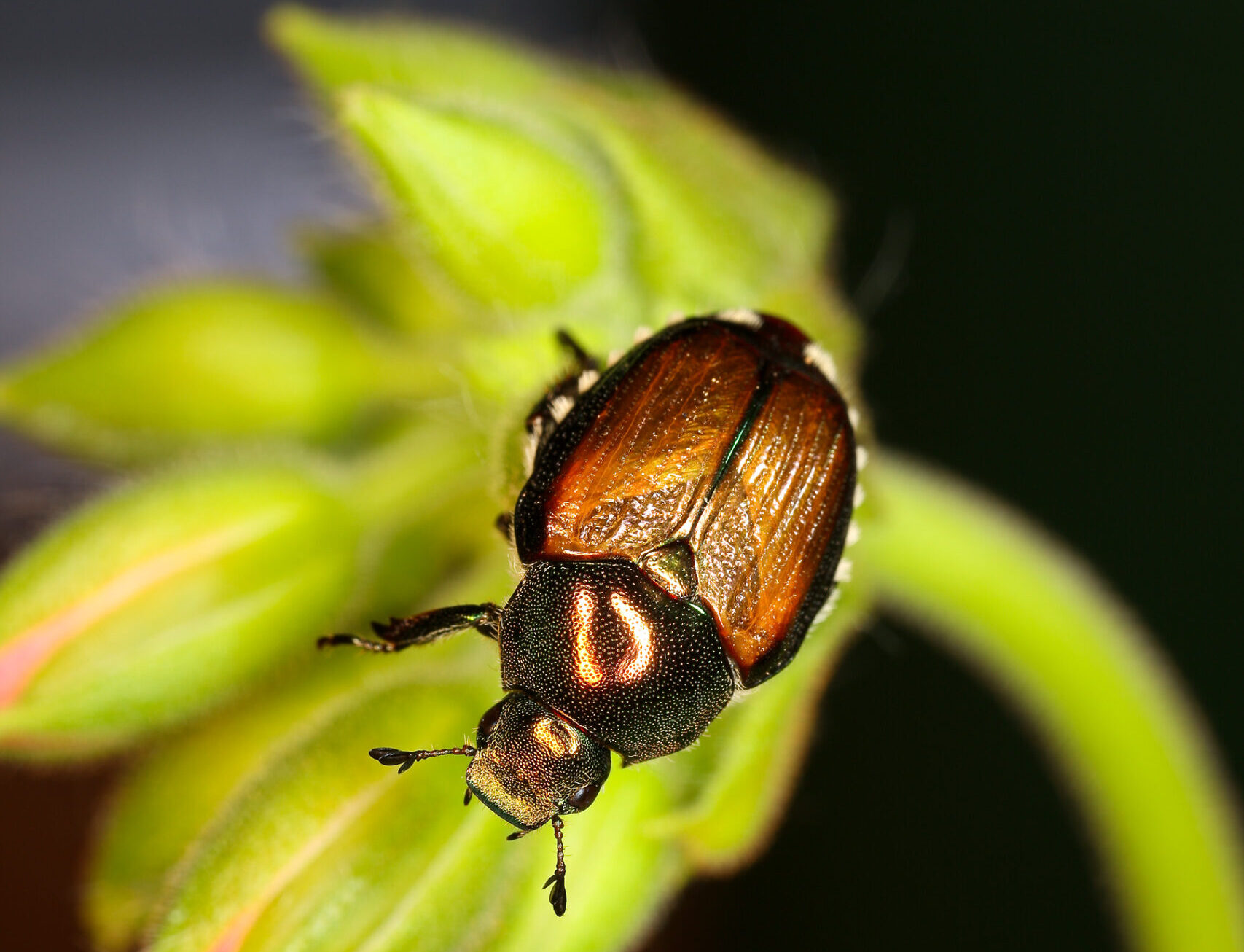
Japanese beetles make their homes in lawns, pastures, and other grassy areas throughout most of the eastern and central U.S., as well as some areas west of the Mississippi River, according to the U.S. Department of Agriculture. Their grubs, or larva, gnaw on grass roots, and severe grub feeding can cause dead patches in lawns and turf.
Full-grown Japanese beetles prefer to eat leaves, flowers, and fruits. The bite holes they leave behind generally cause cosmetic damage, rather than real harm, to most healthy trees and plants—though some fruits, vegetables, and herbs may see reduced yields.
Dead patches of grass caused by grub feeding can be rolled back like carpet because the roots are gone. Japanese beetle grubs look similar to other scarab beetle young—they are white with a tan head, curled into a C shape, and range from about ⅛- to one inch long.

To most effectively prevent and treat Japanese beetle infestations, experts at the University of Minnesota recommend starting management as soon as the adults appear—typically late June and early July. Effective treatment can include:
- Physically removing the bugs and throwing them in soapy water. The best time to do this is in the evening or early morning.
- Covering plants that are not in bloom with fine netting.
- Repeated applications of neem oil or other insecticides that present lower risks to bees and other beneficial pollinators.
3. Spotted lanternfly

Possibly America’s most famous invasive bug, the spotted lanternfly flaunts its bright red wings and polka dots across 19 states and D.C. Its preferred host plant, tree of heaven, is also invasive in North America. One of the best ways to control spotted lanternfly populations is to remove tree of heaven when possible.
Spotted lanternflies feed on a wide variety of plants, including hardwood trees, stone fruit trees, hops, and grapevines. Fortunately, they’re mainly a nuisance pest for homeowners and generally don’t pose much of a threat to home gardens and lawns, according to the University of Maryland’s College of Agriculture and Natural Resources.
Unfortunately, squishing them one by one does little to prevent their spread. Some more effective actions you can take if you see them near your home:
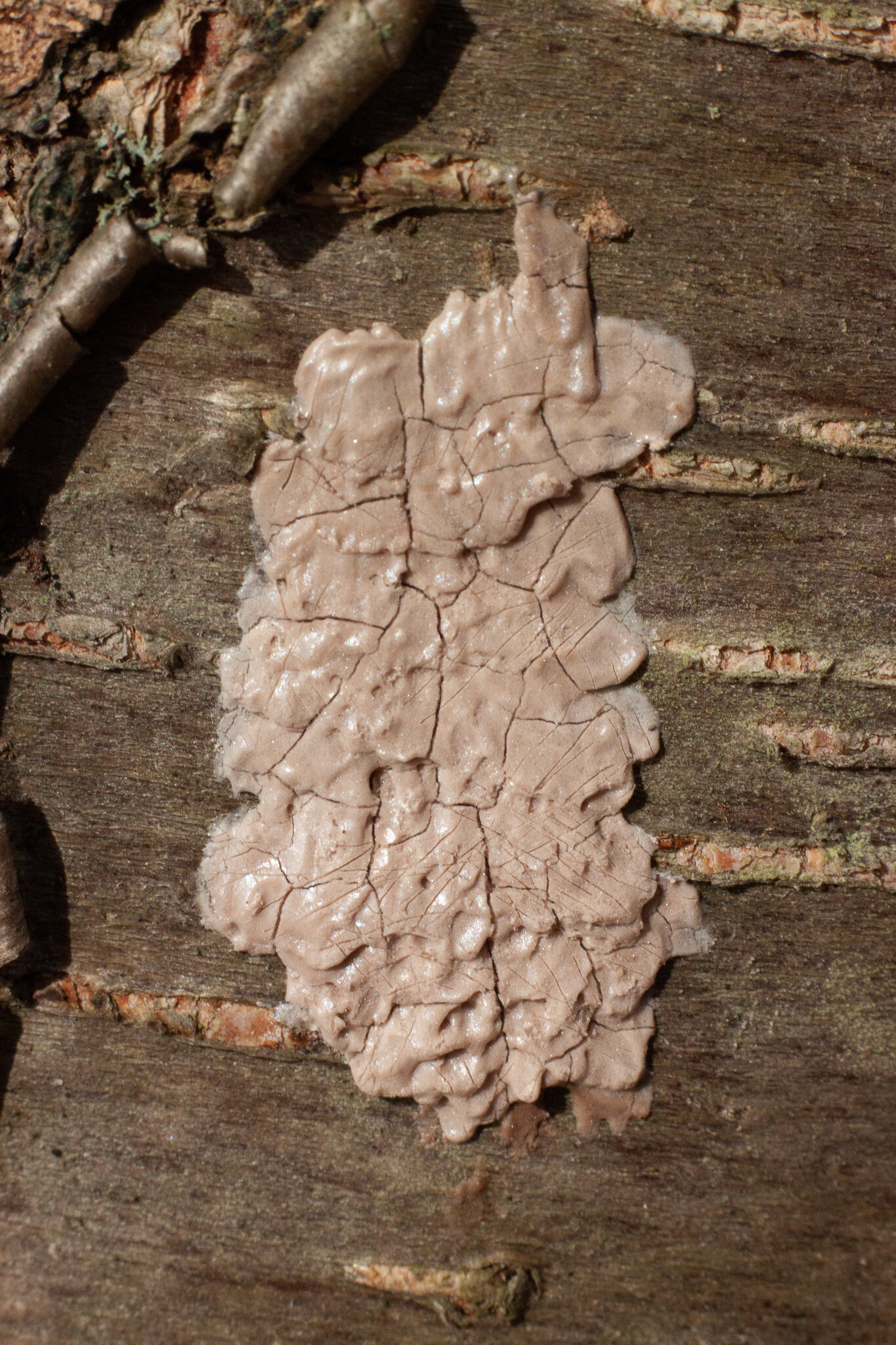
- Look for and destroy egg masses. These show up on smooth surfaces in fall, winter, and spring and look like gray or brown smears about an inch long.
- Check your car, shoes, or belongings before traveling to prevent the bugs or their eggs from stowing away to be spread somewhere new.
- Report infestations or damage from spotted lanternflies to your state’s plant regulators.
Additional Invasive Insects to Look Out For
Other invasive insect species in yards and gardens across the U.S. include the spongy moth, multicolored Asian lady beetle, and emerald ash borer. Home gardeners who grow corn—or live near farms that do—should also look out for corn earworms. According to Purdue University entomologists, these caterpillars sometimes also go after tomatoes, beans, peas, broccoli, cabbage, lettuce, okra, peppers, squash, and pumpkin.
How to Prevent Invasive Insects from Spreading
Beyond damaging lawns and gardens, invasive species can pose threats to crops, forests, ecosystems, and even human health. Help stop the spread of invasive insects by:
- Avoiding moving firewood over long distances. Instead, use firewood that comes from the area where it will be burned. Insect eggs can hitch a ride on firewood to start infestations in new areas.
- Checking parks’ websites before visiting for the first time to learn about any issues with non-native pest infestations.
- After work or recreation outdoors, looking over shoes, vehicles, and other items for eggs or bugs and brushing them off before leaving the site.
- Reporting serious pest infestations to plant health officials in your state.
FAQs About Invasive Insects in Your Backyard
- What’s the easiest way to get rid of stink bugs in my house?
- A simple method for eliminating indoor stink bugs is to create a homemade soapy water trap, which researchers at the University of Virginia found to be more effective than expensive store-bought traps. Fill a foil roasting pan with water and dish soap and put a light over the pan to attract the bugs in a dark room.
- How do I prevent stink bugs from getting into my house?
- To keep stink bugs out, check the outside of your home for cracks or holes and seal them off. Additionally, minimize outdoor lighting, reduce sites of moisture build-up, keep food sealed, and dispose of garbage regularly.
- How do I know if Japanese beetle grubs are in my lawn?
- Dead patches of grass caused by Japanese beetle grubs can be pulled back like a loose carpet, since the grubs chew up the roots. Check the soil below these patches for c-shaped, white or cream-colored grubs with a distinct tan head.
- Are spotted lanternflies dangerous to trees?
- According to experts at the University of Georgia, trees rarely die directly from spotted lanternfly attacks. However, when the bugs gather in large numbers to feed, they can exert stress on the host plant that may make it more susceptible to drought, pathogens, or other pests.
- Why are spotted lanternflies bad?
- Spotted lanternfly infestations have been shown to severely reduce crop yields for grapes. Additionally, the adults leave behind a sticky residue after feeding which can encourage sooty mold growth and leave unsightly dark spots on landscape trees, reducing their value.
- Does stomping on spotted lanternflies help?
- Sadly, probably not. While it doesn’t hurt to kill individual spotted lanternflies, experts say it’s not nearly enough to stop the species from spreading.
- What will help stop spotted lanternflies?
- The best way to prevent spotted lanternflies’ spread is to volunteer with groups doing invasive plant removal to get rid of tree-of-heaven, which is the bug’s favorite host plant.
