









We have much more to do and your continued support is needed now more than ever.
Planting the Seeds of a Just Green Workforce

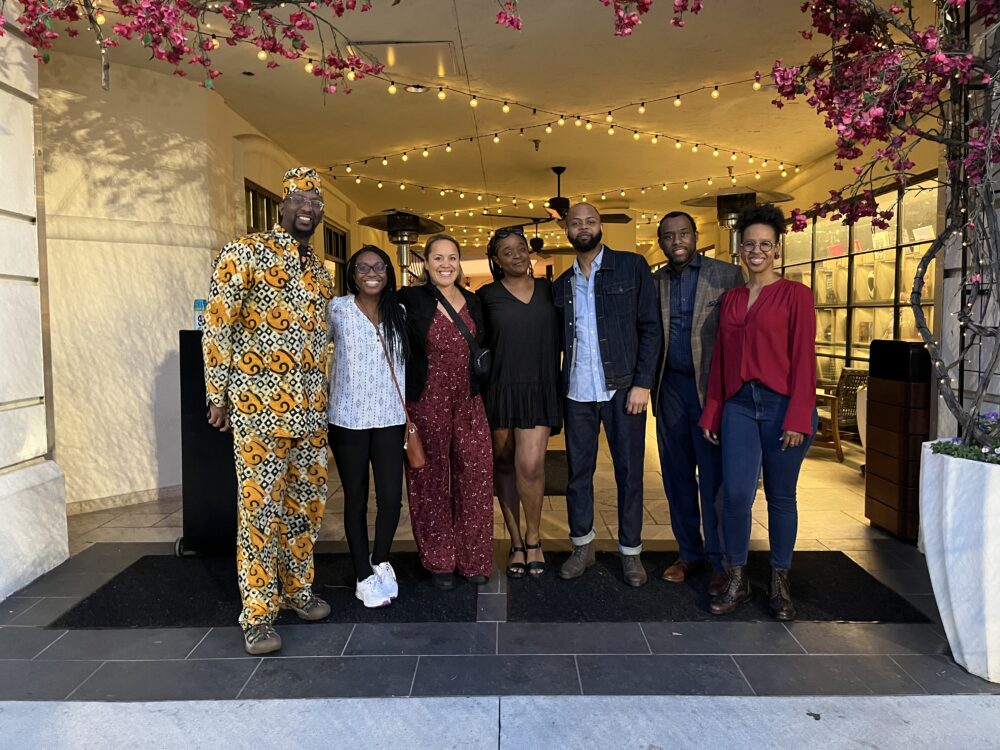
2024 Earth Tomorrow Houston Summer Institute, Career Fair Credit: NWF Staff
I. Planting the Seed – Origins of “Green Jobs”
Green jobs aren’t just job titles in a siloed sector, they’re about cultivating green skills, values, and equity across all work and all sectors. If we want a resilient and just future, we must start planting those seeds early, nurture them through mentorship and equitable access, and ensure every community has a seat at the table. A just and resilient green workforce means recognizing that stewardship isn’t confined to environmental organizations, it can be woven into every role, from city planners to nurses, teachers, and small business owners.
Over two decades ago, the Green Jobs Initiative was established through a partnership between the United Nations Environment Programme (UNEP), the International Trade Union Confederation (ITUC), the International Organization of Employers (IOE), and the International Labour Organization (ILO). Its central aim was to promote opportunities, equity, and a just transition toward sustainable economies.
In its first report published in 2008, “green jobs” were described as any form of decent employment—whether in agriculture, industry, services, or public administration—that helps to protect or restore the environment. But the definition of a green job continues to vary across industries. As one study notes, “There is no uniformity in the literature concerning the specific areas in which green jobs can be created.”
But today, the real opportunity lies not in debating definitions of “green jobs,” but in building a culture where every role has the potential to go green—and where vulnerable communities, impacted first, worst, and longest by climate change, are fully equipped to lead with professional green tools and skills.
II. The Current Need – Why the Soil Matters
Children today spend more time on screens than outdoors. This isn’t just a disconnect from fresh air—it’s a disconnect from identity, stewardship, and relationship with the environment. Green isn’t a job title; it’s a mindset. And if we want a resilient future, we need to plant that mindset early.
Yet vulnerable communities remain underrepresented in climate and green career pathways. At the same time, only 3% of those working in the environmental sector identify as minorities. This gap highlights the urgent need for systemic change.
What if career preparation began with exposure to nature and mentorship from an early age? What if political leaders, healthcare workers, and educators alike were trained to “think green” as naturally as they do math or reading?
Green career preparation must be reframed as a lifelong, community-rooted process—beginning with childhood play in nature, strengthened through youth leadership opportunities, and designed with equity at its core so every community can thrive as part of the climate solution.
Researchers define green employment as “work in any activity that contributes to protecting or restoring the environment, including those that mitigate or adapt to climate change”. That means opportunity exists far beyond niche environmental jobs—it’s about building a workforce where all roles lean green.
And here’s the catch: green skills may be the low-hanging fruit. A growing body of research shows that focusing on green skills—rather than narrowly on green jobs—is one of the most effective resilience strategies we have. According to LinkedIn’s Global Green Skills Report, job postings requiring at least one green skill grew nearly twice as fast as the number of green-skilled workers between 2022 and 2023. Yet, seven in eight workers worldwide still lack even a single green skill. Workers with a green skill, however, are hired at rates 29% higher than the workforce average.
This gap reveals both a challenge and an opportunity: by embedding accessible, transferable skills into school, youth leadership/ mentorship programs, and local workforce pipelines across all industries, we can expand economic mobility for underrepresented communities while also building a more resilient workforce to face climate and economic uncertainty.
III. Cultivating Green Careers – Nurturing Growth
Connection to nature at a young age is one of the best predictors of caring for it later. This is where hope grows—hope for a healthier and safer life and planet. Over the past two decades, there has been a widening gap between time spent indoors versus outdoors among youth. American children on average spend as few as 30 minutes engaged in freeplay outdoors each day and more than seven hours each day with screen time. Rebuilding that relationship isn’t just good for health, it’s the foundation of stewardship.

My own experience with The Woods Project was transformative. It wasn’t just about learning in nature, it was learning with it. That program made sustainability feel practical and relevant, not distant or abstract. Ten years later, it shaped my own superpower: making nature and climate action accessible to communities often left out of the conversation, and mentoring youth in environmental justice.
As a Youth Advisory Council (YAC) member with NWF, I see the same principle at work. When youth are given platforms, they don’t just carry knowledge forward, they carry hope. That hope is what sustains the movement. Green career prep must go beyond job titles, it’s about cultivating purpose, resilience, and environmental consciousness across all walks of life.
IV. The Power of Intergenerational Mentorship – Sharing the Seeds
How can today’s leaders help to prepare the next generation? One of the most powerful ways to give youth professional guidance, hope, and the confidence to thrive in green careers is through mentorship. But mentorship must be intentional, not left to chance. Knowledge should be passed like seeds in the wind—not dropped and forgotten but carried to new soil where it can take root and grow. Mentorship allows today’s leaders to pass along not only wisdom and confidence, but also the technical skills needed to help the next generation succeed.
Eco-anxiety is rising among youth who know they will inherit worsening climate crises. Mentorship eases that burden, turning fear into focus. Sometimes that means a mentor showing a young professional how to analyze heat maps for flood-prone areas, test water quality in the field, or design a pollinator garden in an urban space. These exchanges don’t just build confidence, they pass on the practical, technical, and leadership skills needed to keep growing a just and resilient green workforce.
Think of it like this: if you are a tree, your fruit isn’t for you, it’s for the next generation. The lessons you’ve cultivated are seeds that others will plant, nurture, and pass on.
V. Climate Equity & Workforce Access – Pruning Barriers
Climate equity means meeting communities where they are and removing barriers to participation and opportunity, like transportation, language, program costs, or inaccessible outreach. It also means celebrating and listening to the leadership that is already present in frontline communities instead of employing a top-down approach. Community leaders care, but often lack clear, safe, and just pathways to joining the climate action movement, or the resources needed to advance broader change.
VI. Environmental Justice as Workforce Strategy – Harvesting Diversity
Nature rewards diversity.
Did you know that nearly 90% of the world’s wild flowering plants and over 75% of our food crops depend on pollinators? That means bees, butterflies, birds, and other pollinators help sustain about 35% of all global farmland, making them just as critical to our dinner plates as they are to protecting biodiversity. Without biodiversity, ecosystems—and food systems—collapse.
Nature’s need for biodiversity is a powerful analogy for workforce design. Just as ecosystems thrive when species work together, our economy thrives when diverse communities bring unique perspectives and skills to climate solutions. By equipping all workers with skills like sustainable practices, resource efficiency, or climate-conscious planning, we can expand participation in climate solutions and strengthen innovation across industries.
Diverse, inclusive, justice-centered pipelines make us more resilient and innovative. Real environmental justice in workforce development isn’t just about opening doors, it’s about creating pathways to wealth, security, and stability for every community.
VII. Call to Action – Planting Your Seeds
If anything is clear, it’s this: climate action cannot be the work of a few gatekeepers. It must be a culture woven into every role in society—rooted in green skills, mentorship, and equity.
So, here’s my appeal to others—plant where you are:
- For mentors: Be the mentor you need/needed most. Share your fruit.
- For organizations and companies: Build pipelines that reflect the equity and early skill development our ecosystem depends on, like youth leadership opportunities that are intentional about green skill cultivation.
- For all readers: Identify your superpower and start planting seeds in your community.
A just, regenerative future depends on planting with intention—so that those still germinating have the chance to grow, bloom, and one day sow seeds of their own. Our collective challenge is to plant the seeds now: to make green skills universal, mentorship intentional, and opportunity equitable—so that every young person has both the roots and the wings to grow into a leader our planet needs.
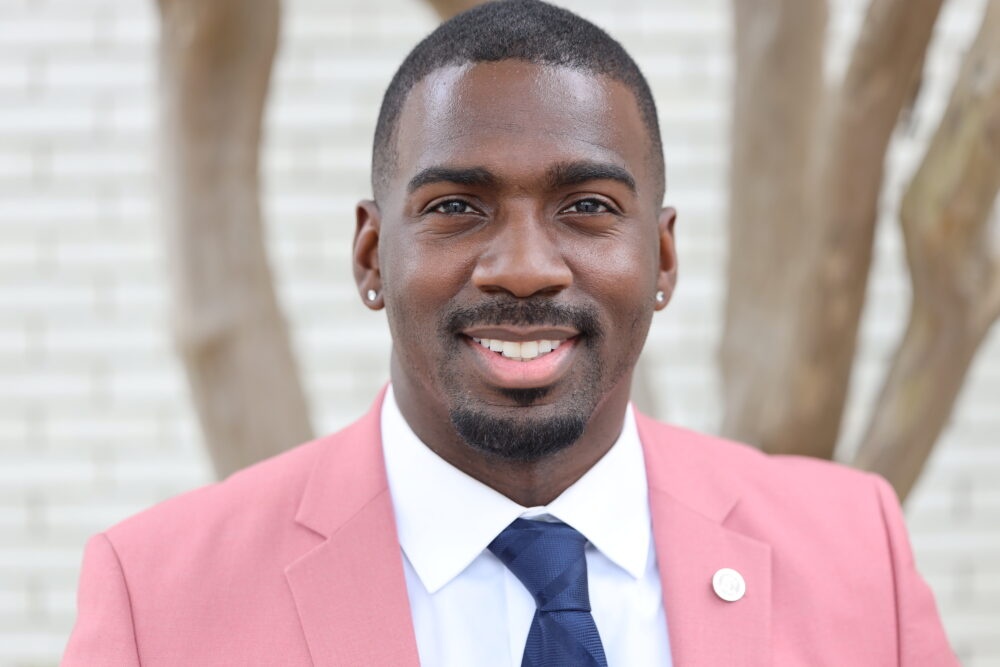
Alicia Fontenot was a member of the 2025 Education & Engagement Youth Advisory Council, as well as a peer-mentor for the 2024 NWF Earth Tomorrow Summer Institute program in Houston, Texas.
Read “Cities and Youth Climate Leaders Need Each Other. Here’s Why.” by Mandy Tran, a fellow 2025 Youth Advisory Council Member, here.
