






We have much more to do and your continued support is needed now more than ever.
Gone Fishing at the Offshore Wind Turbines
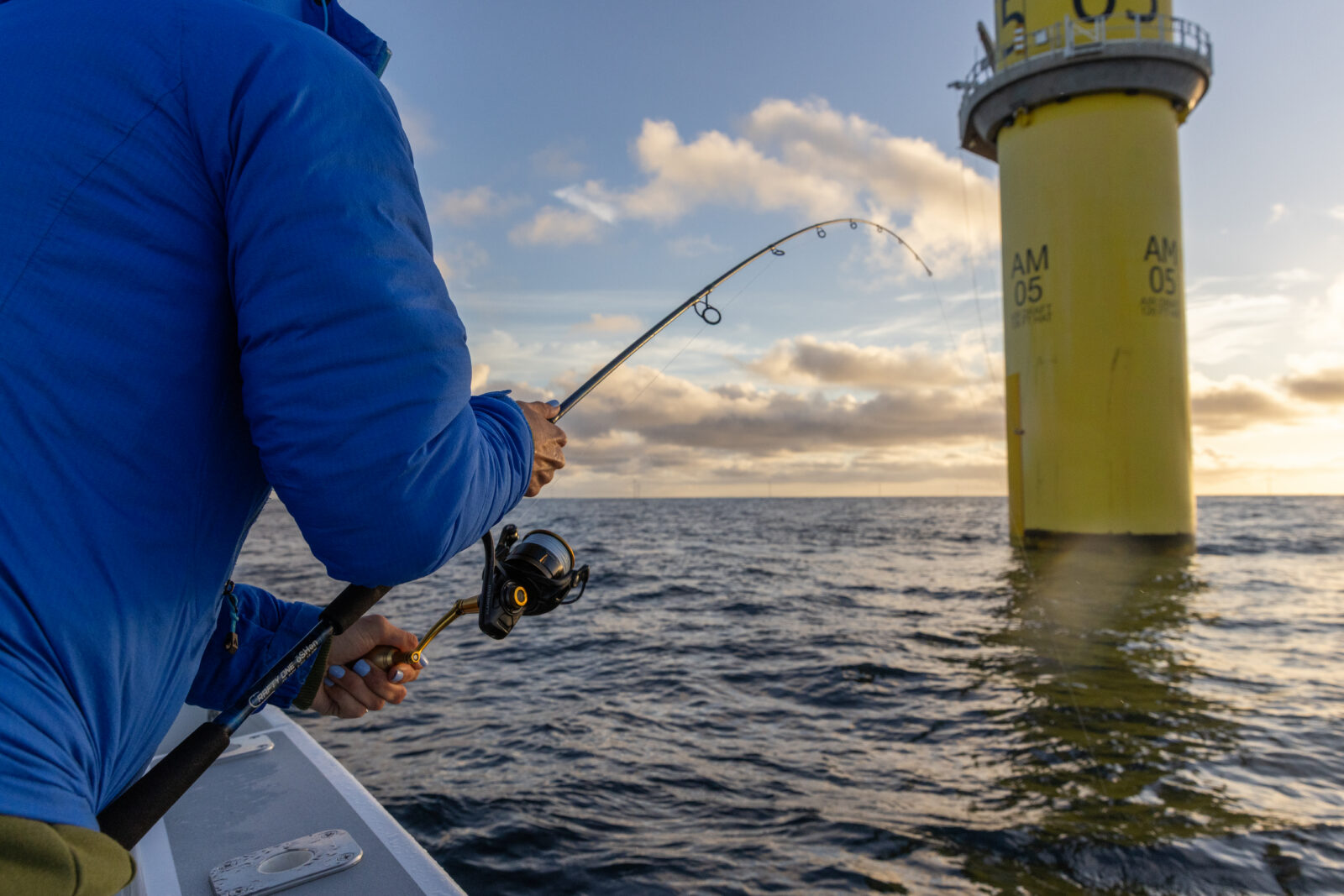
Fishing at South Fork Wind. Credit: Charlie Nutting
In the early morning hours of a hot day at the end of July, anglers from across the country gathered on a dock in Point Judith, Rhode Island, to spend the day on the ocean fishing at wind turbines over 15 nautical miles offshore.
The anglers excitedly loaded their poles, coolers, and other gear onto the vessel before the sun was higher than the boom of the sailboats docked in the marina. With some light chit chat over bagels, coffee, and shared Dramamine for those who were less experienced with ocean fishing, we were on our way.
The Block Island Inshore Fishing Tournament, our reason for assembling the group of 40 anglers, takes place every year over a weekend in late July off the coast of Rhode Island and in the ocean waters around Block Island. Nine species are included in the tournament: bonito, false albacore, bluefin tuna, yellowfin tuna, mahi mahi, fluke, black sea bass, bluefish, and striped bass.
This year, the National Wildlife Federation was a sponsor and chartered a boat for recreational anglers and conservationists to gather for a weekend of fishing, community, and camaraderie underneath the Revolution Wind, South Fork Wind, and Block Island Wind turbines.
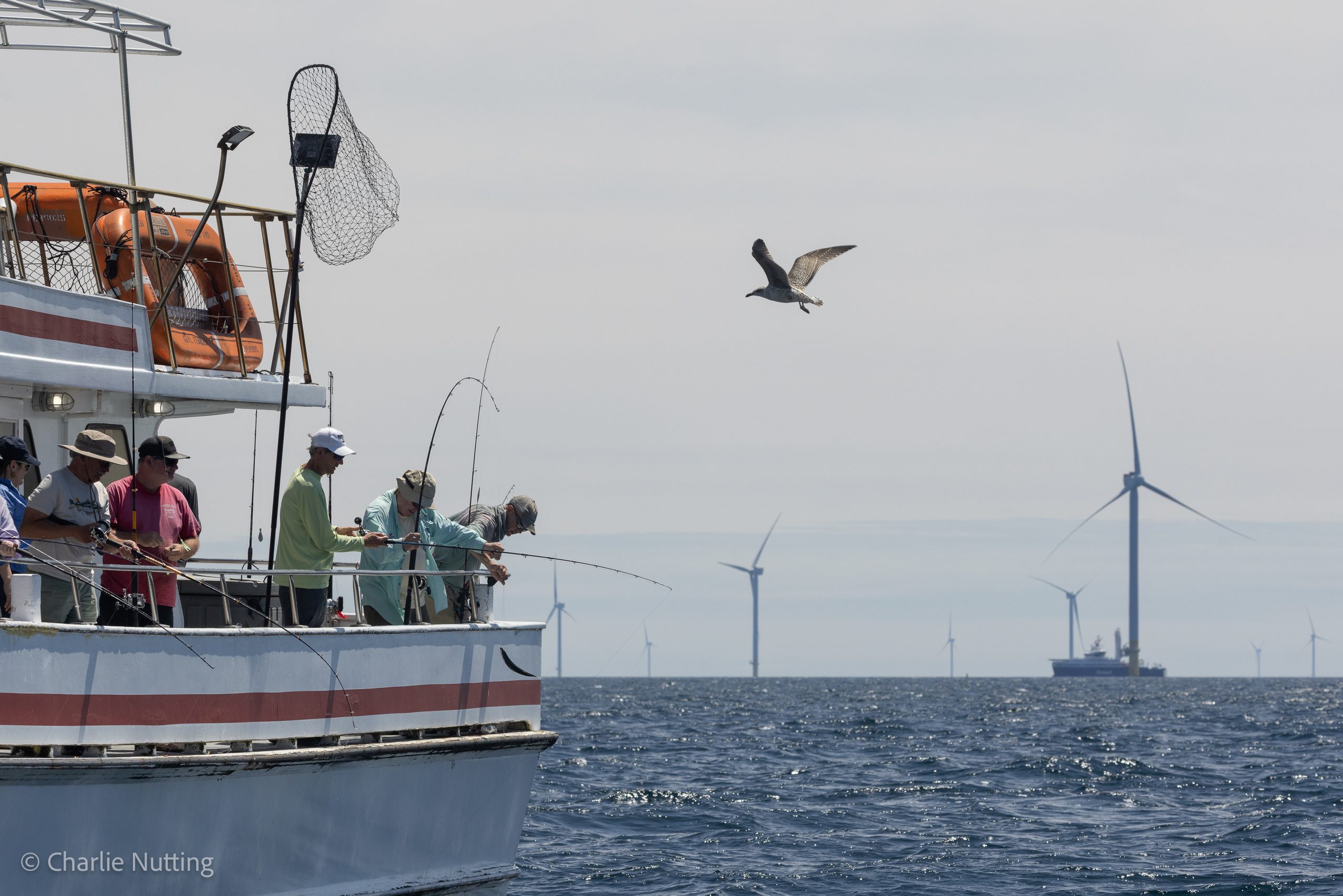
Can you fish at offshore wind turbines?
Yes, anyone can fish at the turbines! Both commercial and recreational anglers can fish at all operational offshore wind projects in the United States once construction is finished. Offshore wind turbines are typically spaced one nautical mile apart, allowing for navigable waters between turbines for all ocean users.
On the East Coast, where current offshore wind projects use ‘jacket’ and ‘monopile’ bases, offshore wind turbines have become hubs for local recreational ocean anglers because of the structure the turbines create underwater for fish and other marine life to thrive. See more on the turbine reefs effect below!

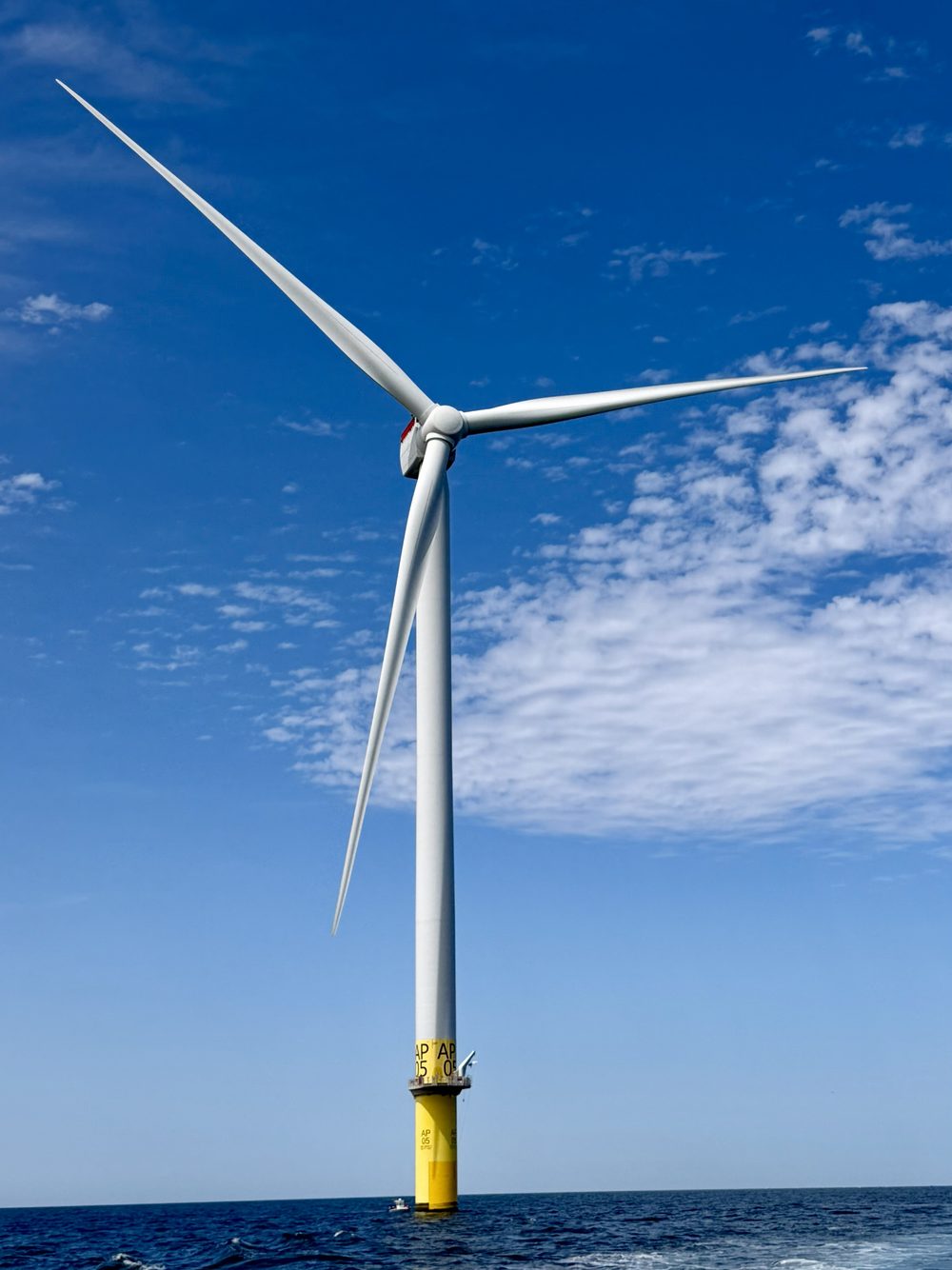
On the first day, we traveled out past Block Island to Revolution Wind, a 65-turbine offshore wind project that will generate 704 MW of clean, affordable, and reliable electricity for Rhode Island and Connecticut—the equivalent to powering 350,000 homes and businesses.
The project will complete construction later this year, but began delivering power to the grid in March 2026. Power from Revolution Wind will help improve grid reliability. A study from Union of Concerned Scientists demonstrated that Revolution Wind and Vineyard Wind would have reduced New England’s blackout risk by 55% if it had been operational during the winter of 2024-2025.
On the second day of the tournament, we traveled closer to the Block Island coast to fish near the Block Island Wind Farm, the first offshore wind project in the United States with five turbines that began sending power to the island in 2016.
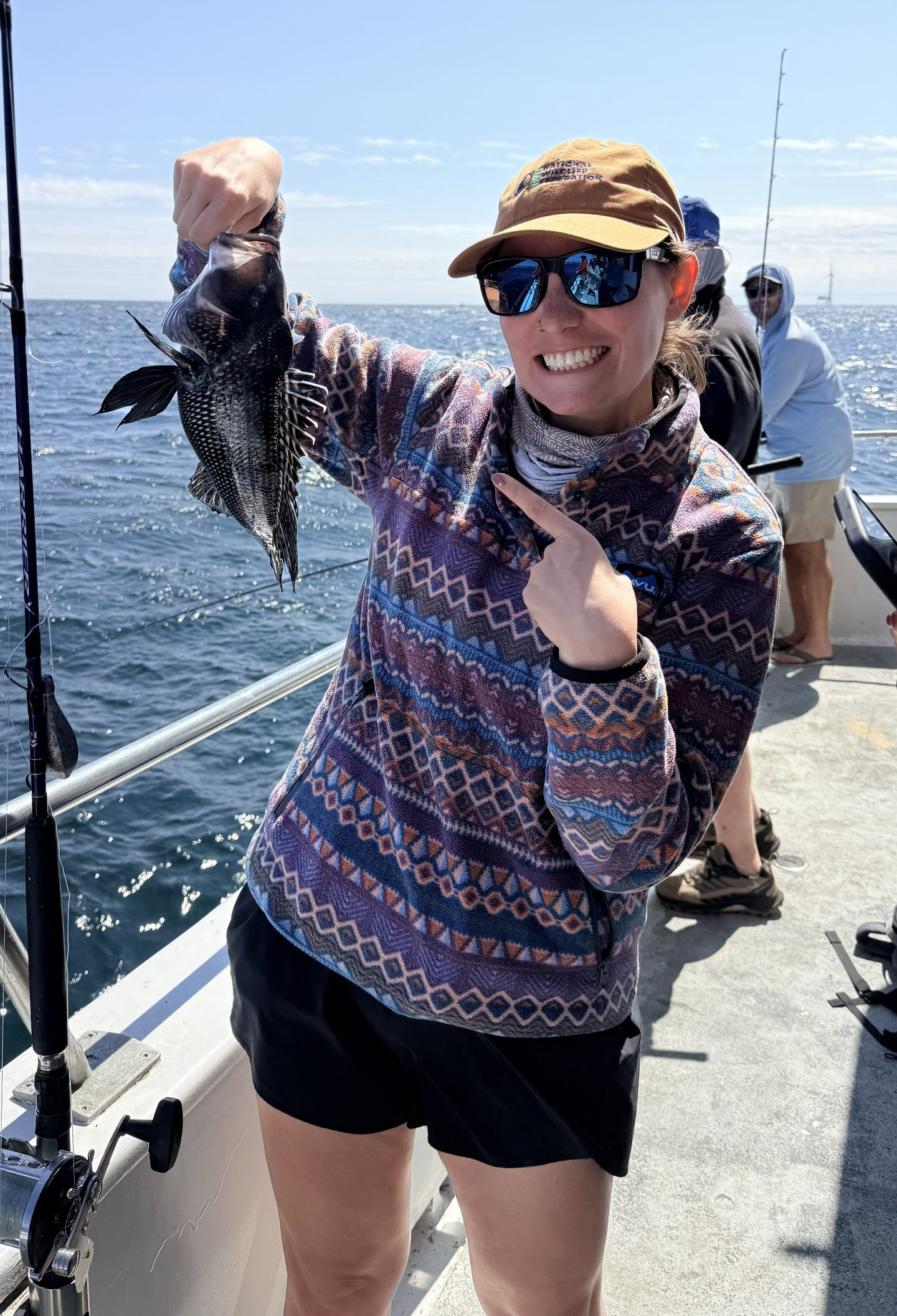
Split into teams of five or six, the anglers put lines in the water to begin the competition. Soon, anglers were reeling in species like black sea Bass to log for their teams, and other species like Atlantic mackerel although they did not count for this tournament.

Offshore Wind Up Close
Seeing offshore wind turbines for the first time, many of the anglers remarked on how the turbines differed from what they expected.
“Seeing it up close puts things into perspective for sure,” said La’Tonya Blanding, an angler and Artemis Sportswoman Ambassador from South Carolina. “They are massive and the power they generate is immense but low sound.”
Underneath the steadily moving blades of the turbine, it was easy to see how a single rotation of the blades could produce enough energy to power the average U.S. household for an entire day.

One participant even found an unexpected connection to their day job. Her workplace, specializing in electrical and power management, shared an article shortly after the trip about how a few of her colleagues participated in an offshore wind readiness program at the Revolution Wind substation. “I’m like wait, I was just there,” said the angler, “so freaking cool.”

“I have been a fan of using ‘green’ options for energy, after seeing these up close I was impressed by just how large they were!” said Jack Illingworth from the Massachusetts Striped Bass Association. “I don’t think my feelings about offshore have changed much, [but] I feel I can better explain my position now.”
Other local anglers said what they saw on the trip came as no surprise. One local noted on fishing in the project area: “I’ve been out there several times for tuna fishing trips, so I was not really surprised by the turbines’ size or the amount of life out there,” but added still, “I never grow tired of encountering whales out there.”
Whales, Dolphins, and Seabirds, Oh My!
And, across the board, the vast array of wildlife thriving around the offshore wind turbines awed the diverse coalition of anglers on the vessel. Within the project areas on our first day out, anglers saw pods of dolphins, various seabirds, and humpback whales breaching to feed near the turbines.
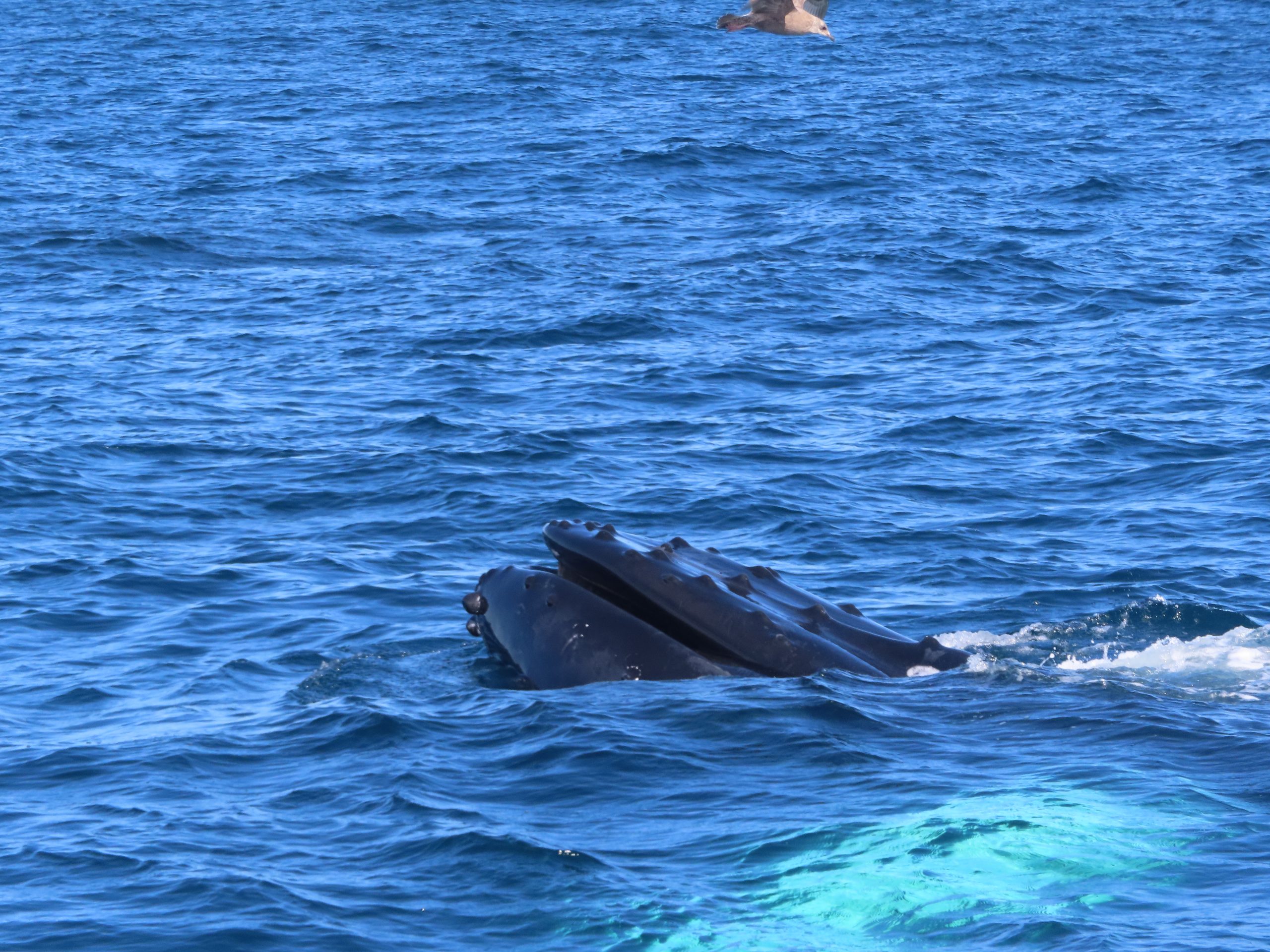
“Seeing the whales bubble feeding [was] just inspirational,” said one angler commenting on the strategy humpback whales sometimes use to catch krill or fish. The whales use ‘bubble-net feeding,’ or the exhalation of air from their blowholes while swimming in a circle, to encase their prey into a smaller underwater space that makes it easier to eat more at once.
Research suggests that humpback whales learn this behavior from each other, but we are learning from it, too. A similar technology is used in the offshore wind industry to keep whales safe from the noise pollution created during the pile driving process of construction.
What is pile driving?
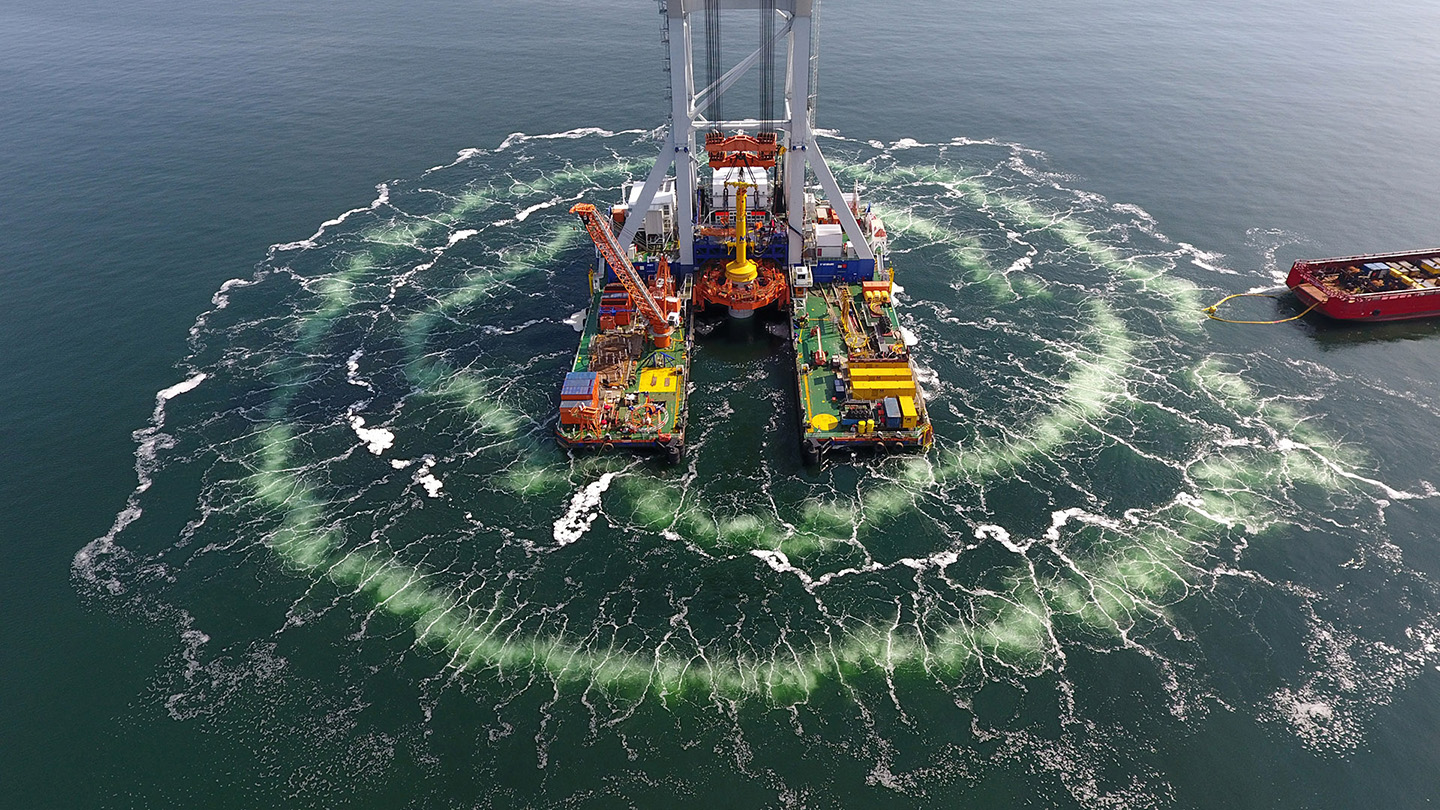
In the construction of fixed-base offshore wind turbines, the monopile (or vertical column holding up the turbine) must be attached to a foundation in the seabed. All human activity in the ocean is noisy, and underwater noise can disturb marine mammals like whales and dolphins if proper technologies to muffle the noise are not utilized. Luckily, there are a variety of strategies that have been proven to be effective in reducing the noise associated with pile driving during offshore wind construction, like ‘double bubble curtains.’
The double ‘bubble curtains’ used during pile driving encase the monopile from the seafloor to the top of the water in a thick layer of bubbles, trapping sound waves inside and protecting whales and other marine mammals from auditory impacts. Developers ‘double’ the bubble curtains—or use two at once—to further prevent construction noise from disrupting marine habitats.
Under the Surface
The offshore wind project areas on the East Coast have become rich underwater ecosystems because of the structure the turbine foundations create for species.
“I was amazed at the amount of marine mammals and bird life,” noted George Baldwin from the Connecticut Surfcasters Association. “It makes total sense, as fish (especially baitfish) are attracted to structure and the [turbine] bases provide that structure. Gamefish, seabirds, and marine mammals know to hunt around structures to find baitfish, so the windmills should prove beneficial in increasing the marine life in the area.”
What is turbine reef effect?
Hard, man-made structures introduced into the ocean may transform into artificial reefs. This phenomenon, often associated with submerged shipwrecks, provides new surfaces for marine organisms to attach onto, generating habitats for algae, shellfish, and various fish species. Fixed-base offshore wind turbines, the style at current offshore wind projects on the East Coast, have already been shown to create diverse artificial reefs structures and support benthic (sea floor) ecosystems with little detected change from life recorded prior to construction and operations.
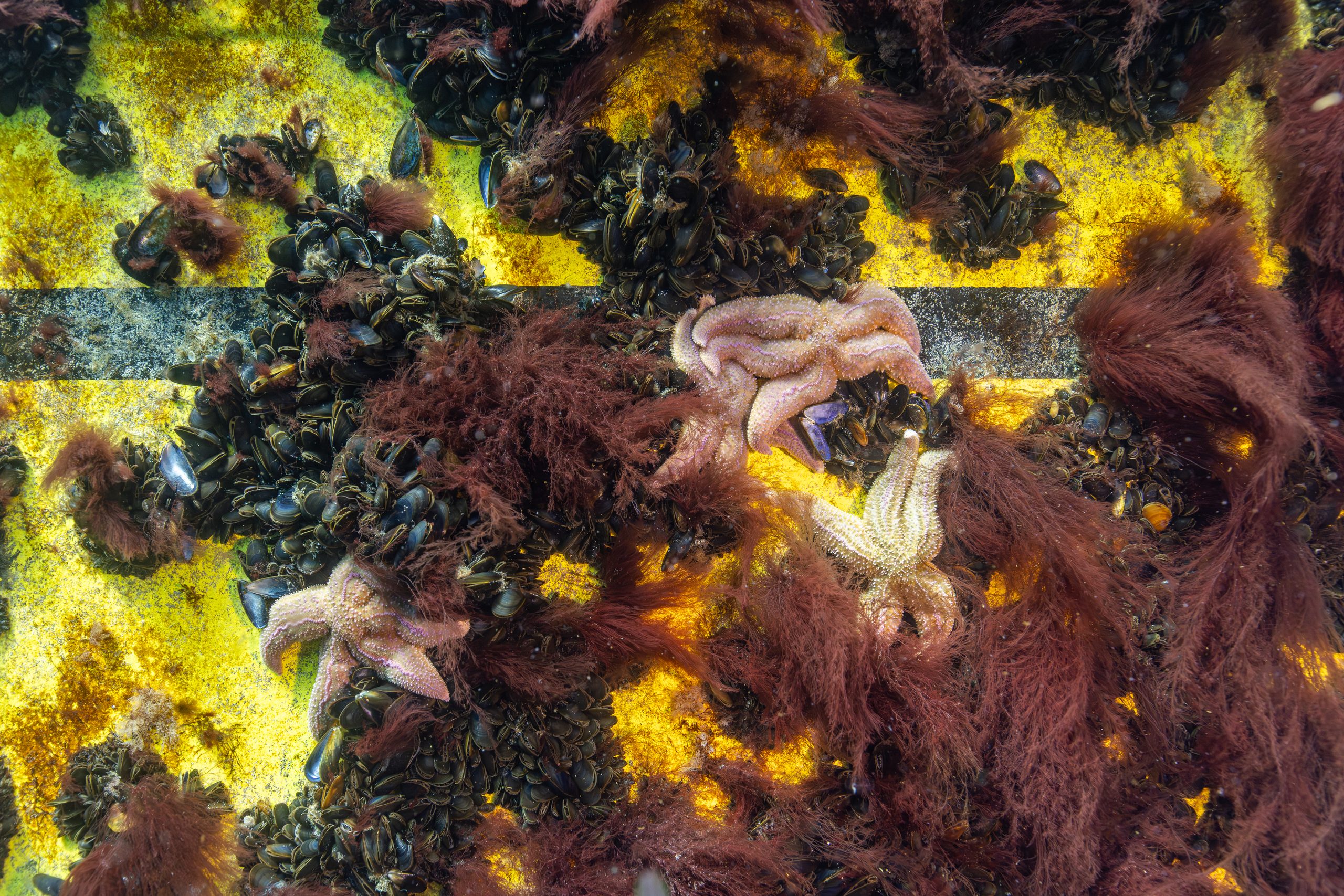
Turbine reefs can create new opportunities for marine life across the food chain, including for anglers who can utilize the turbines’ reef effect for their own recreational fishing, and many of the anglers on the boat attested to the boon.
“Last year, I caught most of my fish right at the base of the [turbines],” said Baldwin.

“The fact that nature and industry can coexist is always interesting to me, and demonstrating that to people is valuable,” said Johnny Marquez from Vanishing Paradise, a program of the National Wildlife Federation that unites sportsmen to advocate for the restoration of water ecosystems in the Gulf. “Seeing the whales was by far my highlight,”
James Riggs from the Rhode Island Saltwater Anglers Association echoed the same admiration for the whales and added, “[I’ll] never forget it.”

Cameradie Across a Big Boat
The weekend ended on Block Island with an awards party at Captain Nicks Rock N Roll Bar with awards for shore, youth, and boat divisions, and best photos. A team from our charter won for best team photo in front of a turbine.
Many anglers noted incredible connections they made with new folks who brought differing perspectives to their engagement in the fishing community and conversation. With anglers coming from different day jobs, fishing clubs, parts of the country, and personal experiences, the boat was ripe for conversation during downtime—an experience that for some was just as, if not more, impactful than the fishing.
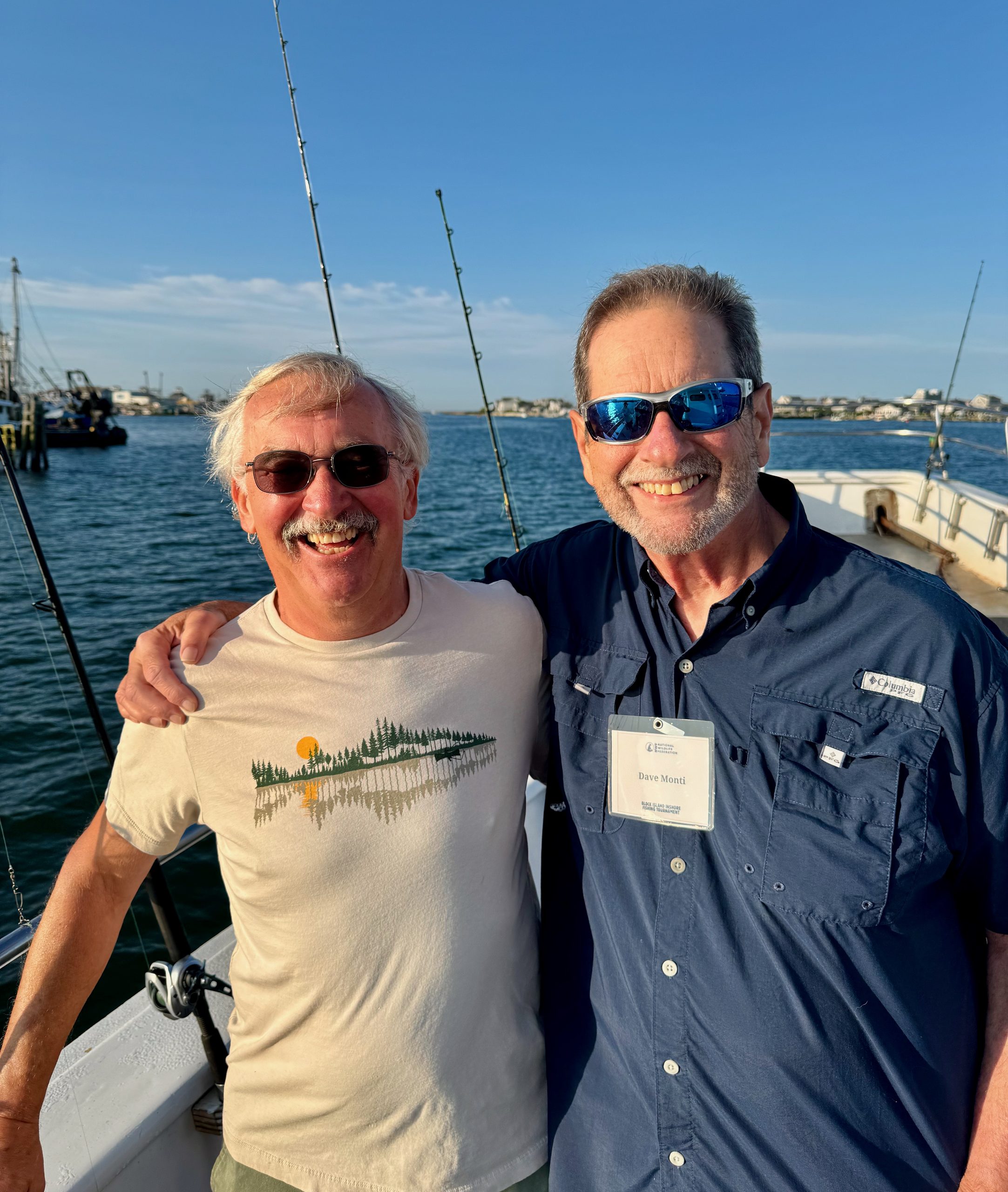
“I had the chance to talk with people I would not normally come across in my daily life either at my job or recreationally, and enjoyed hearing about what they are doing and learned about many things going on around the country,” said Jack Illingworth from the Massachusetts Striped Bass Association. “Many of which I can share with my fishing club and hopefully generate additional support for their causes or work.”
Another angler, from the West Coast, expressed a similar enthusiasm about connecting to anglers from different parts of the country to discuss fisheries and offshore wind: “Getting to connect with so many new people from across the nation who are invested in and care about the future of our oceans was inspiring and fulfilling. I appreciated the opportunity to connect and hear about East Coast fisheries—crazy fish that are so similar but also so different from the ones on the West Coast—and the recreational angling culture.”
He added, “just seeing the wind turbines helped me understand what our West Coast may look like in the future.”
“The focused and shared time with a fellow angler and emerging friend from my town and local fishing club was precious,” said Christa Drew from the Cape Code Salties Sportsfishing Club, who recounted a particularly meaningful conversation with one of her tournament team members on policy in her state. “I was inspired to have time with some other anglers and non-anglers who also care about the environment and conservation in an informed and passionate way.”

Anglers walked away from the weekend feeling inspired to talk to others about how healthy ocean ecosystems can exist next to offshore wind, and spoke directly to how they were going to put this experience into action in their circles.
“I do a lot of conservation work with our fisheries,” said Baldwin, “and am now more inspired to try and influence people to accept wind power as a valid and valuable component in plans to replace dirty fuels that change our atmosphere and our climate, endangering our world and our existence.”
Learn more about responsible offshore wind and recreational fishing and connect with other anglers at the Anglers for Offshore Wind Power website, and connect with them on Facebook and Instagram.
