








We have much more to do and your continued support is needed now more than ever.
QUIZ: Sharks! The Amazing Creatures That Are Older Than Dinosaurs
Take our shark quiz and learn about the biggest fish in the sea.

Scalloped hammerhead. Credit: Getty Images
Sharks are not only the biggest fish in the ocean, but they are probably one of the most popular. Some people are curious about them, while others fear them. But like most wildlife, if you learn more about their behavior, you can take steps to coexist peacefully and enjoy your ocean swim.
Quick Facts About Sharks
- There are more than 530 species of sharks in the world
- More than 50 shark species can be found in the waters along the east coast of the U.S.
- The largest shark is the whale shark, it can be as long as 60 feet
- The smallest shark is the dwarf lantern shark, that can fit in the palm of your hand
Sharks are critical apex predators contributing to a balanced marine ecosystem. Seagrass beds provide important habitat for many fish and invertebrate species as they mature, before moving onto coral reefs and other ecosystems. Coral reefs, kelp forests, and seagrass beds are reliant on sharks’ existence in the food chain to keep these beautiful and important habitats stable.
The National Wildlife Federation (NWF) is committed to wildlife conservation and education, and as part of our work, we spotlight vulnerable wildlife species needing extra support to ensure their populations thrive in an ever-changing world. The International Union for the Conservation of Nature (IUCN) Red List, which has identified that more than 47,000 wildlife species worldwide are threatened with extinction, including 37 percent of sharks and rays.
An endangered species is a plant or animal facing extinction if its population numbers do not increase. In the U.S., individual states and the federal government can list a species as threatened, endangered, or a number of other designations. The U.S. Endangered Species Act (ESA) protections are enforced at the federal level by the U.S. Fish and Wildlife Service (USFWS) and the National Marine Fisheries Service (NMFS) for certain marine species. The IUCN Red List provides conservation status assessments for species globally used by governments internationally to determine protections.
Continue reading to learn more about sharks before you begin the quiz or scroll down to get started!

Here are a few species of sharks that can be found in the oceans along the U.S. coasts that are protected under the U.S. Endangered Species Act:
- Common angel shark (endangered)
- Daggernose shark (endangered)
- Ocean whitetip shark (threatened)
- Scalloped hammerhead shark (endangered)
- Striped smoothhound shark (endangered)
Just for Kids
- Read Ranger Rick article on Great hammerhead sharks
- Watch Shark Science for Elementary, Middle and High School by Sharks4Kids
Listen to the Hammerhead Shark sing-a-long!

Here are a few species of sharks identified as vulnerable or endangered by the IUCN:
- Bonnethead shark (endangered)
- Great hammerhead shark (critically endangered)
- Great white shark (vulnerable)
- Greenland shark (vulnerable)
- Sand tiger shark (critically endangered)
- Whale shark (endangered)
Test your knowledge about sharks and learn some cool facts!
The National Aquarium in Baltimore
If you are in the neighborhood, visit The National Aquarium in Baltimore, Maryland.
The National Aquarium, NWF’s Maryland affiliate partner, connects people with nature to inspire compassion and care for our ocean planet. They house 10 shark species including the sand tiger and sandbar sharks.
One of their most popular exhibits is Shark Alley, however only six of the 10 shark species can easily be found, which makes the other four a fun challenge!
The Aquarium also has their Blacktip Reef exhibit that hosts daily educational opportunities for visitors to learn more about sharks including the behind-the-scenes shark tours, and “shark talks.”
Read more about The Aquarium’s sharks, Hidden Gems: Shifty Sharks.
Take action to protect sharks
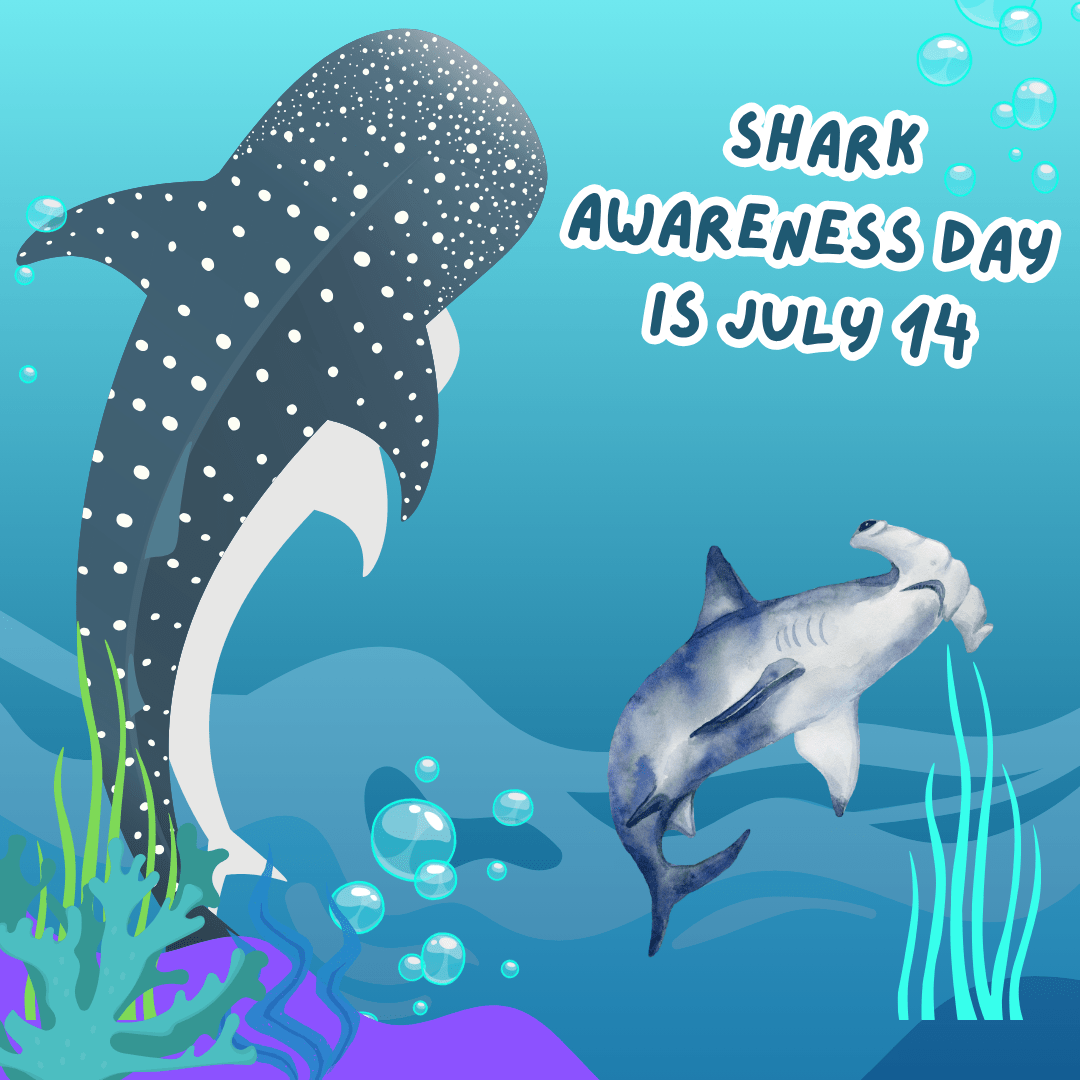
- Celebrate Shark Awareness Day on July 14 by educating your family and friends about sharks and their important role in the marine ecosystem. Right during peak beach season and before the well-known Shark Week, share with others these wonders of the depths.
- Adopt a storm drain. Adopting a storm drain is a simple and fun way you can remind others to keep trash and chemicals that harm wildlife out of our local waterways and oceans.
- Restore seagrass beds. Volunteer with a local organization to protect and restore the sea grass beds.
- Find out what your plastic eco-score is and adopt a new habit to reduce plastic waste.
- Purchase coral reef-safe sunscreen; these sunscreens are mineral-based.
- Symbolically adopt a great white shark and support conservation efforts to protect the great white sharks and other wildlife.
- Advocate for laws that protect endangered shark species and other wildlife including the Endangered Species Act, the Marine Mammal Protect Act, and the Recovering America’s Wildlife Act.
Resources for Kids, Teachers, and Parents
- Great Hammerhead Sharks. This shark isn’t just supersized and super cool. It has superpowers, too!
- Is That a Shark? Sharks come in all shapes and sizes. And not all of them have razor-sharp teeth
- A Whale of a Shark. Meet the whale shark – the biggest fish in the world
- Make a shark hat (craft)
- Swimming with… Sharks. No, these kids aren’t in any danger. They’re discovering how cool sharks can be. Wade in and see for yourself!
- Dive Into Shark Education from the Classroom
- Shark Education with Sharks4Kids (Content for Elementary, Middle and High Schools)
More Resources About Sharks:
- Sharks in the Parks, National Wildlife Federation Blog
- Not So Scary After All: Shark Facts You Might Not Know, National Wildlife Federation Blog
- NWF’s Affiliate Resolution “Protecting Sharks to Safeguard our Oceans”
- Plastic Pollution Impacts on Wildlife, NWF’s Plastics Reduction Partner Program
- Sharks in Atlantic, Gulf, and Caribbean Coastal Waters
 Written by Kristy Jones
