







We have much more to do and your continued support is needed now more than ever.
Building Homes for Bats on a College Campus
Allegheny College in Pennsylvania works to protect the only mammal that can fly
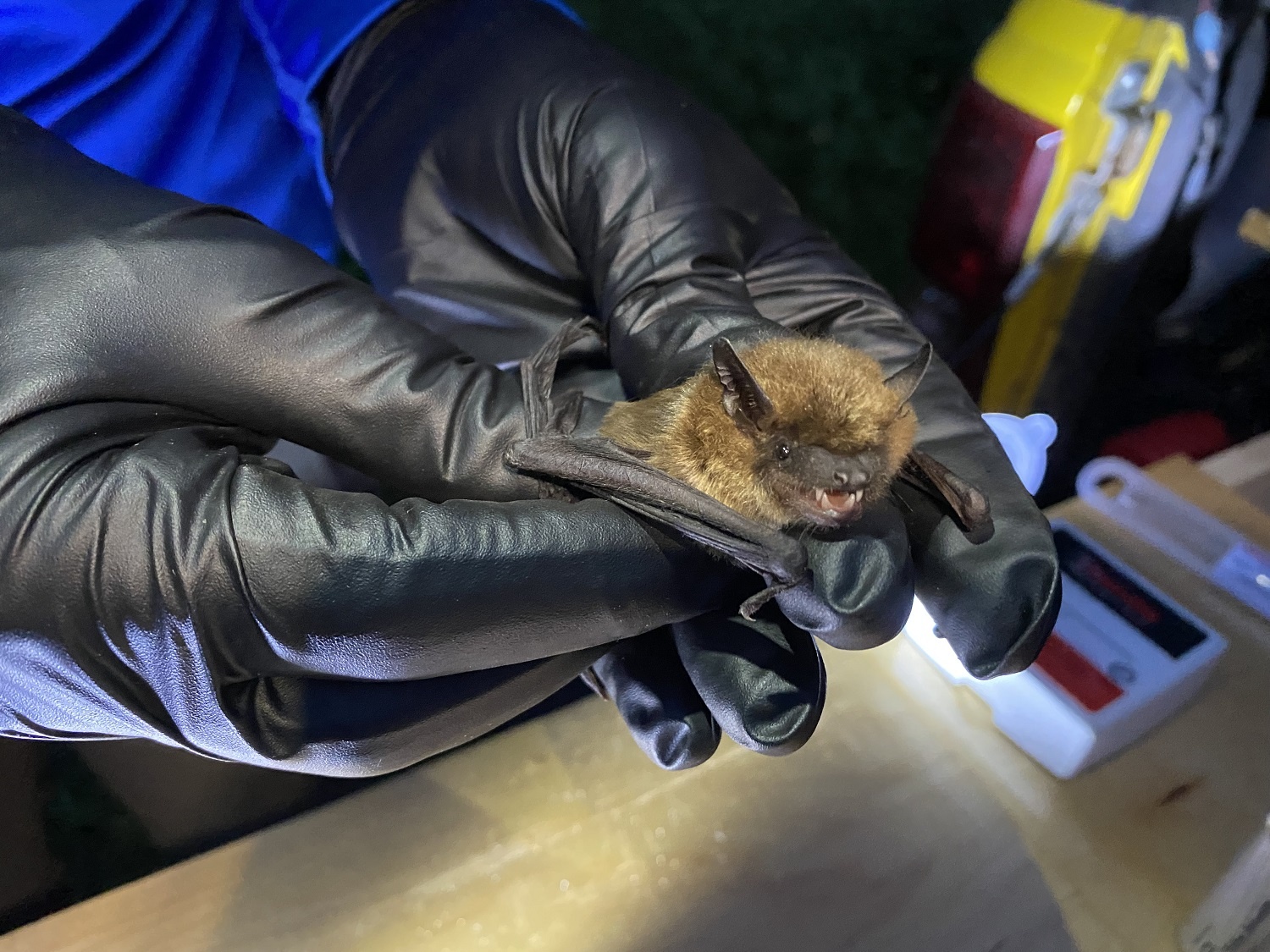
Kelly Pearce, Professor of Environmental Science and Sustainability at Allegheny College, holds a big brown bat captured during a research project at Presque Isle State Park, PA. The study examined which bat species use restored wetlands in the park, collecting data on morphological traits, wing condition, and the presence of white-nose fungus (detected with a UV flashlight). Credit: Katherine Brozell
Bats and human interactions
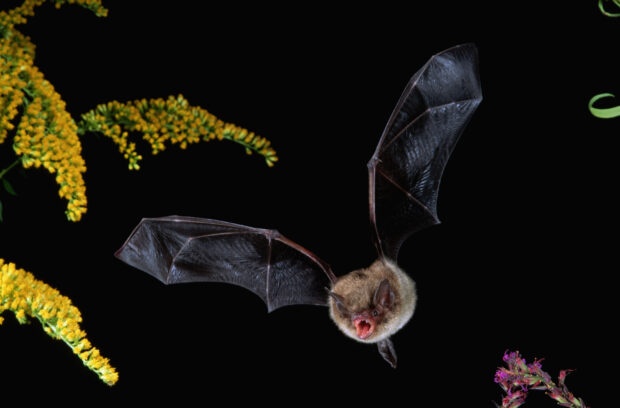
Our fear of bats as creatures of the night, driven by frightful tales of Dracula, tends to cloud our awareness of their ecological benefits and masks our recognition that 53% of bats are threatened in North America and 32 species as critically endangered worldwide. Most of us do not see bats very often due to their night-time activity, but we may come across them in places where we do not want them.
Bats often find convenient places to reside in residential attics, barns, churches, or other locations that have favorable temperatures, especially in buildings that have dark-colored or slate roofs. Even if we like them and are aware of their importance, it is natural for us to try to remove them from human structures where the likelihood of undesired human-bat interactions may exist.
Learning when and how to remove bats safely is important. Female bats need high temperatures to raise their pups, which are born in late spring or early summer, and fly in early summer. Removing or excluding them prior to this time is not advisable due to the risk of trapping pups inside buildings. Learning where they enter buildings is best done at dawn, with the peak of the dawn swarm occurring during July and August.
When air temperature is 62 degrees or warmer, bats are likely to swarm after a night of heavy feeding before they enter their roost site. During the dawn swarm, as light increases, bats may fly around their entry point for up to thirty minutes. We do not know for certain why bats swarm, but reasons may include:
- Communicating the roost site to the colony
- Taking a bathroom break
- Marking territory
- Practicing landings by pups
- Surveying for predators
- Checking the temperature of the roost
When physically removing bats, avoiding direct contact with bats is critical, so wearing gloves is important. Bats can be captured safely by placing a small box over them, slipping a piece of paper or plastic to trap them in the box, and then transporting them to a safe location. Bats are very small mammals, so handling them firmly but gently helps to ensure their safety.
Providing Homes for Bats

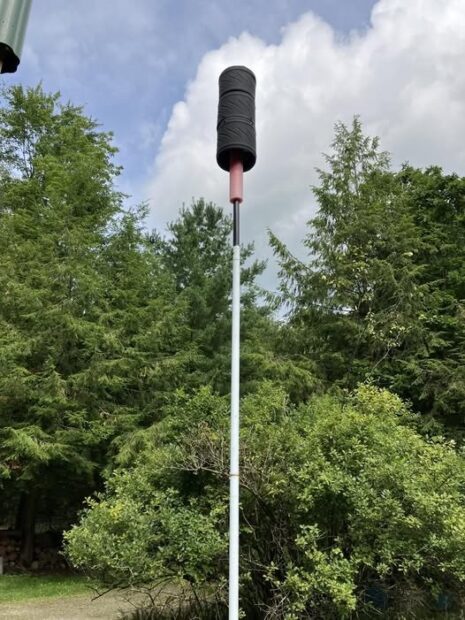
Installing bat houses can be beneficial in guiding bats out of unwanted areas as well as providing important roosting habitats to enhance local bat populations. A bat house mounted in close proximity to a bat colony’s primary entry point into an attic of a building is nearly certain to be used by bats within a week or two. A key to successful occupancy is proximity to the nearest roost site.
A bat house mounted more than a few yards from the roost may never be used. Newly flying pups are often the first bats to use a new bat house; they are very curious. Also critical is full sun—houses mounted in the shade or on trees have little chance of being used (too cold, risk of predators), although houses mounted in flyways along streams or forest edges may become occupied.
Many homeowners have installed bat houses on their own property, and a quick internet search shows that boxes can be purchased from numerous locations. Houses fall into two categories—mounted and free-standing, with numerous variants of each. Mounted houses are typically placed on buildings, whereas free-standing houses are placed on poles near roosts or flyways. Houses can also be built at home if one has basic carpentry skills.
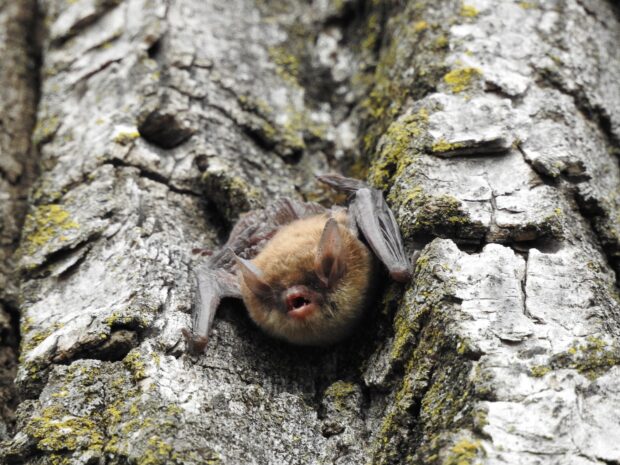
Allegheny College, a small undergraduate liberal arts college in northwestern Pennsylvania, has embarked on a project, funded by the NWF Mutual of Omaha Wild Kingdom Grant, to place bat boxes on or near campus buildings to create habitat and lure bats from residence and lecture halls where the bats like to reside.
The boxes will also provide additional dwellings for bats, especially little brown and northern long-eared bats, both of which are considered endangered and whose populations have crashed due to white-nose syndrome. Bats frequently are found in a couple campus buildings, including a residence hall and lecture hall, creating some uncomfortable moments for both students and bats.
Students in a research methods course collaborated with a local bat expert (Terry Lobdell) to build two prototype bat houses—a wall mount and a free-standing rocket box that can be used on campus. Working with Lobdell and our director of Physical Plant, students investigated the most promising locations on campus for bat boxes, including near buildings where they are found most frequently, and also along a small campus stream, which is a likely bat flyway due to availability of cover and insect food resources.
We will build and place 9-10 bat boxes across campus, and we will monitor bat box occupancy in several environmental courses. Additionally, we will create educational signage near bat boxes to inform the campus community about the value of bats and the rationale for having bat boxes on campus.
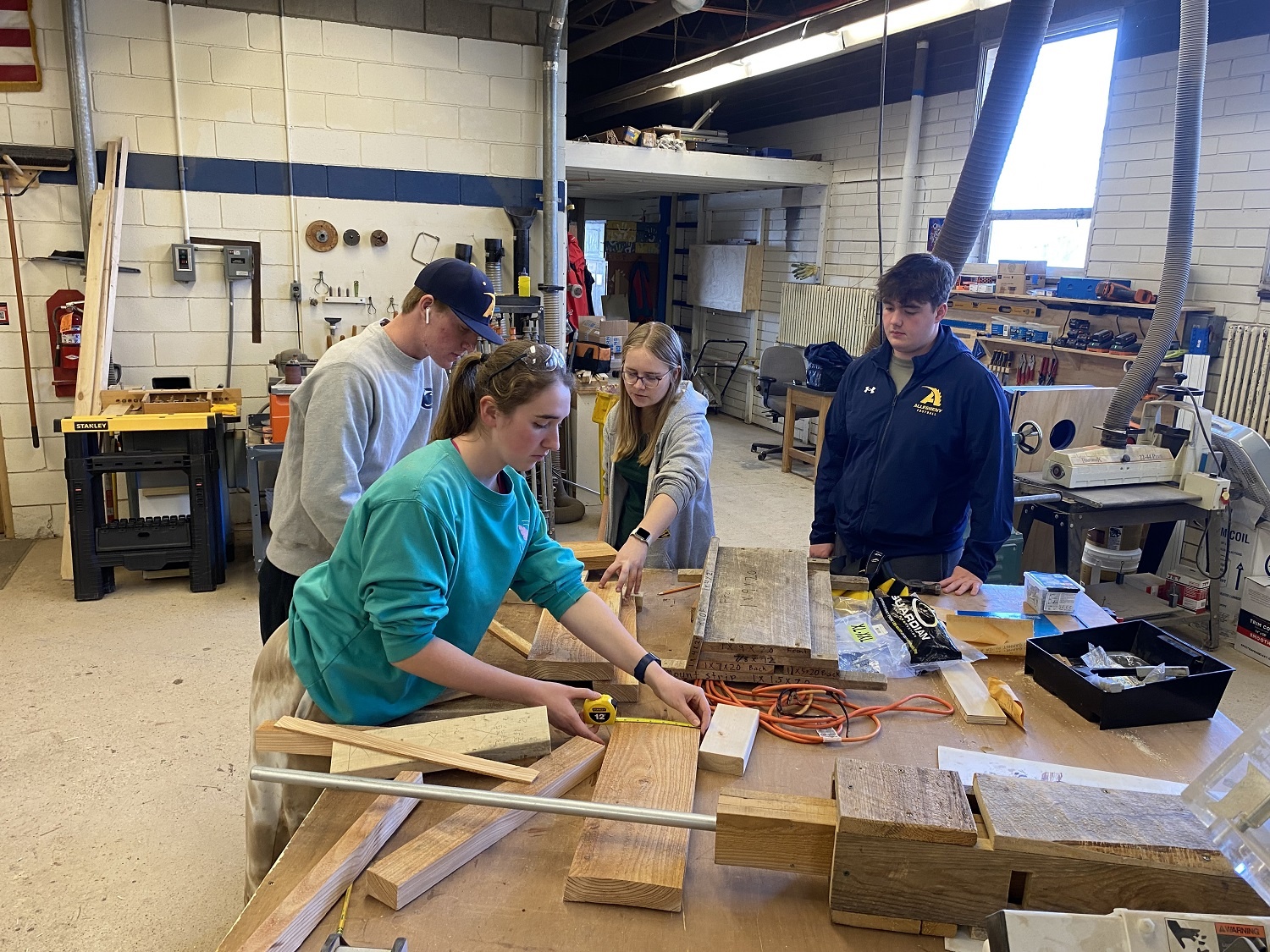
Besides its conservation benefits, the project has been a highly valuable educational immersion. Students learned about the biology and ecology of bats, human threats to their populations, and efforts to help in their recovery.
Interacting with a bat expert gave credence to classroom learning, and building bat boxes provided hands-on practical experience that enabled implementation of a campus sustainability effort. Students have been excited to know that their efforts to plan this project and help to develop the grant application have come to fruition and will lead to a conservation legacy that outlasts their tenure as students.
About the Authors

Kelly Pearce is a Professor of Environmental Science and Sustainability at Allegheny College with more than 10 years of wildlife conservation experience. She co-authored Expanding Sustainability to Include our Non-Human Partners: College Campuses as Models of Wildlife Habitat, focused on creating wildlife habitat on college campuses.

Richard D. Bowden is a Professor of Environmental Science and Sustainability at Allegheny College. He has been involved in many forest studies and sustainability projects on the Allegheny campus, including Allegheny being recognized as a NWF Campus Wildlife Habitat and Arbor Day Foundation Tree Campus.

Terry Lobdell is an Artificial Bat Roost Consultant. He has been involved with bat house projects throughout the country and contributed to Merlin Tuttle’s most recent book, “The Bat House Guide.”
