









We have much more to do and your continued support is needed now more than ever.
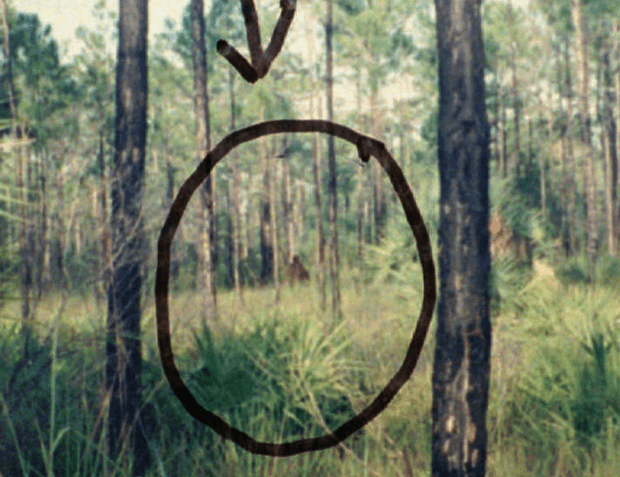
You’ve Heard of Bigfoot… What About Florida’s Skunk Ape?
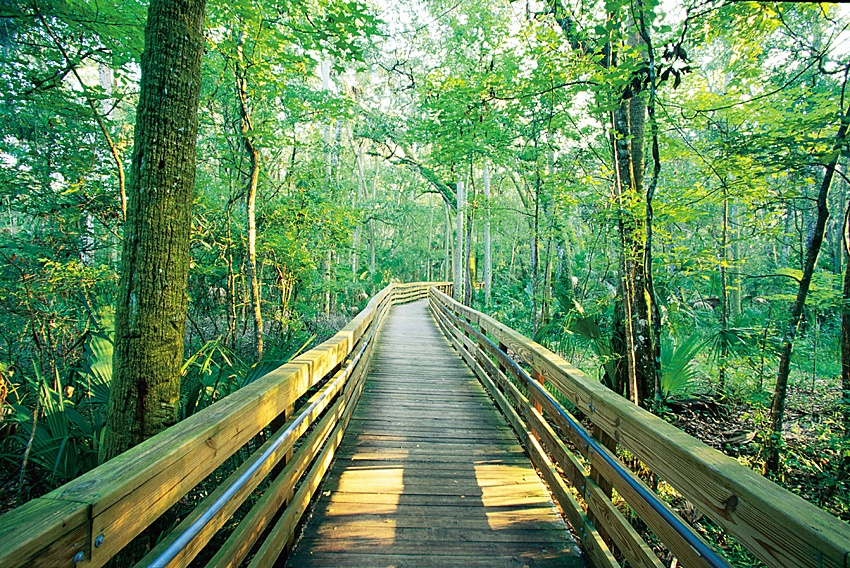
Apalachicola National Forest. Credit: Visit Florida
I yearn to believe that even as Florida’s population crests 23 million people there still might be pockets of wilderness, deep or remote enough, to provide habitat for creatures not yet discovered. Or creatures not seen in many a year.
In Florida we call our Bigfoot by their proper Florida name, Skunk Apes. “Skunk” refers to the purported strong horrible odor that surrounds them. And “Ape” is a reference to their primate-like qualities.

My appreciation of conservation biology leads me to profound skepticism, but I do hold out hope that an Ivory-billed Woodpecker or two still haunts the deepest, most remote swamps and lowlands left in Florida. Perhaps they occasionally gaze down at a Skunk Ape from their secretive perches or cavity trees.
What does it mean when all the mystery of a place is gone? How does that shape our concept of wilderness? Is the darkened swamp more valuable to us because we think something mysterious might still be out there, just beyond what we understand?
The Gulf Coast of Florida, while highly developed in many places, still has some long stretches of remote refuges and preserves filled with longleaf pines, oak hammocks, cypress stands, seagrass meadows, coastal marshes, swamps, spring fed rivers and blackwater and alluvial river basins.
Chassahowitzka Wildlife Management Area and National Wildlife Refuge, Lower Suwannee National Wildlife Refuge, Big Bend Wildlife Management Area, the southern portions of Apalachicola State Forest and Tate’s Hell State Forest all seem like good Skunk Ape territory. Remote and wild still.
Rumor holds that Goethe State Forest is a hot bed of sightings of Skunk Apes. Articles have appeared in local newspapers over the years. Is the truth indeed out there?
When I started my research for this essay I immediately was drawn to something intriguing and somewhat heartwarming. Those who are seeking the Skunk Ape in Goethe frequently take and leave gift baskets for them. In today’s current environment, this small act of kindness seems almost quaint and surely heartfelt.
But what exactly does one put in said basket? Further research led me to several examples of beef jerky, crackers, and loose tobacco being offered as gifts between Homo sapiens and Gigantopithecus Ameripithecus Floridanus (ok, truth be told there is not one accepted scientific name for Skunk Apes as technically they are not recognized by western science, BUT this is the best name I could hobble together after a few meanders through Google and A.I.).
One early morning in March, a glorious spring day filled with a sense of exploration and adventure, I left as the sun rose and headed north to Goethe State Forest into a morning rich with possibility.
A convenience store near Inglis, Florida offered the gift basket supplies I needed. I assumed a Skunk Ape would appreciate me opening the beef jerky and cracker packages for them. I took great pride in my purchases. I bundled them in a handmade basket my mom had woven. Perhaps sharing the crafts of our species, made by hand in an ancient art form, would strengthen the connection and my odds of communion.
It would be easy to treat this as a joke, but as I drove a deeper set of questions began to form in my mind. Could a state as populated as Florida still harbor a creature that remained a mystery to science? Indeed, had it in days long past when fewer people called the Sunshine State home?
The Seminole word for Skunk Apes was “Esti Capcki.” Numerous newspaper articles from the 1800s mention sightings. Florida’s human population in 1900 was only roughly 500,000 people making it the least populated state in the American South. Oh, how times have changed.
As the day ended and sunset approached, I headed home with my gift basket retrieved from where I had left it, leaving no trace (take only pictures, leave only footprints). I will however be back, bearing gifts and good wishes.
I will take my mystery and wonder of nature through the philosophy of deep ecology, the belief that nature has its own value separate from us and our needs. Nature has all the wonder and mystery I need, and this deserves preservation. But, a Skunk Ape could not hurt. Particularly one with an Ivory-billed Woodpecker as a neighbor.
Click here to learn more about Goethe State Forest.
An edited and abridged version of this essay originally appeared in FAU’s The Invading Sea.
Joe Murphy is a former Wildlife Policy Specialist for NWF and contributes blog posts to the NWF Gulf Program as an alumnus and supporter. He occasionally is mistaken for a Skunk Ape when out on the river or the trail. No apologies needed, but a gift basket wouldn’t hurt. You can follow Joe on Facebook (https://bit.ly/joemurphyfacebook
