







We have much more to do and your continued support is needed now more than ever.
Pine Needles Are Leaves, Too

Credit: Sean Dreilinger
Every autumn, we talk about fallen leaves: why to leave them when you can, how the leaf litter feeds the soil, who shelters in them through the winter. But some of the most common leaves on the ground probably never come to mind when picturing a yard full of them: pine needles!
Pine, or conifer, needles are leaves that evolved into a very different shape from the flat, broad deciduous leaves we normally think of as leaves. They’re narrow, waxy, and tough, and built to hang on through cold and drought rather than drop and regrow every year.
A pine tree’s needles come bundled in little sheathed clusters called fascicles, with either two, three, or five to a bundle. Each one of these is doing the same thing broad leaves do—catching light and turning it into food through photosynthesis.
Evergreen Doesn’t Mean Forever
We tend to learn to sort trees into two large bins: deciduous trees that drop their leaves, and evergreen trees that keep theirs. But “evergreen” doesn’t mean a needle lasts forever. It means that the tree as a whole will always be green, because it will always be holding a few years’ worth of leaves at once.
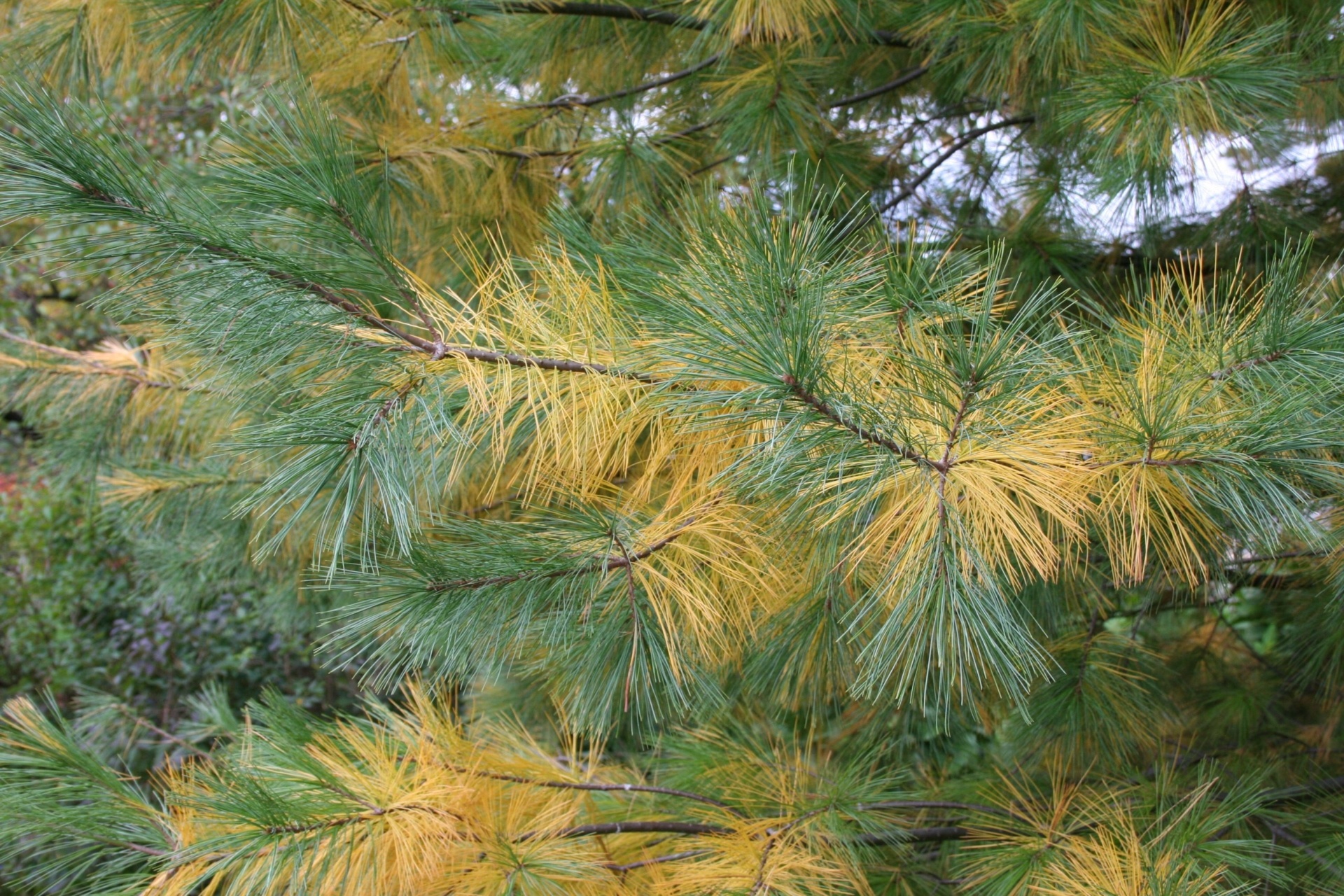
Most pine needles live somewhere between two and five years before dropping to the ground. Because the tree sheds only its innermost, oldest needles while the newest growth stays green at its branch tips, this loss usually goes unnoticed. Eastern white pines are the exception: they shed so many two- and three-year old needles at once that the interior of the tree turns vibrant yellow in the fall!
No pine ever sheds its needles all at once. Instead, they release needles to the ground in a slow, steady trickle, year-round or in short bursts like the white pine. The result on the forest floor is not a seasonal blanket but a deep, springy, ever-renewing layer. And that layer is habitat.
What Lives in Needle Duff
A thick layer of dead needles may look devoid of life, but peel that layer back and you’ll find one of the busiest neighborhoods in your garden. The mat of fallen needles, often called duff, shelters countless tiny species, including mites, beetles, spiders, ants, and centipedes.
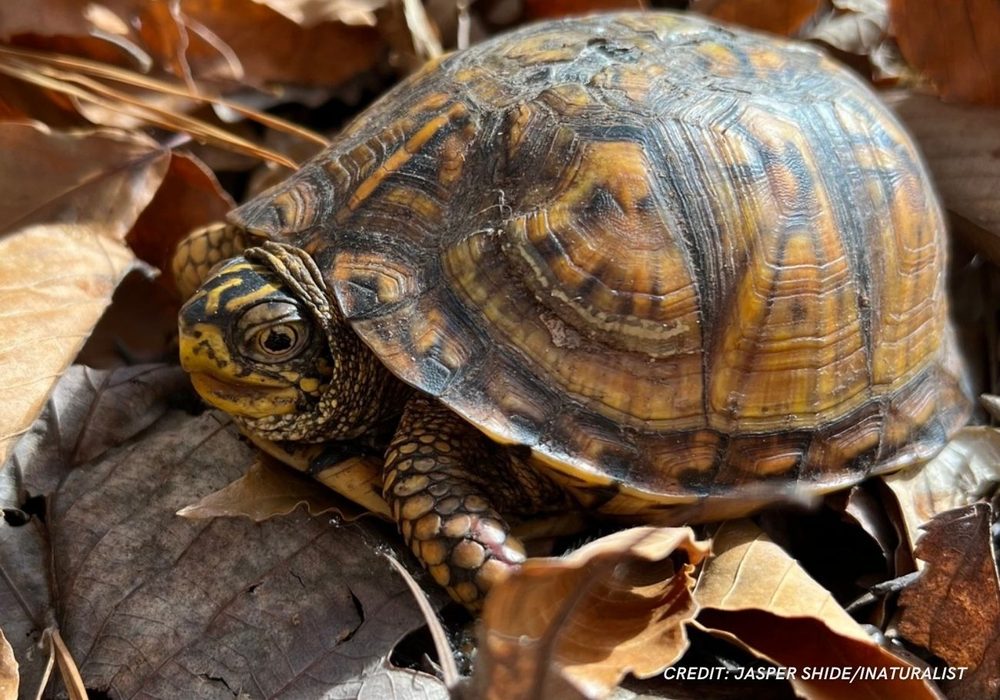
These invertebrates serve as valuable food for the toads, salamanders, turtles, and snakes that live on and under the needle layer. Because most of our backyard birds depend on insects to feed their young, needle duff can also provide a buffet for many bird species.
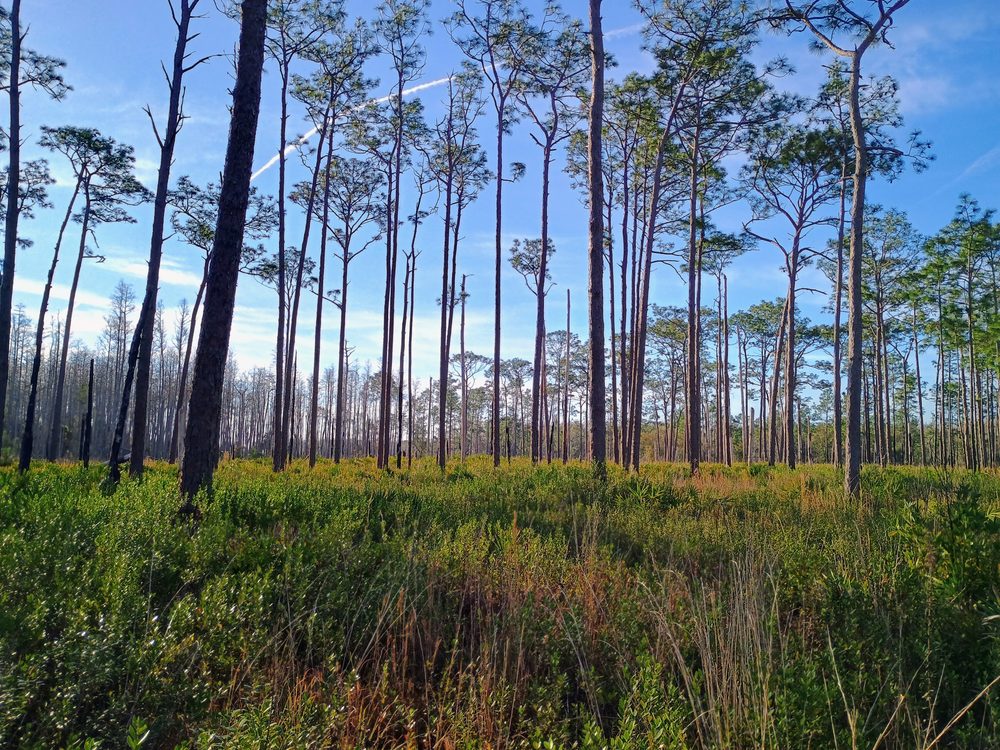
Learn about the National Wildlife Federation’s work to restore longleaf pine habitat here!
Needle Layer vs. Broadleaf Layer
Needles are built differently from broadleaves, and they behave differently once they fall. A waxy cuticle, and slow-to-digest compounds means needles decompose far more gradually. Where a broadleaf layer can be half-gone by midsummer, matted down and well on its way to soil, a needle layer breaks down at a patient, steady pace and may remain for years after the tree dies.
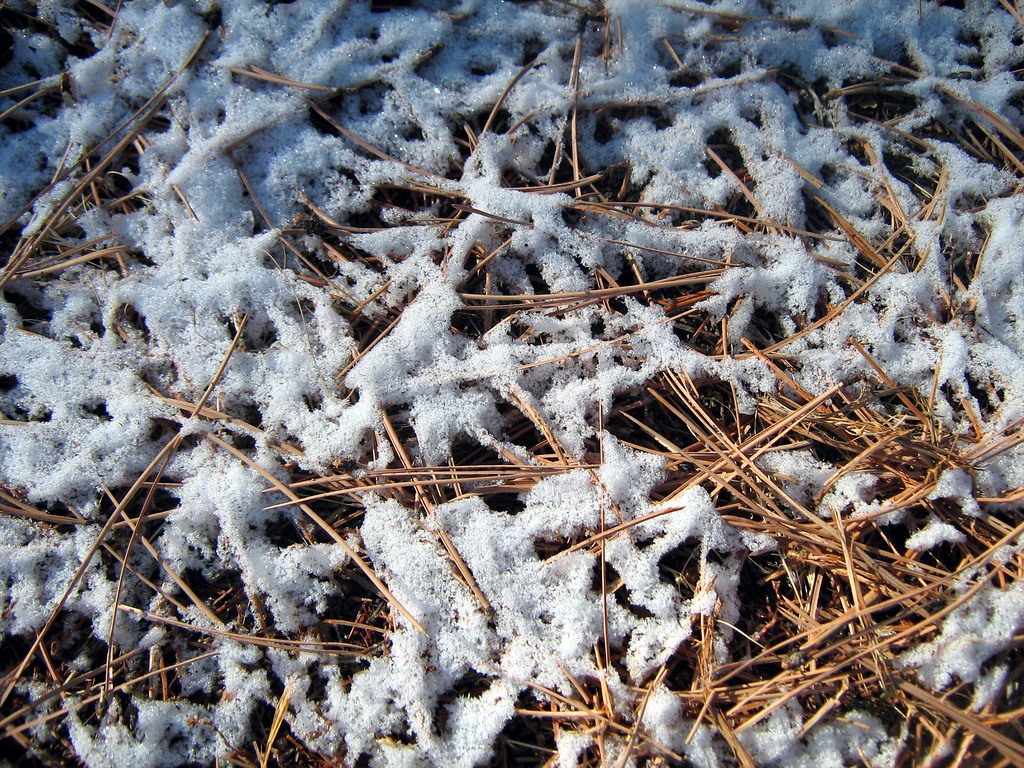
Slow decomposition has its own gifts. Needle duff is durable and deep, and its interlocking, water-shedding structure knits into a mat that stays put on slopes and open ground where lighter leaves would simply blow or wash away. Instead of a seasonal blanket that arrives in fall and thins by summer, it offers steady, year-round cover to wildlife. Different tenants, a different rhythm, but still unmistakably alive.
So when the leaves come down this fall, remember that the needles coming down alongside them are leaves too. They’re feeding the soil, holding the ground in place, and sheltering an entire understory of small lives!
