
















We have much more to do and your continued support is needed now more than ever.
From Farm Runoff to Faucets: How H2Ohio Protects Water

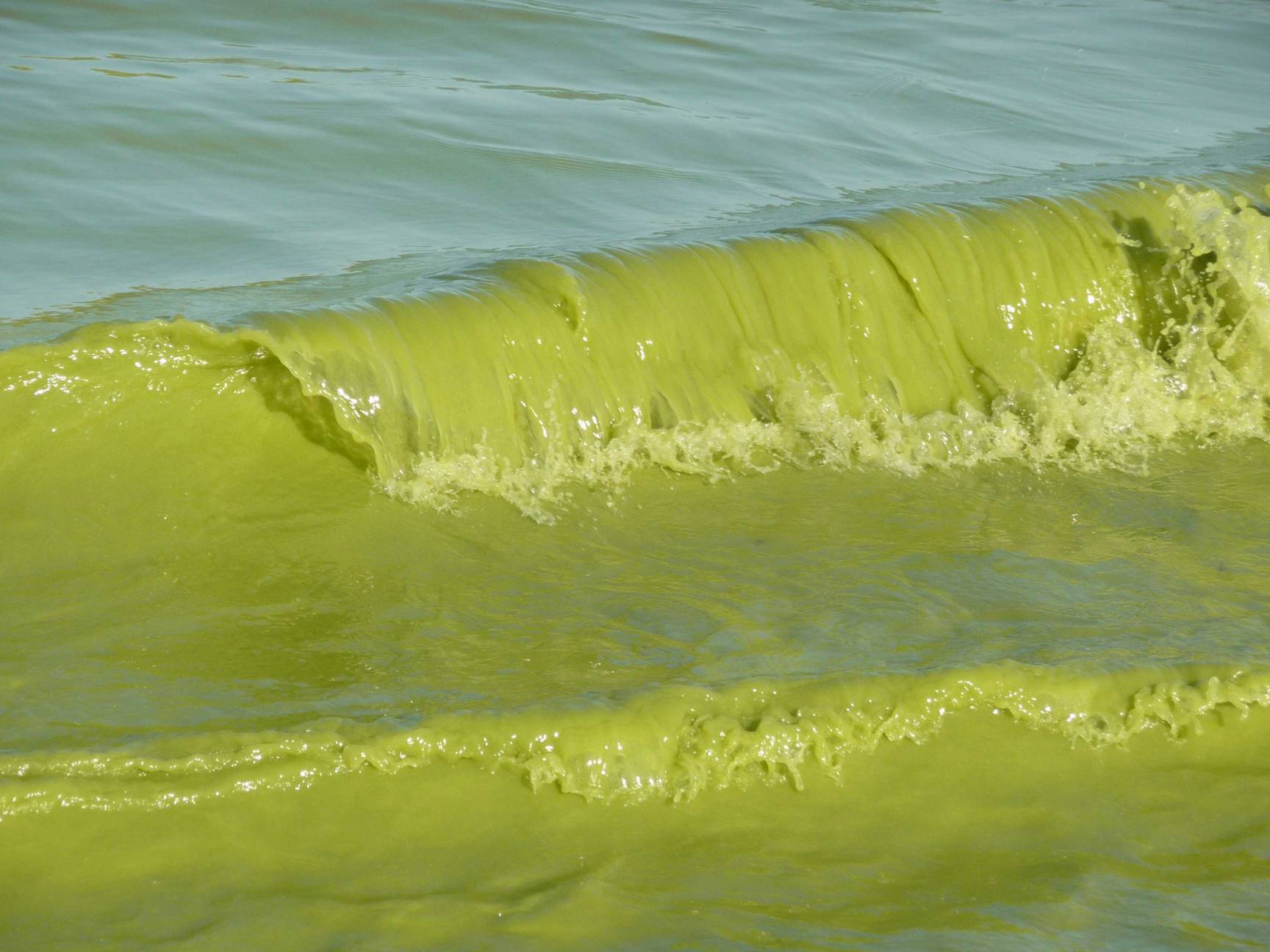
Lake Erie harmful algal blooms, September 2017. Credit: NOAA
What is H2Ohio?
H2Ohio is a statewide water quality initiative launched in 2019 to address Ohio’s most pressing water challenges, primarily nutrient runoff that feed harmful algal blooms in Lake Erie, lead contamination in the drinking supply, and failing wastewater infrastructure. The program focuses on three key areas:
- Agricultural Conservation – Helping farmers implement science-backed practices to reduce phosphorus runoff, the primary driver of algal blooms that can become toxic. Practices include nutrient management plans that provide the specific “prescriptions” for each field to manage nutrients including cover crops, buffers, and more. H2Ohio also provides cost share funding to farmers to implement the recommended practices.
- Wetland Restoration – Expanding natural wetlands, which filter pollutants, including excess nutrients, prevent flooding, and provide critical wildlife habitat.
- Water Infrastructure – Replacing lead pipes and upgrading aging water systems to ensure safe drinking water, particularly in disadvantaged communities.
How Does H2Ohio Work?
- Farmers receive cost-share funding to adopt conservation practices that keep nutrients on fields and out of waterways.
- Communities get grants to map and replace lead service lines, protecting residents from lead exposure.
- Funding is provided to local communities and organizations to restore, enhance, and create wetlands to filter out excess nutrients and other pollutants. Universities are collaborating on research to learn which approaches achieve the best outcomes. Results will inform new projects.
Does H2Ohio Deliver Results?
- Each year the H2Ohio program publishes the accomplishments funded by H2Ohio. To date:
- 3,200 farmers and more than 2.2 million acres are enrolled in H2Ohio with the potential for reducing more than 420,000 pounds of phosphorus entering Ohio’s waterways.
- 183 wetland projects covering 16,200 acres, are providing essential habitat for Ohio’s native species while filtering out excess nutrients and other pollutants.
- 15 water and wastewater infrastructure projects are providing clean and safe water for over 53,500 Ohioans.
Current Debate Over Funding
The Ohio House recently passed a budget (HB 96) that cuts H2Ohio funding, raising concerns about:
- Stalled progress on Lake Erie’s algal blooms. Nutrient management plans are a leading practice funded by H2Ohio. Farmers that have adopted this practice are committed to managing their fields, and crop yields, while protecting water quality. Ohio should not abandon these farmers that are committed to nutrient management but need the cost share assistance of the H2Ohio program for implementation.
- Fewer removals of lead pipe in drinking water systems (especially with stricter federal rules taking effect)
- Lost momentum on wetland restoration, a proven natural solution, including the loss of research that identifies the best techniques for restoring different types of wetlands for nutrient and water management.
Why Does This Matter Beyond Ohio?
Lake Erie supplies drinking water for 11 million people and supports a $17 billion tourism and fishing economy. Its health has regional and national implications, making H2Ohio a model for other states tackling similar water quality issues.
The Bottom Line
H2Ohio represents a rare bipartisan effort to tackle water pollution at its causes—farming, infrastructure, and lost wetlands. Its future funding will determine whether Ohio continues to progress or risks backsliding into another water crisis.
