








We have much more to do and your continued support is needed now more than ever.
Buy a Duck Stamp, Save a Wetland
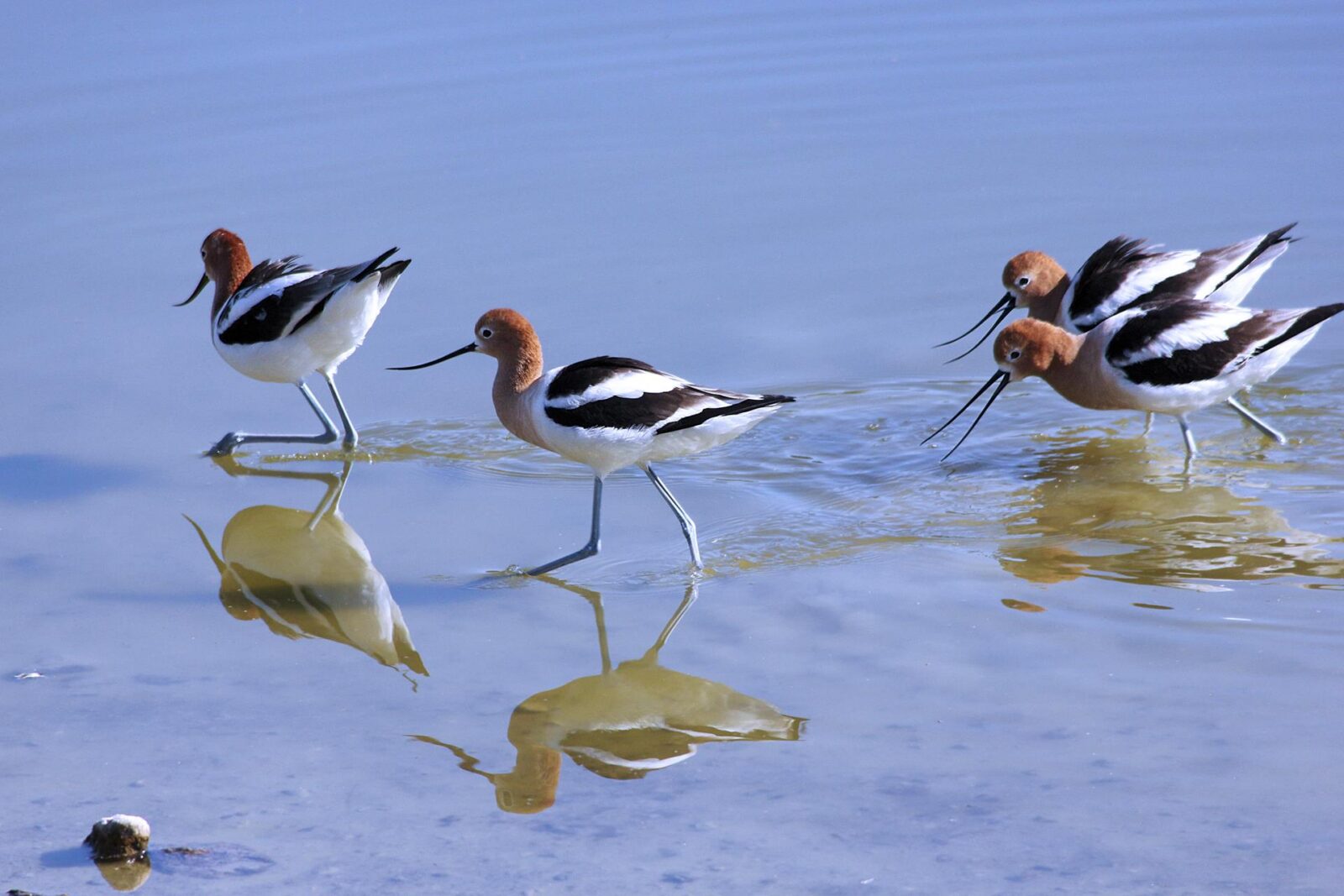
American avocet. Credit: City of Henderson
I grew up in the country’s driest state, Nevada. With annual rainfall averaging only about 10 inches, water is a precious resource in the desert, even more so for our wetlands. While wetlands cover less than 5% of Nevada, they support over 75% of native and migratory species.
That’s why every fall, my elementary school art teacher would load our class onto a bus and take us to Henderson Bird Viewing Preserve. Together, we’d sit quietly along the banks of the preserve’s wetland and sketch our entries for the Junior Duck Stamp Contest.
While the blazing sun beat down the same as ever, it felt like our class had been transported to an oasis, and the usually quiet desert was teeming with life. Warblers and thrushes darted through the brush. Native waterfowl like mallards and ruddy ducks drifted and dove across the open water.
My pencil was never quite quick enough to capture the fleeting motion, but that didn’t matter to me. It was a way to connect with nature in a place where it can feel so scarce.
But Nevada is only getting drier. The American Southwest is undergoing a severe “mega-drying,” and in Nevada, studies show that nearly 40% of groundwater wells have experienced major water level declines. Groundwater-dependent ecosystems like wetlands shrink as a result.
For waterfowl, that means fewer places to land and feed during migratory season. These small, fragile habitats that support the majority of wildlife in Nevada could disappear altogether.
Nevada’s wetlands rely on conservation efforts from hunters and anglers. In 1934, sportsmen, concerned about dwindling duck populations, rallied around the Migratory Bird Hunting and Conservation Stamp Act, commonly known as the Duck Stamp Act.
Signed by President Roosevelt, the act established the Duck Stamp Program, an annually released stamp featuring wildlife art. The first Duck Stamp was designed by renowned conservationist and National Wildlife Federation’s first president, Jay N. “Ding” Darling.
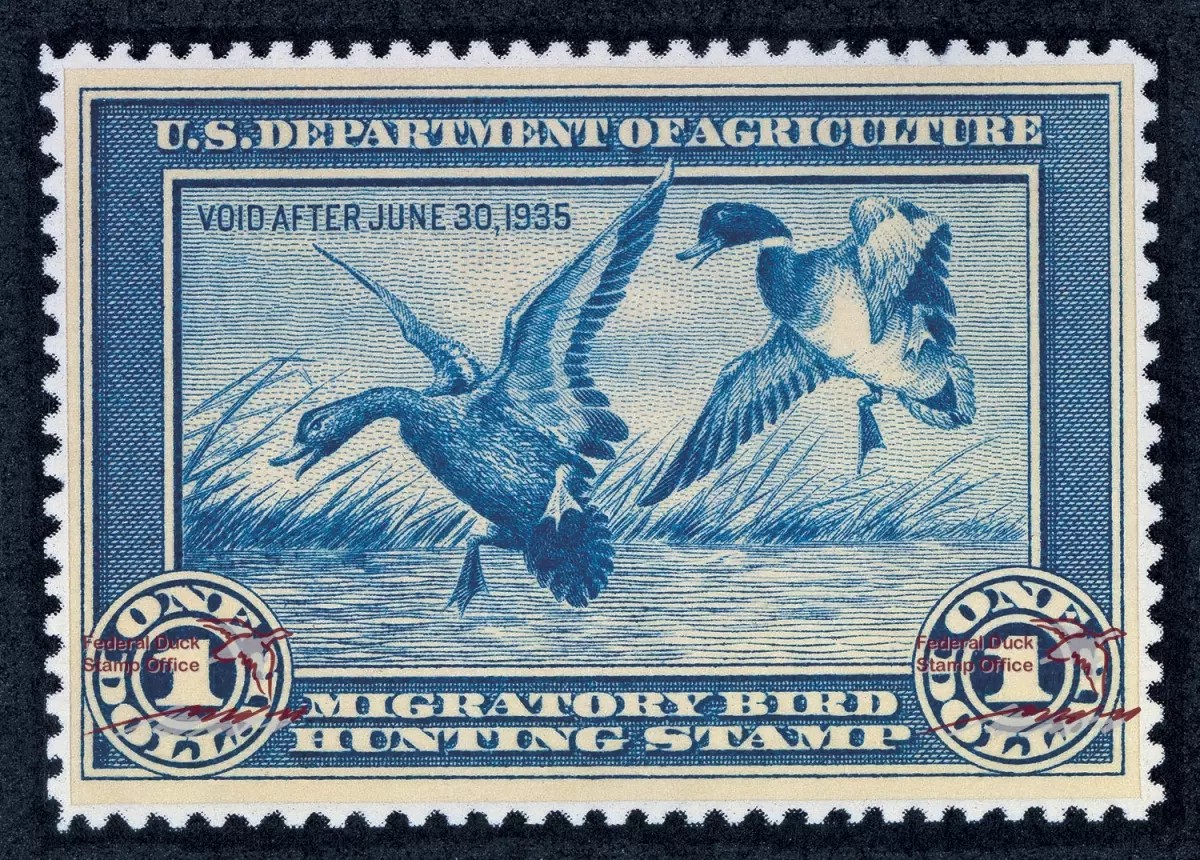
Today, the U.S. Fish & Wildlife Service holds an annual competition for artists and wildlife enthusiasts to showcase their bird-themed artwork, with the winning design printed on that year’s Duck Stamp. They also host the Junior Duck Stamp Contest, an entry point into conservation for many (including myself).
Not only do these stamps raise awareness for conservation, but the Duck Stamp Program has been one of the most successful tools for funding wetland protection.
Since its inception, the Duck Stamp has raised over $1.3 billion dollars and protected over 6 million acres of habitat for waterfowl and countless other species. Artist or not, you can help support wetland conservation. 98% of the proceeds of the Duck Stamp go directly towards acquiring and protecting wetland habitat for the National Wildlife Refuge System.
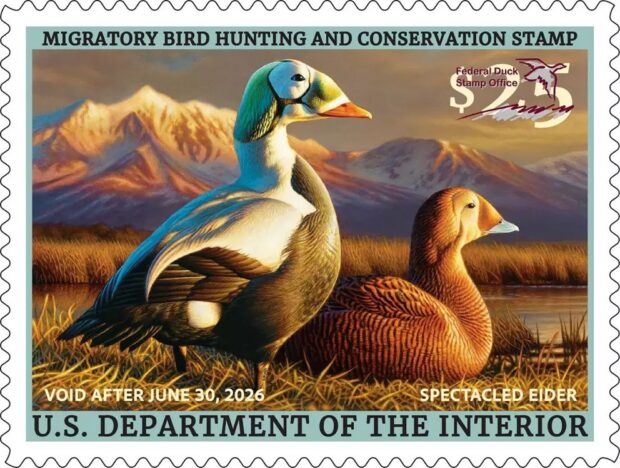
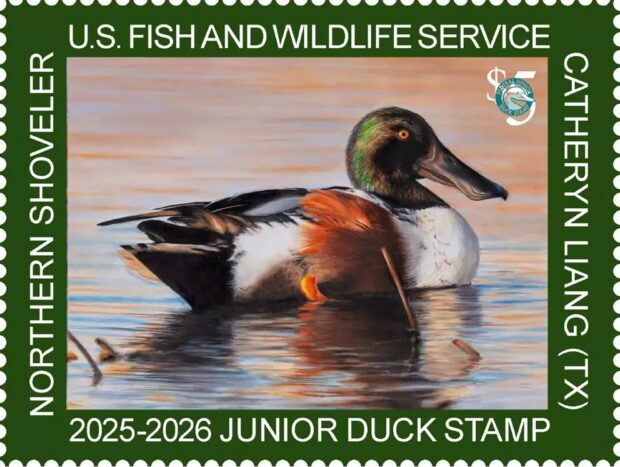
Those who are interested in entering the 2026 Duck Stamp Contest can submit their art to the U.S. Fish & Wildlife Service Headquarters from June 1 to August 15, 2026. This year, contestants can choose from this list of approved species to feature on their design:
- Cackling Goose
- Blue-winged Teal
- Mottled Duck
- Long-tailed Duck
- King Eider
You can learn more about the Duck Stamp Contest submission guidelines here.
