






We have much more to do and your continued support is needed now more than ever.
Wildlife Reasons to Celebrate Plastic Free July
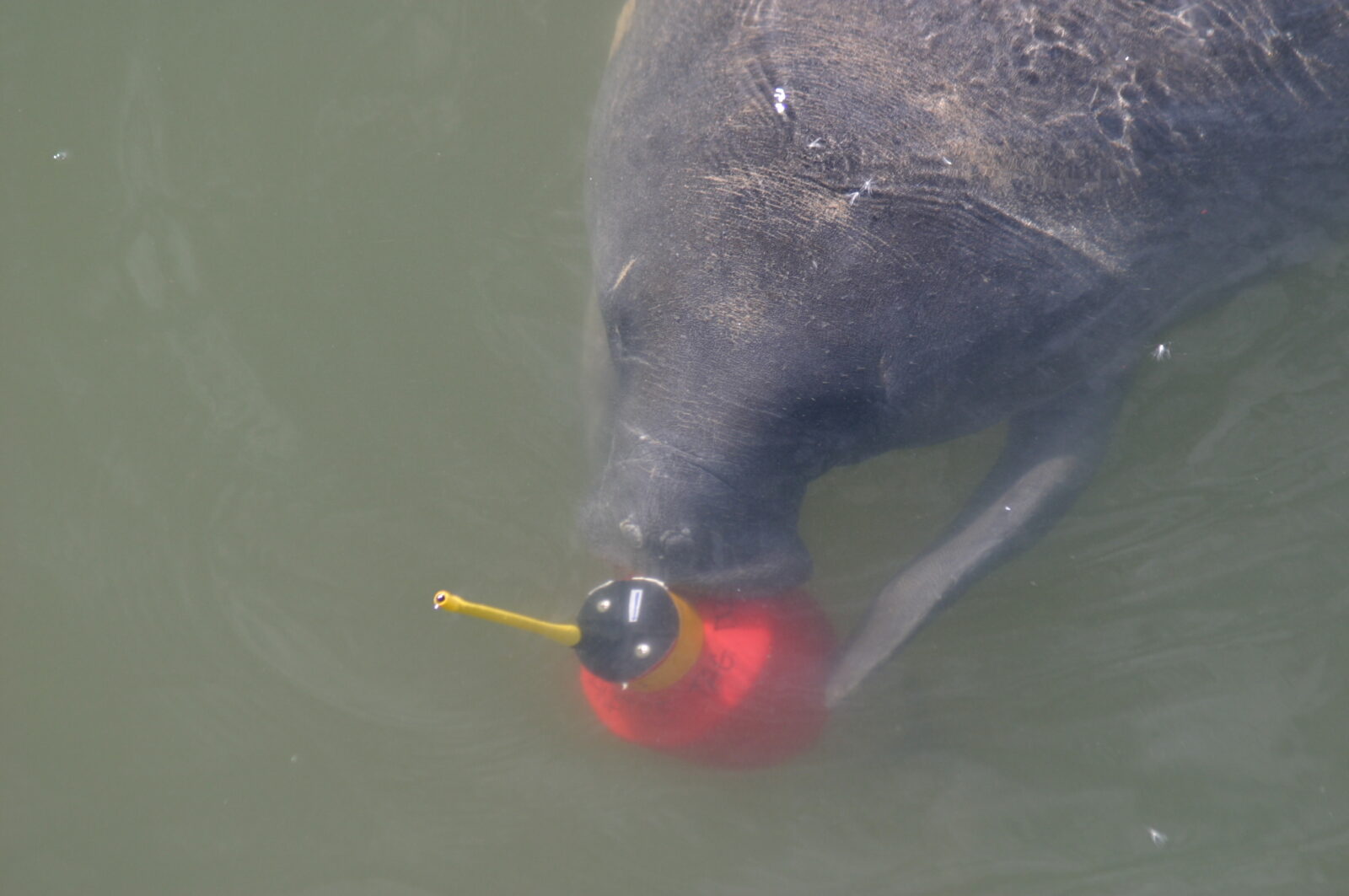
Manatee investigates tagging device. Credit: Megan Martz/FWC
It’s that time of year again, Plastic Free July! This is an opportunity to stop, think, and change how we interact with plastic. Each year, more plastic is produced and less is recycled, but where does it all end up? Let’s explore how plastic is affecting some of our favorite wildlife species and examine a few ways we can reduce plastic waste.
Manatees
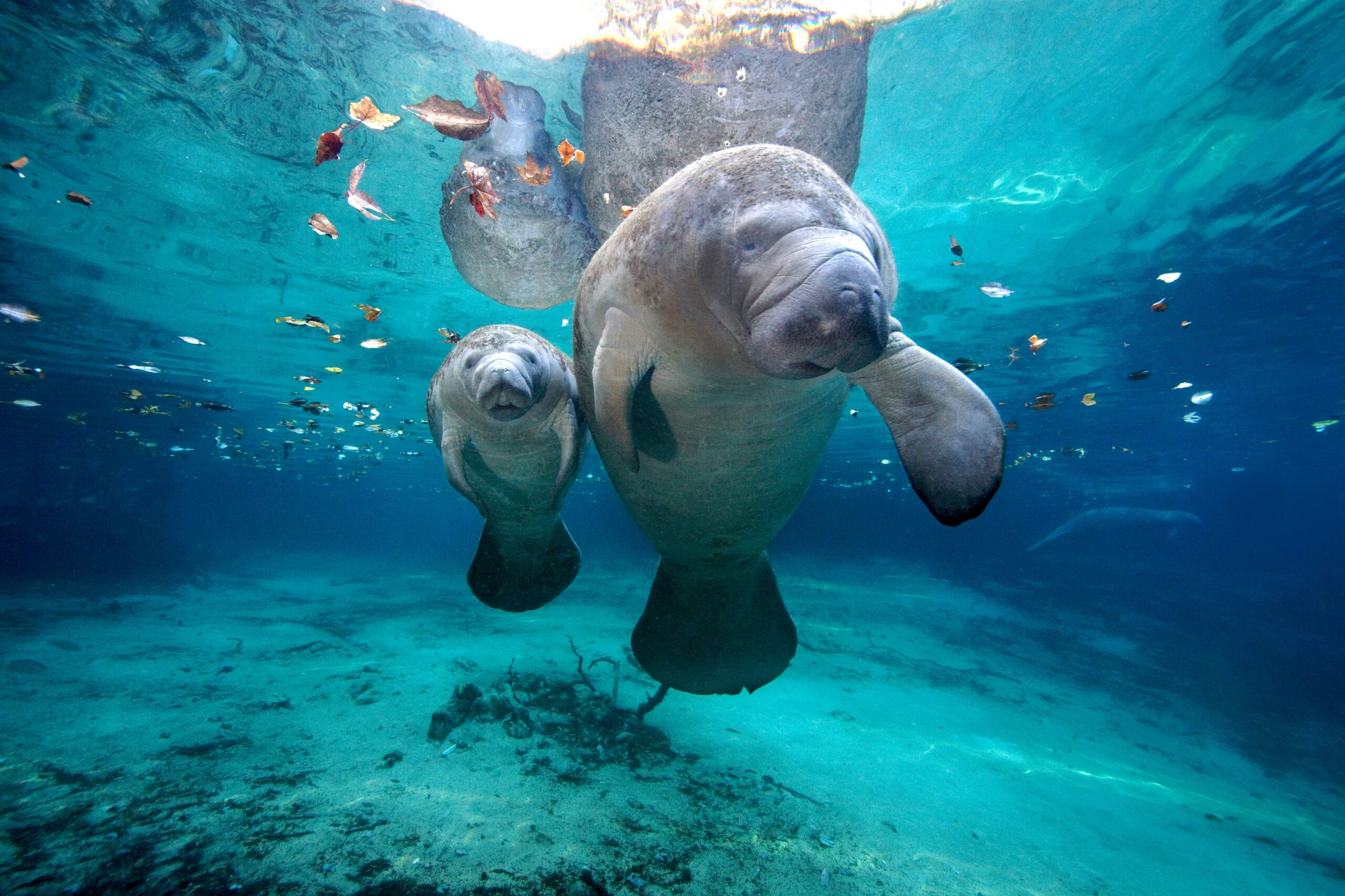
Our beloved Florida manatee, affectionately known as the ‘sea cow,’ is negatively impacted by plastic pollution. The Florida manatee, a subspecies of the West Indian Manatee already listed as threatened under the Endangered Species Act, is facing many other threats, too—such as ship strikes, fishing gear entanglement, and algal blooms—so they truly do not need the increased risks associated with plastic pollution.
In a 2020 report, nearly all 700 manatees studied were found to have ingested plastic pollution. The pollution is becoming ever more common in seagrass beds and can obstruct digestion or cause internal damage, leading to starvation and death.
Shearwaters

Scientists who have been studying shearwaters, a kind of seabird, have discovered a new disease related to plastic called plasticosis—a type of fibrosis, a thickening and scarring of tissue due to chronic inflammation or injury. This particular type of fibrosis has been linked to plastic consumption in the seabirds. While the report states this has only been identified in this specific species, they suspect all organisms—humans included—are at risk.
Coral

Did you even know coral was an animal? Well, now you do! According to a 2023 study led by the California Academy of Sciences, University of São Paulo, University of Oxford, University of Exeter, and other collaborators, plastic is also a threat to these vital organisms. Plastic, in the form of fishing nets and larger items, can cause physical damage to coral by breaking off pieces as it moves across the coral.
Plastic litter can also deprive the coral of oxygen and light, which are vital to survival. It’s also been discovered that plastic pollution can increase the risk of disease in coral, adding to the threats these species are facing. Some species of coral are already listed as endangered under the Endangered Species Act.
Ways to Support Our Wildlife & Celebrate Plastic Free July
- Support legislation for a global plastics treaty
- Conduct a plastic audit and reduce your plastic consumption
- Reuse items as many times as possible before discarding them
- Repair items where possible before sending them to the landfill
- Join your local buy-nothing group and swap items for free
Use this resource to investigate how plastic pollution is affecting species not mentioned in this blog: Plastics and Biodiversity.
 Written by Samantha Hurst
