






We have much more to do and your continued support is needed now more than ever.
Monarch Heroes: Celebrating 10 Years of Wonder, Curiosity, and Stewardship of the Monarch Butterfly, Part 1

Monarchs migrating through Menard, Texas. Credit: Laura O'Toole
“Monarch Heroes, a program that empowers Texas students to create Schoolyard Habitats, shows students that science is alive outside their classroom walls. Experiencing this program transformed my teaching philosophy while taking outdoor education to a new level for me. It sparked a passion that continues to shape my work today.”
– Isaac Esquivel, Elementary Environmental Education Teacher, Northside ISD
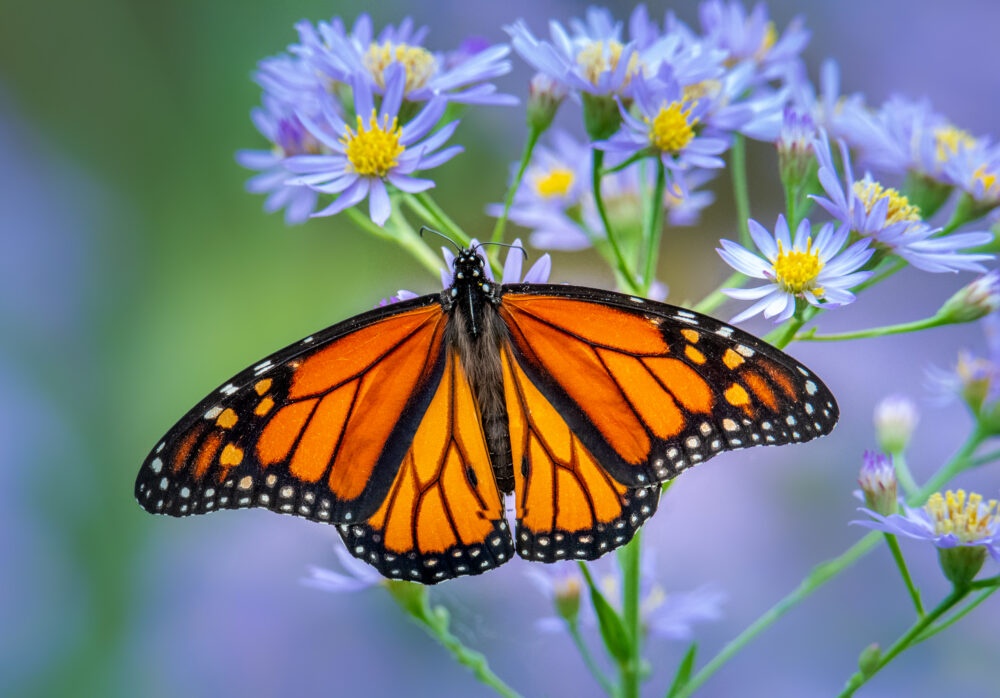
As the fall migration of the monarch butterfly nears its peak in Central Texas, you might be lucky enough to witness ribbons of black, orange, and white gliding across the sky. Although a more common sight 25+ years ago, school children, teachers, families, homeowners, and scientists alike await this iconic migration with much anticipation. Each fall the eastern population of the monarch butterfly makes a remarkable, nearly 3,000-mile journey between Canada and its overwintering grounds in south central Mexico.

This is the time of year our gardens in Texas are often at their best. The temperatures are cooler and we are experiencing more rainfall and buffets full of native nectar plants are open for service. Are your gardens ready to host these weary creatures as they stop by looking to fatten up on their way to Mexico?

In celebration of the 10 Year Anniversary of Monarch Heroes, we have created a few resources to set you on your way. Whether on a campus or at home, we suggest testing your green thumb with a small 10×10 garden. Even small areas of native plants are critical to the recovery of the monarch butterfly. There are so many great native plants to choose from it can sometimes feel overwhelming, so we have developed top 10 plant lists for the five major metropolitan areas in Texas where we work: Dallas/Fort Worth, Austin, San Antonio and Houston. Not from Texas or looking to dive a bit deeper? Check out NWF’s native plants finder for native plants local to your zip code.
What is Monarch Heroes?
Monarch Heroes is a two-year program in Texas that engages students in the recovery of the monarch butterfly, whose populations have plummeted in the last 25 years primarily due to habitat encroachment and the loss of native milkweed, the monarch’s sole larval host plant. NWF designed Monarch Heroes specifically to improve science engagement and motivation among under-resourced PreK-12 students in an effort to connect them to the natural world through the use of project- and place-based learning.
Teachers receive paid professional development and learning standards aligned with a bilingual curriculum. In year 1, students collaborate in teams with teachers and community members to think critically as they design and implement Schoolyard Habitats in support of both the monarch butterfly and outdoor learning. In year 2, they learn to maintain and enhance their gardens for climate resiliency by increasing biodiversity and adding tree canopy. They become true Monarch Heroes as they collect migration data and contribute to national monarch research.
“As the At-Risk Species Coordinator for the Southwest Region, one of my primary goals is to support proactive and voluntary conservation by working with partners and communities. Monarch Heroes directly supports that goal by engaging students and educators in creating pollinator habitat and learning about monarch biology, fostering early awareness and stewardship. The program also helps build public support for pollinator conservation, which is essential to the long-term success of our efforts.”
– Katie Boyer, U.S. Fish and Wildlife Service, Southwest Region
How can schools help with the recovery of the monarch butterfly?

In Dec 2024, the USFWS proposed Endangered Species Act protection for the monarch. The USFWS Director stated, “Providing monarchs with enough milkweed and nectar plants, even in small areas, can help put them on the road to recovery.”
Since 2015, NWF’s Monarch Heroes program has engaged over 275 campuses across five major metropolitan areas in Texas in the recovery of the monarch butterfly. Their combined efforts have amounted to nearly 2.5 acres of new native wildlife habitat for the monarch butterfly and other pollinators.
Schools are important places to install native habitat because they are hubs for community gatherings and learning, and students are often the best voices for change. Students take things they learn at school and try them at home with their families, including creating habitat for pollinators and specifically the monarch butterfly. Monarch Heroes (MH) also helps build community stewardship by connecting those with a passion for natural resource protection with the school communities.
Why is Texas a critical monarch butterfly gateway?

Texas land, water, and air are all critical gateways for migratory species across North America. In 2023, according to the USFWS, Texas ranked 4th in the U.S. for most endangered animals. There is an urgent need to protect these species now and in the future. Texas provides the bridge between the monarch butterflies’ principal breeding grounds in the U.S. and their overwintering grounds in South Central Mexico.
Texas is also the funnel through which all monarchs journey during migration and in the spring, is one of the first places in the U.S. that the monarch stops to lay its eggs on milkweed, so the next generation can continue the journey north. During the fall migration, Texas is one of the last places monarchs stop to feed on nectar plants because they need to refuel on their way to Mexico where they will overwinter.
Why are native plants important?
Native plants have formed symbiotic relationships with native wildlife over thousands of years, meaning that many native animals are dependent on particular species of native plants to survive. Locally adapted native host plants and nectar plants in your area also benefit many other wildlife species, including other pollinators and birds. They also tend to require less water and general maintenance than non-native plants because they are adapted to the rainfall, soil, geology and climate of an area.
“At the Native Plant Propagation Center, a partnership between the Dallas Zoo and Texas Conservation Alliance, we strive to provide access to native plants for the public and community. Our mission is to support wildlife through restoration, education, and conservation, while building a more resilient community and increasing plant diversity in North Texas. Partnering with Monarch Heroes strengthens this mission and connects us with school programs that are eager to do the same.”
– Mei Ling, Community Conservation Director Texas Conservation Alliance (TCA)
In Part 2 of this Monarch Heroes celebration, we’ll highlight a handful of schools and partners who have worked with us to make this program so successful.
