








We have much more to do and your continued support is needed now more than ever.
“Protect the people who protect nature!”: Inspiration from the Voices for Conservation Rally

Credit: Lydia Sulik
So a U.S. Forest Service scientist, a human-size frog, and a box of donuts walk into a rally…
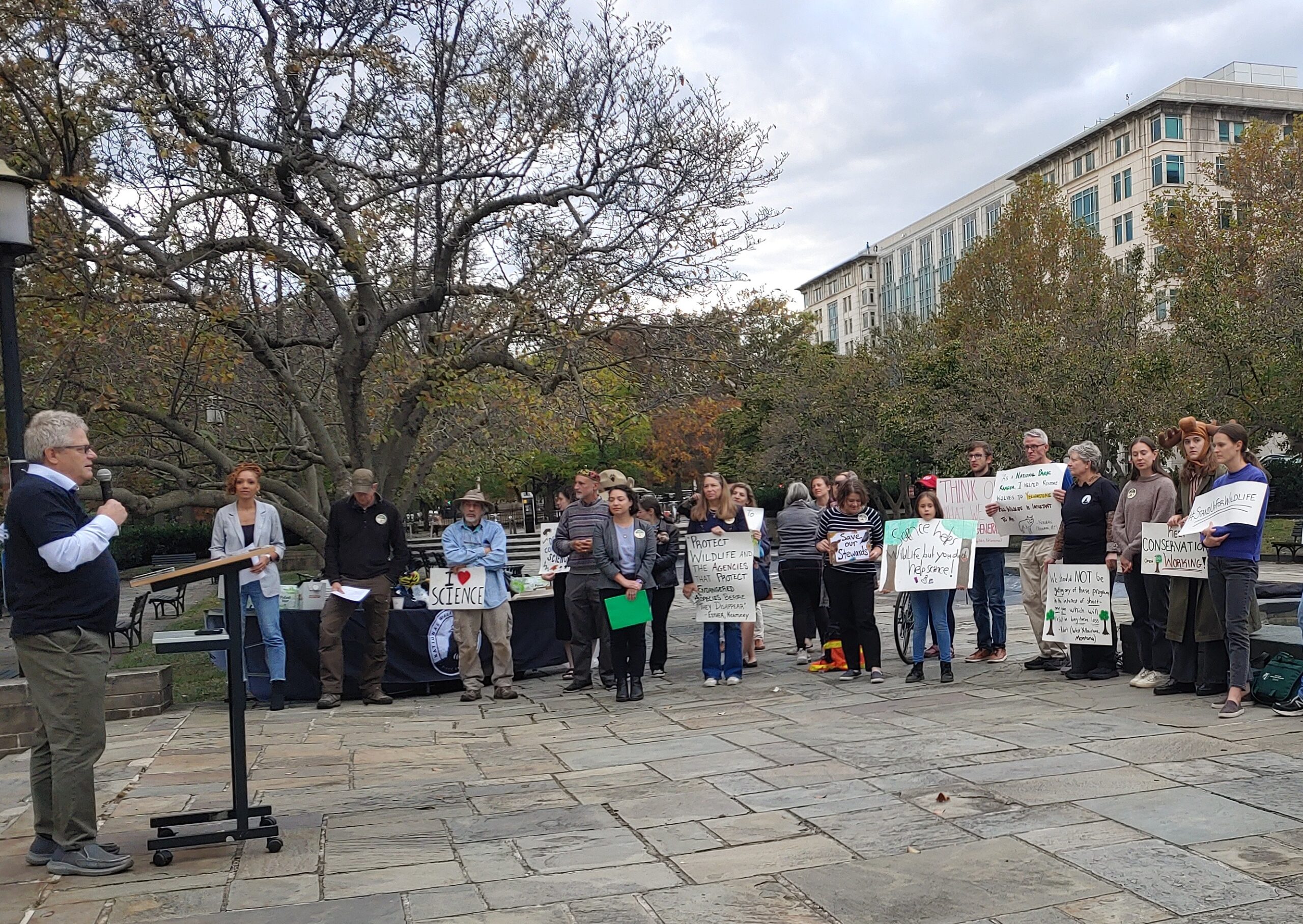
Okay, there’s no punchline, but there was an amazing Voices for Conservation Rally on October 22, featuring all of that and more outside the Department of Interior on a chilly Wednesday night.
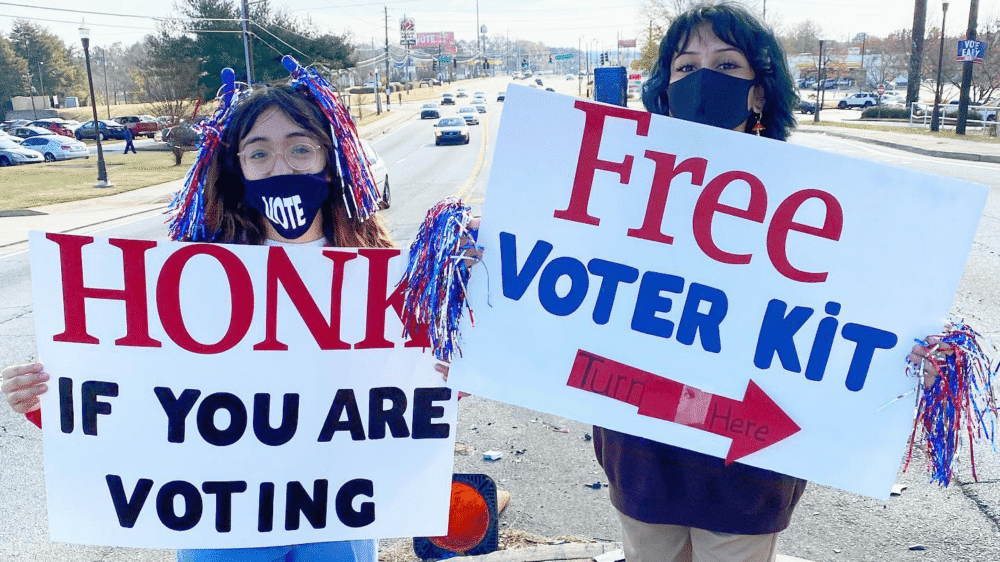
The sound science and programs that safeguard our wildlife, air, and water are being swiftly reduced or eliminated by the federal government, threatening the species and people we love. NWF showed up and showed out at this rally to celebrate and support the conservation scientists and stewards of wildlife who are fighting to keep protections in place.
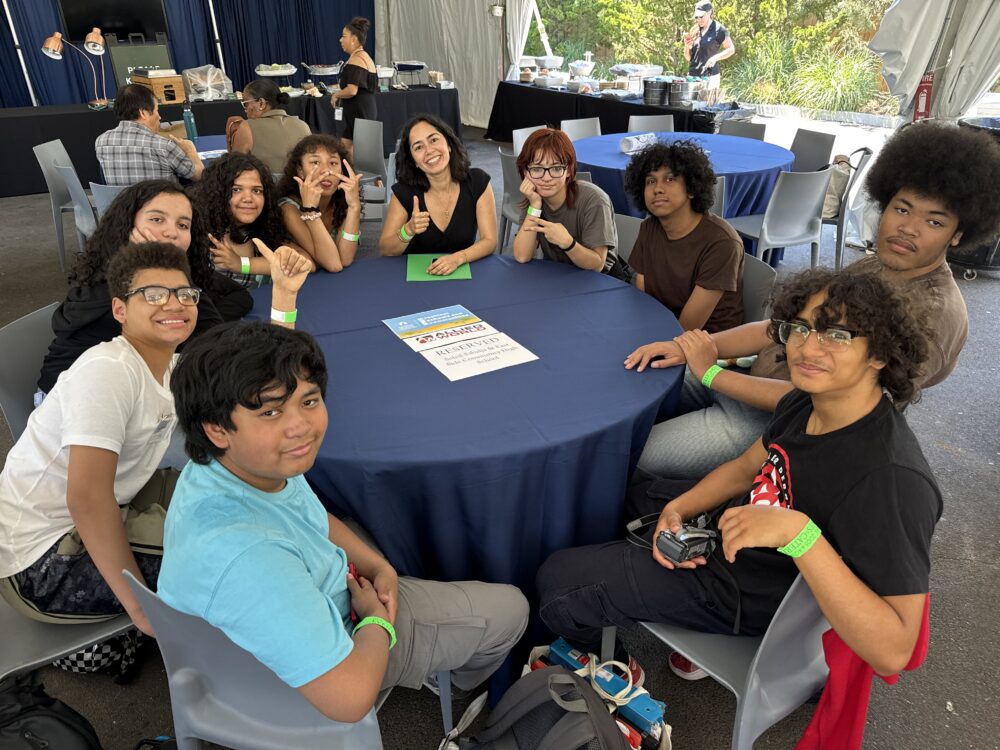
Emcee’d by Corina Newsome, National Wildlife Federation Conservation Scientist, the event hummed with energy from nine passionate conservation speakers and a wide range of participants. A film crew of student documentarians from Ithaca College came to capture the building momentum. Faith leaders and former federal conservation scientists joined the crowd in holding signs, chanting, snacking, and taking pictures with Ranger Rick.

Retired U.S. Fish and Wildlife Service scientist Fred Pinkney, who spent 30 years studying chemical contamination around the Chesapeake Bay, stuck around to chat with other conservation advocates as the rally began to wind down.
“There’s so much stuff going on now that’s unhelpful to people and the environment, but I feel like—at least on a national scale—we’re not getting enough coverage about what serious damage is being done in terms of climate change and wildlife,” he explained. “So that’s why I’m here.”
Pinkney said the event left him feeling “energized,” especially after hearing remarks from nine-year-old rockstar Mira B.
“She’s going to represent a new generation of environmentalists that we desperately need right now,” Pinkney said.
Check out some highlights from Mira and other inspiring rally speakers:
“I am so thankful there are people whose job it is to take care of the environment. For example, rangers protect parks. I love parks! Workers clean up trails and teach kids about pollinators. And finally, scientists study wildlife and make sure animals are healthy. But the bad news is a lot of those jobs are being cut. My heroes are losing their jobs. The government isn’t spending money on these important things, and they’re not taking care of us, which is not okay—for me, for you, and for the workers. Every kid deserves clean water, clean air and safe places to play, no matter where they live. If we don’t help now, what will be left when I’m grown up? Protect the people who protect nature!” – Mira B., 4th grader

“We cannot solve the problems facing migratory butterflies and pronghorn if we don’t fundamentally prioritize justice and communities bearing the heaviest burden of environmental harm and truly honor the sovereignty, rights and leadership of Tribal nations and Indigenous communities.” – Corina Newsome, NWF Conservation Scientist

“Conservation isn’t about putting a fence around places and walking away. We need science to take care of those places.” – John Kantor, NWF Senior Wildlife Biologist
“This latest idea of defunding Forest Service R&D [research and development] is just baffling. It doesn’t make any sense at all, and we as a country should not allow that to happen…The Forest Service has been collecting continuous data in the Experimental Forest system for 100 years. The Forest Service’s experimental forests [are] places where we’ve discovered things like acid deposition effects on water quality, soils, and things like that. These long term data sets, they are just not replaceable.” – Dr. Richard Pouyat, USDA Forest Service Scientist Emeritus

“We now need Congress to step up and stop these attacks on federal wildlife scientists across the country. We’re making it known that the people want a healthy, biodiverse future, and we stand with federal wildlife scientists who are essential team members for that biodiverse future.” – Jewel Tomasula, Endangered Species Coalition National Policy Director
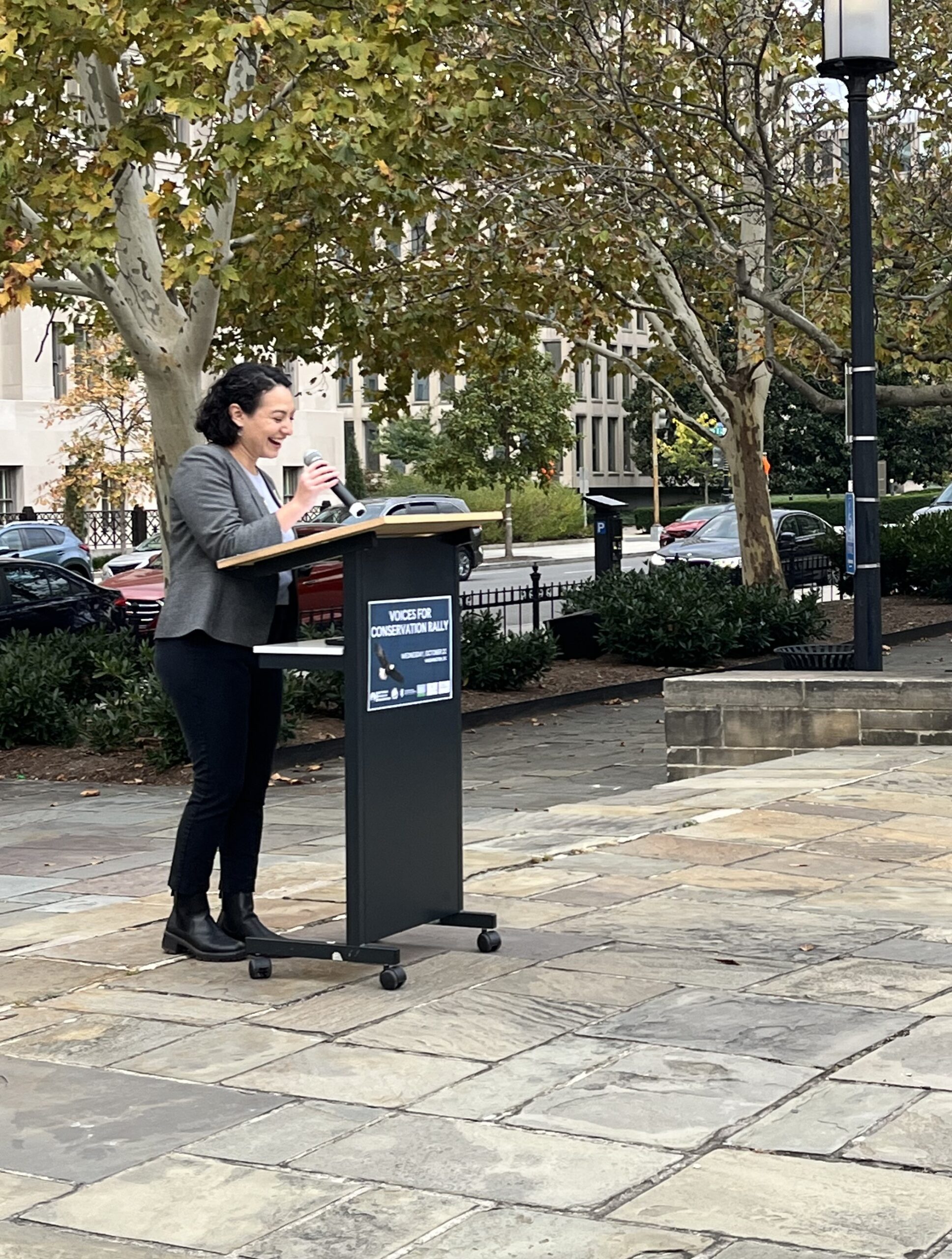
“To know the truth, you’ve got to prioritize it. You’ve got to go looking for it, which is why we are here today. Because truth is synonymous with empiricism, with gathering facts, with using our God-given intellect, our natural curiosity and desire to learn, to see the biggest possible picture—the whole truth and nothing but the truth. So faith and science are very much on the same side, supporting free inquiry, funded research, and peer review—all of which are names for truth.” – Rabbi Fred Dobb

“Investment in great science today enriches the prospect of a great future for our children and future generations. Future innovation, and economic success, and the ability to protect our wild species and our wildlife is directly tied to science investments we make today at the federal level.” – Dr. Steve King, wildlife advocate and retired medical researcher

“Working across generations is how we learn and grow, and how we will be able to be the change everyone wants to see in the world. We are young professionals who want to promote and protect wildlife and conservation programs in a time of unprecedented need.” – Raquel Mandojana, NWF Conservation Science Fellow

“In the next few weeks, I’m going to be welcoming a new conservationist into the world. And I’m so excited to share this magical, beautiful place with him, as I have with my three-year-old son, Ezra… I feel so grateful that he will be born here in one of the most spectacularly beautiful countries on the planet, but he and I both need you all to use your voices in the coming months to make sure that he—and all of our children—have clean air to breathe, clean water to drink, and will inherit this beauty and this responsibility.” – NWF Organizing and Campaigns Deputy National Director Sam Lockhart

To add your voice to the fight to protect federal conservation science, join the National Wildlife Federation Action Fund in telling Congress to keep critical wildlife programs off the budget chopping block.

