






We have much more to do and your continued support is needed now more than ever.
Monarch Heroes: Taking Flight Beyond the School Grounds and into the Community

Credit: Lauren Zapone Maples
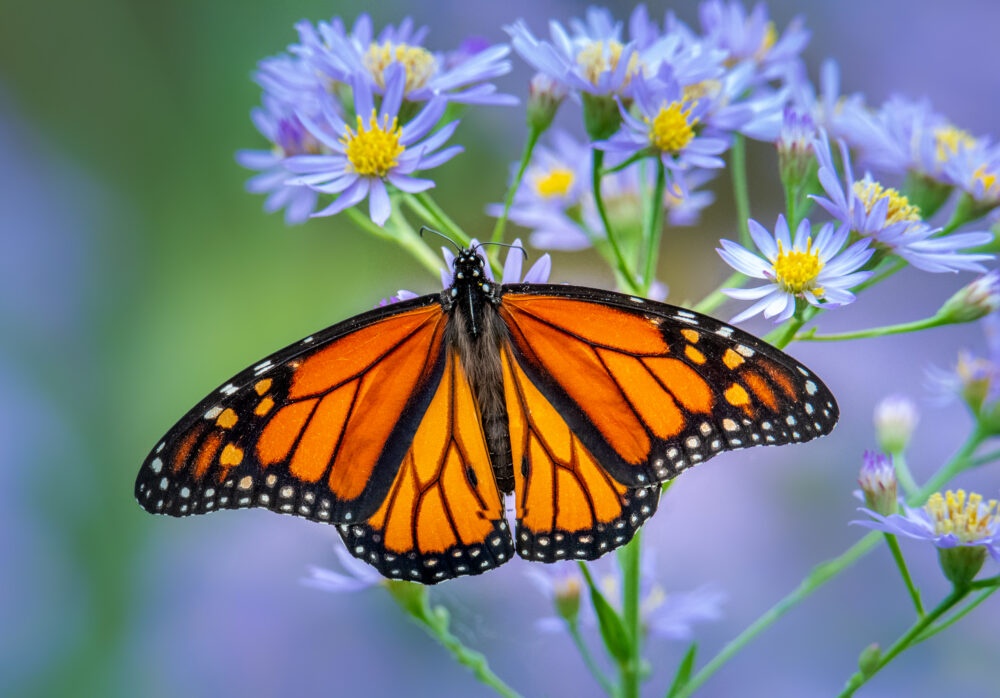
On March 17th, Mexican officials announced a 64% increase from the previous year in the overwintering monarch butterfly population in Mexico—the largest population in seven years!! How do researchers know there is an increase? They estimate the population by measuring the total area of trees occupied by the species. This winter season, the butterflies occupied an estimated 7.24 acres as compared to 4.42 acres last season.

We need to celebrate the communities and all generations throughout the monarch flyway that are contributing to this success, and at the same time, we need to take stock of what is working and continue with our efforts to recover the monarch butterfly whose future remains uncertain. 7.24 acres is indeed a success compared to the previous season, but the goal for the overwintering population established in 2015 is 15 acres.
One thing we can be certain contributes to the recovery of the monarch butterfly are the many small native plant habitats that jewel the landscape. These smaller gardens are essential habitat that help connect to larger native plant spaces, creating safe intervals for the monarch butterfly to fly between areas of rest and nourishment during their long migration.
Schools as Hubs for Monarch Education and Outreach
As hubs of their community, schools can play a vital role in connecting urban centers to larger swaths of habitat. When schools create gardens for the monarch butterfly with native milkweed and nectar plants, they are not only creating a safe space for monarchs to refuel and lay their eggs in the spring, but they also often create a ripple effect of habitat education, replication, and stewardship into their surrounding community.
Schools serve as the place community members and volunteers can engage to learn and take action, whether helping to build and maintain the gardens or learning from the students and discovering free resources. They are also the place community members can give back by sharing their knowledge.


Monarch Heroes Schools
As part of Monarch Heroes 10th Anniversary Celebration, we lift up a handful of the schools who are serving as hubs for monarch butterfly recovery in their communities. Below are some stories from across Texas of how Monarch Heroes gardens have grown beyond school grounds.
Teachers from Woodlawn Academy (San Antonio) and Pattersen Elementary (Houston) take gardening from school to home and build neighborhood and family connections in the process.
Lucia Francese, Teacher, Woodlawn Academy, San Antonio
Monarch Heroes has not only changed my way of teaching but my way of living. I am much more conscious of native plants. I have started growing native plants on my balcony. I have convinced friends to plant native plants in their yards, and this spring on my drive from San Antonio to Houston, I called my mom to describe in detail all the native wildflowers blooming along the highways. This program helped me take my interest in conservation to a true passion and has given me the tools to not only take personal action, but to inspire others to take action as well.


Maria Karen Locke, Teacher, Pattersen Elementary, Houston
Inspired and motivated by the Monarch Heroes garden at our school, I planted a monarch habitat garden at my home. I included milkweed and nectar-rich flowers to support monarch butterflies and other pollinators throughout their life cycle. I continue to expand my garden and share what I’ve learned with my family, neighbors and community. I have shared its purpose with my co-teachers, adminstrators, students and families, discussed my personal experience creating a home habitat, and encouraged participation in planting and caring for the garden.
Students and families have also been inspired to take action at home by reviving their existing gardens with native plants or by starting small pollinator-friendly gardens, and planting milkweed to support monarch butterflies. Many have also inquired about which pollinator plants to use and where to get them. So, we know they are taking it seriously!
School garden teams at Ann Richards Middle School (Austin), Baker Montessori (Houston), and Diamond Hill Elementary (Fort Worth) build community connections and support for gardens through spreading neighborhood gardens and the value of habitat stewardship.
Carey Warner, Teacher, Ann Richards Middle School, Austin, TX

Through a year-long senior project on geriatric depression, students at Ann Richards Middle School explored practical ways to support emotional well-being in adults over 65. Their research revealed that regular exposure to nature can significantly improve mood and help reduce symptoms of depression. Inspired by these findings, the students partnered with the South Austin Senior Activity Center to create a native plant monarch garden.
Now certified by the National Wildlife Federation, the garden serves as a vital habitat for monarch butterflies, offering food and shelter during their migration. But its impact goes beyond environmental benefits. The garden has become a shared community space where seniors can connect, contribute, and find creative inspiration. Whether tending to the plants or using the space for art, participants often experience a renewed sense of purpose and belonging—key factors in reducing loneliness.
Feedback from the community has been overwhelmingly positive. In a survey conducted by the students, every respondent at the Activity Center said the monarch garden brought them joy, and all expressed interest in learning more about it and seeing it expand.
Simone Roemhild, Teacher, Baker Montessori, Houston, TX
Learning about native plant species has shaped our decision processes about what to plant throughout our campus. As neighbors and by-passers notice us creating habitat, they get curious. We now have a regular group of families taking care of the Spark-Park, and we have had several parents lead planting events in collaboration with Trees for Houston. As we establish more “planted islands” at the perimeter of our school, neighbors are starting to feel comfortable and encouraged to plant herbs, native flowers and grasses. Slowly but surely, we are enticing humans to start connecting and stewarding these little islands of public lands in the heart of H-Town (Houston).

Tina Culp-McDonald, Teacher Diamond Hill Elementary, Fort Worth, TX
At our Earth Day celebration, several parents shared with me that their children are more aware of the nature around them and have even scolded a parent or two for being careless with plants and/or insects at home. We made seed balls and students and parents were able to drop them in areas of the neighborhood that could use some brightening up. One parent said her daughter now wants to make a pollinator space in the backyard and had asked mom if they could get a tree trimmed so there would be more light.
Whether community members volunteer to create monarch gardens, attend student led campus community forums or volunteer to share their knowledge with students, the ripple effect and impact on monarch conservation is real.
A teacher from Cunningham Elementary (Austin) switches career paths to found a non-profit, PEAS, and support school gardens across a city.
Lauren Maples, Founder and Executive Director of PEAS, Austin, TX (Former teacher Cunningham Elementary, Austin)
Building upon my experience as a teacher at Cunningham Elementary, at PEAS (Partners in Education, Agriculture, and Sustainability), we have extended the impact of the Monarch Heroes program by incorporating pollinator education into our broader curriculum and supporting other schools in developing and enhancing their own pollinator gardens. The lessons and practices rooted in the Monarch Heroes program now reach additional educators, students, and communities beyond a single campus.
Students often take on the role of educators within their own households. They encourage their families to avoid pesticide use and help them understand how even small actions can support pollinators. Some families extend their involvement into the broader community by tending the school gardens and advocating for pollinator-friendly landscaping in shared spaces. These actions demonstrate how the Monarch Heroes program helps cultivate not only knowledge but a sense of responsibility that carries beyond the classroom and into the community.


Resources
- To learn more about the Monarch Heroes program visit our website.
- To help your students advocate for the Monarch butterfly in their city, consider having them write a letter to their mayor. A template letter is available here.
- Come and Celebrate 10 years of Monarch Recovery with the Monarch Heroes Program at our spring student showcases in May: Austin, San Antonio and Houston.
